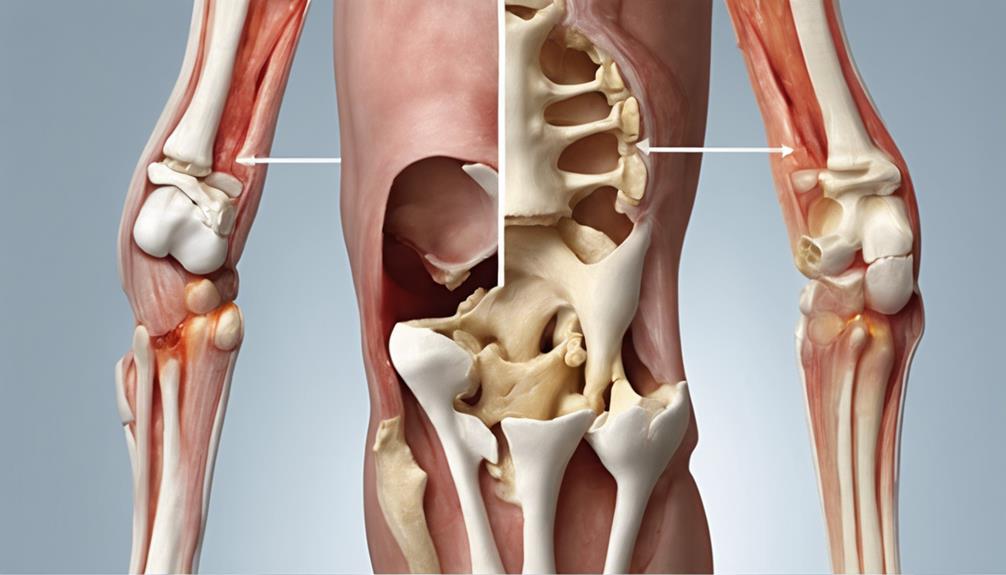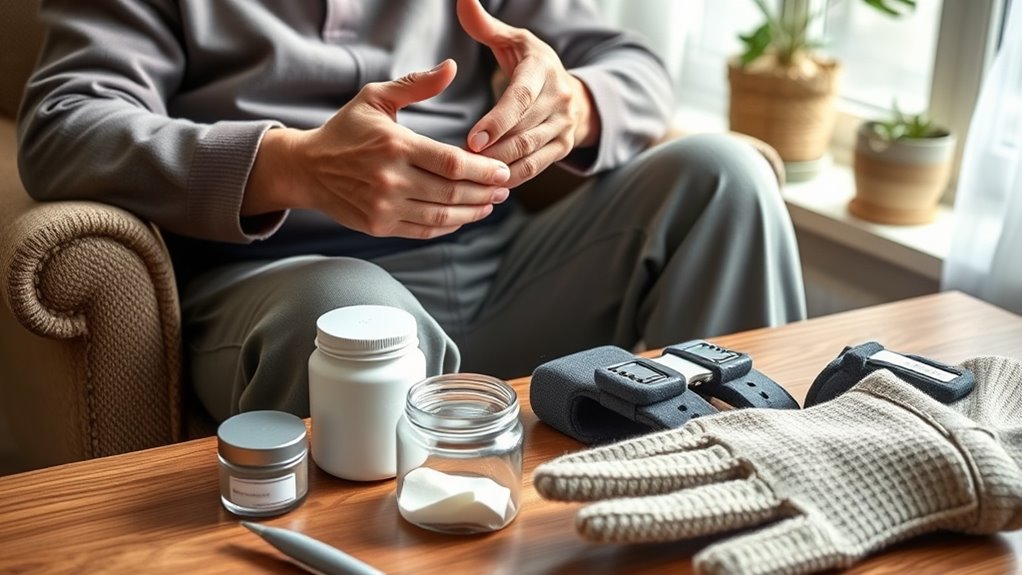

To protect your joints with arthritis, stay active with low-impact exercises like swimming or gentle yoga, which strengthen muscles around your joints and keep them lubricated. Maintain good posture and set up an ergonomic workspace to prevent strain during daily tasks. Manage your weight and wear supportive shoes to reduce pressure on hips and knees. Taking regular breaks and consulting professionals can help you adapt routines, so you’ll discover more ways to keep your joints healthy.
Key Takeaways
- Engage in low-impact exercises like swimming or walking to strengthen muscles and improve joint flexibility.
- Set up an ergonomic workspace with proper chair height and monitor position to reduce joint strain.
- Take regular breaks during activities, switch hands, and avoid repetitive motions to prevent joint overuse.
- Maintain a healthy weight and wear supportive footwear to lessen pressure on weight-bearing joints.
- Consult healthcare professionals for tailored advice and prioritize joint-friendly habits for long-term protection.

Are you doing enough to keep your joints healthy? Many people overlook simple daily habits that can make a significant difference, especially if you’re managing arthritis or joint pain. One of the most effective ways to protect your joints is by incorporating joint friendly exercises into your routine. These exercises focus on strengthening the muscles around your joints, providing better support and reducing strain. Activities like swimming, walking, or gentle yoga can improve flexibility and build endurance without putting excessive stress on your joints. Remember, consistency is key—regular movement keeps your joints lubricated and prevents stiffness. But it’s equally important to create an ergonomic workspace setup. Poor posture or awkward positioning at your desk can lead to unnecessary joint strain, especially in your hands, wrists, shoulders, and neck. Adjust your chair height so your feet rest flat on the floor, and ensure your monitor is at eye level, reducing the need to tilt your head or hunch your shoulders. Use ergonomic accessories like supportive wrist rests or an adjustable keyboard to keep your hands in a neutral position. When your workspace is properly arranged, you’re less likely to develop repetitive strain injuries that can worsen joint discomfort over time.
Beyond exercises and workspace adjustments, paying attention to how you perform daily activities can protect your joints. Avoid repetitive motions that strain specific joints, and take frequent breaks to stretch and change positions. If you spend a lot of time typing or using a mouse, switch hands regularly and ensure your devices are positioned to minimize wrist extension. Maintaining a healthy weight also plays a critical role in joint health; extra pounds increase pressure on weight-bearing joints like your knees and hips, accelerating cartilage wear. Incorporate weight management into your routine through balanced eating and regular activity.
Stay mindful of your body’s signals. If a certain movement causes pain, stop immediately and modify the activity. Warm-up before exercise to prepare your joints and cool down afterward to reduce stiffness. Wearing supportive footwear can cushion impact during walking or standing, further protecting your joints. Hydration is often overlooked but is essential for keeping joint cartilage well-lubricated and functioning smoothly. Ultimately, consider consulting a healthcare professional or physical therapist for tailored advice and exercises designed to strengthen and protect your joints.
Frequently Asked Questions
Can Specific Foods Worsen Arthritis Symptoms?
Yes, certain foods can worsen your arthritis symptoms, especially if you have food sensitivities. Spicy or processed foods may trigger inflammation, making pain worse. On the other hand, eating anti-inflammatory foods like berries, leafy greens, and omega-3 rich fish can help reduce symptoms. Pay attention to how your body reacts to different foods, and consider avoiding those that seem to increase your discomfort to better manage your arthritis.
Are There Alternative Therapies That Help Joint Protection?
Yes, you can explore complementary therapies and herbal remedies to help safeguard your joints. Practices like acupuncture, massage, and physical therapy can reduce inflammation and improve mobility. Herbal remedies such as turmeric, ginger, and devil’s claw may offer natural anti-inflammatory effects. Always consult your healthcare provider before trying new therapies or supplements to ensure they’re safe and suitable for your specific condition.
How Does Sleep Quality Affect Joint Health?
Poor sleep quality can worsen joint pain and inflammation, making arthritis symptoms feel more intense. For example, if you neglect sleep hygiene, you might sleep less than the recommended 7-9 hours, leading to increased stiffness and discomfort. Prioritizing good sleep hygiene and maintaining adequate sleep duration helps your joints recover and reduces inflammation, ultimately improving your overall joint health and making daily activities easier.
Is There a Link Between Stress and Arthritis Flare-Ups?
Yes, stress is linked to arthritis flare-ups because it triggers inflammation and can worsen joint pain. By managing stress through relaxation techniques and prioritizing emotional well-being, you can reduce the frequency and severity of these flare-ups. Practicing stress management helps keep your immune response balanced, supporting better joint health. Stay mindful of your emotional health, and incorporate calming activities into your daily routine to protect your joints effectively.
Can Ergonomic Tools Prevent Joint Strain During Daily Tasks?
Yes, ergonomic tools can considerably prevent joint strain. Studies show that using ergonomic handles and padded grips reduces hand fatigue by up to 40%. By switching to tools with ergonomic handles, you minimize unnecessary pressure on your joints. Padded grips provide extra comfort and reduce friction, making daily tasks easier and less painful. Incorporating these tools into your routine helps protect your joints and maintain better mobility over time.
Conclusion
By following these simple tips, you’ll turn your joints into unstoppable fortresses, resisting every twist, turn, and twinge like superheroes. Imagine your joints as unbreakable steel beams, shrugging off daily wear and tear with ease. With just a little care, you’ll transform arthritis from a relentless enemy into a minor nuisance. Keep moving, stay mindful, and your joints will thank you by staying strong enough to support your every adventure—no matter how wild it gets!