
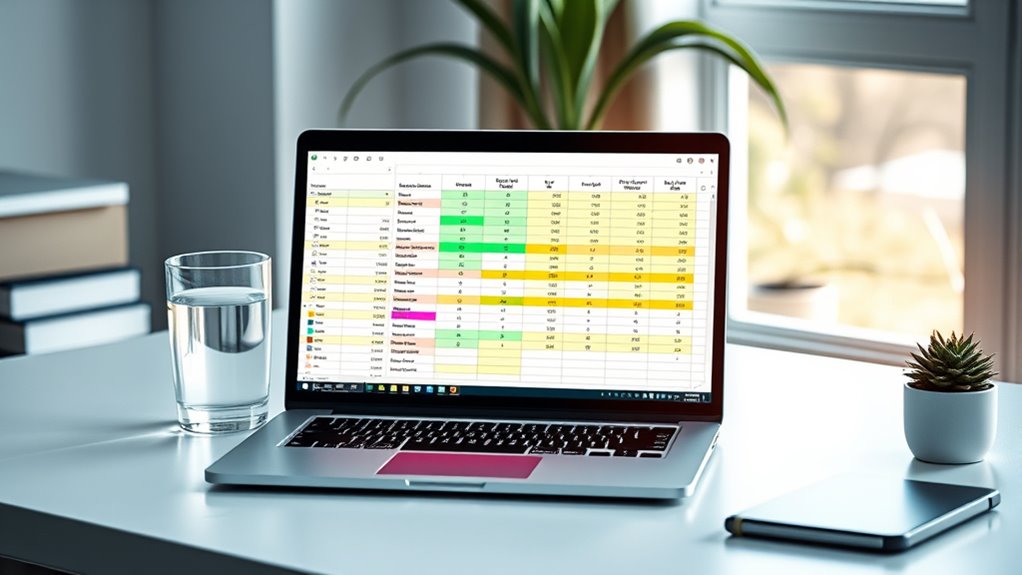
To track behavior data with simple spreadsheet templates, start by setting up clear columns like date, behavior, duration, and context. Keep your layout straightforward and update it regularly to guarantee accurate info. Use color coding or dropdown menus to stay organized and minimize errors. Then, analyze your data by looking for patterns, creating charts, and calculating averages. Continuing with these tips will help you make informed adjustments and stay motivated to improve over time.

Get comfort and care essentials delivered free — and shop member deals
- Fast, free delivery on millions of items
- Access to Prime Big Deal Days deals on October 6–7
- Prime Video, Amazon Music and more included
Key Takeaways
- Start with clear, labeled columns such as Date, Behavior, Duration, and Context for organized data entry.
- Use simple, consistent formats and dropdown menus to ensure accuracy and ease of updating.
- Regularly review and update your template to reflect evolving tracking needs and behaviors.
- Utilize filters, sorting, and basic formulas to analyze patterns, frequencies, and trends in your data.
- Incorporate visual tools like charts or graphs to easily interpret behavior trends over time.
behavior tracking spreadsheet templates
As an affiliate, we earn on qualifying purchases.
As an affiliate, we earn on qualifying purchases.
Getting Started With Basic Spreadsheet Setups

Getting started with basic spreadsheet setups is straightforward and essential for tracking behavior data effectively. First, open a new spreadsheet in your preferred program. Label your columns clearly—such as Date, Behavior, Duration, or Intensity—so you know exactly what data you’re recording. Keep the layout simple to avoid confusion later. Use the first row for headers, and enter your data beneath. Consistency is key, so develop a routine for updating your sheet regularly—daily or after each observation. If you notice patterns emerging, you can add extra columns later. Remember, the goal is to create a user-friendly system that makes data entry quick and easy, setting a strong foundation for more detailed analysis down the line. Additionally, maintaining accurate color accuracy in your data can improve the interpretability of your observations over time.
Choosing the Right Data Points to Track

Choosing the right data points to track is essential for gaining meaningful insights into behavior patterns. You want to focus on information that reveals trends and helps you make informed decisions. Consider what behaviors matter most, whether it’s frequency, duration, or context. For example, tracking the time of day and activity type can highlight when and what triggers behaviors. Use this table to identify key data points:
| Behavior Aspect | Example Data Point |
|---|---|
| Frequency | How often the behavior occurs |
| Context | Location or environment |
| Duration | Length of each behavior episode |
Select data points that align with your goals, avoiding unnecessary details. Clear, relevant data helps you see patterns and track progress effectively. Additionally, understanding which data points are most relevant can improve your ability to analyze behavior data and optimize your strategies. Incorporating accurate measurements and ensuring consistent data collection methods can further enhance your insights.
Organizing and Customizing Your Template

To make your behavior data tracking more effective, organizing and customizing your template is key. Start by clearly labeling your columns to match the data points you’re tracking, such as date, behavior, location, or triggers. Use color-coding or bold fonts to highlight important information or to differentiate categories. Customize the layout to suit your preferences—perhaps adding sections for notes or reflections. Incorporate dropdown menus for consistent entries, reducing errors and saving time. Keep the format simple and intuitive so you can quickly input data without confusion. Regularly review and adjust your template as your tracking needs evolve. Cookies categories provide a structured way to understand and manage your data collection, making your spreadsheet more effective. Paying attention to data organization principles, such as logical grouping and clear hierarchies, further enhances usability. Incorporating meditation techniques into your routine can also improve focus and mental clarity, supporting your data tracking efforts. Research indicates that understanding the horsepower of electric dirt bikes can help you tailor your tracking to specific performance metrics, ensuring your data collection remains relevant and comprehensive. Additionally, understanding the importance of user consent helps ensure your tracking practices respect privacy guidelines. A well-organized, personalized spreadsheet makes data entry smoother and ensures you can easily access meaningful insights later.
Analyzing Your Data for Insights

Once you’ve collected enough behavior data, analyzing it becomes essential for uncovering patterns and gaining meaningful insights. Start by reviewing your spreadsheet for recurring trends or anomalies. Look for days or times when certain behaviors spike or drop. Use filters or sorting features to compare different categories or date ranges. Calculate averages or percentages to quantify your habits. Visual tools like charts or graphs can help you see trends more clearly. Ask yourself questions: Are there correlations between specific activities and outcomes? What behaviors are most consistent? Identifying these patterns helps you understand what influences your behavior. Additionally, understanding how data analysis techniques can streamline your interpretation process can serve as a useful analogy for fine-tuning your habits. Employing behavior tracking methods can further enhance your ability to recognize subtle shifts over time. This step transforms raw data into actionable insights, guiding you to make informed decisions and adjustments for better results.
Tips for Maintaining Consistency and Motivation
Maintaining consistency and motivation can be challenging, but implementing simple strategies can make a significant difference. To stay on track, celebrate small wins—each step forward fuels your confidence. Keep your goals visible; reminders boost your focus and remind you of your purpose. Mix things up to prevent boredom; trying new methods keeps your interest alive. Lastly, connect with a supportive community or accountability partner; sharing progress can inspire you to push through tough days. Remember, setbacks are normal—don’t let them derail your efforts. Instead, view them as learning opportunities. By incorporating these tactics, you’ll build resilience and sustain motivation, turning your tracking habits into a powerful tool for lasting change.
Frequently Asked Questions
How Often Should I Update My Tracking Spreadsheet?
You should update your tracking spreadsheet regularly to keep data accurate and useful. How often depends on your goals, but a good rule of thumb is to update at least weekly or after each relevant activity. This way, you stay consistent and can spot trends early. Don’t wait too long, or your data might become outdated, making it harder to analyze your progress effectively.
Can I Automate Data Entry in My Templates?
Did you know that automating data entry can save you up to 80% of the time spent manually updating spreadsheets? Yes, you can automate data entry in your templates using tools like Google Sheets with scripts or integrations like Zapier. You just need to set up these connections once, and they’ll handle the rest, making your tracking more efficient and reducing errors. It’s a smart way to stay consistent without extra effort.
What Are Common Mistakes to Avoid in Tracking Data?
When tracking data, you should avoid common mistakes like inconsistent data entry, which skews your results. Don’t forget to double-check your entries regularly to catch errors early. Also, avoid overcomplicating your templates—keep them simple and clear. Be consistent with your tracking intervals, and don’t ignore missing data. These habits help guarantee your data remains accurate and useful for making informed decisions.
How Do I Interpret Complex Data Trends?
When interpreting complex data trends, you should look for patterns and anomalies that stand out. Break down large datasets into smaller, manageable parts to understand what’s driving changes. Use visual tools like charts or graphs for clarity. Don’t jump to conclusions—consider external factors and make sure your data is accurate. By staying curious and analytical, you can uncover meaningful insights that inform better decisions.
Is It Necessary to Back up My Tracking Spreadsheet Regularly?
You should back up your tracking spreadsheet regularly to prevent losing important data. It’s a simple step that safeguards your information from technical issues, accidental deletion, or software failures. By doing so, you guarantee your data remains safe and accessible whenever you need it. Set a routine backup schedule, like weekly or monthly, and consider using cloud storage for added security and easy recovery.
Conclusion
Tracking your behavior data with simple spreadsheet templates can boost your self-awareness and motivation. Did you know that people who regularly track their habits are 42% more likely to achieve their goals? By staying consistent and customizing your templates, you turn raw data into powerful insights. Keep it simple, stay committed, and watch your progress unfold. With just a few clicks, you’ll access the habits that lead to lasting change.
Fall Picks
fall essentials
As an affiliate, we earn on qualifying purchases.