
To guarantee home safety for an Alzheimer’s patient, install secure locks on doors and windows, use alarms to monitor exits, and consider locks that are difficult to manipulate. Incorporate safety devices like GPS trackers and emergency call buttons for quick help. Keep medication organized with labeled pillboxes and reminders. Create a clutter-free, secure environment that minimizes hazards while supporting independence. Exploring these safety measures further will help you create a safe, comfortable home for your loved one.

Turn quiet afternoons into listening time
- Thousands of audiobooks, podcasts and originals
- Listen on your phone, tablet or Echo — also offline
- Cancel anytime
Key Takeaways
- Install locks on doors and windows, and use alarms to prevent wandering and unauthorized exits.
- Utilize alarms on entry points to monitor and alert if someone attempts to leave unattended.
- Incorporate security devices like GPS trackers and emergency call buttons for quick assistance.
- Create a safe, clutter-free home environment optimized for easy access and reduced hazards.
- Regularly review and update safety measures to adapt to the changing needs of the individual.
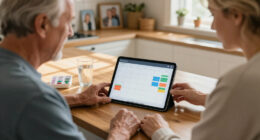
Caring for an Alzheimer’s patient at home can be challenging, but guaranteeing a safe environment is crucial for their well-being. One of the most important aspects of home safety is medication management. As the caregiver, you need to establish a routine for administering medications to prevent missed doses or accidental overdoses. Use clearly labeled pill organizers and set alarms or reminders to keep track of when medications are due. Regularly review prescriptions with your healthcare provider to guarantee dosages are correct and to address any side effects. Keeping medications out of reach and in a secure, locked cabinet helps prevent accidental ingestion by your loved one, especially if they tend to forget or become confused about their medication schedule. Incorporating space optimization strategies can further help organize medication areas and reduce clutter, making it easier to maintain safety and order.
Establish a medication routine with labeled organizers and secure storage to ensure safety and adherence.
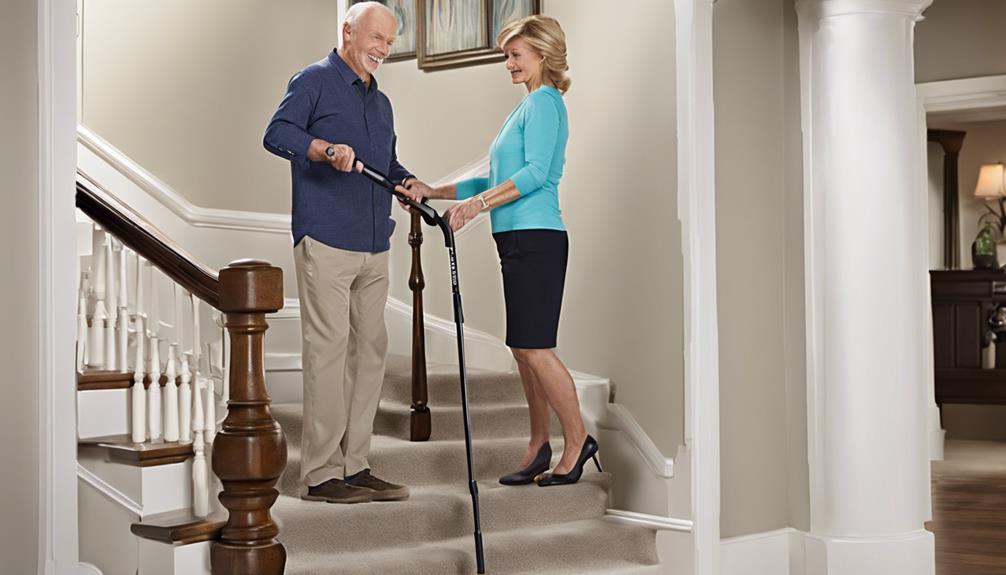
In addition to medication management, personal safety devices play a crucial role in maintaining a secure environment. These devices include wearable alarms, GPS trackers, and emergency call buttons that can be easily accessed. Wearing a personal safety device allows your loved one to alert you or emergency services if they feel lost, confused, or in danger. GPS trackers are particularly helpful if they wander outside the home, providing real-time location updates so you can respond quickly. Emergency alert systems, such as pendants or wristbands, provide peace of mind, knowing help is just a button press away. Make sure these devices are comfortable and simple for your loved one to use, and educate them on how and when to activate them.
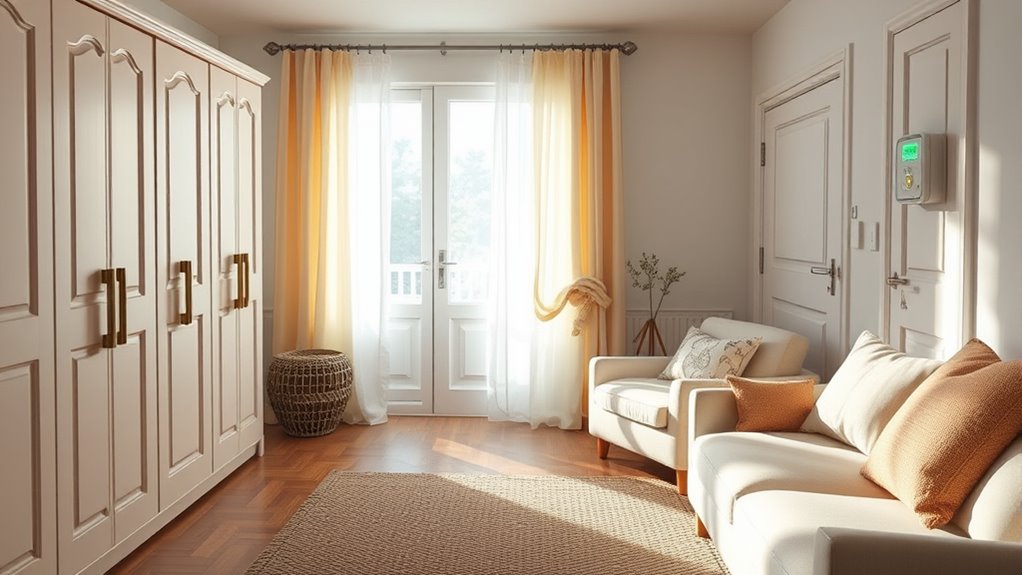
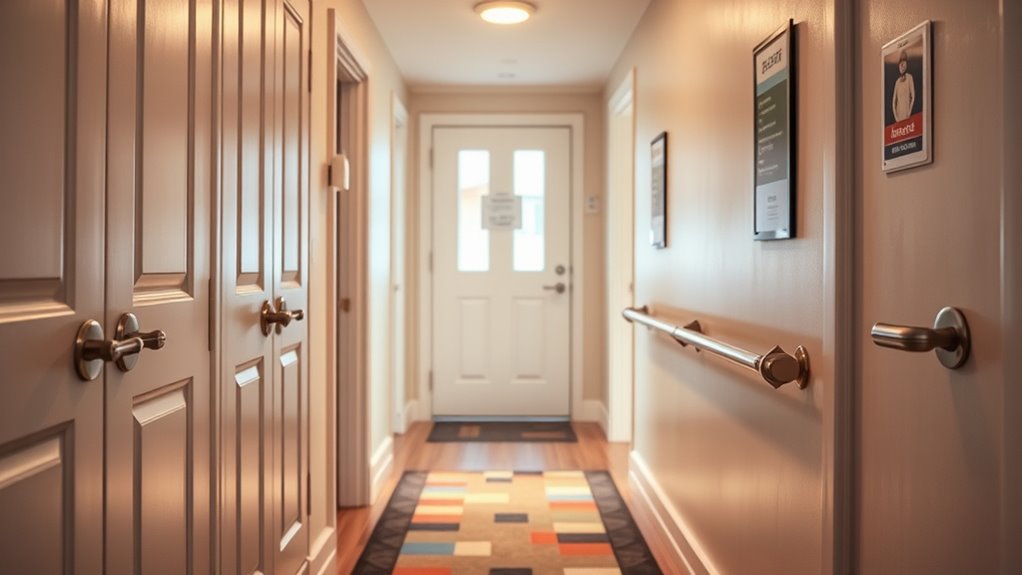
Locks and alarms are additional safety measures to think about. Installing locks on doors and windows can prevent wandering, while alarms on entry points alert you if your loved one tries to leave without supervision. Use childproof locks or keyless entry systems that are difficult for your loved one to manipulate but easy for you to operate. A doorbell alarm or motion detector can also notify you when someone enters or exits certain rooms. These measures work together to create multiple layers of security, reducing the risk of accidents or wandering episodes.
Ultimately, the goal is to create a home environment that balances safety with independence. Managing medication properly, utilizing personal safety devices, and installing appropriate locks and alarms give you control and peace of mind. By taking these proactive steps, you help your loved one stay safe, comfortable, and as independent as possible for as long as possible.
As an affiliate, we earn on qualifying purchases.
Frequently Asked Questions
How Can I Tell if My Loved One Is Trying to Leave Unnoticed?
You can spot if your loved one is trying to leave unnoticed by observing wandering detection and behavioral cues. Watch for signs like pacing, glancing toward exits, or restless movements. Installing door alarms or sensors can alert you when they attempt to leave. Stay attentive to their actions, especially if they seem anxious or confused near exits. Being proactive helps prevent escape and keeps your loved one safe.
Are There Any Legal Restrictions on Locking Doors for Safety?
Legal considerations and privacy concerns vary by state, but generally, you can lock doors to protect your loved one if it’s necessary for safety. However, you should guarantee locks are easily removable or have emergency access. Always balance safety with respect for their dignity. Consult local laws or legal counsel to confirm restrictions. Remember, transparent communication and documenting safety measures help protect both your loved one and you legally.
What Are the Best Non-Intrusive Alarm Options?
Wireless sensors and wearable alarms are your best non-intrusive options. They discreetly monitor your loved one, alerting you without causing distress or invasion of privacy. Wireless sensors can be placed around doors, windows, or key areas, while wearable alarms are comfortable and easy to wear, providing safety without feeling restrictive. Both options help you stay informed and guarantee safety while respecting independence.
How Do I Balance Safety and Independence at Home?
To balance safety and independence, you should implement discreet safety measures like non-intrusive alarms and clear routines that respect privacy concerns. Encourage your loved one’s autonomy while monitoring their safety, minimizing caregiver stress. Regularly communicate and involve them in safety decisions, ensuring they feel empowered. Use technology thoughtfully, and create a safe environment that fosters independence without compromising security or privacy, easing your worries and their confidence at home.
Can Home Safety Devices Be Monitored Remotely?
Yes, home safety devices can be monitored remotely. Studies show that remote monitoring increases safety by 30%, giving you peace of mind. With safety technology, you can track your loved one’s activities, receive alerts instantly, and respond quickly to emergencies—all from your smartphone or computer. This way, you stay connected and confident that your loved one’s safety is maintained, even when you’re not physically present.
Conclusion
By taking these home safety steps, you turn your house into an impenetrable fortress against Alzheimer’s mishaps. Locks, alarms, and clever safeguards aren’t just small fixes—they’re your ultimate weapons in preventing chaos and disaster. With these measures, you’ll feel like you’ve built a superhero’s lair, protecting your loved one from every possible danger. Now, you can breathe easy, knowing your home is a nearly unstoppable safe haven where safety reigns supreme!
Fall Picks
fall essentials
As an affiliate, we earn on qualifying purchases.