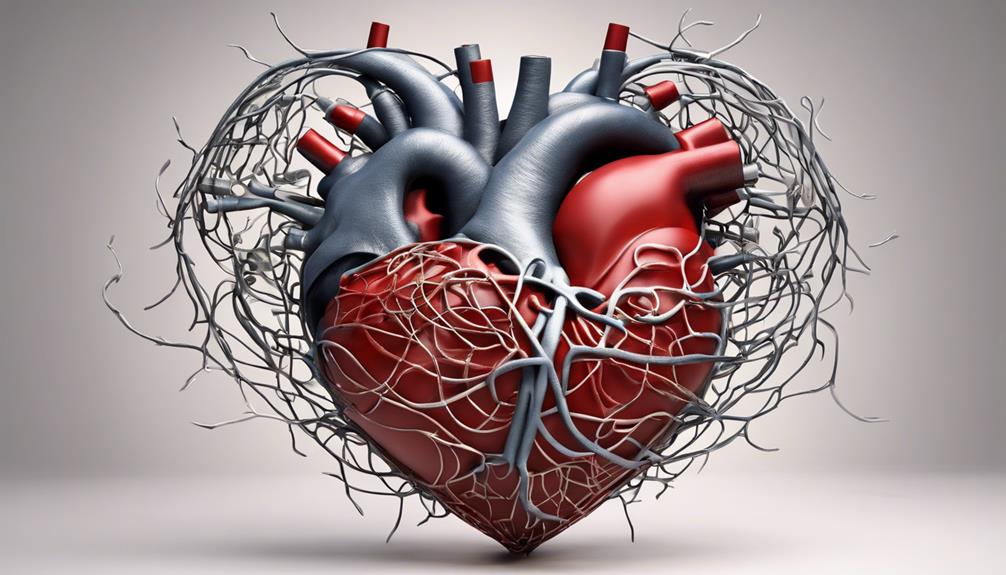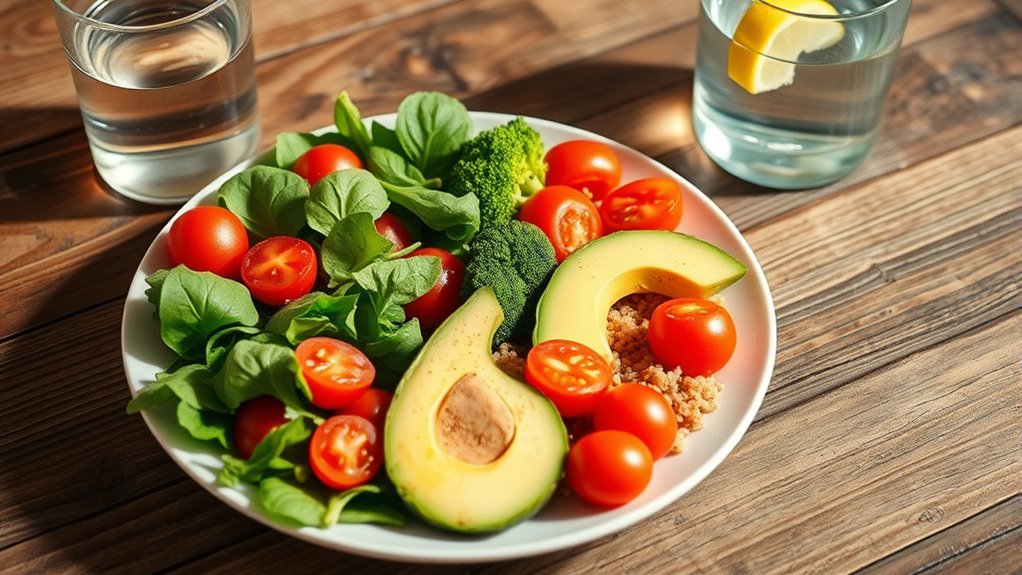

To manage a low-cholesterol diet for heart health, focus on eating plant-based foods like fruits, vegetables, whole grains, nuts, and legumes. Incorporate healthy fats from avocados, nuts, seeds, and olive oil to boost good cholesterol. Choose products low in saturated and trans fats, and swap refined carbs for whole grains. Staying active, avoiding smoking, and choosing accurate food labels can enhance your progress. Keep exploring these strategies to better understand how to support your heart health naturally.

Turn quiet afternoons into listening time
- Thousands of audiobooks, podcasts and originals
- Listen on your phone, tablet or Echo — also offline
- Cancel anytime
Key Takeaways
- Prioritize plant-based foods like fruits, vegetables, whole grains, nuts, and legumes to naturally lower cholesterol levels.
- Incorporate healthy fats from avocados, nuts, seeds, and olive oil to boost good HDL cholesterol.
- Read food labels carefully to choose products low in saturated and trans fats, avoiding processed and fried foods.
- Replace refined carbs with whole grains such as quinoa and whole wheat bread to support heart health.
- Combine a balanced diet with regular physical activity and lifestyle habits like avoiding smoking to optimize heart health.

Managing a low-cholesterol diet is a crucial step toward protecting your heart health. When you focus on what you eat, you can significantly reduce your cholesterol levels and lower the risk of cardiovascular disease. One of the most effective ways to do this is by incorporating more plant-based foods into your meals. Fruits, vegetables, whole grains, nuts, and legumes are naturally low in saturated fats and contain no cholesterol. These foods are rich in fiber, antioxidants, and phytochemicals that help improve your overall heart health. By choosing plant-based options, you support your body’s ability to manage cholesterol levels more effectively, making your diet both nutritious and heart‑friendly.
Incorporate plant-based foods like fruits, vegetables, and grains to naturally lower cholesterol and improve heart health.
In addition to prioritizing plant-based foods, it’s important to incorporate healthy fats into your diet. Not all fats are created equal; some fats can actually help lower bad cholesterol (LDL), while others raise it. Healthy fats, such as those found in avocados, nuts, seeds, and olive oil, are monounsaturated and polyunsaturated fats that promote good cholesterol (HDL). These fats assist in reducing inflammation and improving your lipid profile, which is essential for maintaining healthy arteries. Instead of avoiding fats altogether, focus on replacing saturated and trans fats found in processed foods and fried items with these healthier options. Using olive oil in cooking or snacking on a handful of nuts can make a notable difference in your cholesterol levels over time.
Managing your diet also involves reading labels carefully and making mindful choices when grocery shopping. Look for products that are low in saturated fats and free from trans fats. Incorporate more legumes and whole grains into your meals, replacing refined carbs that can negatively impact your cholesterol. For example, swap white bread for whole‑grain bread or choose quinoa instead of white rice. These small adjustments, combined with a focus on plant-based foods and healthy fats, can help you better control your cholesterol and support your heart health.
Additionally, understanding the importance of well-sourced name coverage in nutritional information can help you make more informed choices, as it emphasizes the role of accurate, reliable information on food labels and dietary guidelines.
Finally, balancing your diet with regular physical activity and avoiding smoking complements your dietary changes. Staying active helps boost your HDL levels and improves your overall cardiovascular health. By integrating these habits into your lifestyle, you reinforce the benefits of a low-cholesterol diet. Remember, managing your diet isn’t about restriction but about making smarter, heart-healthy choices that you can sustain long-term. With dedication and mindful eating, you can markedly improve your heart health and enjoy a better quality of life.
As an affiliate, we earn on qualifying purchases.
Frequently Asked Questions
Can I Eat Eggs on a Low-Cholesterol Diet?
You can eat eggs on a low-cholesterol diet, but moderation is key. While eggs are nutritious, they contain cholesterol that impacts your levels. Consider egg alternatives like egg whites or plant-based substitutes to reduce cholesterol impact. These options let you enjoy similar textures and flavors without raising your cholesterol. Always balance your diet with fruits, vegetables, and whole grains, and consult your healthcare provider for personalized advice.
Are Plant-Based Fats Better Than Animal Fats?
Plant-based fats are generally better than animal fats for your heart. Think of plant oils as a gentle river flowing through your diet, offering healthier fats like monounsaturated and polyunsaturated fats. When comparing fats, plant oils tend to have less saturated fat and no cholesterol, making them a smarter choice for managing your cholesterol levels. Switching to plant oils can help protect your heart and keep your arteries clear.
How Does Fiber Intake Affect Cholesterol Levels?
Increasing your fiber intake, especially soluble fiber, helps lower cholesterol levels. Fiber benefits include binding to cholesterol in your digestive system, which prevents it from entering your bloodstream. You’ll find soluble fiber in foods like oats, beans, apples, and carrots. By eating these regularly, you support your heart health, reduce LDL cholesterol, and improve overall wellness. Aim to include a variety of fiber-rich foods in your diet daily.
Is Seafood Safe for Cholesterol Management?
Seafood is generally safe for cholesterol management, acting as a treasure chest of Omega-3 benefits that support heart health. However, beware of Mercury concerns lurking like shadows in some fish, especially larger species. Opt for smaller, fatty fish like salmon or sardines to maximize Omega-3 intake while minimizing mercury risk. By choosing wisely, you harness seafood’s power without compromising your low-cholesterol goals.
Can Supplements Help Lower Cholesterol Naturally?
Yes, supplements can help lower cholesterol naturally. Natural remedies like plant sterols, soluble fiber, and omega-3 fatty acids may reduce your LDL levels effectively. While statins benefits include lowering cholesterol, supplements offer a natural alternative or complement. Always talk to your doctor before adding supplements, especially if you’re on medication, to guarantee safety and proper management of your cholesterol levels.
Conclusion
By choosing low-cholesterol foods, you’re steering your heart’s ship away from treacherous waters. Think of your diet as the compass guiding you toward smoother seas and healthier days ahead. Remember, every small change is like a steady oar stroke—building momentum for a brighter, heart-healthy future. Keep maneuvering with purpose, and you’ll find yourself sailing toward better wellness, one mindful choice at a time. Your journey to a stronger heart starts now—steady and confident.
Halloween Picks
halloween
As an affiliate, we earn on qualifying purchases.