
As a caregiver, you should recognize that shingles causes painful, blistering rashes often on one side of the body or face, with symptoms like burning or stabbing pain, fever, or fatigue. Early diagnosis and prompt antiviral treatment are essential to reduce severity and prevent complications such as postherpetic neuralgia. Staying informed about vaccination options and proper supportive care can considerably protect your senior loved one. Keep exploring to learn how to better support them through this condition.

Turn quiet afternoons into listening time
- Thousands of audiobooks, podcasts and originals
- Listen on your phone, tablet or Echo — also offline
- Cancel anytime
Key Takeaways
- Recognize early signs like painful, blistering rash on one side of the face or body for prompt treatment.
- Ensure seniors see a healthcare provider quickly to start antiviral medications within 72 hours of symptom onset.
- Support medication adherence and monitor for side effects to reduce symptom severity and prevent complications.
- Promote vaccination discussions to prevent future shingles episodes and boost immunity in seniors aged 50 and above.
- Educate on good hygiene, pain management, and emotional support to enhance comfort and prevent secondary infections.
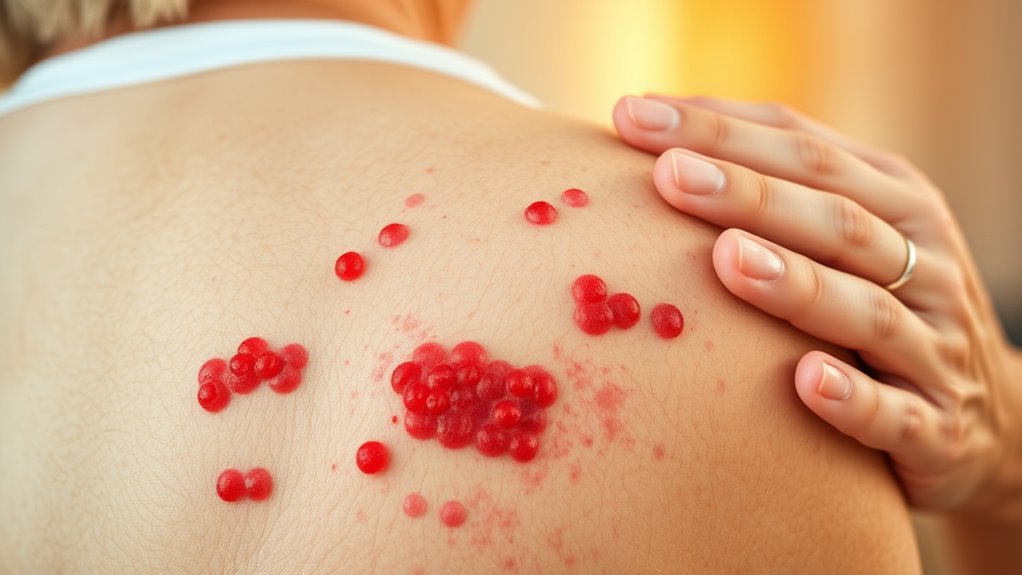
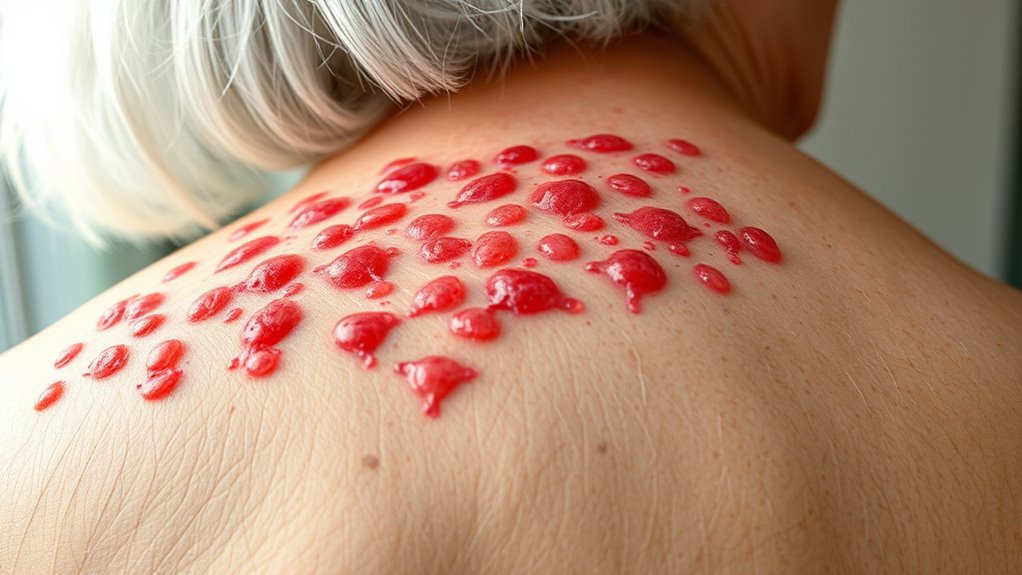
Caring for seniors often involves managing health conditions like shingles, a painful and contagious skin rash caused by the reactivation of the chickenpox virus. As a caregiver, it’s essential to understand how shingles manifests and what steps you can take to support your loved one through this illness. Shingles typically presents as a painful, blistering rash that usually appears on one side of the body or face. The pain can be severe, often described as burning, stabbing, or tingling, and may be accompanied by other symptoms such as fever, headache, or fatigue. Early recognition is key because prompt treatment can reduce the severity and duration of symptoms.
Shingles causes painful rashes; early detection and treatment are vital for relief and recovery.
One of the most effective ways to manage shingles is through antiviral medications. These drugs, such as acyclovir, valacyclovir, or famciclovir, are most effective when started within 72 hours of the rash’s appearance. They can help speed healing, lessen pain, and reduce the risk of complications like postherpetic neuralgia—a condition characterized by lingering nerve pain after the rash heals. As a caregiver, you should encourage your loved one to see a healthcare professional promptly if shingles is suspected. Proper medication adherence is vital, so help them follow the prescribed dosing schedule and monitor for side effects.
Prevention is equally important, and vaccines play an essential role. There are vaccine options specifically designed to prevent shingles in older adults, such as the shingles vaccine. The CDC recommends that adults age 50 and older get vaccinated, even if they’ve had shingles before. The vaccine boosts immunity and considerably lowers the risk of developing shingles and its complications. When caring for seniors, you should be proactive about discussing vaccination with their healthcare provider and ensuring they stay up to date on immunizations. This not only protects them but also helps prevent the spread of the virus to others.
In addition to medications and vaccines, educating yourself about shingles can help you provide better support. Be attentive to the early signs, manage pain with appropriate medications or remedies, and maintain good hygiene to prevent secondary infections. Pay close attention to your loved one’s comfort and emotional well-being, as shingles can be both physically and mentally taxing. Recognizing that the virus can reactivate due to immune system weakening helps you understand why some seniors are more vulnerable. By understanding the importance of antiviral medications and vaccine options, you’re better equipped to help your senior loved one recover and reduce the chances of future outbreaks. Your proactive care can make a meaningful difference in their health and quality of life during this challenging time.
shingles antiviral medication for seniors
As an affiliate, we earn on qualifying purchases.
As an affiliate, we earn on qualifying purchases.
Frequently Asked Questions
Can Shingles Lead to Long-Term Nerve Pain in Seniors?
Yes, shingles can lead to long-term nerve pain in seniors, known as postherpetic neuralgia. You should watch for nerve damage, as it causes chronic pain that persists long after the rash heals. This nerve pain can be severe and affect daily life. To help prevent this, encourage seniors to seek prompt treatment and discuss vaccination options with their healthcare provider. Managing pain early can reduce the risk of lasting nerve issues.
Are There Specific Signs Caregivers Should Watch for Early Detection?
Spotting shingles early is like catching a whisper before it turns into a storm. Watch for rash identification—look for a band of blisters or redness, usually on one side of the body. Symptom monitoring is key; notice any pain, tingling, or burning sensations before the rash appears. If you see these signs, encourage prompt medical attention to prevent complications and make sure your loved one gets relief quickly.
How Effective Are Shingles Vaccines for Seniors?
Shingles vaccines are highly effective for seniors, especially when considering vaccine coverage and boosting their immune response. The vaccine can markedly reduce your loved one’s risk of developing shingles and its complications. While it may not eliminate the chance entirely, the immune response it stimulates helps protect against severe symptoms. Make sure your senior gets vaccinated as recommended, and consult their healthcare provider for personalized advice to maximize vaccine benefits.
What Are the Risks of Shingles Complications in Elderly Patients?
You should know that shingles complications in elderly patients can be serious, especially postherpetic neuralgia, which causes persistent nerve pain. Their immune response weakens with age, increasing the risk of complications like vision loss or bacterial infections. Prompt medical attention is vital to manage symptoms and reduce risks. Encourage vaccination and monitor for early signs to minimize the potential severity of shingles-related issues in seniors.
Can Caregivers Prevent Shingles Transmission Within Households?
You can help prevent household transmission of shingles by practicing good hygiene and taking preventive measures. Encourage frequent handwashing, avoid sharing personal items, and keep your loved one’s rash covered. While shingles isn’t spread through casual contact, these simple steps reduce the risk of spreading the virus. Staying vigilant and maintaining a clean environment helps protect everyone in the household, especially seniors who may be more vulnerable to complications.
Conclusion
As a caregiver, understanding shingles helps you protect your loved ones like a shield guarding a precious gem. By recognizing symptoms early and encouraging prompt medical attention, you can prevent unnecessary pain and complications. Remember, shingles can strike seniors like a sneaky shadow, but with awareness and care, you can help keep their spirits bright and their health secure. Your vigilance makes all the difference in their journey to recovery.
Halloween Picks
halloween
As an affiliate, we earn on qualifying purchases.