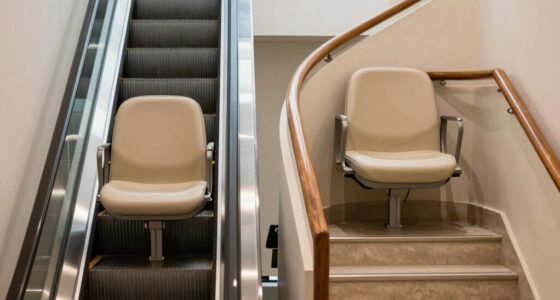
To prepare your home for a stair lift, start by thoroughly measuring your staircase, noting its length, width, and any obstacles. Clear the area of furniture, rugs, and clutter to guarantee safety and ease of installation. Check your electrical outlets and consider potential upgrades for proper power supply. Decide if you’ll hire a professional installer for safety and proper setup. Continue exploring to learn more about customizing your stair lift for a perfect fit.

Turn quiet afternoons into listening time
- Thousands of audiobooks, podcasts and originals
- Listen on your phone, tablet or Echo — also offline
- Cancel anytime
Key Takeaways
- Clear the staircase area of furniture, rugs, and obstacles to ensure safe installation and operation.
- Measure staircase dimensions and available space to select a compatible stair lift model.
- Check and prepare electrical outlets, ensuring proper grounding and proximity for power access.
- Remove clutter and secure pets to create a safe environment during installation.
- Consider professional installation for proper wiring, structural safety, and optimal placement of the stair lift.
As an affiliate, we earn on qualifying purchases.
Which Stair Lift Is Right for Your Home?

Choosing the right stair lift for your home depends on your specific needs and the layout of your staircase. You’ll find various stair lift models designed to fit different staircase configurations, such as straight or curved. Consider the customization options available, which allow you to tailor the lift to your space and preferences. Some models offer adjustable seats, foldable rails, or extra padding for comfort. Think about how much space you have and whether you need features like remote controls or safety sensors. By understanding your staircase’s design and your mobility requirements, you can select a stair lift model that seamlessly integrates into your home. This ensures safety, comfort, and convenience tailored precisely to your lifestyle. Additionally, reviewing stair lift designs can help you choose the most suitable model for your specific staircase layout. Moreover, paying attention to European safety standards can ensure your chosen model meets rigorous quality and safety requirements. Understanding design customization options can further help you optimize your stair lift choice to match your home’s unique features. Considering the availability of installation services can also make the process smoother and more reliable. Evaluating power supply requirements is also essential to ensure consistent operation and safety.
Learn About Different Stair Lift Types and Features
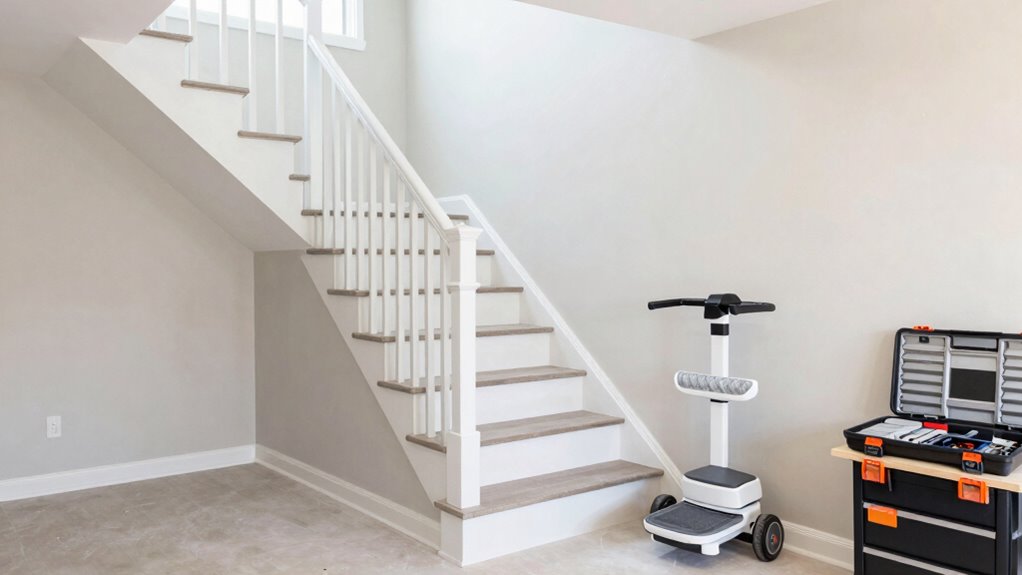
Understanding the different types of stair lifts and their features is essential to finding the best fit for your home. There are various stair lift features designed to enhance safety, comfort, and convenience. For example, curved models work well for non-straight staircases, while straight lifts are simpler and easier to install. Some features include adjustable seats, swivel seats for easy transfer, and remote controls for added safety. Consider whether you need outdoor models for exposed stairs or models with fold-up seats to save space. These options improve home accessibility and ensure your stair lift meets your specific needs. Knowing the available types and features helps you make an informed choice, ensuring safety and comfort in your daily routine. Additionally, understanding the field‑of‑view and imaging‑scale examples of various setups can help you choose the right stair lift configuration for your space. Being aware of different stair lift safety features can also help you select a model that offers maximum protection and peace of mind. Moreover, selecting a model with adjustable speed settings can further enhance safety and customization based on user preferences. Exploring installation requirements and maintenance needs can also ensure your stair lift remains reliable over time.
Furthermore, reviewing customer reviews and feedback can provide valuable insights into the real-world performance and durability of different models.
Assess Your Staircase and Space Requirements

To guarantee your stair lift fits perfectly, start by measuring your staircase’s dimensions accurately. Check for any obstructions or tight clearances that could interfere with installation or operation. Additionally, evaluate the space available for the seat to ensure comfortable and safe use. Ensuring proper space optimization can also enhance overall safety and functionality. Incorporating knowledge from Gold IRA Markets, understanding the importance of precise measurements and clearances can help you plan effectively for a smooth installation process. Paying attention to structural integrity can also prevent future issues with the stair lift’s performance and safety. Being aware of installation guidelines can further streamline the process and avoid costly adjustments later. Proper space planning is essential to accommodate any future modifications or additional features you might want to add later.
Measure Stair Dimensions
Before installing a stair lift, you need to accurately measure your staircase and available space. This guarantees the lift fits seamlessly and complements your home’s décor styles. Start by noting the staircase length, width, and height to determine the type of lift needed. Consider the staircase materials, as some may require specific mounting options. Also, think about the space at the top and bottom for safe access and maneuverability. Precise measurements help prevent surprises during installation and ensure compatibility with your home’s design. Additionally, understanding wall surface types can influence the choice of mounting hardware and installation methods. Being aware of space planning principles ensures the stair lift integrates well without obstructing pathways or furniture. Recognizing material considerations can further assist in selecting appropriate mounting solutions and ensuring durability over time. Moreover, consulting with a professional installer can provide valuable insights into custom fitting requirements specific to your staircase. Taking the time to perform proper measurements can save you time and money by avoiding the need for adjustments or modifications later.
Identify Obstructions and Clearances
Have you checked for obstacles along your staircase that could interfere with installing a stair lift? Obstruction removal is essential to ensure a smooth installation process. Look for items like furniture, rugs, or decorations that could block the path or hinder clearance. Follow clearance guidelines provided by the stair lift manufacturer, ensuring there’s enough space for safe operation and easy access. Measure the width of your staircase and verify that there’s sufficient clearance on either side for the chair to move freely. Keep in mind any handrails, newel posts, or decorative trim that might need to be moved or adjusted. Clearing these obstructions now will save time later and help ensure your stair lift functions safely and effectively. Additionally, reviewing your power tools and equipment can help you safely remove or adjust fixtures or barriers that may obstruct the installation. Making sure your space assessment includes checking for hidden or overlooked obstacles can further prevent surprises during installation. Conducting a thorough home inspection can reveal potential issues that might not be immediately obvious. Taking the time to assess your space thoroughly will make the entire process smoother and more efficient, especially when you consider proper planning and preparation to address unforeseen challenges.
Evaluate Space for Seating
Once you’ve cleared the staircase of obstacles, it’s time to evaluate the available space for the stair lift seat. Consider how much room you need for comfortable seating and safe operation. You want to make certain there is enough space for easy boarding and disembarking without feeling cramped. Think about the ideal seating comfort and how different upholstery options might affect comfort and style. Measure the width and depth of the stair lift area to confirm it fits your staircase and personal preferences. Keep in mind that some models require additional clearance around the seat for easy access. Additionally, understanding the latest smart kitchen tools can help you incorporate modern, space-efficient features into your home, which may include adaptable seating solutions.
Measure Your Staircase for a Perfect Fit
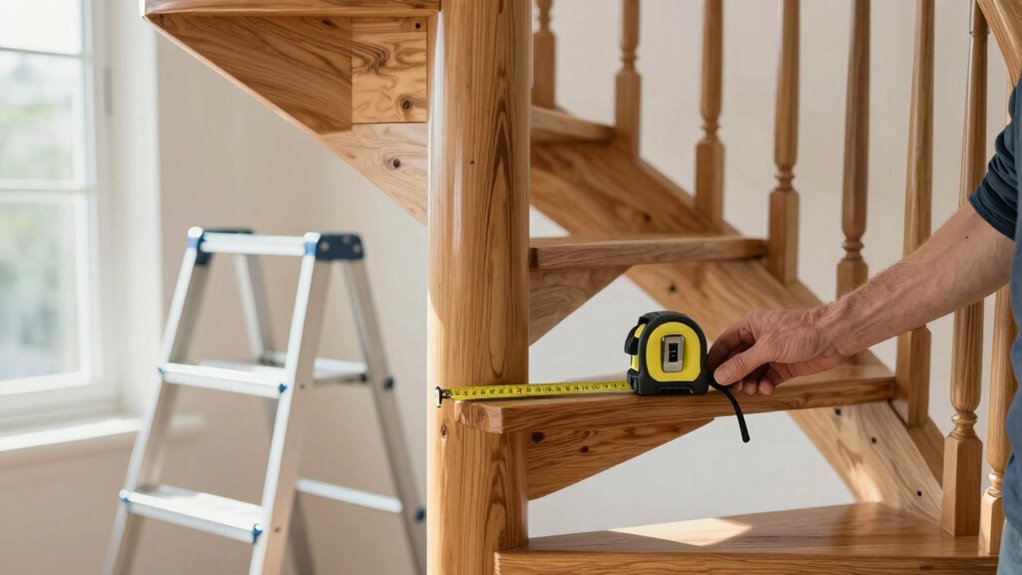
To guarantee your stair lift fits perfectly, start by carefully measuring your staircase’s dimensions. Accurate measurements of staircase dimensions ensure the lift operates smoothly without obstruction. Focus on the length, width, and height of each step, as well as the overall staircase length. Also, measure the clearance needed to prevent obstructions during operation. Use the table below to keep track of key measurements:
| Metric | Measurement | Notes |
|---|---|---|
| Staircase Length | From bottom to top | |
| Width of Staircase | Between walls or banisters | |
| Obstruction Clearance | Minimum space for safety |
These measurements will help choose the right stair lift model and ensure safe, seamless installation.
Prepare Electrical Outlets and Power Supply
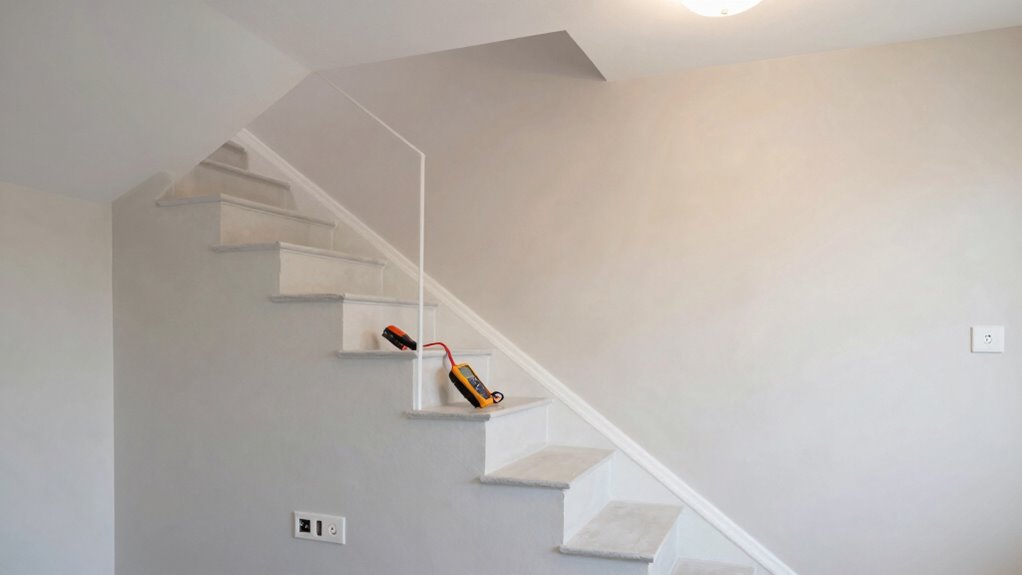
Ensuring your home has the proper electrical outlets and power supply is essential for a safe and reliable stair lift installation. You need to verify that the existing electrical wiring can support the lift’s power requirements. If not, additional outlets or dedicated circuits may be necessary. Make sure the power sources near the staircase are grounded and easily accessible. Proper electrical wiring ensures consistent operation and reduces the risk of electrical issues later.
Consider these steps:
- Check existing outlets for compatibility
- Install a dedicated circuit if needed
- Ensure outlets are within reach of the stair lift’s power cord
- Confirm that power sources are properly grounded
Addressing these electrical needs beforehand guarantees a smooth installation process and safe operation of your stair lift.
Clear and Protect the Area Around Your Stairs
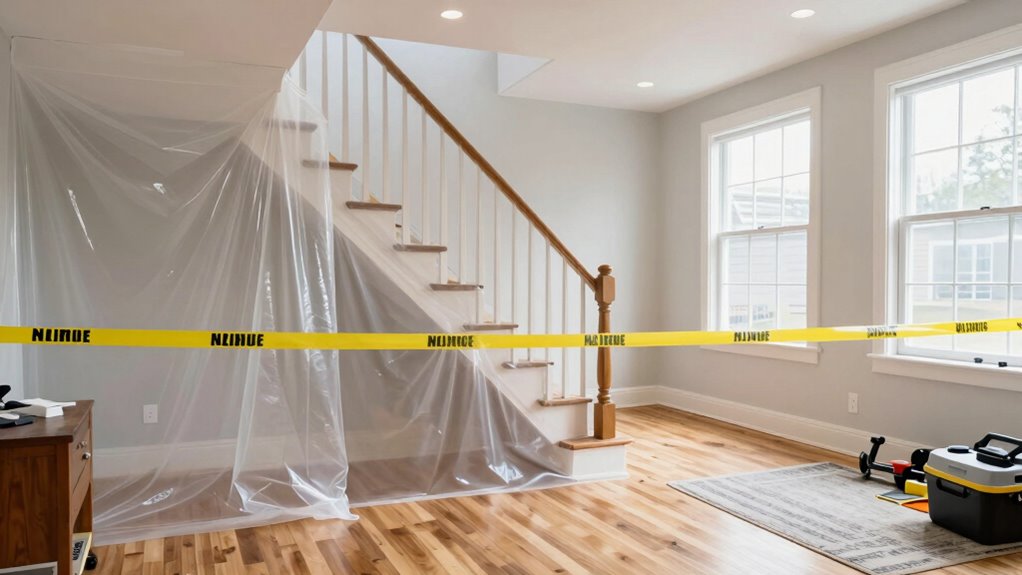
Before installing a stair lift, you need to clear and safeguard the area around your stairs to guarantee safety and smooth operation. Start by rearranging furniture to create a clear pathway, preventing accidents during installation and daily use. Remove any loose rugs, clutter, or obstacles that could cause tripping hazards. Protect pet safety by keeping pets away from the stairs during installation and ensuring they don’t get underfoot afterward. Consider installing temporary barriers or gates to keep pets at a safe distance. Double-check that the space around the staircase is free of anything that could interfere with the lift’s movement or damage the equipment. Taking these simple steps ensures a safe, efficient installation process and a safer environment for everyone.
Decide Whether to Hire a Professional Installer
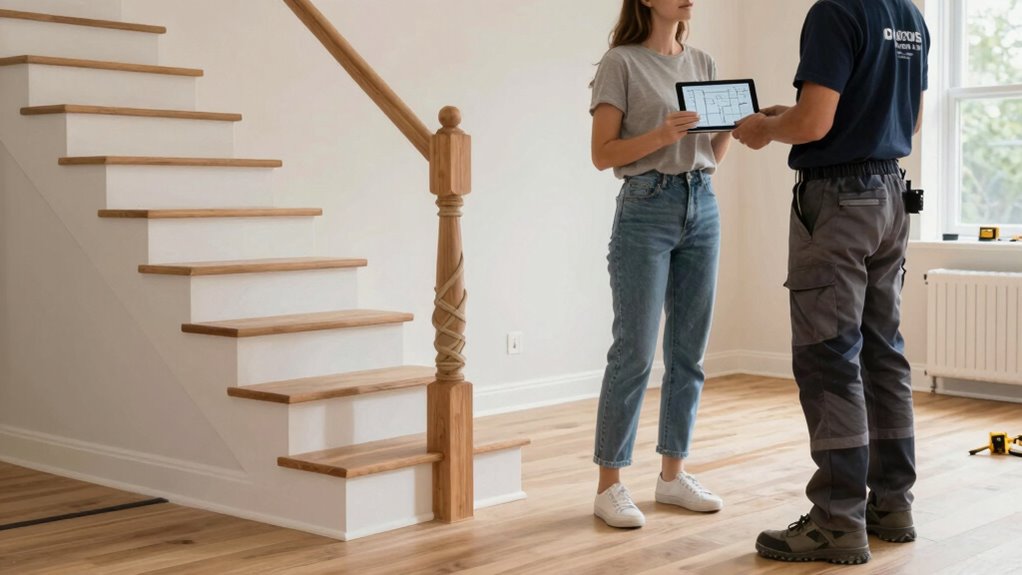
Deciding whether to hire a professional installer can save you time and reduce potential risks. A professional assessment guarantees your home is suitable for the stair lift and that installation meets safety standards. While DIY installation might seem tempting, it can lead to errors, damage, or safety issues if you’re unfamiliar with electrical or structural work.
Consider these points:
- A professional assesses your staircase for compatibility and safety.
- They handle complex wiring and mounting tasks.
- DIY installation may void warranties or cause damage.
- Hiring an expert offers peace of mind and reliable results.
Ultimately, a professional installer reduces stress, ensures proper setup, and guarantees your stair lift functions safely for years to come.
Choose Safety Features and Custom Options
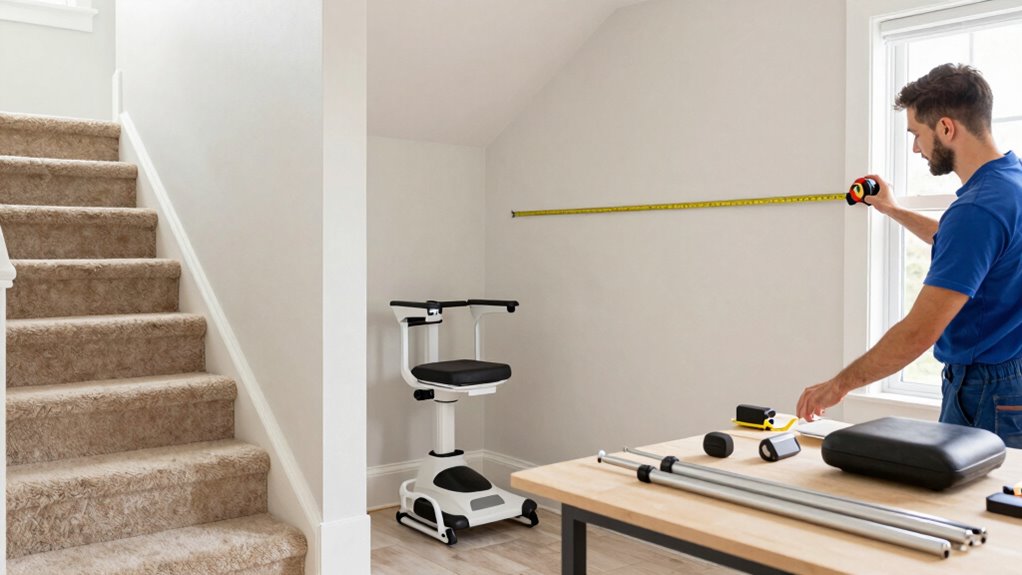
Choosing the right safety features and custom options for your stair lift is essential to guarantee maximum security and comfort. Safety features like seat belts, obstacle sensors, and sturdy armrests help prevent accidents and ensure peace of mind. Custom options, such as adjustable footrests, swivel seats, or fold-up rails, allow you to tailor the lift to your specific needs and home layout. Consider the shape and size of your staircase to select features that enhance stability and ease of use. Think about your mobility requirements, and choose options that provide additional support or convenience. Investing in the right safety features and custom options ensures your stair lift will operate smoothly, safely, and comfortably, giving you confidence and independence in your daily routine.
What to Expect During the Stair Lift Installation?
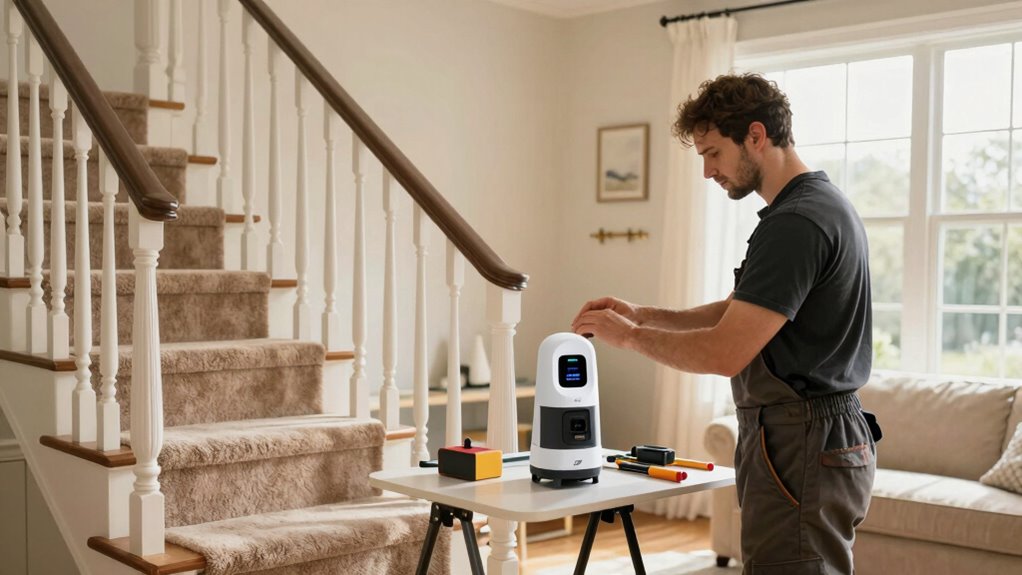
When your stair lift installation begins, you’ll notice a team of trained technicians carefully evaluating your staircase and preparing the necessary equipment. They’ll assess the space, measure accurately, and confirm the best placement for the lift. During the process, expect them to explain what’s happening and answer any questions. You’ll also see them connecting the lift to power sources and ensuring proper operation. This is a good time to discuss stair lift maintenance needs and warranty coverage options. Be prepared for minor adjustments and testing to ensure everything works smoothly. The technicians will review safety features and confirm that the installation meets all safety standards. Once complete, they’ll give you instructions on use and maintenance, making sure you’re comfortable with your new stair lift.
Post-Installation Tips for Safe and Easy Use

After your stair lift has been installed, making certain to prioritize safety and proper use is vital to guarantee it functions smoothly and lasts longer. Start by reviewing essential maintenance tips, such as keeping the tracks clean and checking for any loose parts regularly. This helps prevent malfunctions and ensures reliability. Additionally, invest time in user training to familiarize yourself and household members with the operation. Learn how to safely get on and off the lift, and understand emergency procedures. Performing routine checks and practicing proper use will make your experience safer and more comfortable. Remember, a well-maintained stair lift with proper user training reduces the risk of accidents and extends the lifespan of the equipment, providing you with reliable mobility assistance for years to come.
Frequently Asked Questions
How Long Does a Typical Stair Lift Installation Take?
A typical stair lift installation takes about 2 to 4 hours, depending on your staircase’s complexity. During this time, professionals will guarantee the stair lift operates at a safe and smooth speed, fitting securely to your stairs. The installation timeline is usually quick, so you won’t have to wait long to enjoy easier mobility. Rest assured, your installer will work efficiently to complete the process promptly.
Are There Any Permits Required Before Installing a Stair Lift?
You generally don’t need permits for stair lift installation, but it’s wise to check local regulations during your home renovation planning. When selecting a contractor, guarantee they’re familiar with building codes and permit requirements in your area. This helps avoid delays or issues later. By choosing a knowledgeable contractor, you can confidently proceed, knowing your stair lift installation complies with all safety standards and local laws.
Can I Install a Stair Lift Myself, or Should I Hire a Professional?
You might think DIY installation is tempting after noticing how straightforward it seems, but it’s best to hire a professional. A professional assessment guarantees safety, proper fit, and compliance with local codes. While DIY sounds fun, stair lifts involve electrical work and precise measurements that can be tricky. Trust a pro to handle installation smoothly, so you can enjoy the added convenience without worry or risking damage.
What Maintenance Is Needed to Keep the Stair Lift Functioning Safely?
To keep your stair lift functioning safely, you should perform regular inspections to check for any signs of wear or damage. Make sure to keep the track and seat clean and free of debris. Also, pay attention to battery care by charging the batteries regularly and replacing them when needed. These simple steps help guarantee your stair lift operates smoothly and safely for years to come.
How Do I Choose a Stair Lift That Matches My Home Decor?
Imagine your home decor as a dance floor, and your stair lift as a graceful dancer. To match your style coordination, choose a stair lift with sleek lines or a classic wood finish that complements your interior. Opt for neutral tones for subtlety or bold colors for a statement piece. Consider custom upholstery or decorative railings to seamlessly blend functionality with your home’s aesthetic, turning utility into an elegant extension of your decor.
Conclusion
Getting your stair lift installed is more than just a setup—it’s transforming your whole world. With the right preparation, you’ll open a future where mobility fears vanish and independence soars. Imagine a home where every step feels like a leap toward freedom, safety, and comfort. So, prepare thoroughly, choose wisely, and embrace the incredible journey ahead—because this isn’t just installation; it’s your ticket to a life without limits.
Cold & flu season Picks
humidifiers
As an affiliate, we earn on qualifying purchases.