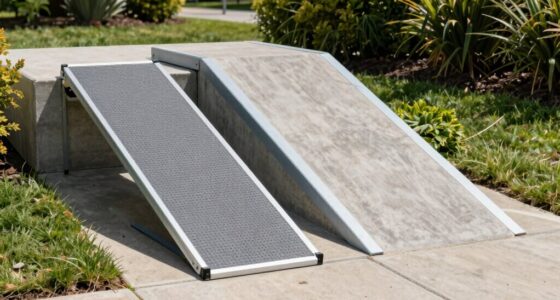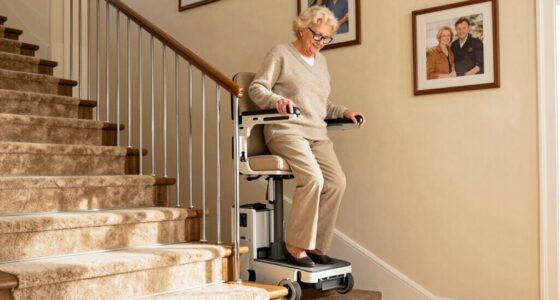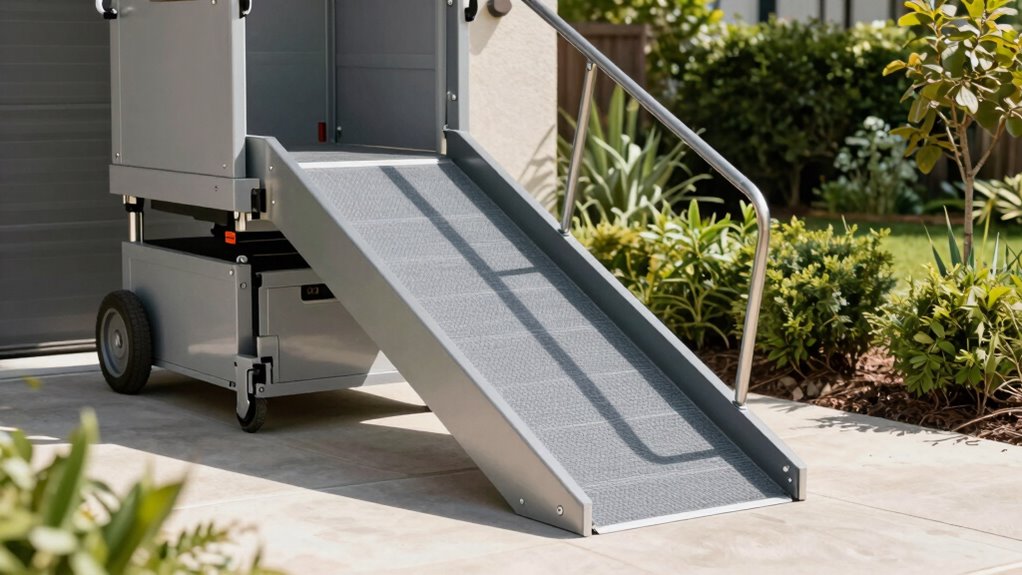

Deciding between a ramp and a lift depends on your space, budget, and mobility needs. Ramps are easier to install, affordable, and best for outdoor or gradual inclines, while lifts occupy less space and handle steeper areas, offering remote operation and safety features. Think about your home’s layout, long-term costs, and user comfort. If you want to learn more about making the right choice, keep exploring your options here.

Turn quiet afternoons into listening time
- Thousands of audiobooks, podcasts and originals
- Listen on your phone, tablet or Echo — also offline
- Cancel anytime
Key Takeaways
- Assess the steepness and length of the incline to determine if a ramp can safely accommodate the slope or if a lift is needed.
- Consider available space and structural support; ramps require more space, while lifts fit tighter or steeper areas.
- Evaluate user mobility needs and safety preferences, including transfer ease and emergency access requirements.
- Factor in installation time, maintenance, durability, and long-term costs to select the most practical solution.
- Match the device’s aesthetic and customization options with your home design for seamless integration.
As an affiliate, we earn on qualifying purchases.
Should You Choose a Ramp or a Lift? A Quick Guide

Deciding whether to install a ramp or a lift depends on your specific needs and space constraints. If you prioritize ease of use, consider a lift with remote operation, allowing you to control it from a distance, which is especially helpful for caregivers. Lifts also provide reliable emergency access, ensuring safe evacuation during power outages or emergencies. Ramps, on the other hand, are generally simpler and require less maintenance, but they may not be suitable for high or steep elevations. Think about how often the equipment will be used, the level of mobility needed, and available space. Additionally, consider the energy efficiency of each option to promote sustainable solutions. Both options have their advantages, but your decision should focus on safety, convenience, and your unique environment. Being aware of space requirements can help ensure the chosen solution fits well within your setting. Moreover, evaluating the installation process for each option can help determine the overall effort and time needed for setup. Considering the long-term costs associated with maintenance and operation can also influence your choice.
What Are the Main Differences Between Ramps and Lifts?
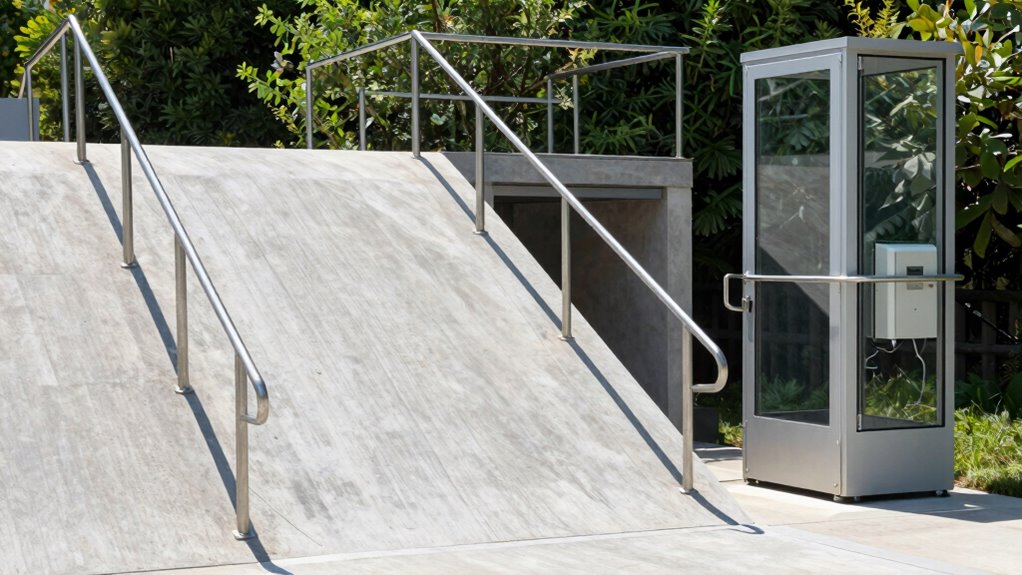
Choosing between a ramp and a lift involves understanding their core differences. Ramps are inclined surfaces that provide a gradual incline, making them simple and accessible for most mobility challenges. They’re typically easier to install and require less maintenance. Lifts, on the other hand, are mechanical devices that transport users vertically, ideal for steep or uneven spaces. They often accommodate a wider range of mobility challenges, including those with limited strength or balance. User preferences play a significant role, as some may prefer the simplicity of a ramp, while others need the convenience and safety features of a lift. Ramps suit outdoor or long-term installations, while lifts work better where space is limited or a more controlled environment is needed. Your choice depends on mobility needs and space constraints. Proper piercing care and hygiene are essential to maintain safety and longevity of installed features, especially in environments where accessibility is a concern. Additionally, understanding the Gold IRA markets can help investors diversify their portfolios with secure precious metal assets, which can be a strategic consideration alongside accessibility features in facility planning.
How Do You Assess Your Space and Layout for Accessibility?
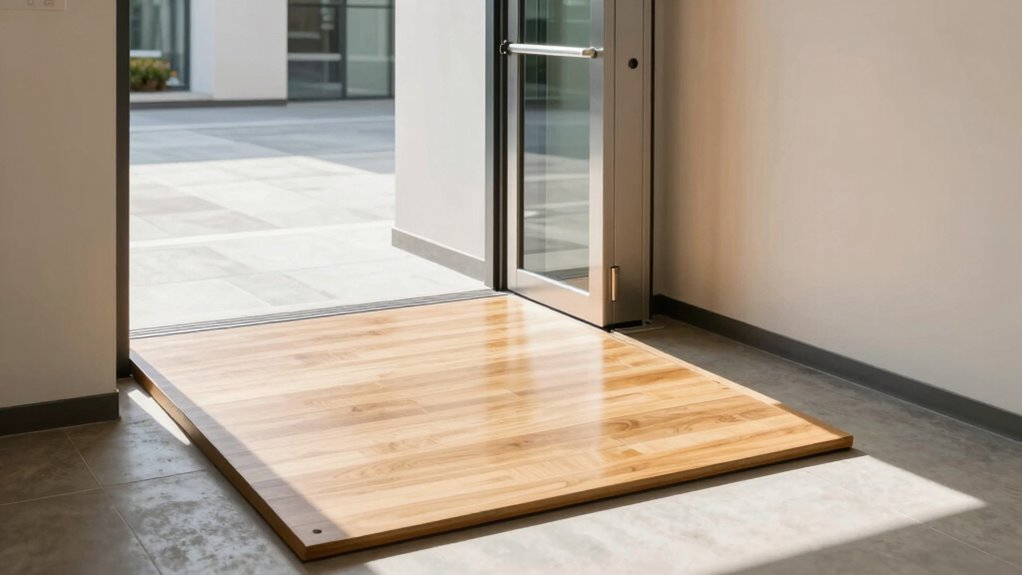
Start by measuring your available space to see if it can accommodate a ramp or lift comfortably. Check the structural support to verify it can handle the weight and stress of the chosen option. Assess whether your layout allows for smooth access without obstructing pathways or compromising safety. Additionally, consider building codes and regulations to ensure your modifications meet safety standards and legal requirements. Evaluating accessibility guidelines can help you make informed decisions that enhance safety and usability.
Space Availability and Dimensions
To effectively assess your space and layout for accessibility, begin by measuring the available area to determine whether it can accommodate a ramp or lift comfortably. Space constraints and dimension requirements are vital in this decision. Consider these key points:
- Identify the exact measurements of the area, noting any tight corners or narrow doorways that could hinder movement.
- Determine if there’s enough clearance for a ramp’s slope or a lift’s size, avoiding cramped or unsafe setups.
- Visualize the flow of traffic, ensuring that both the device and your space remain open and accessible at all times.
Structural Compatibility and Support
Before installing a ramp or lift, it’s vital to evaluate whether your space can support the device structurally. Check the existing support compatibility of your building’s foundation and flooring. For ramps, confirm the surface can withstand additional weight and pressure without shifting or sagging; you may need structural reinforcement to strengthen weak areas. Lifts require a solid, stable support platform to operate safely. Inspect load-bearing walls, floors, and entry points for any signs of damage or instability. If your space isn’t naturally supportive, consult a professional to assess whether reinforcement is feasible. Structural integrity ensures the device remains secure and safe, preventing accidents and costly repairs down the line. Reinforcing weak areas may involve structural modifications, which are essential for long-term safety and durability. Proper structural reinforcement ensures the device remains secure and safe, preventing accidents and costly repairs down the line. This step is essential for a long-lasting, effective accessibility solution. Additionally, consider building codes and regulations to ensure compliance with local safety standards and avoid potential legal issues. Conducting a thorough space assessment can help identify potential structural concerns early and facilitate effective planning.
What Is Your Budget for Accessibility Equipment? Long-Term Costs to Consider

Understanding your budget for accessibility equipment is essential because initial costs are just one part of the overall expense. A thorough cost analysis helps you plan effectively for long-term costs. Consider these factors:
- Maintenance and repairs that keep your equipment safe and functional over time.
- Energy costs or power requirements, especially for lifts or motorized ramps.
- Potential upgrades or replacements as needs evolve or technology advances.
- Selecting reliable backup power options can ensure your accessibility devices remain operational during outages or emergencies.
How Do You Determine Your Mobility Needs and User Capabilities?
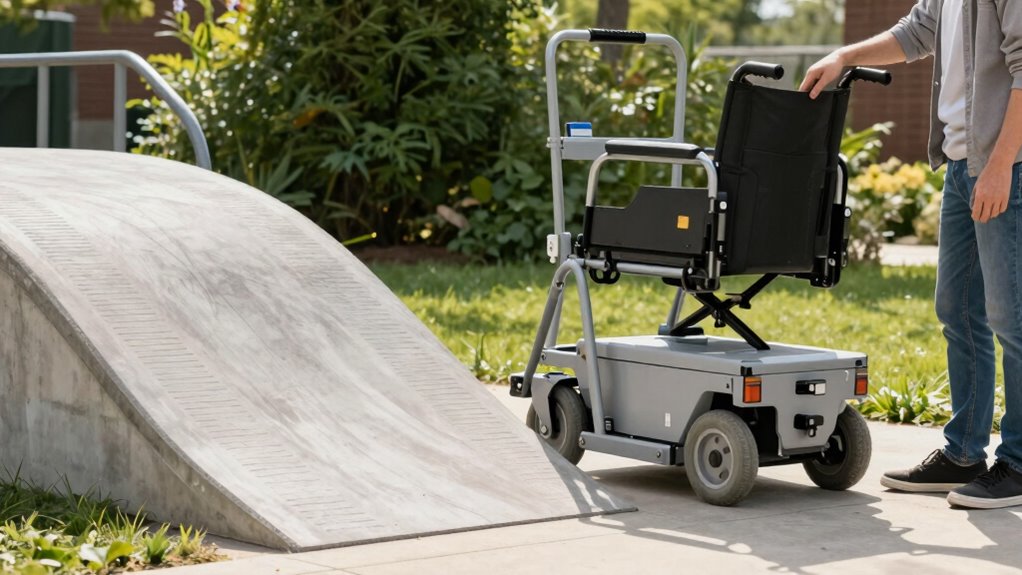
To choose the right accessibility solution, you need to understand your mobility limitations and what the user can handle. Assess their strength and balance to see what adjustments are necessary. This assessment can also include understanding net worth and financial independence, which may influence the type of equipment or modifications you can afford. This way, you can select equipment that best fits their specific needs and capabilities. Considering free floating principles can help create a seamless transition between different mobility aids and outdoor environments. Additionally, evaluating compact living constraints can ensure that the chosen solution integrates well into your living space without sacrificing functionality or style. Recognizing adaptive design features can further enhance safety and ease of use in various settings. Incorporating home safety & accessibility features can also support a safer and more comfortable environment for everyday use.
Assess Mobility Limitations
Evaluating your mobility limitations involves honestly appraising what tasks you can perform independently and where you need assistance. Understanding this helps you decide if a ramp or lift suits your needs best. Consider these factors:
- Are you able to transfer into a wheelchair comfortably, ensuring wheelchair compatibility with your home layout?
- Can you navigate your stair configuration safely, or do stairs pose a significant obstacle?
- Do you experience balance or strength issues that might require additional support during mobility tasks?
- Assessing your overall mobility limitations includes considering how home modifications can enhance safety and independence. Additionally, consulting with a professional evaluator can provide personalized recommendations based on your specific needs.
Evaluate User Strength and Balance
Evaluating your user strength and balance helps you determine whether a ramp or lift will meet your mobility needs. Conduct a balance assessment to see how well you can stand or walk steadily without support. If you have significant balance issues or limited user strength, a lift might be safer and easier to operate. For those with moderate strength and good balance, a ramp could suffice, providing a more accessible and cost-effective solution. Consider how much effort it takes to climb stairs or navigate uneven surfaces. Remember, your capabilities may change over time, so choose a solution that accommodates future mobility needs. Being honest with yourself about your user strength and stability ensures you select the safest, most effective option for your specific situation.
Which Safety, Maintenance, and Durability Factors Matter Most?
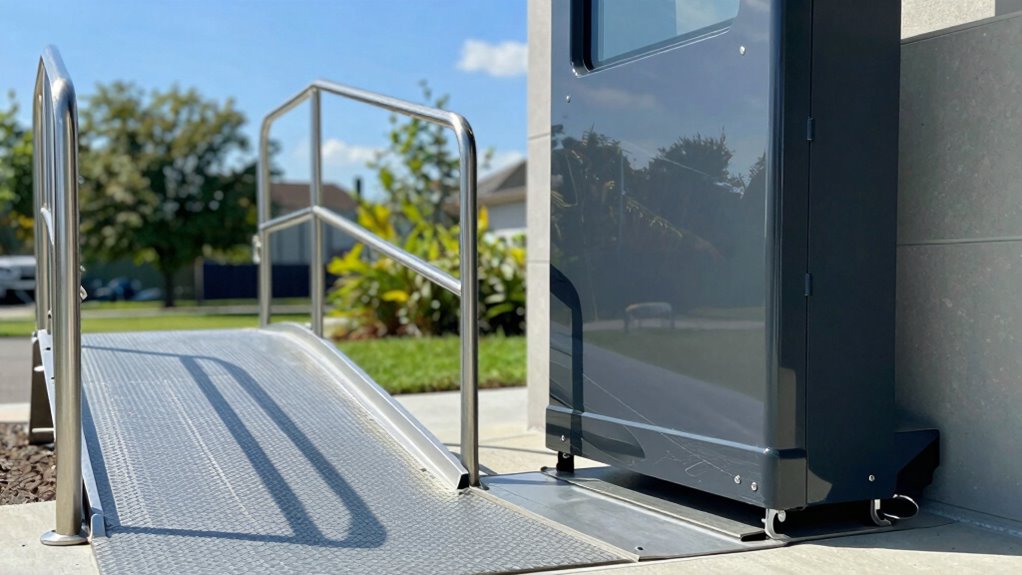
When choosing between a ramp or a lift, safety, maintenance, and durability are critical factors that can’t be overlooked. You need to prioritize safety standards to protect yourself and loved ones. Durability factors guarantee your investment withstands daily use and harsh conditions, providing peace of mind. Consider these key points: reliable connections and the importance of selecting equipment that maintains its integrity over time. Additionally, evaluate the equipment compatibility of your device with your existing infrastructure to ensure seamless integration. Proper load capacity assessment is essential to prevent overloading and ensure long-term performance. Furthermore, the inspection and certification of equipment can help identify potential issues before they become critical, ensuring ongoing safety and reliability. Regular maintenance routines are also vital to extend the lifespan of your equipment and prevent unexpected failures. Lastly, assess the ease of installation to avoid unnecessary delays and expenses.
Will Your Home’s Design and Aesthetic Influence Your Choice?
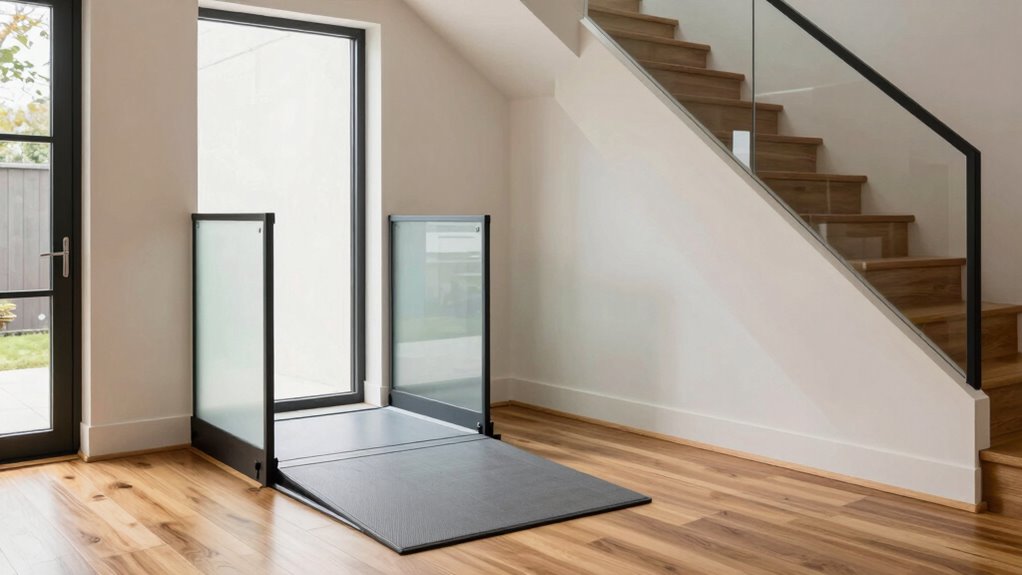
Your home’s design and aesthetic can considerably influence whether a ramp or lift fits better. Consider how each option aligns with your existing style and space, ensuring a seamless look. Thoughtful integration strategies can help you choose a solution that’s both functional and visually appealing.
Design Compatibility Considerations
Since your home’s design and aesthetic play a significant role in choosing between a ramp or lift, it’s important to contemplate how each option complements or contrasts with your existing décor. Consider how the material durability aligns with your home’s style—whether sleek metal for modern spaces or natural wood for cozy charm. Think about aesthetic harmony: will a discreet, low-profile ramp blend seamlessly, or does a lift’s sleek design suit your decor better?
- A ramp with a minimalist design might enhance your home’s flow without disrupting visual harmony.
- A stylish lift can serve as a statement piece, adding modern elegance.
- Choosing materials that echo your décor ensures your accessibility feature feels integrated rather than intrusive.
Aesthetic Integration Strategies
Choosing between a ramp and a lift isn’t just about functionality—it’s also about how well the feature blends with your home’s overall style. To achieve seamless integration, consider decorative accents that complement your existing decor. For example, a wooden ramp can be stained to match your flooring, or a sleek, modern lift can incorporate metallic finishes that echo your fixtures. Color coordination is key; select hues that harmonize with your walls and furniture, ensuring the addition doesn’t stand out awkwardly. You can also add subtle decorative details, like planters or lighting, to soften the appearance. The goal is to make your mobility aid feel like a natural part of your home’s aesthetic, enhancing both form and function without disrupting your design flow.
How Long Does Installation Take, and How Complex Is It?
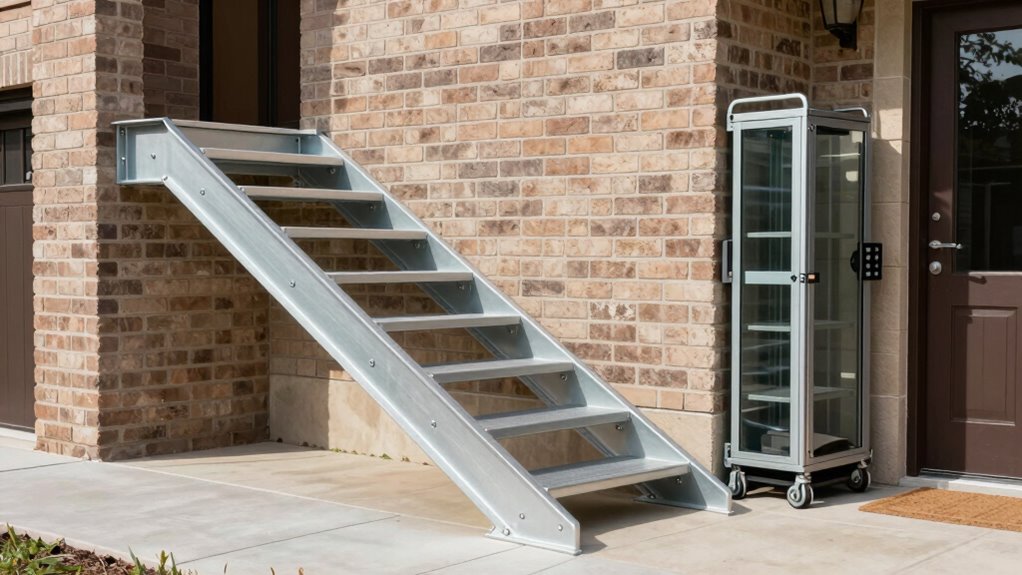
The time it takes to install a ramp or lift varies depending on the type and complexity of the system. Your installation timeline can be quick or lengthy, depending on several factors. Here’s what you might experience:
- A simple portable ramp could be set up in just a few hours, giving you immediate access.
- A custom-built lift with extensive modifications might take several days, requiring detailed planning.
- Complex installations involving structural changes can extend over a week, demanding careful coordination.
Understanding the complexity level helps set realistic expectations. Some installations are straightforward, while others require more time and effort. Be prepared for variations, and work with professionals who can accurately assess your needs and provide an accurate timeline.
What Accessibility Features and Customization Options Are Available?
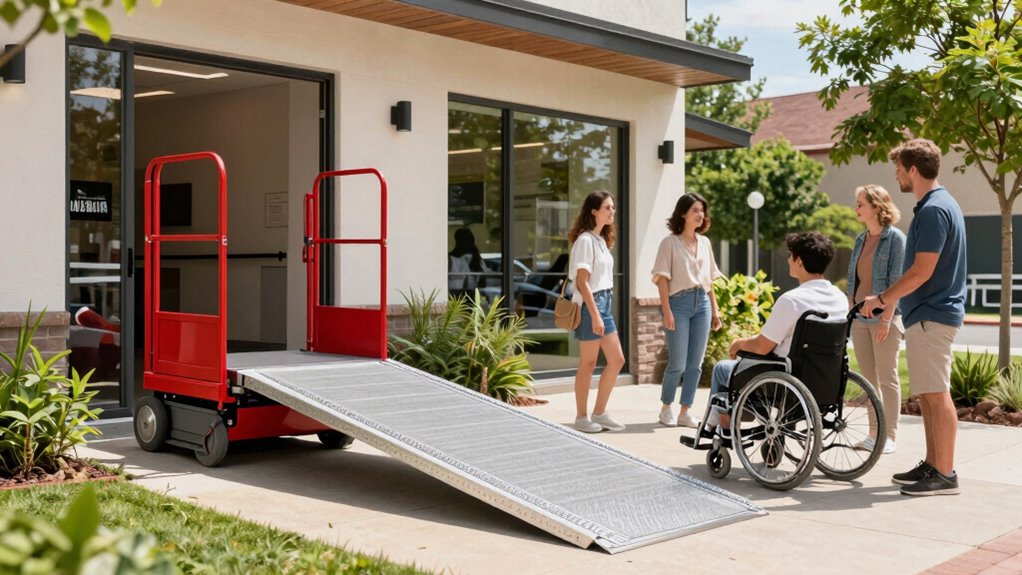
Accessibility features and customization options can greatly enhance your experience by tailoring the system to your specific needs. Many ramps and lifts offer a variety of accessibility features, such as adjustable heights, non-slip surfaces, and remote controls, making daily use safer and more convenient. Customization options might include personalized controls, voice activation, or seating adjustments to improve comfort and usability. Some systems also provide visual and auditory signals to assist users with sensory impairments. By exploring these features, you can select a solution that best fits your mobility requirements and lifestyle. Ensuring the system offers the right accessibility features and customization options helps you maintain independence and confidence in your daily routines.
Questions to Ask Before Making Your Final Decision

Before finalizing your decision, it’s important to ask the right questions to guarantee the system you select meets your needs. Consider how the choice impacts your home safety and legal compliance. Ask yourself:
Before choosing a system, ask key questions to ensure safety, compliance, and peace of mind.
- Will this system fit seamlessly into your home without creating hazards?
- Does it meet local building codes and accessibility laws?
- Will it provide reliable, long-term safety for everyone using it?
These questions ensure you’re not just choosing convenience but also prioritizing safety and legal standards. A well-informed decision reduces risks, avoids costly modifications later, and offers peace of mind. Remember, your choice should enhance safety and comply with regulations, so ask these questions before making your final call.
Frequently Asked Questions
What Are the Legal Requirements for Accessibility Equipment in My Area?
You need to check your local building codes and safety standards to determine legal requirements for accessibility equipment. These regulations specify which types of ramps or lifts are permitted, their dimensions, and safety features. Always guarantee your installation complies with these standards to avoid penalties and provide safe access. Contact your local building authority or accessibility agency for detailed guidelines tailored to your area.
Can Ramps or Lifts Be Installed Outdoors in All Weather Conditions?
You can install ramps or lifts outdoors, but weather durability varies. About 60% of outdoor accessibility equipment faces weather-related challenges, like snow or rain. Ramps are generally more vulnerable to installation challenges caused by uneven terrain or moisture, which can weaken materials over time. Lifts are designed with weather-resistant features, making them a better choice in harsh climates. Guarantee proper maintenance and choose equipment rated for outdoor use to maintain safety and durability.
How Do I Choose Between Manual and Powered Lifts?
You should choose manual lifts if you prefer a cost-effective, simple solution that requires no power source and suits lighter loads. However, if you need convenience, ease of use, and the ability to handle heavier or frequent loads, powered lifts are your best option. Powered lifts offer motorized operation, reducing physical effort, while manual lifts demand more strength but are more affordable and easier to maintain.
Are There Any Grants or Financial Assistance Options Available?
Yes, there are financial aid options available. In fact, over 60% of people with mobility challenges qualify for grant programs or financial assistance. You can explore local or federal grant programs designed to help cover costs for ramps and lifts. Many organizations, like the Department of Veterans Affairs or state health departments, offer financial aid. Check eligibility requirements and apply early to secure the support you need.
How Often Should Accessibility Equipment Be Inspected or Serviced?
You should inspect and service your accessibility equipment regularly, ideally following a set maintenance schedule. Typically, inspection frequency depends on usage, but performing a thorough check at least once every three to six months helps identify potential issues early. If your equipment sees heavy use or harsh conditions, consider more frequent inspections. Consistent maintenance guarantees safety, longevity, and reliable operation, giving you peace of mind and compliance with safety standards.
Conclusion
Choosing between a ramp and a lift might feel overwhelming, but with the right info, you’ll find the perfect solution faster than you can say “accessibility miracle.” Think about your space, budget, and needs—these factors are your guiding stars. Remember, this decision can transform your home into a haven of independence, making everyday life smoother than a well-oiled machine. Trust your instincts and create a space that’s truly built for you!
Halloween Picks
halloween
As an affiliate, we earn on qualifying purchases.