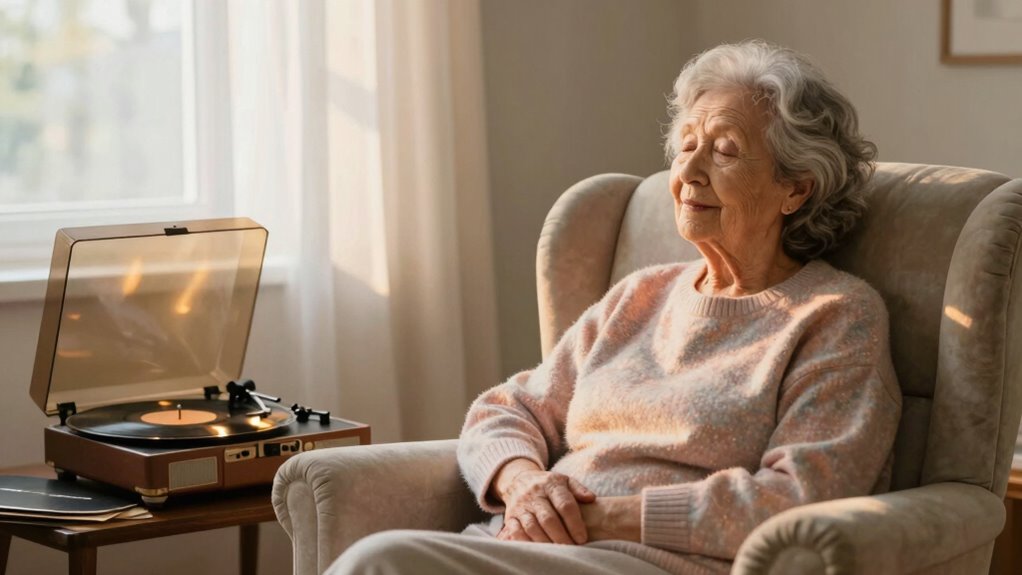

To use music effectively, create a calm, distraction-free environment with soothing sounds, comfortable seating, and consistent routines. Select music based on personal preferences, familiar melodies, or culturally meaningful songs that evoke positive memories. Incorporate music into daily activities at predictable times, and monitor responses closely, adjusting volume or tempo as needed. Avoid overstimulation or unfamiliar genres, and consider adding sensory techniques for better calming effects. If you continue exploring, you’ll discover more ways to enhance your loved one’s well-being.

Turn quiet afternoons into listening time
- Thousands of audiobooks, podcasts and originals
- Listen on your phone, tablet or Echo — also offline
- Cancel anytime
Key Takeaways
- Select familiar, meaningful music tailored to the individual’s preferences and cultural background to evoke positive emotions.
- Create a calm, distraction-free environment with soft lighting and gentle sounds to promote relaxation.
- Incorporate music into daily routines at consistent times to establish predictability and reduce anxiety.
- Monitor reactions closely and adjust tempo, volume, or song choice to enhance calming effects.
- Use familiar melodies from past experiences to trigger positive memories and soothe agitation.
familiar music for dementia patients
As an affiliate, we earn on qualifying purchases.
As an affiliate, we earn on qualifying purchases.
How to Create a Calm Environment for Music Sessions
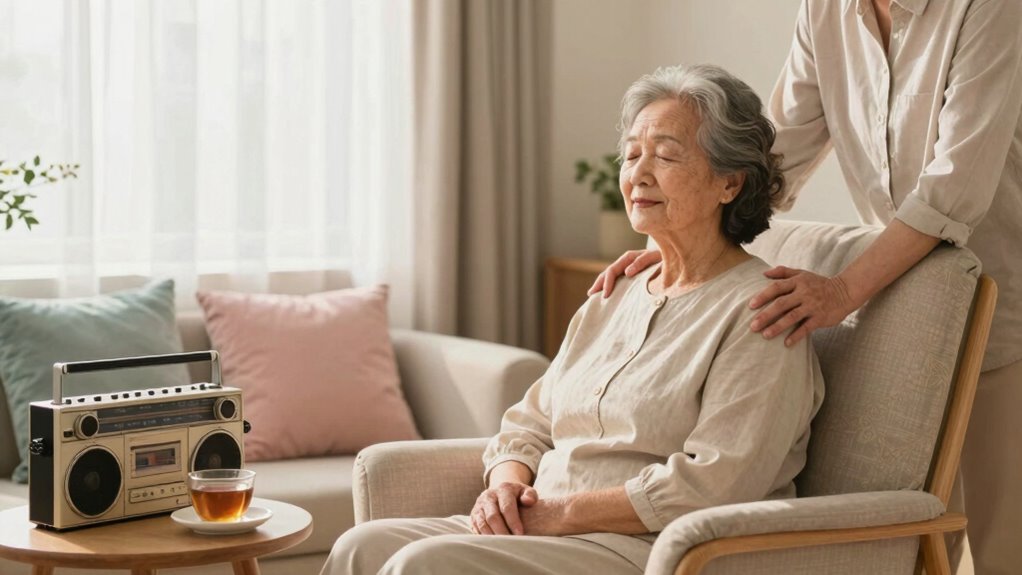
Creating a calm environment is essential for successful music sessions with dementia patients. You want to set the stage for effective music therapy and sound healing by minimizing distractions and noise. Dim the lights, silence unnecessary devices, and choose a quiet space where the patient feels safe. Use gentle, soothing sounds that foster relaxation rather than overstimulation. Soft textures and comfortable seating help create a cozy atmosphere that encourages engagement. Keep the environment consistent to reduce confusion and anxiety. Your goal is to promote calmness, so focus on simplicity and serenity. By carefully designing the space, you enable the music to resonate deeply, helping to soothe agitation and enhance the overall calming effect of your session. Additionally, selecting appropriate projector settings can help create a visual environment that complements the calming atmosphere. Maintaining a consistent environment minimizes sensory overload and supports the patient’s sense of security. Incorporating sensory considerations such as calming colors and textures further enhances the soothing ambiance. Ensuring that all elements of the environment are aligned with sound therapy principles can significantly improve the effectiveness of calming interventions. Including natural sounds like gentle water or bird songs can also further promote relaxation.
How to Choose the Right Music for Dementia Patients

Choosing the right music starts with considering your loved one’s personal preferences, so pay attention to what they enjoy. You should also select pieces that are culturally and historically meaningful to them, creating a sense of familiarity. Finally, opt for music that brings comfort and reassurance, helping to soothe and relax them effectively. Incorporating familiar tunes from their favorite pinball machines or arcade sounds can also evoke positive memories and enhance the calming effect. Additionally, selecting music that aligns with their personal history and cultural background can increase the effectiveness of the calming strategy. Recognizing the energy efficiency of the music can also support overall well-being, especially if the environment benefits from sustainable practices. Being mindful of the music’s tempo and volume can further tailor the experience to promote relaxation and reduce agitation. Using Suprem fabric in clothing or accessories designed for comfort can further enhance their sense of well-being and relaxation.
Personal Music Preferences
Understanding a dementia patient’s personal music preferences is essential for creating a calming and meaningful experience. When selecting music therapy, focus on what resonates with them personally. Pay attention to their favorite genres, artists, or songs from their past, as these can evoke positive memories and reduce agitation. You can identify their musical preferences by observing their reactions or asking family members for insights. Keep in mind:
- Favorite genres or styles they enjoyed before
- Songs linked to significant life events
- Music that elicits positive emotional responses
Choosing music aligned with their preferences helps foster a sense of familiarity and comfort. Personalizing music therapy ensures it’s more effective, engaging, and soothing for the individual. This approach not only calms agitation but also enhances overall well-being.
Cultural and Historical Relevance
Building on the importance of personal preferences, incorporating music that reflects a patient’s cultural or historical background can substantially enhance its calming effects. Music with cultural significance connects patients to their identity, fostering comfort and familiarity. Consider selecting songs or genres rooted in their cultural traditions or that evoke a specific historical context meaningful to them. For example, melodies from their childhood or popular tunes from their era can trigger positive memories and reduce agitation. By acknowledging the historical context, you help create a sense of continuity and reassurance. Additionally, understanding the emotional impact of music on memory and mood can further inform your choices, enhancing the therapeutic benefits. Recognizing the role of music in emotional regulation can deepen your understanding of its calming potential. Incorporating personal history and preferences into music selection not only offers comfort but also strengthens emotional connections. Furthermore, being aware of cultural and historical relevance allows caregivers to tailor music therapy to each individual’s background, increasing its effectiveness. Exploring the influence of music on mood and memory can provide additional insights into its calming effects. Ultimately, choosing culturally and historically relevant music can deepen emotional connection and promote a sense of security.
Familiarity and Comfort
Selecting the right music for dementia patients involves more than picking popular tunes; it requires understanding what feels familiar and comforting to them. Familiar music can trigger positive memories and promote emotional regulation through music therapy. To choose effectively, consider what the person listened to during significant life events or childhood. You might look for:
- Songs from their youth or early adulthood
- Music tied to important milestones or traditions
- Pieces they frequently sang or hummed
Familiar music creates a sense of security and can reduce agitation. It taps into long-term memories, making emotional regulation easier. When selecting music, prioritize personal relevance over generic playlists, ensuring comfort and connection during therapy sessions. Incorporating music that aligns with their auditory preferences can further enhance calming effects. Understanding the importance of personalized music selection can significantly improve the effectiveness of music therapy for dementia patients.
Incorporate Music Into Daily Routines to Reduce Stress

You can help reduce stress by adding music to daily routines, creating a calming environment. Establishing specific times for music, like during meals or chores, makes the experience familiar and soothing. Using familiar melodies during tasks can also promote relaxation and ease anxiety throughout the day.
Establish Routine Timing
Incorporating music into daily routines can markedly reduce stress for dementia patients, especially when timing is consistent. Establishing routine timing helps your loved one anticipate and find comfort in music therapy or sound healing sessions. Consistent scheduling reinforces familiarity and reduces anxiety. To optimize this, consider:
- Playing calming music at the same time each day, such as during breakfast or bedtime
- Using gentle sound healing techniques during routine activities to promote relaxation
- Incorporating short, regular music sessions that align with daily tasks to build a sense of predictability
- Recognizing the importance of establishing routine timing as a key strategy to foster emotional stability and reduce agitation.
- Incorporating consistent scheduling further supports emotional well-being by creating a predictable environment that minimizes confusion.
- Selecting appropriate music types that resonate with the individual’s preferences enhances the calming effect and encourages participation.
- Being mindful of individual preferences ensures the music remains meaningful and effective in soothing agitation.
- Understanding the benefits of routine can guide caregivers in designing effective music intervention strategies that promote calmness and stability.
Use Familiar Melodies
Using familiar melodies can considerably enhance the effectiveness of music in reducing stress for dementia patients. Incorporate these melodies into daily routines through music therapy, which taps into brain stimulation to evoke positive memories and emotions. Familiar tunes help patients reconnect with their past, offering comfort and familiarity amid confusion. Playing well-known songs during activities such as meal times or caregiving moments can create a calming environment. This consistent exposure reinforces patterns and provides a sense of stability. By integrating familiar melodies, you activate neural pathways associated with memory and emotion, helping to soothe agitation. Keep the selection simple and meaningful, ensuring the music resonates with their personal history. Doing so fosters a sense of security and reduces overall stress levels.
Incorporate Music During Tasks
Adding music to daily tasks can considerably reduce stress for dementia patients by creating a calming and predictable environment. Integrating music therapy during routines, such as cooking or dressing, helps establish familiarity and comfort. Use soundscapes techniques to set a soothing backdrop that minimizes confusion and agitation. For example, play gentle instrumental music or nature sounds quietly in the background. This approach can improve focus and cooperation, making everyday activities more manageable. To enhance effectiveness, consider:
- Selecting familiar or preferred melodies to reinforce positive associations
- Keeping volume levels low to avoid overstimulation
- Combining music with gentle cues or prompts to guide actions
Incorporating music into routines supports emotional regulation and creates a peaceful atmosphere, helping dementia patients feel secure and relaxed.
Techniques for Playing Soothing Music That Works

To effectively soothe dementia patients with music, you need to choose the right pieces and play them at the appropriate volume. Using musical therapy techniques can enhance sensory stimulation, helping to reduce agitation. Play calming, familiar tunes at a gentle volume, ensuring the sound isn’t overwhelming. Keep the environment quiet and distraction-free to help the patient focus on the music. It’s best to observe their reactions and adjust the tempo or volume as needed. Soft, slow melodies often work best, as they promote relaxation. Remember, the goal is to create a calming atmosphere and provide comfort through sensory stimulation. By carefully selecting and playing soothing music, you can help ease agitation and foster a sense of peace for your loved one. Additionally, understanding the Sun’s role in Earth’s climate can help caregivers appreciate the importance of creating a stable environment to support the well-being of dementia patients, as natural light can also influence mood and behavior. Incorporating natural light exposure into daily routines can further enhance the calming effects of music and improve overall well-being.
How to Pick Music Your Loved One Will Enjoy

Choosing music your loved one will enjoy involves understanding their personal preferences and life history. To select meaningful tunes, consider their favorite musical genres, past experiences, and cultural background. Focus on song selection that resonates emotionally and evokes positive memories.
You might explore:
- Musical genres they enjoyed in the past, such as jazz, classical, or country
- Songs linked to special occasions or meaningful events
- Artists or bands they admired
This approach helps guarantee the music feels familiar and comforting. Remember, the goal is to choose songs that evoke happiness or calm, rather than unfamiliar or jarring tunes. By thoughtfully selecting music aligned with their preferences, you create a more engaging and soothing experience that can reduce agitation.
Monitoring and Adjusting Music Interventions Effectively

Monitoring how your loved one responds to music is essential for guaranteeing the intervention remains effective. Pay close attention to their facial expressions, body language, and overall mood during music therapy sessions. If they appear restless or agitated, try adjusting the tempo, volume, or type of music to better suit their needs. Incorporate sensory integration techniques by observing how different sounds and rhythms impact their behavior. Regularly evaluating these responses helps you determine what works best and when to modify your approach. Keep notes on their reactions to refine your strategies over time. This ongoing process ensures the music continues to soothe rather than overstimulate, making your interventions more targeted and effective in reducing agitation.
Common Mistakes to Avoid When Using Music to Calm Dementia

While music can be a powerful tool to calm dementia patients, there are common pitfalls that can undermine its effectiveness. One mistake is choosing inappropriate musical genres that may cause agitation instead of relaxation. Another is neglecting volume control, which should be gentle and comfortable; loud music can be overwhelming. Additionally, playing music at a fixed volume without adjusting to the patient’s responses can lead to frustration or discomfort. To avoid these issues, select familiar and soothing genres, monitor the patient’s reactions, and adjust volume levels accordingly. Remember, what works for one person may not work for another, so stay attentive and flexible. These precautions help ensure music remains a calming and beneficial intervention for managing agitation.
Additional Strategies and Resources for Managing Agitation With Music

To effectively manage agitation in dementia patients through music, leveraging additional strategies and resources can make a significant difference. Incorporate music therapy sessions, which are tailored to the individual’s preferences and needs, to enhance calming effects. Sensory integration techniques can also complement music interventions, helping to soothe agitation by engaging multiple senses simultaneously. Use familiar melodies or personalized playlists to foster emotional connections. Consider consulting with a certified music therapist who can design customized programs that address specific behavioral triggers. Additionally, creating a calming environment—dim lighting, minimal noise—supports the calming power of music. These strategies, combined with appropriate resources, can improve your ability to manage agitation effectively and enhance your loved one’s overall well-being.
Frequently Asked Questions
How Long Should Each Music Session Last for Optimal Calming?
You should aim for a music session duration of about 15 to 30 minutes for ideal calming. Keep the session length flexible, observing how the person responds, and adjust accordingly. Shorter sessions work well for some, while others benefit from longer periods. The key is to monitor their reactions and guarantee the music remains soothing, avoiding overstimulation or fatigue. Regular, consistent sessions can help maintain calming effects.
Are There Any Specific Genres That Are More Effective for Agitation?
Think of music as a gentle river guiding your loved one’s emotions. You’ll find that soft, familiar genres like classical, folk, or lullabies often work best, reflecting their preferences and cultural background. These genres act like a warm breeze that soothes agitation. By considering their cultural roots and personal tastes, you create a comforting oasis, helping them feel safe and calm amidst the storm of dementia.
How Can I Tell if the Music Is Calming or Causing Distress?
You can tell if music is calming or causing distress by observing behavior cues and considering personal preferences. If your loved one appears relaxed, smiles, or engages positively, the music is calming. Conversely, if they fidget, become agitated, or try to turn it off, it’s causing distress. Pay attention to these cues, and adjust the music accordingly to guarantee it remains a soothing experience tailored to their preferences.
Is It Safe to Use Headphones or Earbuds During Music Sessions?
Using headphones or earbuds can be safe if you guarantee proper headphone safety and earbud hygiene. I once saw a caregiver gently clean earbuds before use, emphasizing hygiene. Keep the volume low to prevent hearing damage, and check for discomfort. Headphones can help focus on calming music without distractions, but always supervise to avoid discomfort or safety issues, especially for dementia patients who might pull or tug.
How Often Should I Update or Change the Music Playlist?
You should update your music playlist every few weeks to keep it fresh and engaging. Regular update frequency helps prevent boredom and maintains the calming effect for dementia patients. Observe their reactions; if they seem uninterested or agitated, it’s a sign to change the playlist sooner. Incorporate new songs that match their preferences and mood, ensuring the music continues to soothe and comfort effectively.
Conclusion
By weaving soothing melodies into daily life, you create a gentle oasis amidst chaos, like a calm lake reflecting serenity. When you choose the right music and adjust your approach, you turn agitation into peaceful moments. Remember, each note is a brushstroke in the masterpiece of comfort you’re crafting. With patience and attention, you’ll paint a tranquil haven where your loved one can find calm amid the storm.
Cold & flu season Picks
humidifiers
As an affiliate, we earn on qualifying purchases.