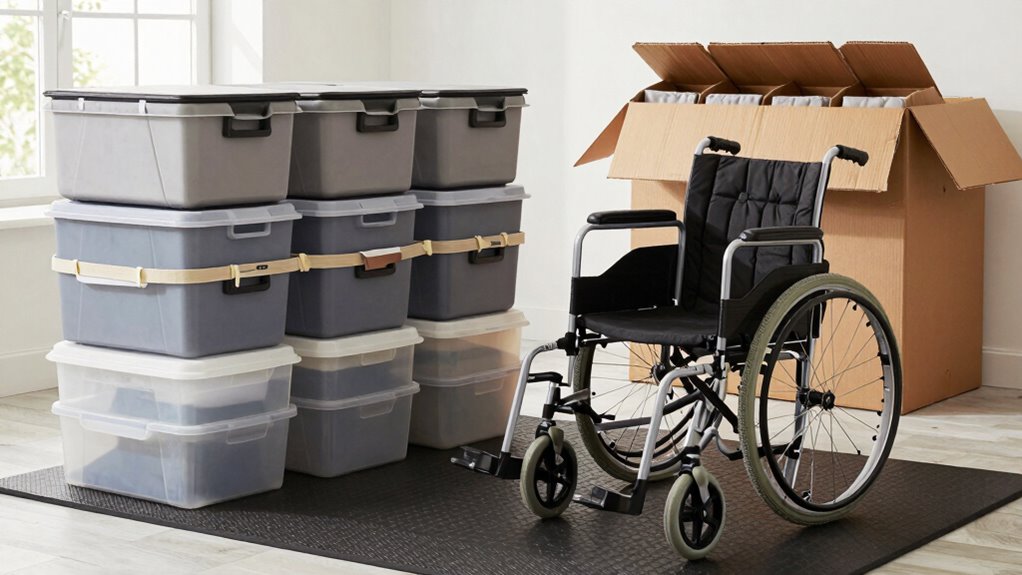

To store and transport bulky home care equipment safely, first assess its space needs and measure it accurately. Choose storage solutions like sturdy containers with padding and ventilation, and keep items organized with clear labels. Before moving, clean and secure fragile parts, disassemble when possible, and document their condition. Use appropriate padding and protective straps during transit. For more tips on handling these large devices, you’ll find helpful strategies to make the process smoother.

Turn quiet afternoons into listening time
- Thousands of audiobooks, podcasts and originals
- Listen on your phone, tablet or Echo — also offline
- Cancel anytime
Key Takeaways
- Measure equipment dimensions and weight to select appropriate storage containers and transportation methods.
- Clean and secure fragile parts with padding, disassemble removable components, and label for easy handling.
- Choose well-ventilated, accessible storage spaces that protect devices from moisture and damage.
- Use sturdy, padded containers or crates and secure all moving parts during transit to prevent shifting or breakage.
- Document equipment condition, verify insurance coverage, and handle with care to ensure safe storage and transport.
sturdy padded storage containers for medical equipment
As an affiliate, we earn on qualifying purchases.
As an affiliate, we earn on qualifying purchases.
Assess Your Equipment’s Storage Needs and Space Requirements
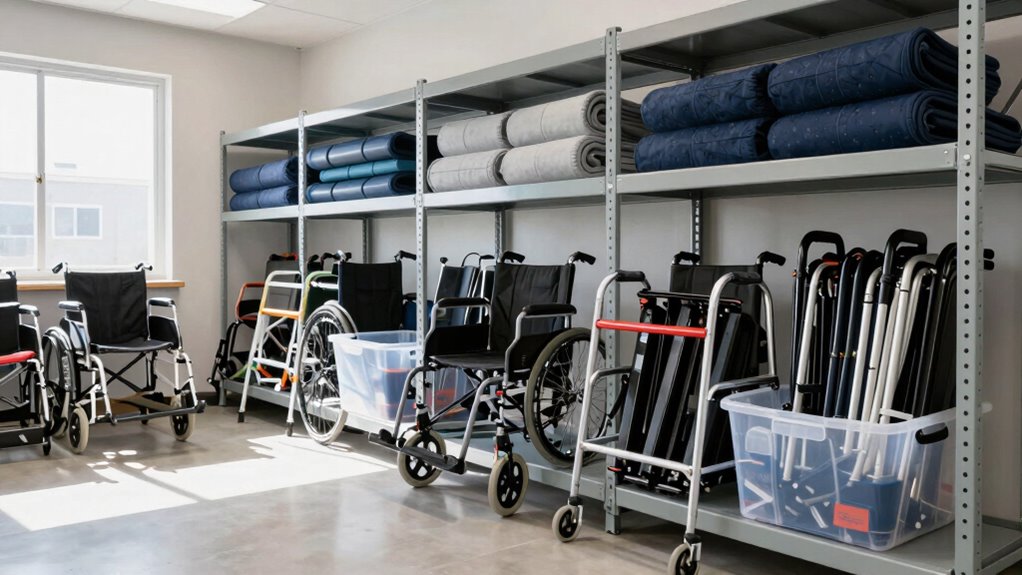
Before storing or transporting your home care equipment, you need to determine its specific storage needs and the space it requires. Evaluate each item’s size, weight, and delicacy to guarantee proper storage organization. Measure the equipment accurately to understand how much space it will occupy, preventing overcrowding. Consider whether items need to be stored vertically or horizontally to optimize space and accessibility. Think about temperature and humidity conditions to protect sensitive devices. Doing this initial assessment helps you plan effectively, ensuring that your storage area is well-organized and space is used efficiently. Proper evaluation minimizes the risk of damage and makes future retrieval easier, ultimately supporting smooth storage and transport of your home care equipment. Additionally, understanding the size and horsepower of electric bikes can help you determine if your vehicle can handle transporting bulky equipment securely. Recognizing pinball machine weights is also useful when planning for safe transportation and storage solutions for larger, heavier items. Being aware of power tool dimensions can further assist in organizing your storage space efficiently and safely. Moreover, considering the sound vibrations involved in certain storage environments can help preserve sensitive electronic components. Incorporating appropriate ventilation considerations can further safeguard electronic devices from overheating or moisture buildup.
Choose the Best Storage Solutions for Your Home Care Devices
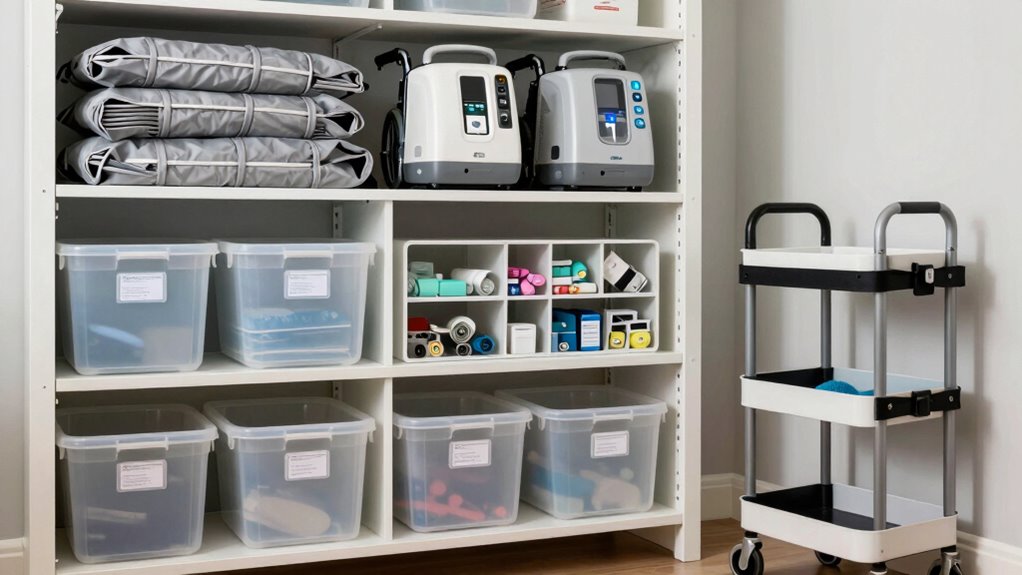
To find the best storage solutions, start by evaluating how much space your home care devices need and where they’ll fit best. Choose containers that protect your equipment while allowing easy access when you need it. Making sure your devices are accessible will help you stay organized and ready for use whenever necessary. Incorporating smart storage solutions can further optimize organization through automation and connectivity. Additionally, considering simple and functional systems can make maintenance easier and ensure your storage remains clutter-free over time. Ensuring your storage options also promote adequate ventilation can help prevent mold and damage to sensitive equipment. Exploring custom storage options designed specifically for your devices can maximize space efficiency and protection. Implementing proper labeling can also speed up retrieval and reduce wear and tear on your equipment over time.
Assess Storage Space Needs
Evaluating your storage space needs is a crucial first step in choosing the right solutions for your home care devices. Start by measuring available areas to determine how much space you can allocate. Consider whether a dedicated storage unit, such as a closet, garage, or spare room, can accommodate your equipment comfortably. Think about organization systems that help maximize space and keep items accessible. Clear pathways and designated zones prevent clutter and make retrieval easier. If your devices are bulky, you might need to reassess your layout or consider vertical storage options. Incorporating storage organization strategies can further optimize your space utilization and improve overall accessibility, especially when dealing with bulky equipment that requires thoughtful planning. Additionally, understanding your storage capacity allows you to select solutions that prevent overcrowding and damage to your devices. Exploring innovative storage solutions can also provide new ways to utilize limited space effectively. Proper planning and the right storage solutions ensure your home remains organized and your devices are protected.
Select Appropriate Container Types
Choosing the right containers is essential to protecting your home care equipment and keeping it organized. Your selection depends on the size, weight, and frequency of use of your devices. Storage bins are versatile container options that help categorize and safeguard bulky items. Consider sturdy plastic bins with lids for durability and dust protection. Clear containers allow easy identification of contents, saving time. For larger equipment, heavy-duty storage boxes or carts can provide mobility and support. Use labels to mark each container’s contents clearly. Additionally, selecting containers with ventilation features can help prevent moisture buildup and prolong the lifespan of your devices. Proper storage organization can also make your routine maintenance easier and more efficient. Incorporating protective padding inside containers can further prevent damage during storage or transport. Being mindful of climate control is also important to prevent damage from humidity or temperature fluctuations. Proper ventilation not only helps maintain optimal conditions but also reduces the risk of mold or mildew formation inside storage containers. Here’s a quick guide:
| Container Type | Ideal Use |
|---|---|
| Plastic Bins | Small to medium devices |
| Storage Boxes | Heavy, bulky equipment |
| Wheeled Carts | Easy transport and access |
| Clear Containers | Quick identification |
| Stackable Bins | Maximize storage space |
Selecting suitable container options ensures your home care devices stay safe and organized.
Ensure Device Accessibility
Making sure your home care devices are easily accessible is essential for both safety and convenience. Proper device labeling helps you quickly identify each piece of equipment, reducing the risk of misuse or accidents. Use clear, visible labels on storage containers or shelves, indicating the device’s purpose and any special handling instructions. Accessibility signage can also guide family members or caregivers, pointing out where equipment is stored or how to operate it safely. Arrange devices in designated areas that are easy to reach, avoiding clutter or high shelves. Regularly update labels and signage to reflect any changes. Additionally, storage organization techniques can optimize space and ensure that frequently used devices are always within easy reach. Incorporating space-saving solutions can further enhance accessibility and reduce clutter. By prioritizing accessibility, you ensure that your home care devices are always ready for use when needed, promoting safety and efficient care.
Prepare Your Equipment to Prevent Damage During Storage and Transport
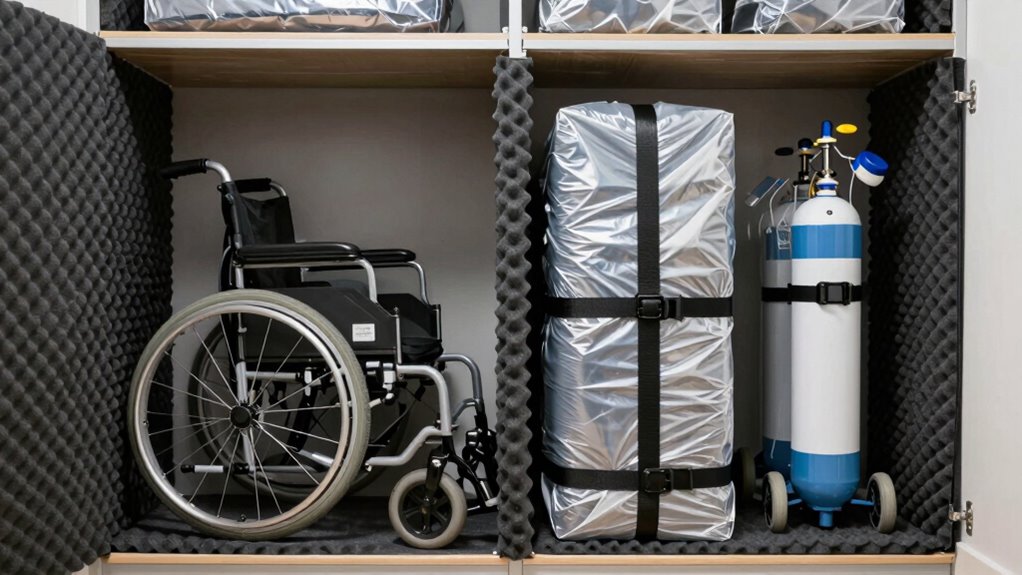
Before storing or transporting your equipment, make sure to clean it thoroughly to remove dirt and debris. Use proper padding materials to protect fragile parts, and secure any moving components to prevent damage. Taking these steps helps guarantee your equipment stays in good condition during storage and transit. Additionally, consider the storage costs and insurance associated with your equipment to ensure comprehensive protection. Being aware of proper storage practices can further minimize the risk of damage and extend your equipment’s lifespan. Incorporating seasonal maintenance checks can also help identify potential issues before they worsen, preserving your equipment’s performance over time. Employing natural materials for padding can enhance protection while remaining environmentally friendly.
Clean Equipment Thoroughly
To prevent damage during storage and transport, it’s essential to thoroughly clean your home care equipment. Follow proper cleaning routines to remove dirt, dust, and debris that could cause deterioration or malfunction. Use appropriate disinfectant options to eliminate germs and bacteria, ensuring the equipment remains hygienic for future use. Carefully wipe down all surfaces, paying attention to crevices and hard-to-reach areas. Avoid using harsh chemicals that might damage sensitive components. Dry the equipment completely to prevent rust or corrosion, especially on metal parts. Proper cleaning not only maintains the equipment’s condition but also reduces the risk of contamination. By taking these steps, you’ll help ensure your equipment stays in good shape during storage and transport, ready for safe use when needed.
Use Proper Padding Materials
Using proper padding materials is essential to protect your equipment from damage during storage and transport. Protective padding absorbs shocks and prevents scratches or dents. Choose padding materials like foam, bubble wrap, or moving blankets that suit the item’s fragility. Wrap each component carefully, especially delicate parts, ensuring full coverage. Secure the padding with tape or straps to keep it in place. Here’s a quick overview:
| Padding Material | Best Use | Benefits |
|---|---|---|
| Foam Sheets | Large, flat surfaces | Cushions impact |
| Bubble Wrap | Small, fragile parts | Absorbs shocks |
| Moving Blankets | Heavy or bulky items | Protects against scratches |
| Packing Peanuts | Loose, irregular shapes | Filling gaps |
| Corrugated Board | Edges and corners | Reinforces protection |
Proper protective padding minimizes damage risk during handling.
Secure Moving Parts
Securing moving parts is essential to prevent damage during storage and transport. Start by engaging the locking mechanisms on your equipment’s moving parts, such as adjustable arms or wheels. These mechanisms keep components from shifting or collapsing, reducing the risk of breakage. If your equipment has locks or latches, double-check that they’re fully engaged before moving. Wrap loose or sensitive moving parts with padding to add extra protection. For parts that can be detached, remove and store them separately in labeled containers. Always ensure that all moving parts are stabilized and secured to avoid jostling or impact damage during transit. Properly locking and securing these components helps maintain your equipment’s integrity and prolongs its lifespan.
Pack and Secure Your Equipment for Safe Moving
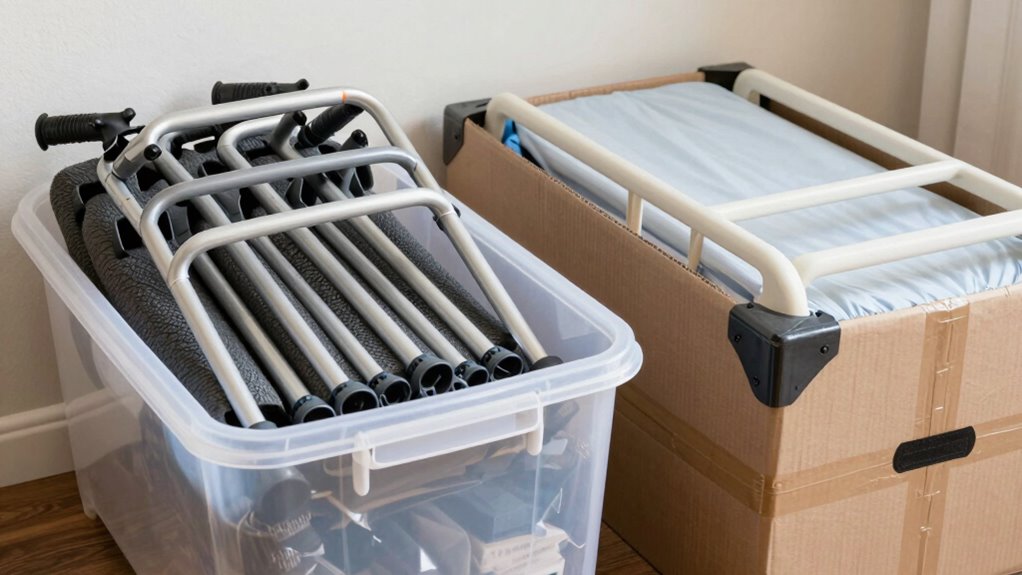
Before you start packing, make sure you have the right supplies, such as sturdy boxes, packing tape, and padding materials. Carefully disassemble any removable parts, and secure them separately. Use padding to protect fragile components and prevent damage during transit. Label each box clearly, focusing on labeling accuracy to avoid confusion. Include handling instructions and specify if climate control is necessary, especially if your equipment is sensitive to temperature or humidity changes. Keep essential items together for easy access upon arrival. Ensure heavier items are placed at the bottom of boxes to prevent crushing. Secure all moving parts to prevent shifting or breakage. Proper packing and securing reduce the risk of damage and make unpacking smoother, guaranteeing your equipment stays in prime condition during the move.
Tips for Safely Transporting Your Medical Equipment

Properly preparing your equipment for transport helps prevent damage and guarantees it arrives in working condition. Start by performing essential equipment maintenance, such as cleaning and inspecting for loose parts or leaks. Secure all components to prevent movement during transit. Use appropriate padding or cushioning to protect delicate parts from bumps. Consider insurance considerations; verify your coverage in case of accidents or damage en route. Document the condition of your equipment beforehand with photos, so you have proof of its state prior to transport. When loading, handle carefully to avoid jostling or dropping. Ensure your vehicle is suitable for the size and weight of your equipment. By following these tips, you’ll minimize risks and ensure your medical equipment remains safe and functional during transport.
Save Money and Manage Costs When Storing and Moving Equipment

To save money and better manage costs when storing and moving your home care equipment, it’s vital to plan ahead and explore cost-effective options. Start with a solid budget plan to allocate funds wisely and avoid unexpected expenses. Next, verify your insurance coverage to understand what costs are covered, preventing out-of-pocket surprises. Here are three ways to cut costs:
- Compare storage facilities and moving services to find affordable rates.
- Opt for shared or community storage to reduce expenses.
- Schedule moves during off-peak times for lower prices and better availability.
Troubleshoot Common Challenges in Storage and Transportation

Even with careful planning and cost-saving strategies, challenges can still arise when storing and transporting bulky home care equipment. Equipment maintenance issues, such as mechanical failures or damage, often disrupt your plans. To prevent this, regularly inspect and maintain your equipment before storage or transit. Additionally, storage regulations may pose obstacles; improper shelving, ventilation, or labeling can lead to violations or damage. Always verify local regulations to ensure compliance. When problems occur, troubleshoot promptly by checking for loose parts or worn components, and adjust storage conditions if needed. Clear labeling and proper handling can prevent damage during transportation. Staying proactive with equipment maintenance and adhering to storage regulations will help you avoid common challenges, ensuring your equipment remains safe, functional, and compliant.
Frequently Asked Questions
How Do I Clean and Disinfect My Home Care Equipment Before Storage?
You should start by following cleaning protocols specific to your home care equipment, using gentle soap and water for surfaces. Then, choose an appropriate disinfectant, like an alcohol-based solution or diluted bleach, to thoroughly disinfect all parts. Be sure to wear gloves and allow the disinfectant to sit for the recommended time. Rinse if necessary, dry completely, and store in a clean, dry place to prevent bacteria buildup.
What Are the Best Temperature and Humidity Conditions for Storing Medical Devices?
You should store medical devices in a cool, dry place with proper humidity control and temperature regulation. Aim for a temperature between 50-70°F (10-21°C) and humidity levels around 30-50%. Avoid extreme temperatures or high humidity, which can cause damage or mold growth. Regularly monitor these conditions to guarantee your equipment remains in peak condition, ready for use whenever needed.
Can I Store Multiple Types of Equipment Together Safely?
Storing multiple types of equipment together is like mixing a recipe; it can work if you’re careful. Keep equipment organized by grouping similar items and using labeled containers to avoid confusion. Follow storage safety guidelines, ensuring each device’s specific temperature and humidity needs are met. Regularly check for damage or wear. Proper equipment organization prevents cross-contamination and extends your devices’ lifespan, making your storage both safe and efficient.
How Do I Handle and Transport Delicate or Fragile Home Care Items?
To handle and transport delicate or fragile home care items, you should always use protective padding like bubble wrap or foam to cushion them. Make certain they’re securely packaged to prevent movement during transit. Handle with care, supporting the item from the base, and avoid sudden jolts or drops. When loading, place fragile items on top of sturdier objects and secure everything tightly to minimize shifting.
What Should I Do if My Equipment Gets Damaged During Storage or Transit?
If your equipment gets damaged during storage or transit, don’t panic. First, assess the extent of the damage; you might need to file an insurance claim promptly. Next, follow the repair procedures outlined by the manufacturer or your provider to fix or replace the item. Acting quickly guarantees you’re covered and minimizes downtime, so stay vigilant and address the issue immediately to get back on track.
Conclusion
Properly storing and transporting your home care equipment ensures it stays in good condition and ready when you need it. Did you know that over 60% of equipment damage occurs during handling or transport? By evaluating your space, choosing the right solutions, and following safety tips, you can prevent costly damages and keep your equipment functioning efficiently. Taking these steps not only saves money but also provides peace of mind, knowing your essential devices are well-protected.
Fall Picks
fall essentials
As an affiliate, we earn on qualifying purchases.