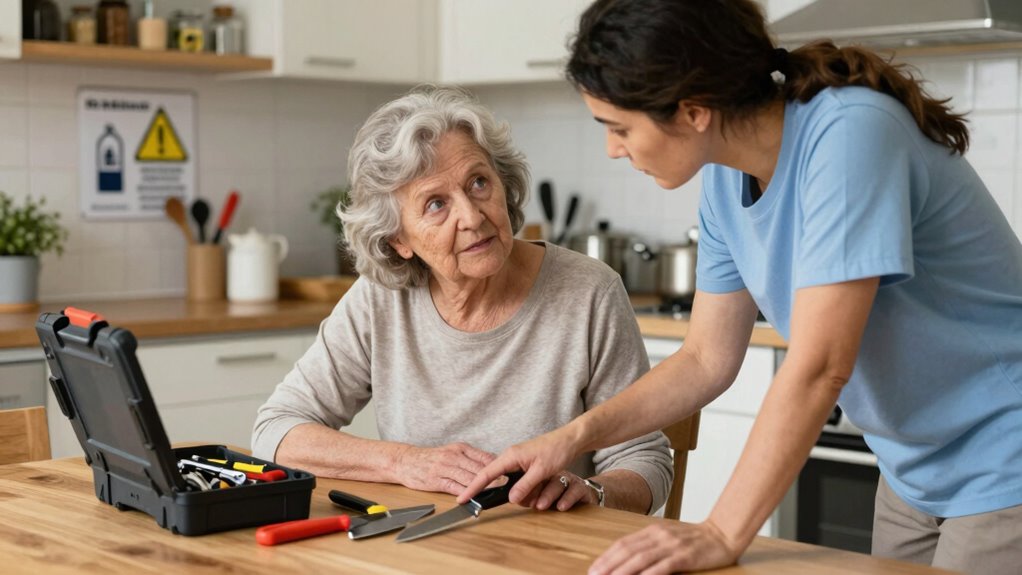

When discussing unsafe tools and home risks with a senior, approach with kindness and genuine concern. Focus on building trust by emphasizing safety and independence, not criticizing. Show how certain tools might be risky and suggest safer alternatives. Offer to review tools together to make certain they’re in good condition. Respect their autonomy, listen actively, and work collaboratively on solutions. If you keep exploring, you’ll discover more helpful ways to support their safety.

Turn quiet afternoons into listening time
- Thousands of audiobooks, podcasts and originals
- Listen on your phone, tablet or Echo — also offline
- Cancel anytime
Key Takeaways
- Use a caring, non-judgmental tone to express concern for their safety and independence.
- Focus on specific hazards, like loose tools or clutter, and suggest safer alternatives.
- Offer to review tools together for proper use and condition, emphasizing collaboration.
- Highlight how small safety adjustments can prevent accidents and preserve their independence.
- Encourage active listening and involve them in safety assessments to respect their autonomy.
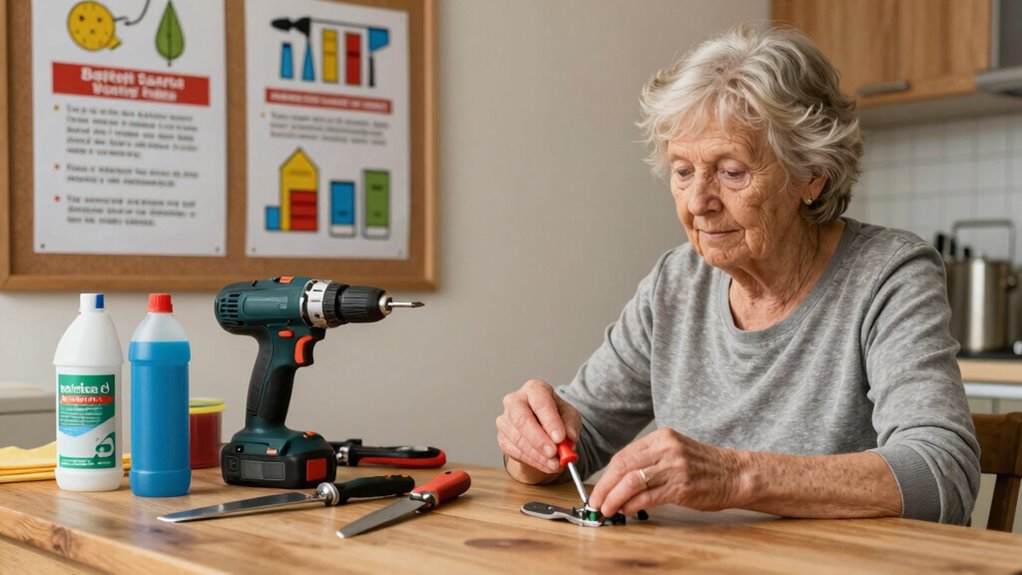
Have you ever wondered how to approach a senior about the dangers of unsafe tools and home hazards? It’s a sensitive topic, but it’s vital for their safety. When you bring up these concerns, focus on building trust and understanding. Start by emphasizing that your goal is to help them stay safe and independent. Avoid sounding confrontational or judgmental; instead, use a caring tone that shows you genuinely want to protect them. Explain that many injuries occur at home due to simple hazards, and addressing these can prevent serious accidents.
Approach seniors with kindness and understanding to discuss home hazards, focusing on safety and independence.
One of your main points should be fall prevention. Falls are a leading cause of injury among seniors, and many happen because of unsafe tools or cluttered, poorly maintained spaces. Gently point out specific hazards, like loose rugs, uneven flooring, or misplaced tools that could cause tripping. Suggest practical solutions, such as installing grab bars, using non-slip mats, or organizing tools in accessible areas. Reinforce that small adjustments can make a significant difference in reducing fall risks. Offer to help them make these changes or to accompany them when shopping for safety equipment. Additionally, a home safety assessment by professionals can identify hidden hazards and provide tailored solutions to improve their living environment. Educating seniors about proper tool use can also prevent accidents related to improper handling of equipment.
Emergency planning is another vital aspect you should discuss. Explain that being prepared for accidents can save lives and reduce panic during emergencies. Encourage them to create a simple plan that includes contacts for emergency services, nearby family members, and neighbors. Make sure they know how to reach help quickly if they fall or sustain an injury. Offer to help draft a plan or to set up emergency alert systems if they’re comfortable with technology. Stress that knowing what to do can empower them and provide peace of mind. Incorporating emergency preparedness strategies can further enhance their safety and confidence in managing home risks.
When talking about unsafe tools, focus on education rather than criticism. Show them how certain tools might be dangerous if used improperly and suggest safer alternatives. Offer to review their tools together, ensuring they are in good condition and used correctly. If they’re hesitant to change, reassure them that safety is about making their home a secure space, not about limiting their independence.
Additionally, highlighting the importance of home safety assessments can help them understand how professional advice can identify hidden hazards and provide tailored solutions. Throughout the conversation, listen actively. Ask how they feel about their current safety measures and what worries them most. Respect their autonomy and preferences, and work collaboratively to find solutions. Remember, the goal is to make them aware of potential hazards without making them feel powerless or old. By approaching the topic with kindness, clarity, and practical advice, you can help them maintain their independence while minimizing risks.
As an affiliate, we earn on qualifying purchases.
Frequently Asked Questions
How Can I Recognize Hidden Hazards in My Senior Loved One’s Home?
To recognize hidden dangers in your senior loved one’s home, start hazard identification by closely inspecting for clutter, loose rugs, and poor lighting. Look for exposed wires, uneven flooring, or unsecured furniture that could cause falls or injuries. Pay attention to appliances or tools stored in unsafe spots. Regularly walk through their home, and encourage open conversations about potential hazards, making safety a priority to prevent accidents.
What Are Effective Ways to Encourage Safety Without Causing Offense?
Think of your conversation as planting a gentle seed. Use respectful dialogue and communication strategies that emphasize concern, not blame. Focus on shared safety goals, and listen carefully to your loved one’s feelings. Avoid confrontation by framing suggestions as caring advice. This approach helps your senior feel valued and respected, making it easier for them to accept safety improvements without feeling offended.
How Do I Address Denial or Resistance From Seniors About Safety Concerns?
When facing denial or resistance from seniors about safety concerns, use gentle resistance communication and denial strategies. Show empathy and listen carefully to their worries, avoiding confrontation. Share relatable stories or examples, emphasizing care and concern rather than criticism. Offer practical solutions together, making safety improvements seem like collaborative efforts. This approach helps reduce defensiveness and encourages openness, making it easier to address unsafe tools and home risks effectively.
Are There Community Resources to Assist With Home Safety Assessments?
Think of community resources as your safety allies. You can find local partnerships that offer free home safety assessments, connecting you with professionals who identify hazards. Many communities also host safety workshops designed to educate seniors and caregivers. Reach out to local agencies, senior centers, or health departments—they often have programs or referrals that help improve home safety, giving you peace of mind and support in creating a safer environment.
How Can Technology Help in Monitoring Home Safety for Seniors?
Technology helps you monitor home safety for seniors through smart sensors that detect falls, movement, or hazards, alerting you instantly to any issues. Emergency apps allow seniors to call for help quickly with just a tap, providing peace of mind. You can set up these tools to track safety, ensuring prompt responses and reducing risks, especially for seniors living alone or with limited mobility.
Conclusion
Talking about unsafe tools and home risks might feel challenging, but it’s essential for your loved one’s safety. Remember, nearly 30% of injuries among seniors happen at home, often due to preventable hazards. Approach the conversation with care, emphasizing your concern and offering solutions. By working together, you can create a safer environment. Your proactive steps can make a real difference—helping your senior stay safe and independent longer.
Fall Picks
fall essentials
As an affiliate, we earn on qualifying purchases.