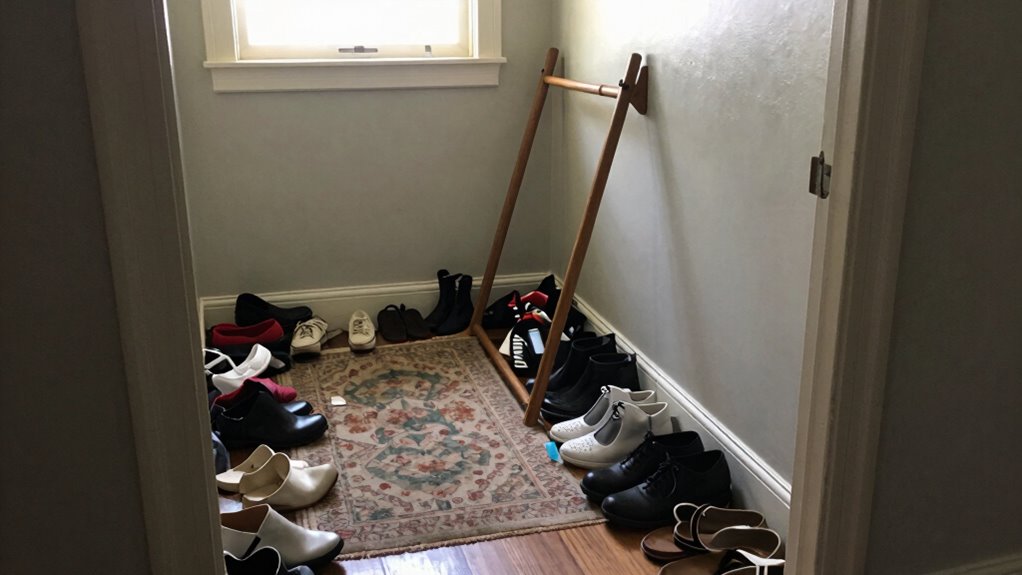

Blocking pathways with bulky or poorly arranged furniture makes home access harder for everyone. When furniture obstructs the natural flow, it forces people to navigate around obstacles, reducing ease of movement and creating clutter. Clear, wide pathways—at least 36 inches—improve safety and accessibility. Using slim, multi-functional pieces helps maximize space without sacrificing comfort. Pay attention to layout and lighting, so your entryway remains inviting and functional. Keep going to discover more tips for making your entrance effortlessly accessible.
Key Takeaways
- Blocking pathways with bulky furniture reduces accessibility and creates obstacles for easy navigation.
- Overcrowding the entryway with items causes clutter, hindering quick and safe access for all users.
- Poor lighting placement creates shadows and dark spots, making navigation difficult and unsafe.
- Failing to maintain clear, minimum 36-inch wide pathways limits access for wheelchair users and those with mobility aids.
- Ignoring universal design principles can make the entryway less inclusive and harder to use for everyone.
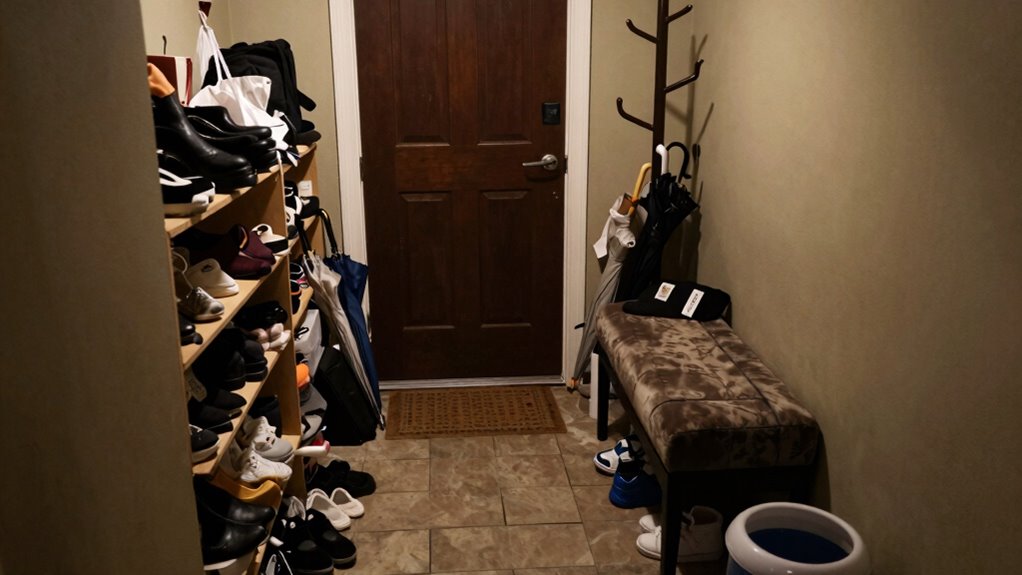
Your entryway is the first impression visitors see, but common mistakes can make it harder to access your home efficiently. One of the biggest errors is poorly planned furniture arrangement. When furniture blocks the pathway or creates clutter, it forces you and your guests to navigate around obstacles. Instead of welcoming ease, your entryway becomes a maze of furniture that slows down movement and causes frustration. To fix this, think about how you use the space daily. Keep key items like a bench, coat rack, or shoe storage close but not in a way that obstructs the main path. Use slim or multi-functional furniture that fits snugly against the wall, leaving enough room for people to move comfortably. Clear pathways should be at least 36 inches wide, so everyone, including those with mobility aids, can pass without hassle. Proper furniture arrangement isn’t just about aesthetics; it’s about functionality and flow. Additionally, integrating multi-functional furniture can maximize space efficiency while maintaining accessibility. Incorporating space-saving solutions can further enhance the usability of your entryway, especially in small homes. Good space planning helps ensure your entryway remains open and inviting rather than crowded. Paying attention to accessibility considerations ensures that the space accommodates all users comfortably. Including universal design principles in your planning can help create a space that benefits everyone, regardless of their mobility level. Lighting design also plays a crucial role in making your entryway accessible. Poor lighting can hide clutter, make navigation difficult, and create a less inviting atmosphere. You want your lighting to be bright enough to see clearly but also warm enough to feel welcoming. Consider layering your lighting with a combination of overhead fixtures and task lighting, like wall sconces or table lamps, to eliminate shadows and dark corners. Motion sensors or smart lighting controls can help ensure the space is always well-lit when you arrive or leave, without needing to fumble for switches. A well-lit entryway guides you safely into your home and signals to visitors that they’re entering a thoughtfully designed space. It also enhances security by reducing dark spots where intruders could hide. When you combine smart furniture arrangement with effective lighting design, your entryway becomes more than just a passage; it transforms into an accessible, organized, and inviting space. You’ll find it easier to unload groceries, take off shoes, or welcome guests without having to navigate through clutter or stumble in poorly lit areas. Small adjustments, like repositioning a piece of furniture or upgrading your lighting, can make a significant difference. Remember, your entryway sets the tone for your entire home, so optimizing these elements ensures it’s both functional and welcoming. Making these improvements doesn’t just enhance accessibility—it elevates the entire experience of entering your home.
As an affiliate, we earn on qualifying purchases.
Frequently Asked Questions
How Can I Improve My Entryway’s Safety Besides Decluttering?
To improve your entryway’s safety beyond decluttering, focus on entryway security by installing sturdy locks and a doorbell camera to monitor visitors. Additionally, implement weatherproofing strategies like non-slip mats, adequate lighting, and secure door seals to prevent accidents and enhance safety during bad weather. These steps make your entryway safer, more secure, and accessible for everyone, regardless of weather conditions or potential threats.
What Are the Best Storage Solutions for Small Entryways?
A place for everything, and everything in its place. To maximize your small entryway, opt for vertical storage like wall-mounted shelves or hooks for decor organization. Use multi-functional furniture, such as a bench with shoe storage solutions underneath, to save space and keep things tidy. Consider slim, stackable shoe racks or over-the-door organizers for shoes. These solutions make your entryway more functional, welcoming, and clutter-free.
How Do I Make My Entryway More Welcoming for Guests?
To make your entryway more welcoming, add decorative accents like a stylish mirror, cozy rug, or artwork that reflects your personality. Choose a warm color scheme to create an inviting atmosphere. Keep the space tidy and organized with accessible storage, so guests feel comfortable immediately. These touches make your entryway feel inviting, friendly, and ready to greet visitors, setting a positive tone right from the start.
Are There Specific Lighting Tips for Narrow Entry Corridors?
To brighten narrow entry corridors, use layered ambient lighting like wall sconces or ceiling-mounted fixtures to eliminate shadows. Opt for warm color schemes—like soft beige or light gray—that reflect light and make the space feel larger. Avoid harsh, direct lighting, which can make the corridor feel cramped. Instead, focus on even illumination and subtle color choices to create a welcoming, open atmosphere that guides guests comfortably into your home.
How Often Should I Clean and Maintain My Entryway?
Think of your entryway as a welcoming garden—needing regular tending. You should clean and maintain it weekly, sweeping away dirt, dust, and debris. Keep shoes organized in a dedicated space to prevent chaos, and guarantee your mat placement traps dirt at the door. Regular upkeep keeps it inviting and functional, making every return feel like stepping into a cozy, well-kept haven rather than a cluttered maze.
Conclusion
By clearing clutter, organizing shoes, and keeping pathways open, you create an entrance that welcomes rather than blocks. You make it easier to step inside, easier to find what you need, and easier to move freely. You design an entryway that invites guests in, that simplifies your daily routines, and that welcomes ease over chaos. When you fix this mistake, you transform your home’s first impression into a space of comfort, convenience, and clarity.