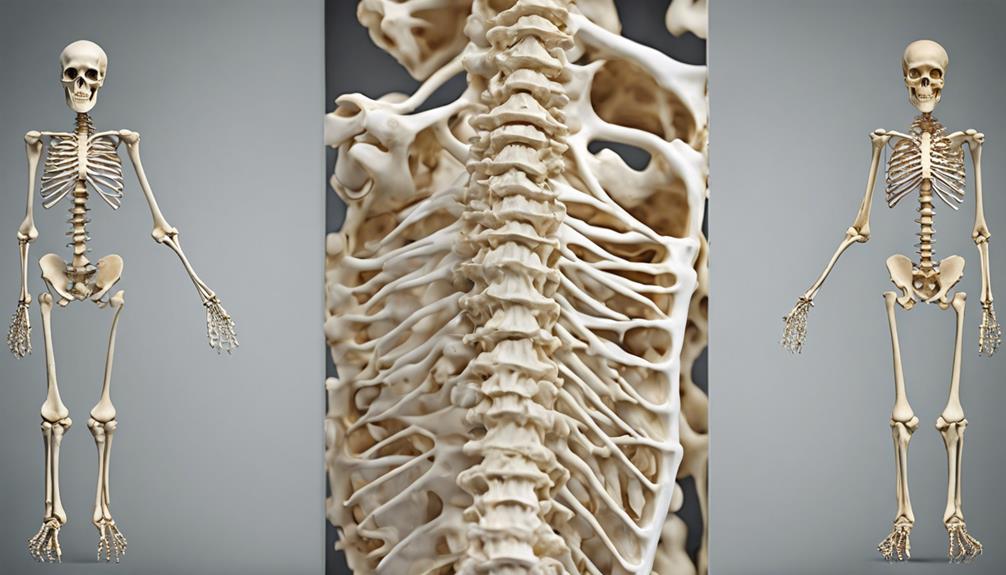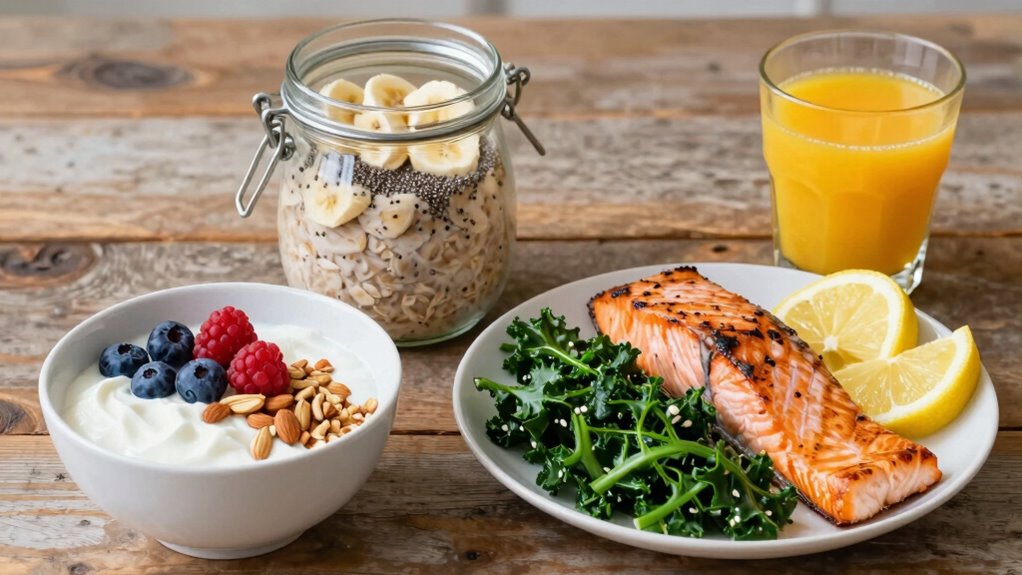

To support strong bones all week, plan meals that include calcium-rich foods like dairy, leafy greens, and fortified plant milks, along with vitamin D sources such as fatty fish and eggs. Incorporate these into breakfast, lunch, and snacks, such as yogurt parfaits, salads with salmon, and almond snacks. Stay consistent with nutrient-dense options, hydrate well, and limit caffeine and alcohol. Keep exploring ways to nourish bones effectively—you’ll find more tips to help you stay proactive.
Key Takeaways
- Plan daily meals incorporating calcium-rich foods like dairy, leafy greens, and fortified plant-based options.
- Include vitamin D sources such as fatty fish, eggs, or sunlight exposure in meals or snacks.
- Combine calcium and vitamin D in each meal, like yogurt with berries or salmon salad with greens.
- Use a variety of nutrient-dense foods like nuts, seeds, and vegetables to support overall bone health.
- Maintain hydration, limit caffeine and alcohol, and prioritize sustainable, locally sourced ingredients throughout the week.
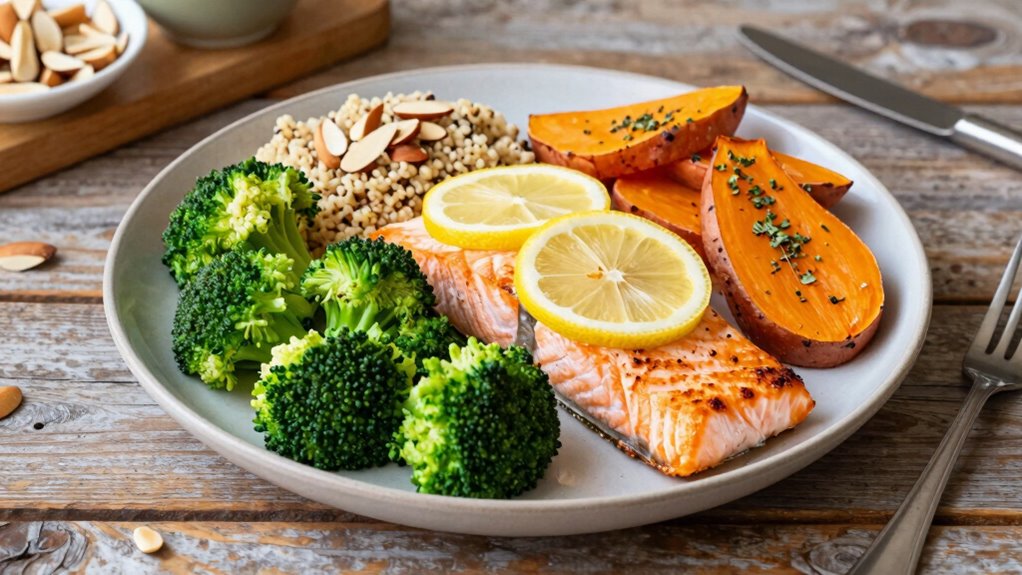
Taking care of someone else can be demanding, but nourishing both yourself and your loved one is crucial for maintaining strength and health. One way to do that is by focusing on bone health through your meals. Making sure that your diet includes good calcium sources is key. Calcium is an essential mineral that supports strong bones and helps prevent osteoporosis. When planning your weekly meals, incorporate foods rich in calcium like dairy products—milk, yogurt, and cheese—and plant-based options such as leafy greens, almonds, and fortified plant milks. These choices provide a steady supply of calcium, helping to keep bones resilient over time.
In addition to calcium sources, bone health tips emphasize vitamin D, which enhances calcium absorption. Including foods like fatty fish—salmon, mackerel, or sardines—can boost your vitamin D levels naturally. Eggs and fortified foods also serve as good sources. Don’t forget to get some sunlight; just 10-15 minutes a day can help your body produce enough vitamin D, supporting your bone health efforts. Combining these nutrients in your meals not only benefits your loved one but also keeps you strong and energized for caregiving. Additionally, practicing sustainable living practices such as choosing locally sourced foods can contribute to environmental conservation while supporting your health. Incorporating a variety of nutrient-rich foods ensures your diet remains balanced and supports overall bone health. This approach is aligned with current recommendations for maintaining long-term bone integrity.
For breakfast, consider oatmeal topped with almonds and sliced bananas, or a yogurt parfait with berries and chia seeds. Both options pack calcium and healthy fats that promote bone strength. Lunches can feature leafy greens like kale or bok choy, tossed into salads or stir-fries, paired with grilled salmon or tofu for added vitamin D and calcium. Incorporating nutrient-dense foods can further enhance your diet’s bone-supporting benefits. Dinners might include baked chicken with steamed broccoli and quinoa or a hearty vegetable curry with lentils—foods that are both nourishing and rich in bone-friendly nutrients.
Snacks are easy to incorporate too. A handful of almonds, cheese slices, or a glass of fortified plant milk can keep your calcium intake up during busy days. Remember, consistency matters; making these foods a regular part of your weekly meal plan ensures your bones get the support they need. Staying hydrated and limiting caffeine and alcohol also contribute to bone health, so choose water or herbal teas over sugary drinks. For optimal bone health, consider nutrient-rich foods, as they provide essential minerals and vitamins for strong bones. Regularly incorporating calcium-rich foods into your diet supports long-term bone strength and helps prevent deficiencies. Prioritizing bone health tips in your meal planning can make a meaningful difference in overall wellbeing.
Focusing on bone-friendly meal ideas isn’t just about preventing future issues; it’s about maintaining your strength today. By prioritizing calcium sources and following bone health tips, you nourish your body and your loved one’s, making caregiving a little easier and a lot healthier.
As an affiliate, we earn on qualifying purchases.
Frequently Asked Questions
How Can Caregivers Ensure Meals Are Appealing to Picky Eaters?
To make meals appealing to picky eaters, you can enhance flavor with herbs and spices, making dishes more enticing. Incorporate texture variation by blending soft and crunchy elements to keep their interest. Present the food in fun, colorful ways or small portions, and involve them in meal prep to boost their curiosity. These strategies make meals more enjoyable, encouraging healthier choices without overwhelming their palate.
Are There Budget-Friendly Options for Bone-Healthy Ingredients?
Like finding hidden treasures, you can discover affordable alternatives for bone-healthy ingredients with some cost-effective sourcing. Stock up on canned salmon or sardines, which are budget-friendly and rich in calcium. Use dried beans and lentils as calcium sources, and incorporate leafy greens like collard greens or kale, often on sale. These options help you stay within your budget while ensuring your loved ones get essential nutrients for strong bones.
How Can Meal Prep Be Simplified for Busy Caregivers?
To simplify meal prep, focus on efficient meal planning by batching ingredients and using versatile options. Make ingredient substitutions to save time and money, like swapping fresh greens for frozen or canned options. Prepare large batches of bone-healthy staples, such as beans or roasted veggies, and store them for quick assembly throughout the week. This approach reduces daily effort and keeps your meals nutritious and manageable amid a busy schedule.
What Are Some Quick Snack Ideas That Promote Bone Health?
You might think snacks can’t boost bone health, but calcium-rich options like Greek yogurt, cheese, or almonds, combined with vitamin D foods like fortified cereals or canned salmon, can make a difference. Quick, portable, and easy, these snacks support your bones while fitting into your busy schedule. Incorporate them into your daily routine, and you’ll give your bones the nutrients they need without extra hassle.
How Do I Accommodate Dietary Restrictions in Bone-Friendly Meals?
To accommodate dietary restrictions in bone-friendly meals, you can explore vegetarian options like tofu, tempeh, or leafy greens rich in calcium and magnesium. Use dairy alternatives such as almond milk, soy yogurt, or fortified plant-based cheeses to meet calcium needs without dairy. Incorporate these ingredients into meals, ensuring they’re balanced with other bone-supportive nutrients. This way, you create inclusive, nutritious options that promote bone health for everyone.
Conclusion
So, there you have it—your foolproof, bone-friendly meal plan for the week. Who knew caring for others could be so deliciously simple? Just follow these ideas, and you’ll be the hero who’s both nourishing and neglecting their own calcium needs—because, hey, who needs strong bones when you’ve got a plate full of good intentions? Just don’t forget, a little dairy or leafy greens might save your future self from a world of creaky joints.