
Creating bedside rituals with intention helps you connect deeply with your loved one and honor their life. You can share stories, play favorite music, light candles, or display meaningful photos to foster emotional bonds. Gentle acts like holding hands or offering words of gratitude can bring comfort and peace. These rituals turn parting into a celebration of love and memory. To discover more meaningful ways to say goodbye, keep exploring these heartfelt approaches.
Key Takeaways
- Create a sacred space with photos, candles, or meaningful objects to foster reflection and emotional connection.
- Share stories, read poetry, or play favorite music to celebrate the loved one’s life and evoke memories.
- Hold hands, speak words of gratitude, and express love openly to deepen emotional bonds.
- Incorporate tangible tokens like photographs or mementos to reinforce shared memories and legacy.
- Engage in quiet, intentional gestures and collective participation to offer comfort and strengthen unity.
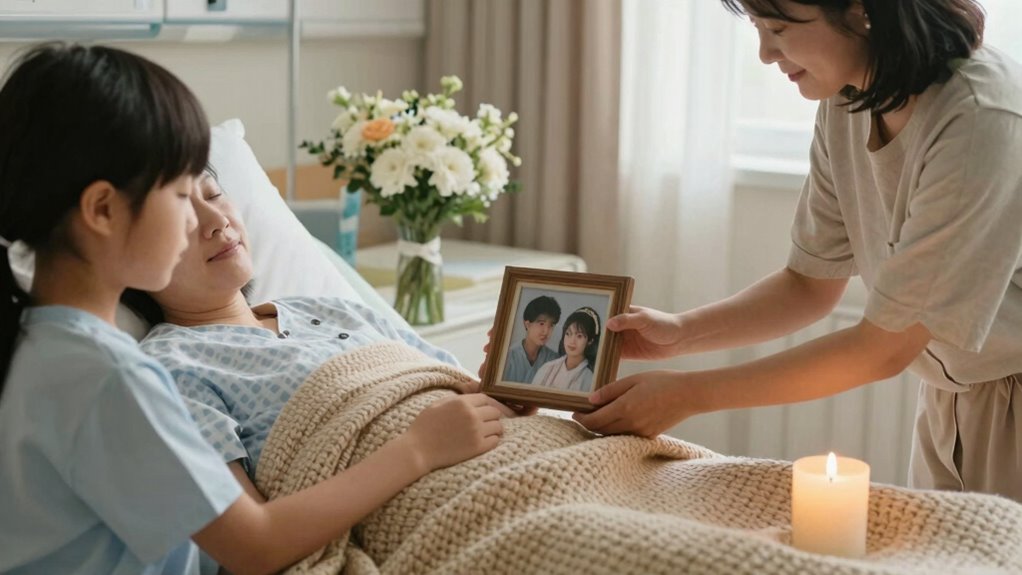
When a loved one is nearing the end of life, creating meaningful bedside rituals can offer comfort and help you say goodbye with intention. These rituals serve as a way to honor their life, foster a sense of connection, and leave lasting memories. As you prepare, consider what truly matters to both of you—whether it’s shared stories, favorite music, or quiet moments of presence. This focus on memory remembrance allows you to celebrate the life your loved one has lived, rather than just mourning its end. Engaging in these rituals can deepen your emotional connection, providing a sense of unity during a time of transition.
Creating meaningful rituals at the bedside honors life, fosters connection, and transforms farewell into a celebration of love and memory.
You might start by sharing stories from the past, recalling joyful moments or meaningful experiences. This act of reminiscing not only preserves precious memories but also reinforces the emotional bond you share. It’s a way to keep your loved one’s spirit alive in your heart and in the stories that will continue to be passed down. Holding their hand, softly speaking words of love and gratitude, can amplify this emotional connection. It’s in these quiet, intentional gestures that you find comfort and strength. You may also consider playing their favorite music or reading meaningful poems or scriptures. These small acts create a sacred space for reflection and connection, transforming the bedside into a place of peace and remembrance.
Lighting a candle or displaying photographs can serve as visual reminders of shared experiences, anchoring your loved one’s memory in a tangible way. These physical tokens help you focus on the life and love that has filled the space, rather than solely on the impending loss. When you create rituals like these, you allow yourself and others to express feelings openly, fostering vulnerability and compassion. This openness strengthens the emotional connection, making the farewell more heartfelt and genuine. If there are others present, encouraging collective participation can deepen the sense of unity, turning the bedside into a sanctuary of love and remembrance. Incorporating conservation practices can also remind families of the importance of caring for the environment even in difficult times.
Ultimately, these rituals aren’t just about saying goodbye—they’re about celebrating life, cherishing memories, and reinforcing emotional bonds. They remind you that love endures beyond physical presence and that, through intentional acts, you can find comfort in the shared history you hold. As you engage in these rituals, you’re not only honoring your loved one’s journey but also creating a meaningful, healing experience for everyone involved.
As an affiliate, we earn on qualifying purchases.
Frequently Asked Questions
How Can I Create a Personalized Bedside Ritual?
To create a personalized bedside ritual, start by reflecting on meaningful memory remembrances that connect you and your loved one. Incorporate symbolic gestures, like lighting a candle or holding a special object, to honor their memory. You can also share stories or express your feelings aloud. This intentional practice helps foster connection, provides comfort, and creates a lasting remembrance tailored to your unique bond.
What Are Some Cultural Variations of Bedside Goodbyes?
Imagine wrapping a loved one in a warm, colorful quilt as you say goodbye—different cultures have unique farewell ceremonies. In some traditions, prayer or chanting offers comfort, while others include lighting candles or sharing meaningful stories. Cultural traditions shape bedside goodbyes, honoring the person’s spirit. These rituals help families find peace, connect deeply, and create lasting memories, offering a heartfelt farewell that resonates across diverse backgrounds.
How Do I Handle Emotional Overwhelm During Rituals?
When emotional overwhelm hits during rituals, focus on grounding yourself with mindfulness techniques like deep breathing or noticing your senses. Cultivate emotional resilience by accepting your feelings without judgment, allowing yourself to process grief steadily. Take short breaks if needed, and remind yourself that it’s okay to feel overwhelmed. These practices help you stay present, honor your emotions, and support your loved ones with compassion and strength during difficult moments.
Can Children Participate in Bedside Farewell Rituals?
Yes, children can participate in bedside farewell rituals, and involving them through ritual storytelling helps create meaningful connections. You might encourage their child participation by sharing gentle stories about the loved one, asking about their feelings, or including simple activities like drawing or holding a keepsake. These shared moments foster understanding, comfort, and a sense of involvement, making the farewell more personal and healing for both children and adults.
What if the Patient Is Unconscious or Unresponsive?
If the patient is unconscious or unresponsive, you can still engage in silent communication to convey love and presence. Focus on emotional grounding by speaking softly, holding their hand, or gently touching their face. These rituals help you connect and express your feelings without words, providing comfort to both you and the patient. This quiet, intentional approach can bring peace and meaning during difficult moments, even when words can’t be spoken.
Conclusion
By embracing bedside rituals, you create space for connection, comfort, and closure. You honor memories, express love, and find peace in presence. You listen deeply, share openly, and hold gently. You acknowledge fears, celebrate life, and say goodbye with intention. In these moments, you transform grief into grace, silence into song, and separation into a sacred farewell. Through these rituals, you nurture the soul, strengthen the bond, and carry love forward.