
TL;DR
Open a free Amazon Business account
Business pricing, bulk buying and tax-exempt orders.
Create a free accountAs an affiliate, we earn on qualifying purchases.
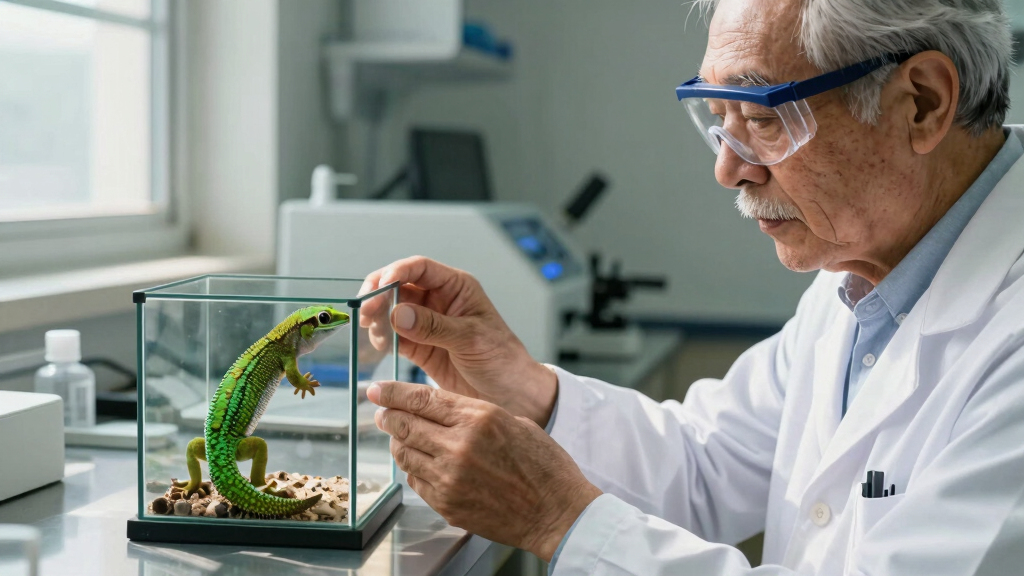
Researchers are investigating a pet gecko’s immune system and genetic traits to understand its potential in cancer research. This could open new avenues for treatments, but many details are still emerging.
Scientists are studying a pet gecko’s immune system and genetic makeup to explore its potential in advancing cancer research. This marks a novel approach, as the animal’s unique biology could reveal new insights into tumor resistance and immune responses.
The research, led by a team at a biomedical institute, was prompted by observations that certain gecko species exhibit remarkable resilience against diseases, including cancer-like conditions. The team has sequenced parts of the gecko’s genome and analyzed its immune cells, aiming to identify mechanisms that could inform human treatments.
While the study is still in early stages, preliminary findings suggest the gecko’s immune system may possess unique features that enable it to detect and suppress abnormal cell growth. Researchers caution that much remains to be confirmed, and translating these findings into human medicine will require extensive further work.
Potential Impact of Gecko-Based Cancer Research
If successful, this research could lead to the development of new immunotherapies or diagnostic tools inspired by the gecko’s biology. It highlights a broader trend of exploring unconventional animal models to unlock secrets of complex diseases like cancer. The findings could eventually benefit patients by providing alternative treatment pathways or early detection methods.
reptile immune system research kit
As an affiliate, we earn on qualifying purchases.
As an affiliate, we earn on qualifying purchases.
Background on Animal Models in Cancer Research
Historically, animals such as mice and zebrafish have been used to study cancer. Recently, scientists have begun examining more exotic species, including certain reptiles and amphibians, for unique biological traits. The idea of using a pet gecko in this context is unprecedented and represents a shift toward exploring diverse animal models for medical breakthroughs.
This initiative follows earlier research into reptiles’ immune systems, which are often more robust against infections and diseases compared to mammals. The current focus is on understanding how these animals’ immune defenses could inspire new human therapies.
“The gecko’s immune system shows promising features that could inform future cancer treatments. We’re just beginning to understand its potential.”
— Dr. Emily Carter, lead researcher
Unconfirmed Aspects of Gecko’s Cancer Resistance
It is not yet clear whether the gecko’s immune mechanisms can be directly applied or replicated in human medicine. The research is still in early stages, and translating animal biology into effective treatments will require extensive validation and clinical trials.
Additionally, the specific genetic or cellular features responsible for any observed resistance remain unidentified, and whether these traits are unique to this gecko species or more widespread is unknown.
Next Steps in Gecko-Based Cancer Research
The research team plans to conduct more detailed genetic and immunological studies of the gecko. They aim to identify specific molecules or pathways that could be targeted in new therapies. Clinical relevance will be assessed through further laboratory experiments and possibly animal models.
Meanwhile, the team will seek partnerships with biotech firms to explore potential applications, and peer-reviewed publications are expected in the coming months to share initial findings with the scientific community.
Key Questions
How could a pet gecko help in cancer research?
Scientists are studying the gecko’s immune system and genetic traits to understand mechanisms that might resist or suppress tumor growth, which could inspire new treatments for humans.
Are there any risks or ethical concerns with using animals in this research?
The current research involves non-invasive genetic analysis of the pet gecko. Ethical considerations are being addressed, and any future animal testing would follow established guidelines and regulations.
When might this research lead to new cancer treatments?
It is too early to predict timelines. The research is in initial stages, and translating findings into human therapies typically takes several years of validation and testing.
What makes geckos different from other animals used in research?
Geckos have unique immune features and genetic traits that are less studied but could offer novel insights into disease resistance mechanisms.
Could other reptiles or animals be used similarly?
Yes, researchers are increasingly exploring diverse species for their unique biological traits, but geckos are currently the focus due to their distinctive immune properties.
Source: rss
Fall Picks
fall essentials
As an affiliate, we earn on qualifying purchases.