
TL;DR

Turn quiet afternoons into listening time
- Thousands of audiobooks, podcasts and originals
- Listen on your phone, tablet or Echo — also offline
- Cancel anytime
Artificial intelligence is increasingly being integrated into drug discovery processes, showing promising results but still facing significant challenges. This report explores current developments, their implications, and future directions.
Artificial intelligence is now a key component in drug discovery, with recent breakthroughs enabling faster identification of potential drug candidates. While AI’s adoption is expanding across the pharmaceutical industry, experts acknowledge significant technical and regulatory challenges remain. This development matters because it could dramatically shorten drug development timelines and reduce costs, potentially transforming healthcare.
Recent studies and industry reports indicate that AI algorithms are increasingly used to analyze biological data, predict molecular interactions, and identify promising compounds more efficiently than traditional methods. Companies like Atomwise, Insilico Medicine, and DeepMind have reported successful applications of AI in early-stage drug discovery, leading to candidate compounds advancing to clinical trials.
However, these applications are still largely experimental, with many AI models needing validation against real-world data. Regulatory agencies such as the FDA are beginning to develop frameworks for evaluating AI-driven drug discovery tools, but comprehensive guidelines are not yet in place. Experts caution that AI cannot replace all traditional research steps but can complement them significantly.
Why AI’s Role in Drug Discovery Is a Turning Point
This progress could revolutionize how new medicines are developed, reducing the time from discovery to market and lowering costs. Faster drug development is especially critical for responding to emerging health threats like pandemics. Nonetheless, widespread adoption depends on overcoming technical hurdles, ensuring safety and efficacy, and establishing regulatory standards. The integration of AI in drug discovery also raises questions about data privacy, intellectual property, and ethical considerations.
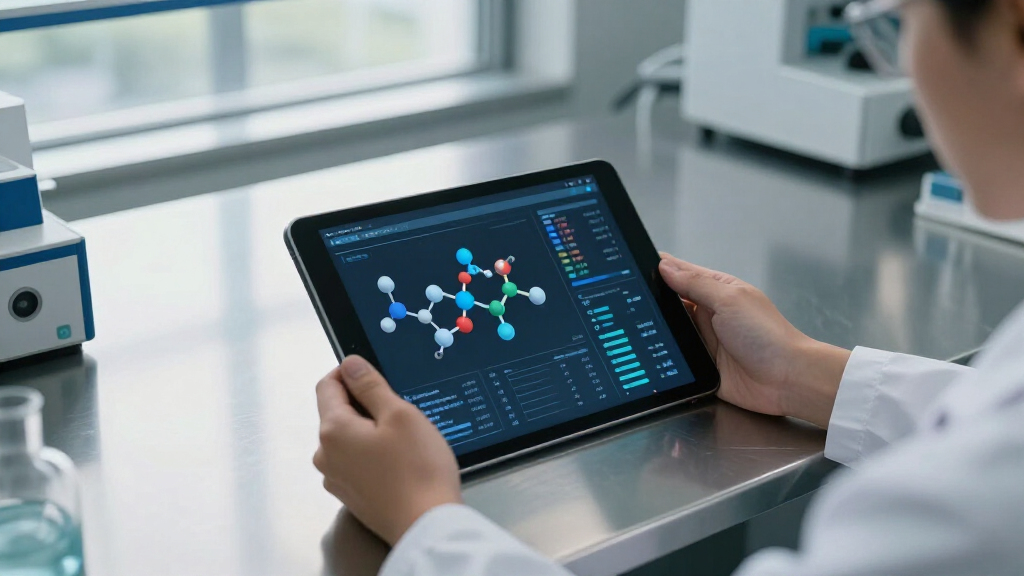
AI-powered drug discovery software
As an affiliate, we earn on qualifying purchases.
As an affiliate, we earn on qualifying purchases.
Recent Advances and Industry Adoption of AI in Drug Development
Over the past five years, AI has moved from experimental research to practical applications in pharma. Early successes include AI’s ability to predict drug-target interactions and optimize molecular structures, which traditionally required lengthy laboratory work. Major pharmaceutical companies have invested heavily in AI startups and in-house AI teams, signaling a shift toward digital transformation in drug research.
Despite these advances, AI’s role remains largely confined to early-stage discovery, with limited examples of AI-driven drugs reaching the market. Regulatory pathways are still evolving, and the scientific community continues to evaluate the reliability and reproducibility of AI models.
Key Challenges and Uncertainties in AI-Driven Drug Discovery
While promising, AI models are not yet fully validated for regulatory approval, and their reliability across diverse biological data sets remains uncertain. There are also concerns about data quality, bias, and reproducibility of AI predictions. The pace at which regulatory frameworks will adapt to AI tools is still unclear, which could impact the timeline for broader adoption.
Upcoming Developments and Regulatory Milestones for AI in Pharma
Researchers and industry leaders expect continued advancements in AI algorithms, with more rigorous validation studies and pilot programs informing regulatory standards. The FDA and other agencies are expected to release draft guidelines in the next 12-24 months, providing clearer pathways for approval. Additionally, larger collaborations between tech firms and pharma companies are likely to accelerate practical applications and clinical trials involving AI-identified drug candidates.
Key Questions
How is AI currently used in drug discovery?
AI is primarily used to analyze biological data, predict molecular interactions, and identify promising compounds faster than traditional methods. It supports early-stage research but has not yet replaced laboratory experiments entirely.
What are the main challenges facing AI in drug discovery?
Challenges include validating AI models for regulatory approval, ensuring data quality and unbiased predictions, and developing comprehensive regulatory frameworks to oversee AI-driven processes.
Will AI replace human researchers in drug development?
AI is expected to complement human expertise by accelerating certain tasks, but it is unlikely to replace researchers entirely. Human oversight remains crucial for validation, interpretation, and ethical considerations.
When might AI-driven drugs reach the market?
While some AI-identified candidates are progressing toward clinical trials, widespread market entry depends on regulatory approval, which may take several years. Expect incremental progress over the next 3-5 years.
Source: hn
Fall Picks
fall essentials
As an affiliate, we earn on qualifying purchases.