TL;DR

Turn quiet afternoons into listening time
- Thousands of audiobooks, podcasts and originals
- Listen on your phone, tablet or Echo — also offline
- Cancel anytime
Fit&Well published a yoga therapist’s seven-part seated movement sequence for older adults, including gentle arm raises, twists, side bends and spinal movements. The therapist says participants can adapt the movements to their abilities; the report does not provide clinical evidence that the routine improves health or fitness.
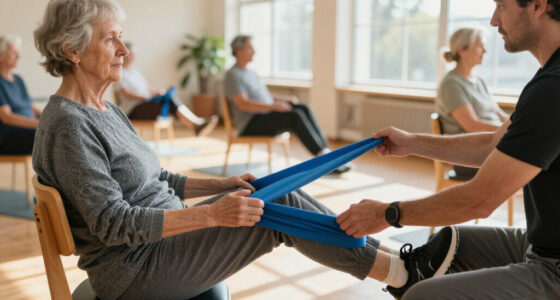
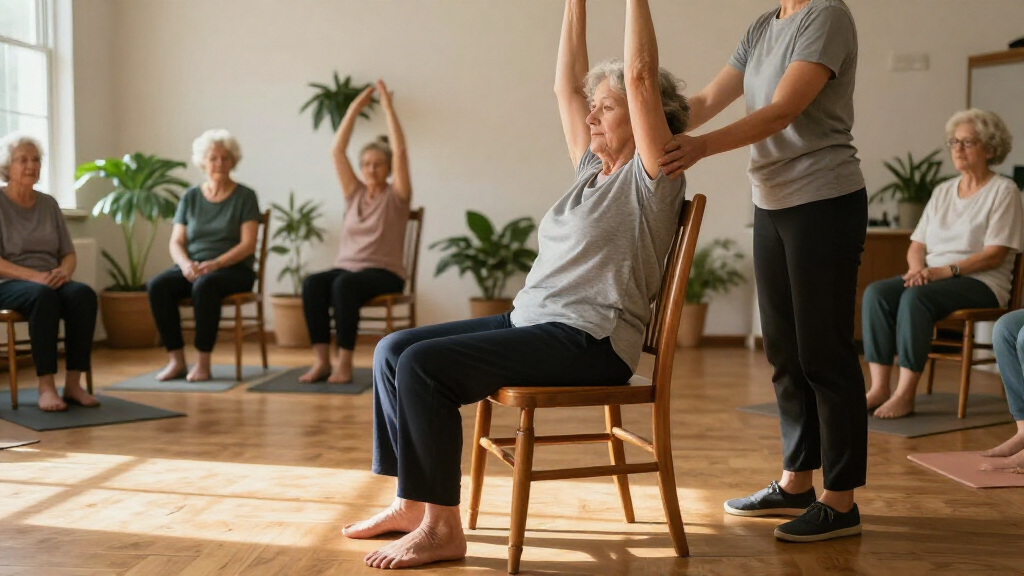
Fit&Well has published a seven-part chair-based movement sequence recommended by a yoga therapist who works with older adults, including people living with Parkinson’s disease, other movement disorders and chronic health conditions. The therapist describes the movements as gentle and adaptable, offering a seated option for people who cannot or prefer not to exercise on the floor.
The sequence uses a sturdy chair and space to raise the arms. It begins with a one-minute settling exercise: sit toward the back of the chair with feet flat, keep the chest upright, rest the hands on the lap and allow the breath to settle. The therapist advises participants to explore movement within their own capacity rather than try to achieve a particular position.
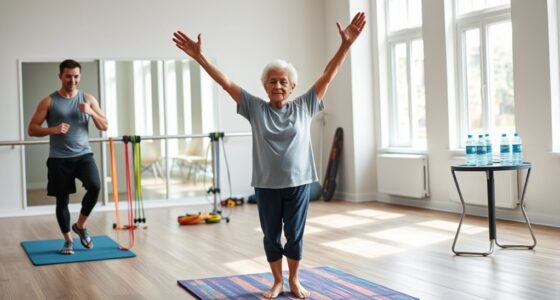
The next movements are an arm sweep into prayer, performed three to five times, and seated torso twists, three times on each side. The routine then adds single-arm raises followed by double-arm raises, and side bends for three repetitions on each side. The instructions coordinate breathing with movement, such as inhaling while raising the arms and exhaling as they are lowered.
It finishes with three to five seated cat-cow movements and three to five forward folds. The article offers adjustments: people who want more stability during a side bend can hold the chair, while those needing extra support during a forward fold can keep their hands on their knees. The source presents these as exercise instructions, not as a clinician’s assessment of an individual’s suitability.
A Seated Option for Gentle Movement
The routine offers a way to move without getting down to the floor, which may suit some people with limited mobility or those more comfortable exercising from a chair. Its simple equipment requirements also make it possible to try at home, provided there is a stable chair and enough clear space for arm movements.
The therapist says the sessions she leads combine stretching muscles, mobilizing joints and mindful movement, and that participants may feel calmer, rested and uplifted. Those are her descriptions of the experience, not measured outcomes established by the Fit&Well report. The article does not cite research showing this particular sequence improves balance, strength, mobility or symptoms of a health condition.
For readers, the practical takeaway is the emphasis on adapting the range of movement. The routine includes specific alternatives for two movements, while the therapist’s broader instruction is to move within one’s accessible range. People with health concerns or uncertainty about exercise can seek guidance from a qualified health professional before trying a new routine.
Products Worth Considering

BowFlex Results Series SelectTech Adjustable Dumbbells (Pair)

Bowflex SelectTech 840 Adjustable Kettlebell

Levoit Vital 100S-P Air Purifier with Washable Pre-Filter
As an affiliate, we earn on qualifying purchases.
How the Chair Sequence Is Structured
The Fit&Well report presents the routine as a short seated flow rather than a set of strenuous exercises. It moves from settling into the chair to upper-body mobility, side-to-side rotation, spinal movement and a forward fold. Most movements are prescribed for three to five repetitions, with side bends and twists done on each side.
The yoga therapist says she mainly works with older adults living with Parkinson’s, movement disorders and chronic health conditions, and uses gentle postures. She also says chair-based yoga can serve people who lack the mobility for floor-based movement, as well as those who simply prefer a chair. The article does not identify the therapist by name in the supplied material or provide details about her qualifications beyond describing her as a yoga therapist.
“There’s no particular shape or position to achieve.”
— Yoga therapist quoted in Fit&Well
Evidence and Individual Suitability
The supplied report does not state when the article was published, name the therapist, or cite studies evaluating the seven movements as a set. It also does not establish whether the sequence is appropriate for every older adult or for people with particular diagnoses, pain, balance difficulties or other limitations.
The therapist’s comments about participants feeling calmer, rested or energized are personal observations as described in the article. No outcome data, comparison group or follow-up period is provided. Readers should not interpret the sequence as treatment for Parkinson’s disease or another health condition; individual needs and safe movement ranges can differ.
Trying the Routine Safely
The article does not announce a follow-up study, event or further reporting. Its immediate next step for readers is to use the printed instructions if they choose to try the sequence, starting with the settling exercise and moving only within a comfortable range. A sturdy chair and clear space are the stated equipment needs, and the suggested chair holds and hands-on-knees fold provide added support.
Anyone unsure whether a movement is suitable can ask a qualified health professional for advice before beginning. The source gives no guidance on how often to repeat the full flow, how to progress it over time or what to do if a movement causes discomfort.
Key Questions
What exercises are in the chair-based routine?
The seven parts are grounding and settling, an arm arc into prayer, seated twists, arm raises, side bends, cat-cow and forward folds. The instructions give a one-minute settling period and generally prescribe three to five repetitions, with some movements completed on each side.
What equipment does the routine require?
The article calls for a sturdy chair and enough space to raise the arms. It does not list additional equipment.
Can the movements be adjusted?
Yes. The therapist advises moving within the range and capacity available to each person. The article suggests holding the side of the chair for support during side bends and placing the hands on the knees during a forward fold if more support is needed.
Does the article show that these exercises treat a health condition?
No. It reports a yoga therapist’s recommendations and observations, but does not cite clinical evidence that this specific sequence treats Parkinson’s disease or another condition. People with health concerns can consult a qualified health professional about suitable movement.
Source: fitandwell.com