
TL;DR

Turn quiet afternoons into listening time
- Thousands of audiobooks, podcasts and originals
- Listen on your phone, tablet or Echo — also offline
- Cancel anytime
Recent studies indicate that alterations in sleep patterns might serve as early clues to Alzheimer’s disease. Researchers emphasize the potential for sleep monitoring to aid early diagnosis, though definitive markers are still under investigation.
Recent scientific findings suggest that changes in sleep patterns may serve as early indicators of Alzheimer’s disease, offering a potential window for earlier diagnosis and intervention. Scientists May Have Found What Really Triggers Alzheimer’s Disease While these discoveries are still in the research phase, they have attracted increasing attention from the medical community and the public, given the importance of early detection in managing the disease.
Multiple studies have observed that individuals in the preclinical stages of Alzheimer’s often experience disruptions in sleep, including fragmented sleep, reduced slow-wave sleep, and altered circadian rhythms. Researchers from various institutions have reported that these sleep disturbances can appear years before cognitive symptoms become evident, raising the possibility of using sleep as a non-invasive biomarker for early detection.
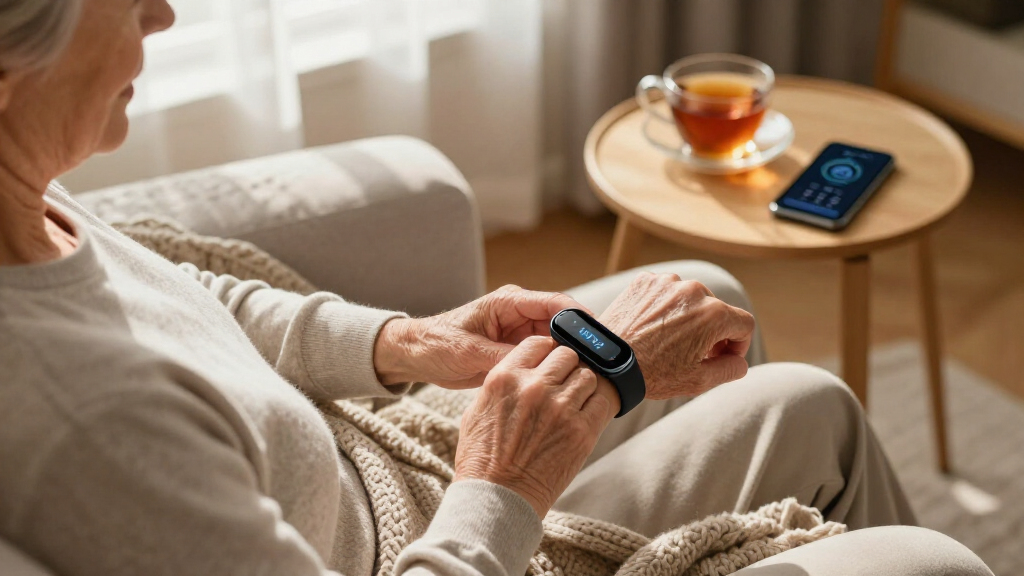
Expert analyses indicate that these sleep changes may reflect early brain changes associated with Alzheimer’s, such as the accumulation of amyloid-beta plaques, which are known to interfere with normal sleep architecture. The research is still preliminary, but the potential for wearable sleep trackers and other monitoring devices to identify early signs is increasingly being explored.
Health authorities and research institutions are emphasizing that while the findings are promising, they are not yet definitive enough to replace existing diagnostic methods. Further large-scale studies are needed to confirm whether sleep alterations can reliably predict Alzheimer’s onset and to develop standardized screening protocols.
Potential for Early Alzheimer’s Detection Through Sleep Monitoring
This emerging research could significantly impact how Alzheimer’s is diagnosed and managed. If validated, sleep pattern analysis might enable earlier intervention, potentially slowing disease progression. It also offers a non-invasive, accessible method for screening at-risk populations, which could complement existing diagnostic tools like imaging and cerebrospinal fluid analysis. Early detection is crucial because it provides more time for treatment strategies and planning, potentially improving patient outcomes and reducing healthcare costs. However, the scientific community emphasizes that these findings are preliminary, and further validation is required before clinical implementation.wearable sleep tracker for early Alzheimer’s detection
As an affiliate, we earn on qualifying purchases.
As an affiliate, we earn on qualifying purchases.
Growing Interest in Sleep as an Alzheimer’s Biomarker
Over the past decade, Alzheimer’s research has increasingly focused on identifying early biomarkers to facilitate earlier diagnosis. Traditionally, biomarkers include brain imaging and cerebrospinal fluid analysis, but these methods are invasive and costly. Recently, attention has shifted toward more accessible, non-invasive indicators like sleep patterns. Studies have shown that sleep disturbances are common in Alzheimer’s patients, but recent research suggests these may occur even before cognitive decline, making sleep a promising area of investigation. The current spike in coverage and research interest is driven by preliminary findings linking sleep changes with early brain pathology, although these are still considered signals rather than confirmed markers. The trigger for this renewed focus appears to be a series of recent publications and conference presentations, but the evidence remains preliminary and unconfirmed at this stage.Unconfirmed Links Between Sleep Changes and Alzheimer’s Onset
It is not yet clear whether sleep disturbances are a cause, consequence, or early marker of Alzheimer’s disease. While associations have been observed, definitive evidence establishing causality or predictive accuracy is lacking. Ongoing studies aim to clarify these relationships, but current data remain preliminary and require validation through larger, longitudinal research.Further Research Needed to Validate Sleep as an Early Marker
Researchers plan to conduct large-scale, longitudinal studies to track sleep patterns over time in at-risk populations. Advances in wearable technology may facilitate continuous monitoring, enabling scientists to determine whether sleep changes can reliably predict Alzheimer’s development. Regulatory and clinical bodies will also evaluate whether sleep-based screening tools could become part of standard early detection protocols in the coming years. Expect more published data and possibly pilot programs testing sleep monitoring as an early diagnostic tool within the next 2-3 years.Key Questions
Can sleep changes definitively diagnose Alzheimer’s?
No, current research suggests sleep alterations may be early indicators but are not yet reliable enough for definitive diagnosis. They are being studied as potential supplementary biomarkers.
Are sleep monitoring devices available for early detection?
While many consumer sleep trackers exist, their use for medical diagnosis of Alzheimer’s is not yet approved. Research is ongoing to develop and validate specialized tools for clinical use.
How soon could sleep-based screening become common?
This depends on the outcomes of ongoing research and validation studies. It could take several years before sleep monitoring is integrated into standard screening protocols.
What should individuals do if they notice sleep problems?
Individuals experiencing persistent sleep issues should consult healthcare professionals. While sleep disturbances alone are not diagnostic of Alzheimer’s, they can impact overall health and warrant medical evaluation.
Does this mean Alzheimer’s can be prevented by improving sleep?
Current evidence does not establish causality or prevention through sleep improvement. Research is exploring whether healthy sleep might influence disease risk, but no conclusive prevention strategies are established yet.
Source: rss
Cold & flu season Picks
humidifiers
As an affiliate, we earn on qualifying purchases.