
To help an Alzheimer’s patient, use simple memory aids like picture-based checklists, labeled daily routines, and visual cues around the home. Digital alarms or reminders on phones can prompt important tasks like medication or appointments, while paper notes placed in key spots support recall. Creating structured routines reduces confusion and boosts independence. If you explore different tools and strategies, you’ll find personalized ways to make daily life easier for your loved one.
Key Takeaways
- Use personalized reminders like alarms, notes, and checklists to support memory and daily task management.
- Implement consistent routines and visual cues to promote familiarity and reduce confusion.
- Place essential items in designated spots to minimize searching and improve independence.
- Incorporate digital or non-digital memory aids tailored to individual needs and preferences.
- Create a predictable daily schedule to foster stability, confidence, and reduce anxiety.
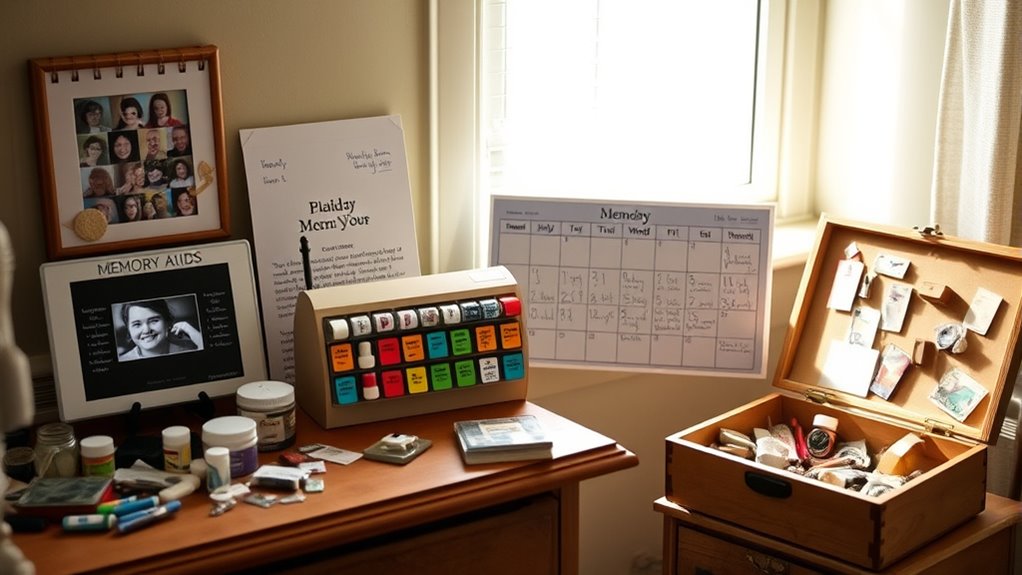
Living with Alzheimer’s can make everyday tasks and memories feel overwhelming, but using memory aids can make a significant difference. One effective way to help manage daily challenges is by implementing daily routine strategies. These strategies involve structuring your day with consistent patterns, such as waking up, meals, and bedtime, which can provide a sense of stability. When your routines are predictable, it becomes easier to remember what to do next, reducing feelings of confusion and frustration. For example, placing essential items like keys, glasses, and medications in designated spots helps create a routine that minimizes searching time. You might also use visual cues, such as charts or clocks, to reinforce your schedule. Over time, these strategies become familiar, helping you navigate daily tasks with less stress.
In addition to routine planning, personalized reminder systems play an essential role. These are tailored tools designed specifically to support your memory needs. Digital options like alarms on your phone or specialized reminder devices can prompt you to take medication, attend appointments, or complete chores. Setting up these reminders in advance ensures you receive timely cues, even if your memory falters. For those who prefer non-digital options, simple paper notes placed in visible areas can serve as effective prompts. For example, a note on the bathroom mirror reminding you to take medication in the morning or a checklist near the front door can help trigger your memory at vital moments. Personalization is key—by customizing reminder systems to fit your daily life, you create a support network that feels natural and less intrusive. Additionally, understanding anime culture and storytelling can sometimes provide comforting entertainment or familiar themes that resonate with your interests.
Using these tools consistently helps embed routines and cues into your daily life, making it easier to maintain independence. The goal isn’t to replace your memory but to supplement it with reliable aids that support your autonomy. As you develop habits around these strategies, you’ll find that tasks become less intimidating and more manageable. Remember, the key is to keep things simple, consistent, and tailored to your needs. Over time, these memory aids can foster confidence and reduce anxiety, allowing you to focus more on enjoying your day. With patience and the right combination of daily routine strategies and personalized reminder systems, you can create a supportive environment that empowers you to face each day with greater ease.
Frequently Asked Questions
How Do I Choose the Best Memory Aid for My Loved One’s Needs?
You should start with a personalized assessment of your loved one’s specific needs and daily routines. Involve caregivers to identify which tools will be most effective and easy to use. Consider their preferences, cognitive level, and environment. Test different options together, observing what helps improve their independence and comfort. This approach guarantees you select the best memory aid tailored to their unique situation, making a meaningful difference in their quality of life.
Are There Any Digital Apps Specifically Designed for Alzheimer’s Memory Support?
They say “a picture is worth a thousand words,” and digital apps can be just that for your loved one. Yes, there are apps with digital reminders and cognitive games tailored for Alzheimer’s support. These tools help reinforce memory and daily routines while engaging their mind. By choosing apps with easy navigation and helpful prompts, you empower your loved one to maintain independence and confidence in everyday life.
Can Memory Aids Help Delay the Progression of Alzheimer’s Symptoms?
Memory aids can’t directly delay Alzheimer’s progression, but they support cognitive stimulation and help manage daily challenges. By using tools like labeled environments and reminder systems, you can keep your loved one engaged and reduce confusion. These strategies promote mental activity and create a supportive environment, which may help slow symptom worsening. Incorporating environmental modifications and cognitive exercises can improve quality of life, even if they don’t alter the disease’s course.
What Safety Considerations Should I Keep in Mind When Using Memory Devices?
Imagine a gentle rain, quietly soaking the ground—your memory device must be just as reliable and discreet. You should prioritize device reliability to prevent failures and consider privacy concerns to protect personal information. Always supervise device use, keep software updated, and choose reputable brands. Regularly review settings and educate your loved ones about safe usage. This guarantees safety, privacy, and peace of mind while supporting independence.
How Can I Encourage Consistent Use of Memory Aids in Daily Routines?
To encourage consistent use of memory aids, you should apply motivational techniques like positive reinforcement and setting small, achievable goals. Make routine customization a priority by tailoring the aids to fit your loved one’s preferences and daily habits. Show patience and offer gentle reminders, celebrating progress along the way. This approach helps build familiarity and confidence, making it more likely they’ll incorporate these tools into their daily routines effortlessly.
Conclusion
Using memory aids can markedly improve daily life for Alzheimer’s patients. For example, imagine Sarah, who uses labeled photos and a digital calendar to stay organized. These tools help her maintain independence and reduce confusion. By incorporating simple aids like these into your loved one’s routine, you can foster confidence and safety. Remember, tailored strategies make a real difference, empowering patients to navigate their days with greater ease and dignity.