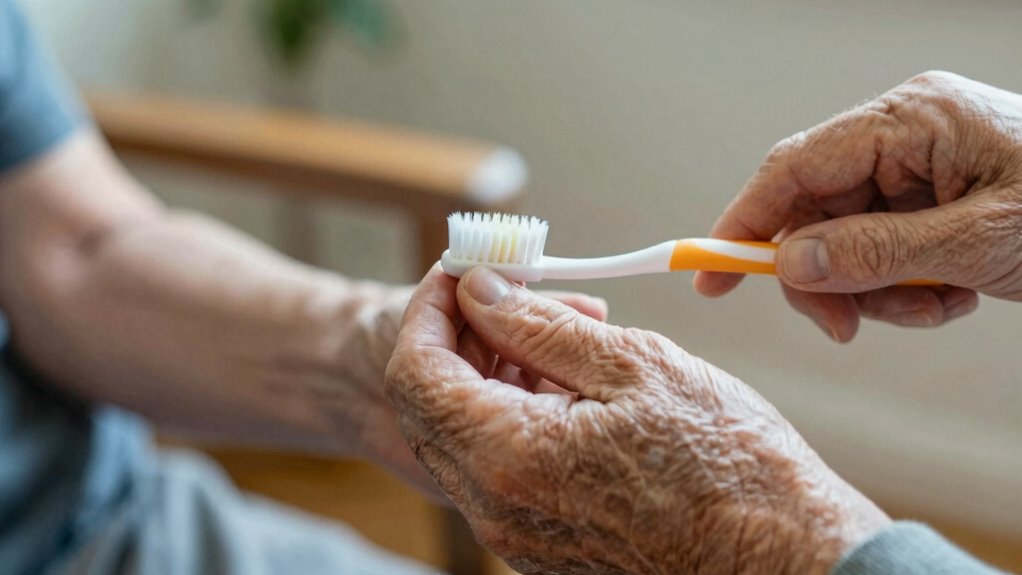

Caring for oral health becomes harder in Alzheimer’s because cognitive decline and loss of coordination make routines difficult to remember and perform. You might notice your loved one forgets to brush or struggles with proper technique, leading to plaque buildup and infections. To help, establish simple routines, get assistance from caregivers, and use tools like electric toothbrushes. Creating a calm environment and staying attentive can make a big difference—continue to explore so you can learn more ways to support their oral health.

Turn quiet afternoons into listening time
- Thousands of audiobooks, podcasts and originals
- Listen on your phone, tablet or Echo — also offline
- Cancel anytime
Key Takeaways
- Cognitive decline and loss of coordination make routine oral hygiene difficult for individuals with Alzheimer’s.
- Forgetfulness and discomfort reduce motivation to maintain regular brushing and flossing.
- Caregiver assistance and simple routines enhance oral care adherence and effectiveness.
- Using electric toothbrushes and fluoride products helps compensate for manual challenges.
- Creating calm environments and providing education support better oral health management.

Have you ever thought about how Alzheimer’s disease affects more than just memory? It also impacts your ability to maintain good oral health, which can lead to serious consequences if not managed properly. As the disease progresses, you might find that keeping up with dental hygiene becomes increasingly challenging. This isn’t just about avoiding bad breath or a smile for photos; poor oral care can lead to mouth infections that cause pain, discomfort, and even more serious health issues. You may notice that brushing and flossing become harder tasks, or that discomfort discourages you from maintaining your usual routine. That’s why understanding what makes oral care more difficult and what can help is so important.
One of the key reasons oral hygiene gets tougher in Alzheimer’s is that the disease affects cognitive functions. You might forget to brush or floss regularly, or lose motivation because the task feels unfamiliar or overwhelming. As coordination declines, it becomes more difficult to hold a toothbrush properly or reach all areas of your mouth. This can result in the buildup of plaque, which leads to cavities and gum disease. Over time, these issues can cause mouth infections, which are especially dangerous because they can spread and cause further health problems. Mouth infections may also cause pain or make eating and speaking uncomfortable, affecting your overall quality of life. Recognizing how cognitive decline influences daily tasks highlights the importance of tailored oral care strategies for those affected. Additionally, understanding the impact of Alzheimer’s on daily routines can help caregivers implement effective support methods.
Alzheimer’s impairs cognitive function, making oral care and coordination difficult, increasing risks of infections and health complications.
To help combat these challenges, establishing a simple, consistent routine is essential. Caregivers can assist by gently guiding you through brushing and flossing, making the process as comfortable and stress-free as possible. Using electric toothbrushes might make cleaning easier, and applying fluoride rinses or gels can help protect against cavities if brushing becomes less effective. Regular dental checkups are also vital, as dentists can spot early signs of infection or decay before they become serious. Maintaining proper dental hygiene isn’t just about keeping your teeth and gums healthy; it’s about preventing mouth infections that could worsen your overall health. Additionally, dental health education for caregivers can greatly improve the quality of care and ensure proper techniques are used consistently.
In addition, creating a calm, familiar environment for dental care can reduce anxiety. Using positive reinforcement, like praise or small rewards, encourages cooperation. Caregivers should also pay attention to any signs of discomfort or pain, addressing issues promptly. Recognizing that oral care in Alzheimer’s requires patience and adaptation allows you to prioritize your mouth health amid the many other challenges posed by the disease. Ultimately, staying vigilant and proactive about dental hygiene helps prevent mouth infections and keeps your mouth as healthy and comfortable as possible, despite the obstacles Alzheimer’s may bring.
electric toothbrush for seniors with limited dexterity
As an affiliate, we earn on qualifying purchases.
As an affiliate, we earn on qualifying purchases.
Frequently Asked Questions
How Can Caregivers Encourage Independence in Oral Hygiene?
You can encourage independence in oral hygiene by using motivational strategies like positive reinforcement and gentle encouragement. Incorporate adaptive tools, such as electric toothbrushes or easy-grip handles, to make brushing easier. Break tasks into simple steps, and offer choices to foster a sense of control. Stay patient and supportive, praising their efforts to boost confidence and help them maintain as much independence as possible during oral care routines.
Are There Specific Toothpaste Types Recommended for Alzheimer’s Patients?
Did you know that nearly 70% of Alzheimer’s patients struggle with oral hygiene? For them, fluoride-free or gentle toothpaste with safe ingredients like aloe or xylitol can be helpful. Look for oral hygiene aids designed for sensitive mouths, such as soft-bristled brushes and easy-to-use dispensers. These specially chosen toothpastes and aids make brushing less uncomfortable, encouraging regular care and helping maintain their oral health despite cognitive challenges.
How Often Should Dental Visits Be Scheduled for Someone With Alzheimer’s?
You should schedule dental visits for someone with Alzheimer’s every three to six months, depending on their oral health needs. Regular check-ups allow your loved one to get necessary teeth whitening, fluoride treatments, and preventive care. These visits help maintain oral hygiene, prevent infections, and address issues early. Consistent dental care supports overall health and comfort, making it easier to manage their oral hygiene routine at home.
Can Diet Impact Oral Health in Alzheimer’s Patients?
Yes, diet can impact oral health in Alzheimer’s patients. By implementing diet modification, you can reduce sugar intake and avoid sticky foods that promote decay. Nutritional support guarantees they get essential vitamins like calcium and vitamin D, which strengthen teeth and gums. These changes help maintain oral health, making brushing and dental visits less challenging. Consistent, healthy eating habits play a vital role in supporting their oral well-being and overall health.
What Signs Indicate Oral Health Issues Needing Immediate Attention?
You should watch for signs like plaque buildup, gum bleeding, persistent bad breath, and difficulty chewing or swallowing. These symptoms indicate oral health issues needing immediate attention. Plaque buildup can cause cavities and infections, while gum bleeding signals inflammation or gum disease. If you notice these issues, don’t delay seeking professional dental care, as addressing problems early can prevent further deterioration and improve comfort for your loved one.
Conclusion
As Alzheimer’s progresses, maintaining oral care becomes more challenging, like trying to brush through a fog that thickens with time. Yet, with gentle patience and consistent routines, you create a steady lighthouse guiding your loved one safely through this fog. While their ability to care for themselves dims like a fading sunset, your unwavering support becomes the bright dawn, restoring confidence and comfort. Together, you turn a formidable journey into a shared moment of care and connection.
Cold & flu season Picks
humidifiers
As an affiliate, we earn on qualifying purchases.