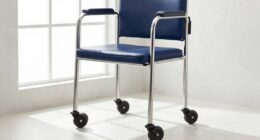
To avoid slips and falls in the bathroom, you should install secure grab bars near the tub, shower, and toilet, ensuring they are properly anchored into wall studs. Use non-slip mats and textured flooring to improve grip, and keep the floor dry and clutter-free. Regularly inspect all safety equipment and maintain good ventilation to prevent moisture buildup. Staying vigilant with these strategies will help you create a safer environment for everyone involved. If you continue, you’ll discover more tips to keep everyone safe.
Key Takeaways
- Install and regularly inspect grab bars, non-slip mats, and textured surfaces to prevent slips and provide stable support.
- Ensure proper bathroom lighting and keep pathways clear of clutter to improve visibility and reduce trip hazards.
- Use secure fixtures and proper hardware when installing safety devices, following manufacturer instructions for durability.
- Maintain dry, clean surfaces by promptly cleaning spills and ensuring adequate ventilation to prevent mold and slipperiness.
- Train caregivers on safety protocols, emergency procedures, and routine checks to proactively identify and address hazards.
Why Bathroom Safety Matters for Caregivers and Loved Ones
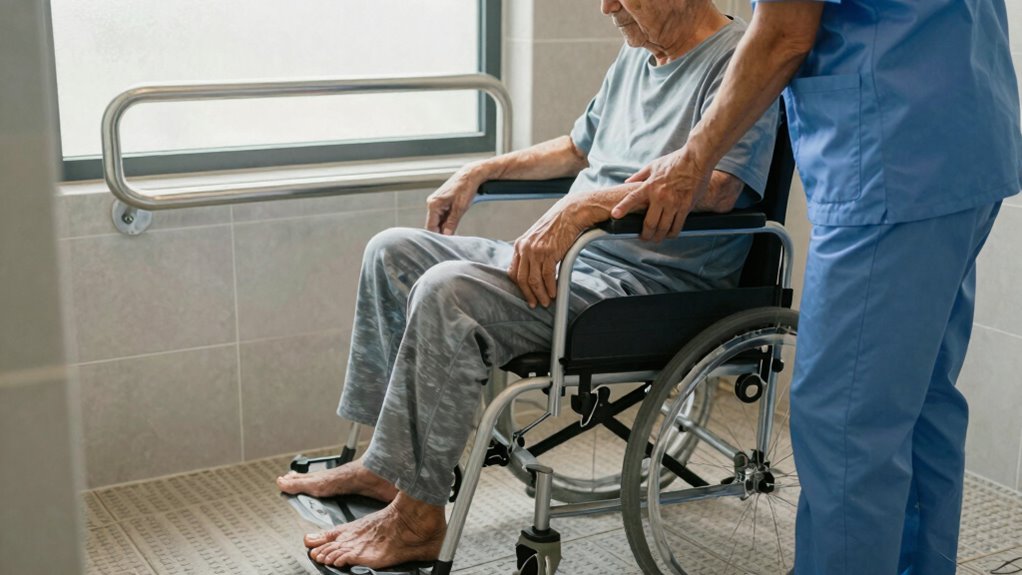
Bathroom safety is crucial because it’s one of the most accident-prone areas in the home, especially for caregivers and their loved ones. Ensuring bathroom accessibility means designing the space to meet everyone’s needs, whether through grab bars, non-slip mats, or easy-to-reach fixtures. As a caregiver, your awareness of potential hazards helps prevent falls and injuries before they happen. By recognizing the importance of a safe environment, you can implement simple modifications that reduce risks and increase independence for your loved ones. Staying vigilant about bathroom safety not only protects their physical well-being but also gives you peace of mind. Prioritizing accessible and safe bathroom features makes a significant difference in maintaining safety and comfort for everyone involved. Incorporating proper ventilation considerations helps prevent moisture buildup and mold, further enhancing safety and health in the bathroom. Additionally, understanding home safety principles can guide you in identifying and addressing other potential hazards. Being proactive about moisture control can further prevent slip hazards caused by excess water or humidity.
What Are Common Bathroom Hazards That Cause Falls?
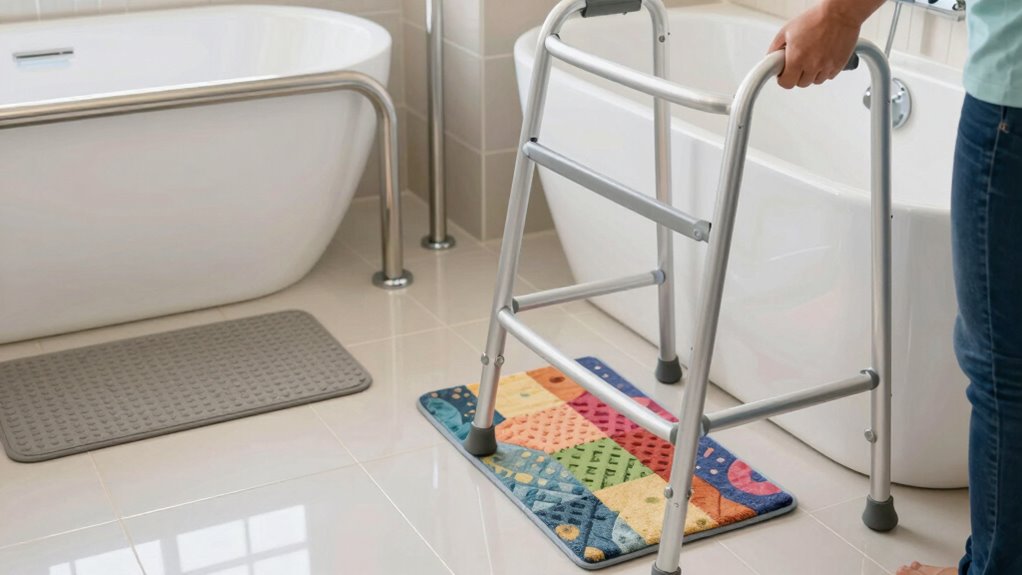
Ever wonder what specific hazards in the bathroom can lead to falls? Bathtub hazards are a common risk, especially if the surface is uneven or has sharp edges. Slippery surfaces, like wet floors or shower stalls, considerably increase the chance of slipping. Soap, shampoo spills, and water splashes create slick areas that can catch you off guard. Clutter around the bathtub or on the bathroom floor can also cause trips. Without proper traction or secure grab bars, maintaining balance becomes harder, making falls more likely. Recognizing these hazards is the first step toward preventing accidents. Regularly checking for and addressing bathtub hazards and slippery surfaces can make your bathroom safer for everyone. Bathroom safety measures are essential for reducing fall risks and ensuring peace of mind. Additionally, incorporating fall prevention strategies such as non-slip mats and assistive devices can further enhance safety. Conducting a home safety assessment helps identify potential risks before an accident occurs. Implementing floor safety measures like proper lighting and securing loose rugs can also significantly lower the chances of falls.
Essential Bathroom Safety Equipment for Fall Prevention
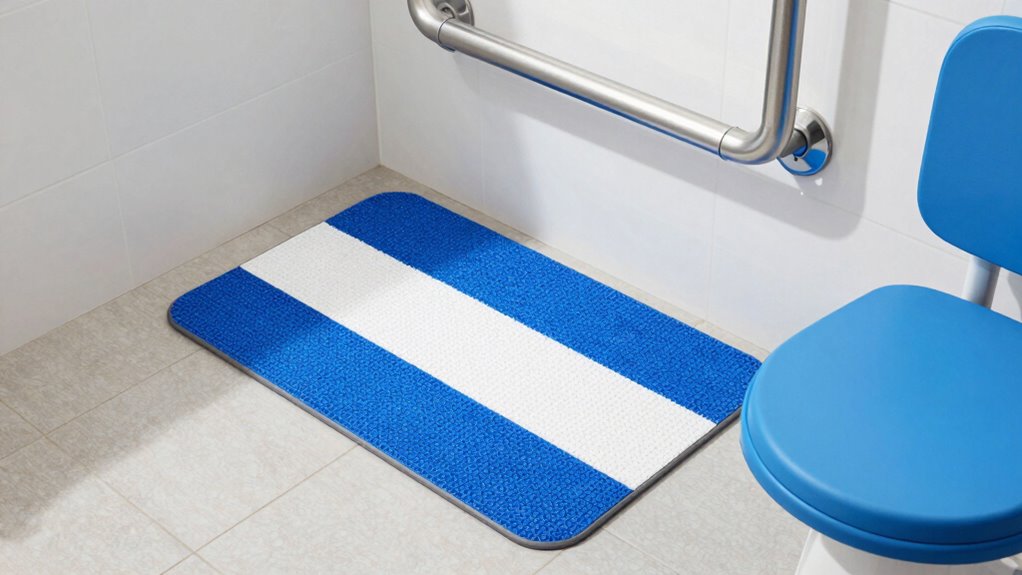
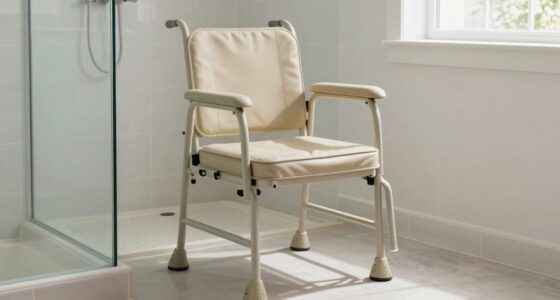
To reduce the risk of falls, installing essential safety equipment can make a significant difference in your bathroom. Bathtub grips provide sturdy support, helping you or your loved one safely enter and exit the tub. These grips are easy to attach and prevent slipping on wet surfaces. Shower seats are also vital, offering a stable place to sit during bathing, reducing fatigue and instability. Choose a shower seat with non-slip feet and adjustable height to guarantee safety and comfort. Together, bathtub grips and shower seats create a safer bathroom environment by minimizing common fall hazards. Regularly inspect and maintain this equipment to guarantee it remains secure and effective. Properly installed safety tools empower you to prevent slips and falls during bathroom activities. Additionally, understanding water chemistry can help maintain a safe and slip-resistant environment by preventing soap scum and mold buildup that can contribute to hazards. Implementing bathroom safety measures that address surface cleanliness and slip resistance can further enhance overall safety. Maintaining clean surfaces is essential, as slippery residues can accumulate over time and compromise safety. Being aware of chemical interactions within your bathroom can also aid in preventing slippery conditions caused by cleaning products and residues.
How to Install Grab Bars and Support Handles Safely
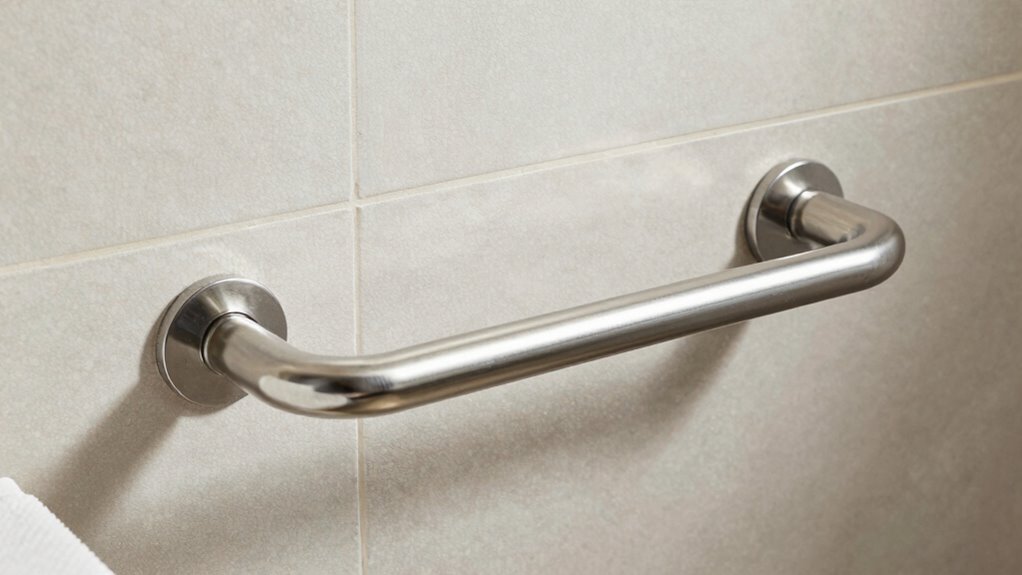
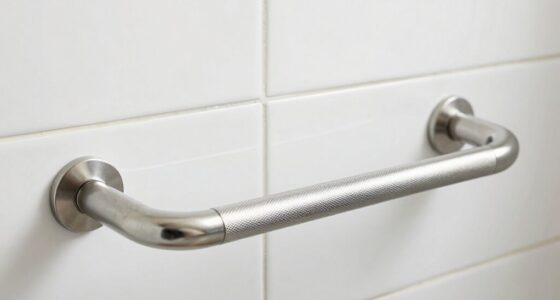
Properly installing grab bars and support handles is essential for ensuring safety and stability during bathing. Start by choosing the right grab bar types, such as straight, angled, or swing-up options, based on your needs. Next, focus on support handle placement: install them at strategic points like near the toilet, shower, or bathtub edge, ensuring they are secure and reachable. Follow these steps:
Securely install grab bars at key locations to enhance bathroom safety and prevent slips.
- Use a stud finder to locate wall studs for secure mounting.
- Mark the desired height, typically around 33-36 inches above the floor.
- Drill into the wall and secure the grab bars with appropriate anchors, ensuring they can support weight.
- Incorporate herbal remedies into the bathroom routine to promote relaxation and reduce stress, helping create a calming environment that complements safety measures. Additionally, choosing secure mounting hardware is crucial for maximizing safety and durability. Proper placement and secure installation help prevent slips and falls, creating a safer bathroom environment. Ensuring the correct installation techniques are followed can significantly enhance the stability and safety of grab bars over time. Using appropriate hardware and following manufacturer instructions can further improve the longevity and safety of the installation.
Choosing Non-Slip Mats and Flooring for Better Grip
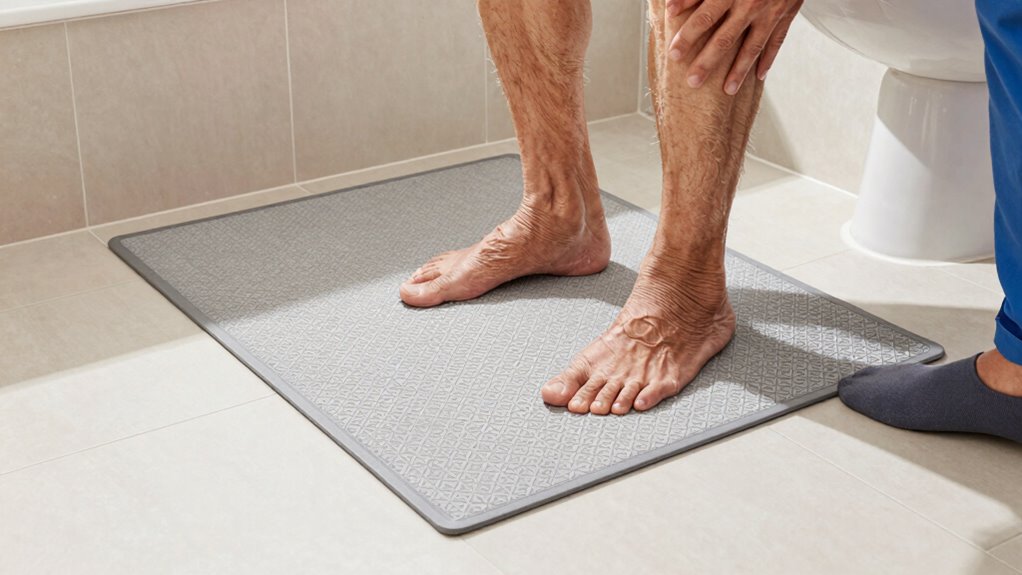
Choosing the right non-slip mats and flooring is essential for safety, so consider different materials like rubber, textured vinyl, or textured tiles. Proper installation guarantees they stay secure and effective, while regular maintenance keeps their grip intact over time. Additionally, selecting high-quality materials that are designed for slip resistance can further enhance safety. When selecting flooring options, look for products certified for slip resistance to ensure they meet safety standards. Incorporating test results and certifications can provide additional assurance of a product’s safety performance. Understanding material durability helps in choosing solutions that maintain their slip-resistant properties longer, reducing the risk of accidents. By paying attention to these points, you can create a safer bathroom environment for everyone.
Material Options for Safety
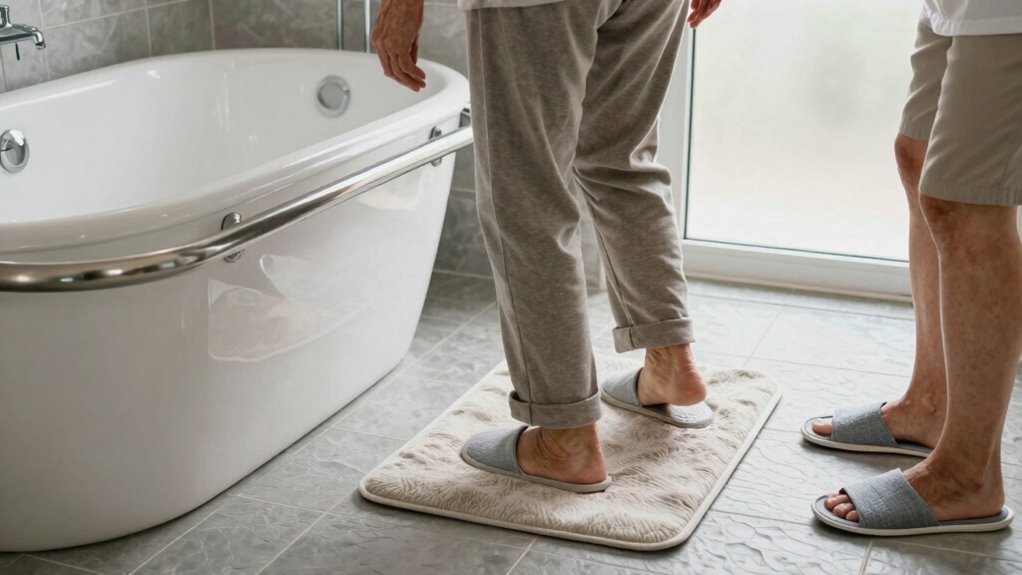
Selecting the right materials for bathroom safety can make a significant difference in preventing slips and falls. You should focus on durable, slip-resistant options that provide reliable grip. Use slip resistant tiles on the floor to reduce slipping risks, especially in high-traffic areas. Choose bathtub materials with textured surfaces or add slip-resistant coatings to avoid accidents during bathing. Opt for mats made from non-slip materials to add extra grip when standing or moving around. Incorporating safety checklists and proper installation techniques ensures these materials perform effectively over time.
Installation Best Practices
To guarantee maximum safety in the bathroom, focus on proper installation of non-slip mats and flooring. Use correct installation techniques to assure mats stay securely in place and flooring remains level. When installing non-slip surfaces, thoroughly clean the area to remove dust and debris, which helps with safety compliance. Follow manufacturer instructions carefully to prevent gaps or wrinkles that could cause tripping hazards. Secure mats with adhesive backing or non-slip tapes designed for bathroom use. For flooring, choose materials that are waterproof and adhere well to the subfloor, avoiding loose edges. Regularly inspect the installation for signs of wear or movement. Proper installation not only enhances grip but also minimizes the risk of slips and falls, keeping caregivers and care recipients safer. Additionally, selecting proper flooring materials can significantly improve safety and durability over time.
Maintenance and Longevity
Ensuring your non-slip mats and flooring last over time requires regular maintenance and thoughtful selection. Proper upkeep keeps grip intact and extends their lifespan. First, regularly clean your mats and flooring with gentle, non-abrasive cleaners to prevent buildup that can reduce traction. Second, guarantee good bathroom ventilation; proper airflow helps dry surfaces quickly, preventing mold and slippery residue. Third, schedule routine plumbing maintenance to fix leaks and prevent water accumulation, which can damage flooring and create hazards. Additionally, inspect your mats and flooring periodically for wear or damage, replacing them as needed. By combining careful cleaning, adequate ventilation, and plumbing upkeep, you’ll maintain a safe, slip-resistant bathroom environment that’s both durable and reliable for caregivers and users alike.
How to Keep Your Bathroom Safe and Clutter-Free
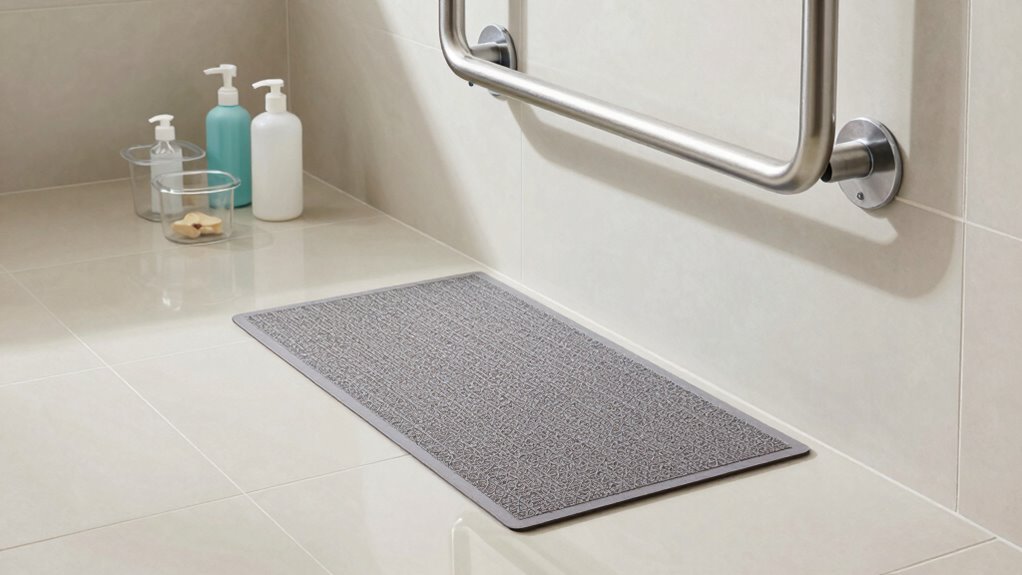
To keep your bathroom safe, make sure pathways are always clear of clutter so you don’t trip or fall. Installing proper lighting helps you see hazards before they cause problems. Using non-slip mats adds extra traction, reducing the risk of slips on wet surfaces. Incorporating safety features like grab bars can provide additional support and stability. Additionally, utilizing smart home automation can alert caregivers to potential hazards or emergencies in real-time. Investing in specialized safety products designed for bathroom environments can further prevent accidents and enhance safety. Maintaining a clutter-free space also supports balance and stability, which is crucial for preventing falls.
Clear Pathways Always Maintain
Keeping pathways clear in the bathroom is essential for safety, especially when assisting others or managing mobility challenges. To guarantee obstacle removal and maintain a safe environment, follow these steps:
- Regularly check for clutter and promptly clear items from walkways.
- Keep cords, rugs, and cleaning supplies out of the way to prevent tripping hazards.
- Use storage solutions that keep essentials within reach but off the floor.
Install Adequate Lighting
Installing adequate lighting in your bathroom is essential for safety and clutter prevention. Good lighting design ensures every corner is well-lit, reducing the risk of slips and falls. Focus on bright, even illumination that minimizes shadows, especially around sinks, toilets, and shower areas. When selecting bulbs, choose those with high lumens for maximum brightness and opt for color temperature options that mimic natural light, making it easier to see details clearly. Consider layered lighting—overhead fixtures combined with task lighting around mirrors—to create a safe environment. Proper bulb selection not only enhances visibility but also reduces glare, which can cause disorientation. Regularly check and replace bulbs to maintain consistent lighting and keep your bathroom safe and clutter-free for caregivers and users alike.
Use Non-Slip Mats
Bright, even lighting helps you see every area clearly, but adding non-slip mats provides physical stability that lighting alone can’t guarantee. To reduce slip hazards, choosing the right mat is essential.
- Mat selection: Pick a non-slip mat with a textured surface designed for bathroom use, ensuring it stays securely in place.
- Placement: Position mats in high-risk areas like the shower or tub entrance and outside the sink, where water often pools.
- Maintenance: Regularly clean your mats to prevent mold and residue buildup, which can reduce grip and increase slip hazards.
Creating Safe Bathroom Routines and Assistance Strategies
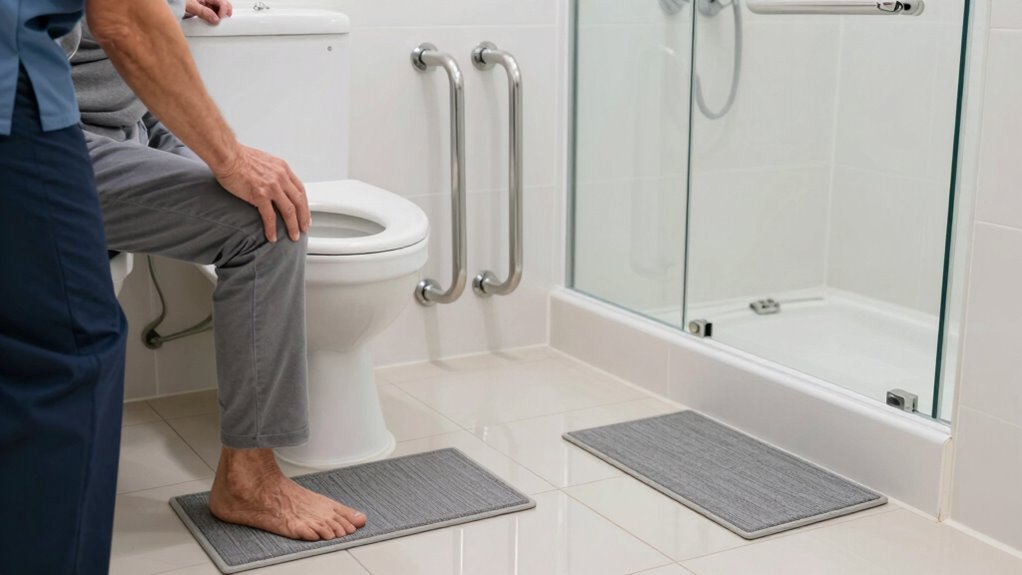
To guarantee safety during bathroom routines, it’s essential to establish clear and consistent assistance strategies that prioritize your awareness and the individual’s comfort. Start by organizing the bathroom for easy access, keeping frequently used items within reach and ensuring pathways are clear. Develop routines that are predictable, so both you and the person you’re assisting know what to expect, reducing confusion and hesitation. Incorporate bathroom organization principles to minimize clutter and hazards. Additionally, prepare for emergencies by having a plan in place, such as ensuring a phone or emergency alert device is nearby. Consistent routines and well-thought-out organization create a safer environment, helping prevent slips and falls while fostering independence and confidence during bathroom activities.
Performing Regular Safety Checks in Your Bathroom
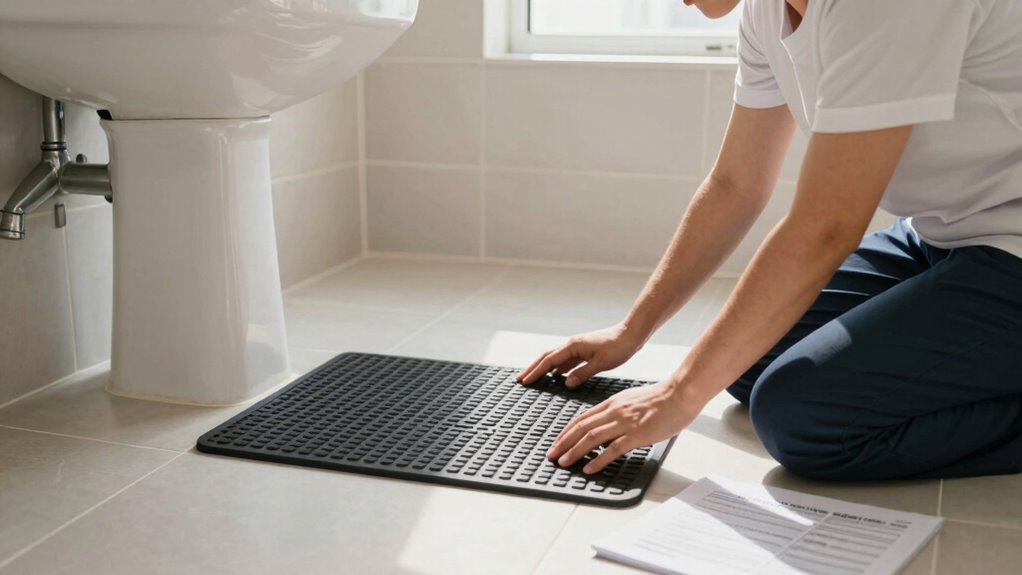
Performing regular safety checks in your bathroom is essential to identify and address potential hazards before they cause accidents. Start by inspecting the bathtub for slippery surfaces, loose tiles, or missing grab bars to guarantee bathtub safety. Next, evaluate toilet accessibility: confirm that the toilet is at an appropriate height, stable, and equipped with grab bars if needed. Finally, check the flooring for water spills, loose mats, or uneven surfaces that could cause slips. Regularly cleaning and maintaining these areas helps prevent falls. By making safety checks a routine, you can catch issues early and keep your bathroom a secure environment. Consistent attention to bathtub safety and toilet accessibility reduces risks and promotes confidence during use.
Training Caregivers and Family on Bathroom Fall Prevention

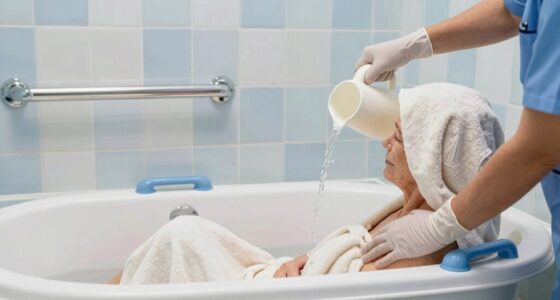
Training caregivers and family members on bathroom fall prevention is essential to creating a safe environment. You need to guarantee everyone understands emergency preparedness, so they can respond quickly if a fall occurs. Teach proper communication techniques, so caregivers can effectively alert each other and the person at risk about hazards or changes in condition. Regular training sessions help reinforce safety protocols, like using grab bars and keeping the bathroom clutter-free. Emphasize the importance of evaluating risks and adapting routines as needed. Clear caregiver communication ensures everyone stays informed and coordinated, reducing the chance of accidents. By investing in thorough training, you empower your caregivers and family members to prevent falls confidently and respond efficiently during emergencies.
Frequently Asked Questions
How Often Should Bathroom Safety Equipment Be Inspected and Replaced?
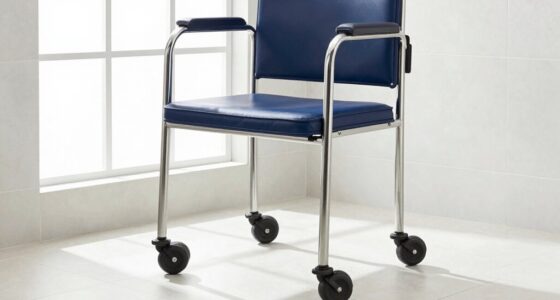
You should inspect bathroom safety equipment at least once a month to guarantee it’s secure and in good condition. Follow a regular maintenance schedule and adhere to replacement guidelines, especially for items like grab bars, non-slip mats, and shower chairs. Replace any worn or damaged equipment promptly to prevent accidents. Regular checks help keep your loved ones safe and reduce the risk of slips and falls in the bathroom.
Are There Specific Bathroom Modifications Recommended for Different Mobility Impairments?
Of course, everyone with mobility issues should get a mansion-sized bathroom with every gadget imaginable! But realistically, you’ll want grab bars installed for stability and shower chairs for those who can’t stand long. For wheelchair users, roll-in showers and higher toilets make life easier. Tailor modifications to your specific needs, ensuring safety and independence—because a few strategic changes beat a bathroom full of unnecessary bells and whistles any day.
What Are Signs of Wear or Damage in Safety Equipment That Need Immediate Attention?
You should look for signs of wear or damage in safety equipment like tactile indicators and non-slip coatings, such as peeling, cracking, or thinning surfaces. If tactile indicators are loose or missing, or if non-slip coatings are worn smooth, replace or repair them immediately. These signs undermine safety, increasing the risk of slips and falls. Regular inspections ensure your bathroom remains a secure environment for everyone.
How Can Caregivers Effectively Communicate Bathroom Safety Protocols to Seniors?
To effectively communicate bathroom safety protocols, focus on fostering clear, consistent communication. Use visual aids like signs or diagrams to highlight safety steps, making instructions memorable. Employ feedback techniques, such as asking questions or encouraging seniors to repeat instructions, ensuring understanding. Keep your tone friendly and patient, and always reinforce safety messages regularly, creating a safe, supportive environment where seniors feel confident following bathroom safety practices.
Are There Legal Requirements or Standards for Bathroom Safety Installations?
Yes, there are legal standards and safety regulations that guide bathroom safety installations. You need to guarantee that grab bars, non-slip flooring, and accessible fixtures meet local building codes and the Americans with Disabilities Act (ADA) standards. These regulations help prevent accidents and protect both caregivers and seniors. Always check with your local authorities or a licensed installer to ensure your bathroom complies with all relevant safety standards.
Conclusion
So, next time you’re marveling at your perfectly organized bathroom, remember that safety is no accident. With a few simple upgrades and vigilant routines, you can turn that treacherous ‘death trap’ into a sanctuary of stability. After all, preventing falls isn’t just about avoiding bruises; it’s about giving your loved ones the dignity of independence—without turning your bathroom into a scene from a slapstick comedy. Stay vigilant, stay safe, and keep the falls at bay.