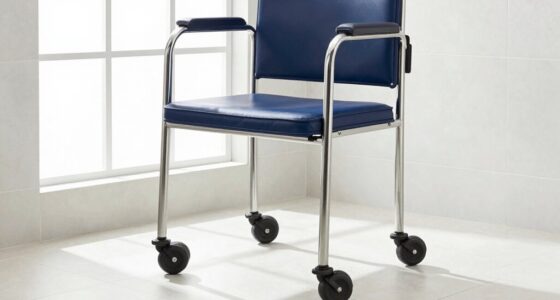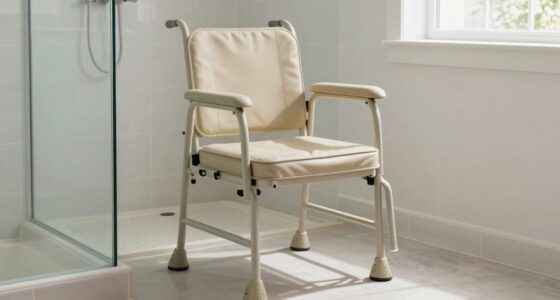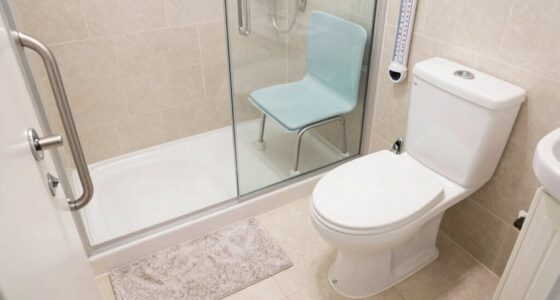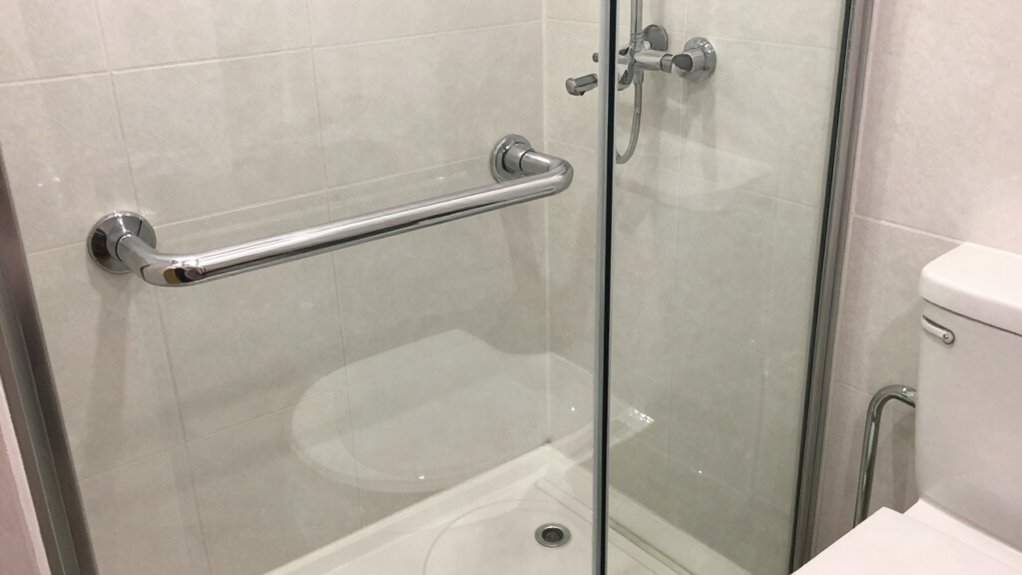

You should consider modifying your bathroom for senior safety when you notice hazards like slippery surfaces, poor lighting, or fixtures that are difficult to use. Signs of mobility issues, frequent falls, or dizziness also signal it’s time for upgrades. If you or a loved one experience discomfort, injuries, or difficulty staying safe during bathroom activities, taking action now can prevent accidents. Keep going to discover how these modifications can protect independence and boost confidence.
Key Takeaways
- Notice frequent slips, falls, or near misses during bathroom activities.
- Experience difficulty standing, sitting, or maintaining balance in the bathroom.
- Observe hazards like poor lighting, slippery surfaces, or clutter that increase trip risks.
- Have health conditions such as arthritis or mobility issues that affect bathroom safety.
- Recognize signs of aging or physical changes that compromise bathroom accessibility and stability.
How to Tell If Your Bathroom Is Unsafe for Seniors
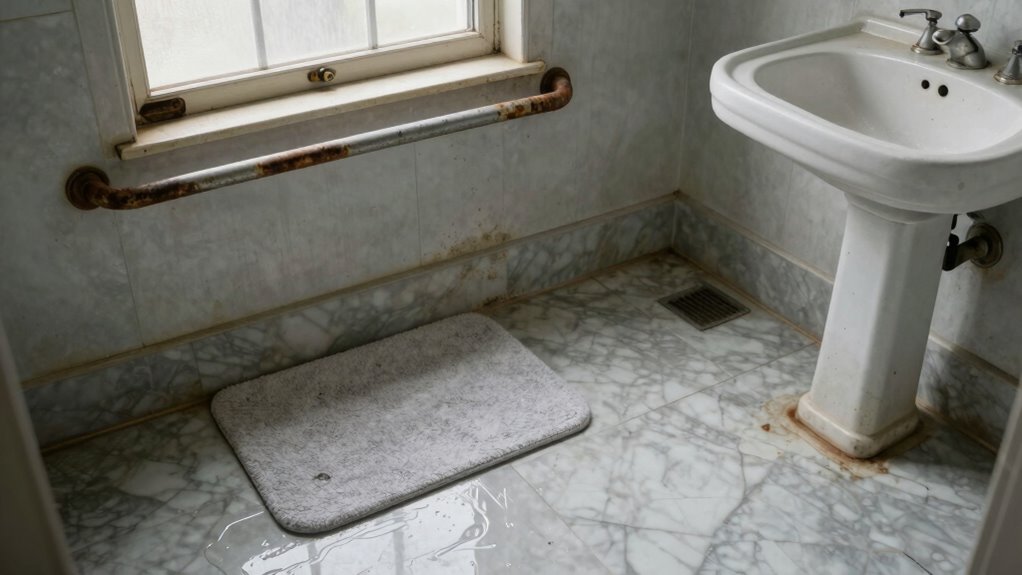
To determine if your bathroom is unsafe for seniors, start by inspecting key areas that could pose hazards. Check the bathtub safety; look for slippery surfaces, high sides, or the absence of grab bars. If stepping into or out of the tub feels unstable, it’s a clear sign to consider modifications. Also, evaluate the toilet height—if it’s too low, seniors may struggle to sit down or stand up easily, increasing fall risk. Confirm there’s enough space around fixtures to prevent tripping. Examine lighting as well; poor illumination can cause accidents. Additionally, conducting a seasonal maintenance check can help identify issues like mold or moisture buildup that could compromise safety. Proper fixture placement and thoughtful layout can significantly reduce hazards and improve accessibility. Conducting a home safety assessment can help identify potential risks and prioritize necessary upgrades. Reviewing home safety assessments and making necessary adjustments can further enhance bathroom safety for seniors. These simple assessments reveal whether your bathroom needs adjustments to reduce fall risks and take into account safety. Addressing these issues promptly can make your bathroom much safer for seniors.
How to Evaluate Your Bathroom’s Safety Features and Risks
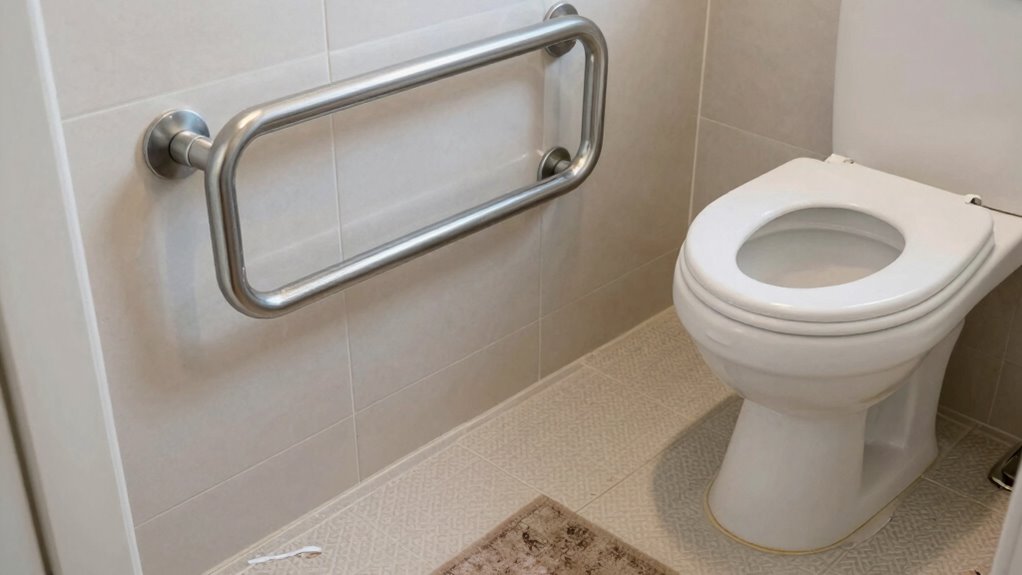
Evaluating your bathroom’s safety features and risks involves a straightforward inspection of key elements that impact senior safety. Start by examining your bathtub – consider whether bathtub modifications, like grab bars or non-slip mats, are needed to prevent falls. Check the lighting; poor illumination can cause accidents, so lighting improvements are essential to ensure the space is well-lit, especially in darker areas. Look for slippery surfaces, loose tiles, or uneven flooring that could pose hazards. Assess the height and accessibility of fixtures, such as sinks and toilets, to determine if they’re senior-friendly. Clear clutter and remove obstacles that could cause tripping. Additionally, incorporating free floating elements can enhance both safety and aesthetics by reducing clutter and creating open, accessible spaces. Using slip-resistant flooring options can further decrease the risk of falls, especially in high-traffic or wet areas. Pay attention to mobility aids placement to ensure they are within easy reach and do not create new hazards. Conducting a regular home safety assessment can help identify potential risks before they lead to accidents. Taking these steps helps identify potential risks and informs necessary modifications, creating a safer, more accessible bathroom environment.
Signs That Mobility or Balance Issues Require Bathroom Modifications

If you notice you’re falling or nearly falling in the bathroom, it’s a clear sign you need to contemplate modifications. Difficulty getting up or sitting down also points to safety concerns. Addressing these issues early can help prevent serious accidents. Additionally, feeling unsteady or experiencing dizziness during bathroom activities may indicate the need for mobility improvements, appropriate safety measures, and modern safety technology can further enhance bathroom safety for seniors. Recognizing age-related physical changes can guide timely adjustments to prevent injuries. Incorporating family photoshoot fails insights such as unplanned weather changes or miscommunication can remind us that proactive planning minimizes surprises and enhances safety.
Frequent Falls or Near Misses
Frequent falls or near misses in the bathroom are clear warning signs that your mobility or balance may be declining. If you’re struggling to stay steady, consider bathroom modifications like bathtub upgrades to reduce slipping hazards. Installing grab bars or non-slip mats can provide additional support, helping you stay safe. Lighting improvements are also essential—bright, well-placed lights reduce shadows and make it easier to see obstacles. If you find yourself constantly catching yourself or feeling unsteady, it’s time to evaluate your bathroom environment. Addressing these issues early can prevent more serious falls and injuries. Additionally, home safety assessments can help identify other potential hazards before an accident occurs. Regularly reviewing your mobility and balance can help determine if further modifications are needed. Being proactive with home safety measures can significantly reduce fall risks and promote confidence in everyday activities. Incorporating accessible design principles ensures your bathroom remains safe and functional as your needs change. Don’t wait until a fall happens—making these adjustments now can give you confidence and safety during your daily routines.
Difficulty Standing or Sitting
Struggling to stand up or sit down comfortably is a clear sign that your mobility or balance may be declining, and it’s time to contemplate bathroom modifications. If you experience standing difficulty or sitting challenges, safety becomes a concern. You might find yourself needing extra support or taking longer to get seated or upright. These signs suggest your current setup may no longer be safe or practical. A safe bathroom environment is essential to prevent falls and injuries. Consider these indicators: – Frequent near-falls when switching between sitting and standing – Using furniture or walls to steady yourself – Feeling unsteady or unbalanced during transfers – Pain or discomfort when sitting or standing – Increased fatigue during bathroom routines. Addressing these issues early can prevent falls and improve safety in your bathroom. Recognizing ear wax odor or other unusual smells can sometimes signal underlying health issues, emphasizing the importance of a properly equipped bathroom for maintaining safety and independence. Additionally, being aware of adaptive safety features can help you create a more secure environment tailored to your needs. Incorporating supportive fixtures such as grab bars or seating can further enhance safety and ease of use.
Common Bathroom Accidents That Signal Safety Concerns
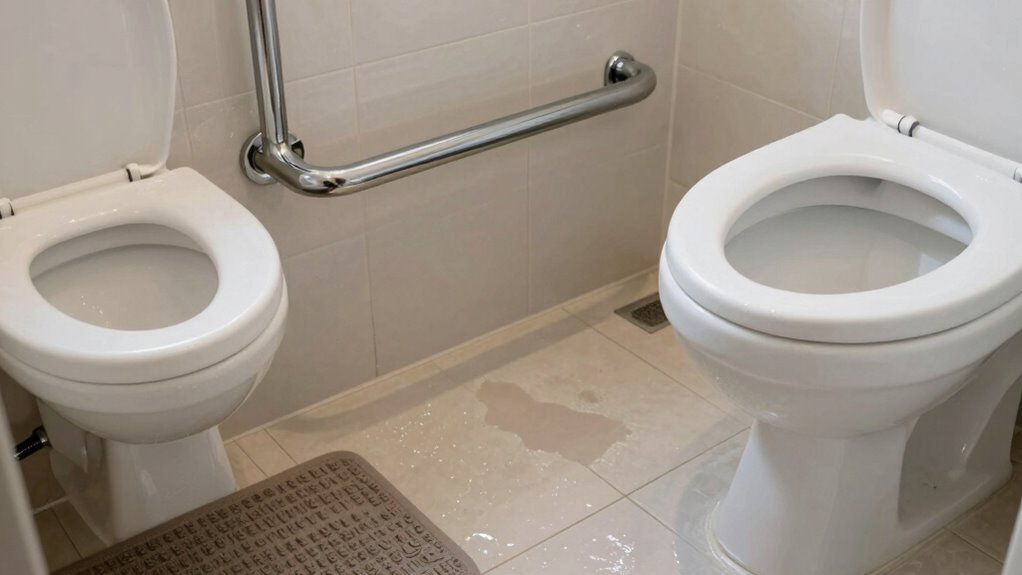
Bathroom accidents are common signs that safety improvements are needed, especially for seniors. Slips and falls in the bathroom often happen on wet floors or from unstable surfaces. You might notice frequent slips when stepping into the shower or bathtub, highlighting the need for bathtub renovations like grab bars or non-slip mats. Falling while reaching for toiletries or balancing on a shaky vanity can also signal safety issues. These accidents often occur due to outdated fixtures or poor lighting. Upgrading your vanity with better lighting or installing slip-resistant flooring can markedly reduce risks. Recognizing these accidents early helps you decide when to implement safety modifications, making your bathroom a safer space and preventing future injuries. Incorporating safety assessment tools can help identify hazards before accidents happen. Additionally, integrating smart home fitness technology elements, such as sensors or connected devices, can further monitor and alert you to potential hazards, enhancing overall bathroom safety. Regularly inspecting bathroom fixtures for wear and damage is also crucial to maintain a safe environment.
Health Conditions That Mean You Need Bathroom Safety Upgrades
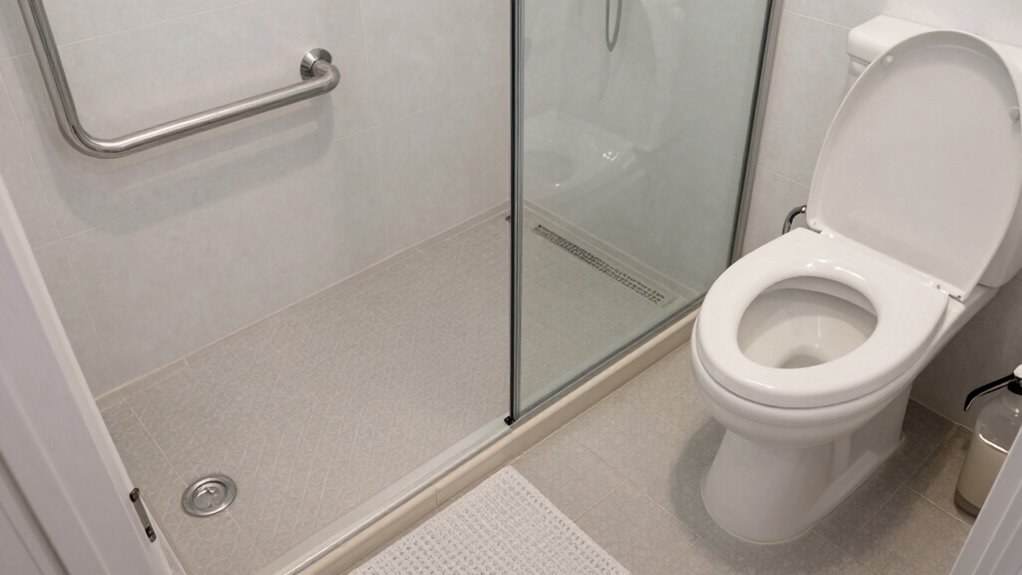
Certain health conditions can considerably increase the risk of accidents in your bathroom, making safety upgrades essential. If you have arthritis, limited mobility, balance issues, or neurological conditions, small hazards become bigger dangers. You might struggle with maintaining dental hygiene, which can lead to longer bathroom stays, increasing fall risk. Conditions like vision impairment or weakness also make kitchen accessibility relevant, as hazards in other areas can spill over. To stay safe, consider these needs:
- Installing grab bars and non-slip mats
- Using raised toilet seats
- Improving lighting for better visibility
- Adding easy-to-reach storage
- Ensuring bathroom entry is barrier-free
These upgrades can help you stay independent and safe despite your health challenges.
What Are the Best Safety Features to Add to Your Bathroom?
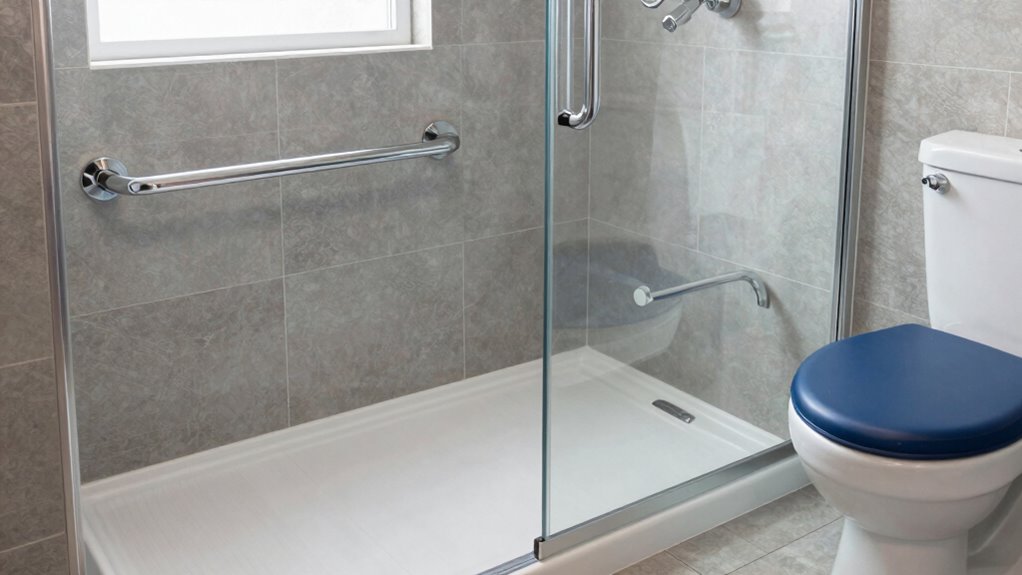
Adding the right safety features to your bathroom can considerably reduce the risk of falls and injuries. Installing grab bars near the toilet and shower provides essential support, while non-slip mats and decorative tiles with textured surfaces improve footing. Consider upgrading to luxury fixtures like walk-in showers with low thresholds, making entry safer and easier. A handheld showerhead adds convenience and safety, especially for seated use. Adequate lighting, including night lights, ensures visibility without straining your eyes. To enhance aesthetics and safety, opt for decorative tiles that are slip-resistant yet stylish. These features combine function and design, creating a safer, more comfortable bathroom environment tailored to your needs.
When Should You Consult Professionals for Bathroom Safety Improvements?

Knowing when to bring in professionals for bathroom safety improvements is crucial to ensuring your space remains secure and accessible. You should consult experts if you notice issues like unstable fixtures or difficulty maintaining aesthetic considerations such as decorative fixtures that match your decor. Professionals can assess your bathroom’s layout and recommend upgrades that balance safety with style. Consider calling in specialists if you experience:
Know when to consult professionals for bathroom safety and aesthetic upgrades.
- Persistent water leaks or plumbing problems
- Difficulty installing or maintaining decorative fixtures
- Non-compliant safety features
- Structural concerns like uneven flooring
- Need for customized solutions that preserve aesthetics
Engaging professionals early ensures modifications meet safety standards without sacrificing your bathroom’s look. They can help you incorporate aesthetic considerations seamlessly into functional safety upgrades, ensuring your space remains both beautiful and secure.
Key Bathroom Modifications to Keep Seniors Safe and Independent

To keep seniors safe and independent in the bathroom, focus on key modifications like proper grab bar placement, non-slip surfaces, and accessible shower designs. These changes provide stability and reduce fall risks during daily routines. Implementing these features makes the bathroom safer and more user-friendly.
Grab Bars Placement
Proper placement of grab bars is essential for guaranteeing seniors can maintain balance and prevent falls in the bathroom. You should position grab bars strategically around the toilet, shower, and bathtub areas to maximize stability. When considering grab bars placement, think about common fall points and where support is most needed. Use different bathroom grab bar types to suit each location, such as straight bars for the toilet and angled bars for the shower. Keep in mind that bars should be installed securely into wall studs or with appropriate anchors. Proper placement not only improves safety but also promotes independence. Remember these tips:
- Install near the toilet, within easy reach
- Place in the shower for stable entry and exit
- Use angled bars for corner spaces
- Position at a comfortable height
- Ensure they are easy to grip and sturdy
Non-Slip Surfaces
Installing non-slip surfaces in your bathroom is a key step in reducing fall risks for seniors. Non-slip surfaces, like textured tiles or specialized safety mats, provide better traction, especially in wet areas. Safety mats are an affordable and easy-to-install option that offer immediate grip and stability. Confirm these mats have non-slip backs to prevent shifting. Additionally, consider replacing smooth flooring with textured materials designed for slip resistance. Regularly clean and inspect these surfaces to maintain their effectiveness. Remember, even small improvements can make a significant difference in preventing falls and promoting independence. By incorporating non-slip surfaces and safety mats, you create a safer environment where seniors can bathe and move around with confidence.
Accessible Shower Design
Designing an accessible shower is essential for maintaining safety and independence in your bathroom. Proper shower accessibility guarantees you can bathe comfortably while reducing fall risks. Focus on bathing ergonomics to create a space that’s safe and easy to use. Consider these key features:
- Walk-in or curbless entry for easy access
- Grab bars strategically placed for support
- A built-in shower seat or bench for comfort
- Non-slip flooring to prevent slips
- Handheld showerheads for better control
How to Budget and Plan for Bathroom Safety Upgrades
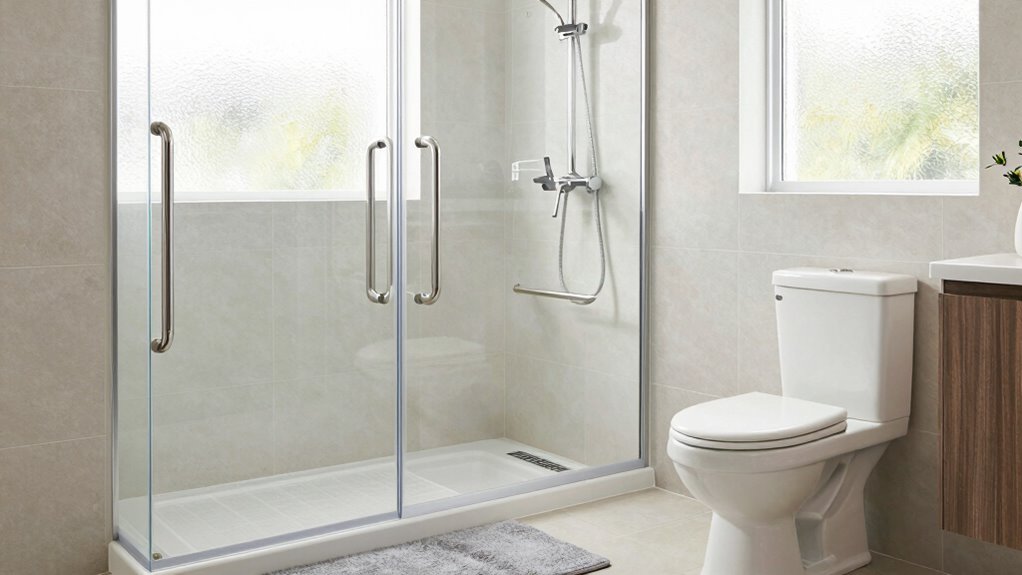
Planning your bathroom safety upgrades starts with setting a realistic budget and understanding what improvements are necessary. Begin by listing essential features like grab bars and non-slip flooring, then consider luxury fixtures or decorative tiles to add style. To help organize, use this table:
| Priority Items | Estimated Cost |
|---|---|
| Grab bars and handrails | $200 – $500 |
| Non-slip flooring | $1,000 – $3,000 |
| Luxury fixtures | $2,000 – $5,000 |
| Decorative tiles | $1,500 – $4,000 |
Review your budget regularly, and plan for unexpected costs. This approach guarantees you balance safety needs with aesthetic upgrades, creating a bathroom that’s both secure and inviting.
Frequently Asked Questions
How Often Should I Reassess My Bathroom’s Safety Features?
You should reevaluate your bathroom’s safety features every six months or after any significant change, like installing new fixtures or noticing hazards. Check that bathroom lighting is bright enough, non-slip mats are in good condition, and grab bars are secure. Regular inspections ensure these safety measures remain effective, minimizing fall risks. Staying proactive helps keep your bathroom safe and comfortable as your needs evolve over time.
Are There Specific Age Milestones That Trigger Bathroom Modifications?
Age milestones like turning 65, 75, or 80 often serve as safety triggers for bathroom modifications. When you notice balance issues, reduced strength, or mobility challenges around these ages, it’s time to contemplate upgrades. Installing grab bars, non-slip mats, or walk-in showers can considerably prevent accidents. Don’t wait until a fall happens; proactively address these safety triggers to keep your bathroom secure as you age.
What Are Cost-Effective Ways to Improve Bathroom Safety?
You can boost bathroom safety without breaking the bank by installing grab bars and placing non-slip mats. These simple upgrades are cost-effective and quickly reduce fall risk. Start by adding grab bars near the shower and toilet, ensuring they’re securely anchored. Use non-slip mats inside and outside the tub or shower to prevent slips. These affordable improvements can make a significant difference in safety and confidence.
How Do I Involve Seniors in Safety Decision-Making?
You should involve seniors in safety decision-making by actively engaging them in discussions about their needs and preferences. Encourage caregiver involvement to guarantee their concerns are heard, and address medication management to prevent accidents. Ask open-ended questions, listen carefully, and respect their opinions. This collaborative approach fosters independence, boosts confidence, and ensures safety modifications truly meet their daily needs. Your involvement makes safety adjustments more effective and empowering for seniors.
Can Temporary Modifications Provide Adequate Safety During Recovery?
You might find that temporary solutions can provide adequate safety during recovery, especially if your home undergoes thorough safety assessments. Coincidentally, these quick fixes often prevent accidents just when you need them most. While they’re helpful for short-term needs, keep in mind that regular evaluations guarantee your environment remains safe. Trust your instincts and consult professionals to determine if temporary modifications will truly protect you during this vulnerable time.
Conclusion
If your bathroom feels like a slippery hazard or a tricky maze, it’s time to make some upgrades. Picture stepping into a safe, warm haven where every grab bar and non-slip tile gives you confidence. By recognizing the signs and acting early, you turn your bathroom into a secure oasis — a place where independence and comfort flow seamlessly, letting you enjoy every shower and rinse with peace of mind.