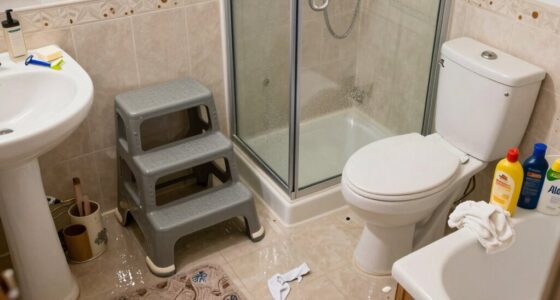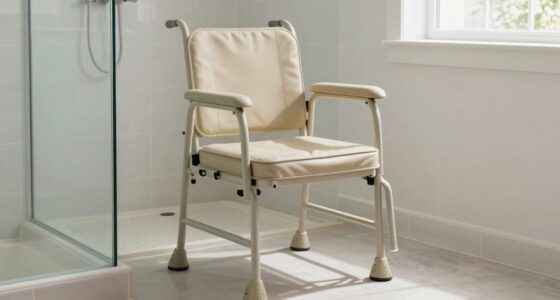
To make a senior’s bathroom safer in one weekend, start by evaluating hazards like slippery surfaces, clutter, and poor lighting. Install grab bars near the toilet, shower, and tub, and consider non-slip flooring or mats. Improve lighting with bright overhead fixtures and nightlights, and organize toiletries within easy reach. Adding emergency alert systems provides extra safety. Follow these steps to create a safer space quickly — you’ll discover more tips to guarantee lasting safety soon after.
Key Takeaways
- Conduct a safety assessment identifying hazards and organizing essentials for easy access.
- Install grab bars, support rails, and emergency alert systems for added stability and quick help.
- Upgrade flooring with non-slip surfaces and strategically place safety mats in high-risk areas.
- Improve lighting with bright overhead fixtures, nightlights, and motion sensors for better visibility.
- Arrange toiletries logically, keep pathways clear, and add stability aids to create a safer bathroom environment.
How to Assess Your Bathroom for Senior Safety Hazards

Before making any safety improvements, you need to identify potential hazards in your bathroom. Start by examining the bathtub area, checking for slippery surfaces, uneven flooring, or sharp edges that could cause falls. Consider bathtub safety; is the tub easy to step into? Are there high sides or a slippery surface? Next, assess toilet accessibility. Is it at a comfortable height for easy sitting and standing? Is there enough space around the toilet for a walker or wheelchair? Look for clutter, loose rugs, or cords that could cause tripping. Make certain lighting is adequate, especially near the bathtub and toilet. Additionally, understanding bathroom hydraulics can help identify potential water flow issues that might contribute to safety hazards. Proper installation and maintenance of plumbing ensure water flows correctly and reduces slip risks. Being aware of water pressure fluctuations can also prevent unexpected water flow problems that might lead to safety concerns. Regularly inspecting drainage systems helps prevent clogs and water backup that could create hazards. Moreover, understanding water flow regulation can assist in maintaining consistent water pressure, reducing unexpected surges or drops that could pose safety risks. By thoroughly evaluating these areas, you’ll pinpoint key hazards and create a safer bathroom environment tailored to senior needs.
Prioritize Installing Support and Grab Bars in Key Areas

Installing support and grab bars in key areas of the bathroom can considerably reduce fall risks and improve safety for seniors. Properly placed support bars and grab rails provide stability when transferring, standing, or sitting. Focus on these areas:
Installing support and grab bars in key bathroom areas enhances safety and reduces fall risks for seniors.
- Near the toilet – support rails here help seniors lower themselves and stand up safely.
- Inside the shower or bathtub – grab rails prevent slips during bathing.
- Along the walls of the bathroom – support bars offer extra stability when moving across the space. Adding discreet, accessible mounting options can enhance both safety and aesthetics in the bathroom. Securely installed support bars and grab rails give seniors confidence and independence. They’re essential safety features that can prevent accidents before they happen. Incorporating secure installation methods ensures the support features remain reliable over time. Proper placement and installation of these features are vital for fall prevention and long-term safety. Additionally, choosing corrosion-resistant hardware can prolong the durability of safety fixtures in a humid environment. To further ensure safety, selecting hardware that is easy to clean and maintain can help keep the bathroom hygienic and functional. Prioritize these installations to create a safer bathroom environment in just a weekend.
Upgrade Flooring and Add Non-Slip Mats for Better Traction
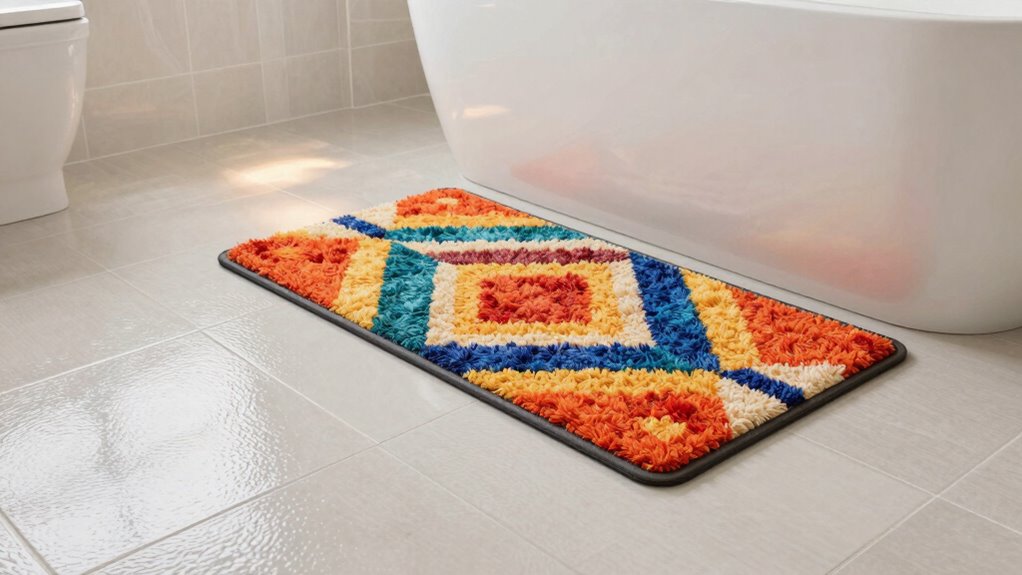
Upgrading to non-slip flooring can markedly reduce falls, so consider options like textured vinyl or rubber. Placing safety mats in high-risk areas such as near the shower and toilet provides extra traction where it’s needed most. These simple changes make your bathroom safer and give you peace of mind. Additionally, ensuring proper ventilation can prevent moisture buildup that contributes to slippery surfaces and mold growth. Proper installation is crucial for non-slip flooring to maintain its effectiveness and durability over time. Regularly inspecting and maintaining these surfaces will help ensure ongoing safety and performance. To maximize safety, choosing appropriate cleaning methods can help preserve the non-slip properties and prevent buildup of slippery residues. Understanding the importance of floor safety standards can guide you in selecting the best materials and practices for a safer bathroom environment.
Non-Slip Flooring Options
Choosing the right flooring is essential for preventing slips and falls in a senior’s bathroom. Think about options like slip resistant tiles, textured vinyl flooring, or waterproof rubber mats. These choices provide better grip and peace of mind. Here are three options to consider:
- Slip resistant tiles with textured surfaces to reduce slipperiness.
- Textured vinyl flooring, offering durability and improved traction.
- Non-slip mats placed strategically near the shower and sink for extra safety.
- Incorporating non-slip flooring options that are designed specifically to enhance safety in wet environments can further reduce accident risks. Selecting flooring with slip resistance features tailored for wet areas is crucial for optimal safety. Using wettability-resistant materials can help maintain traction even when surfaces are wet, providing additional security. Additionally, choosing flooring with enhanced slip resistance can significantly improve safety in frequently wet areas.
Placement of Safety Mats
To maximize safety, placing non-slip mats in key areas of the bathroom is essential. Focus on the shower and bathtub to prevent slips, especially where water temperature changes can cause sudden movements. Make certain mats are securely positioned to avoid bunching, reducing fall risks. Proper bathroom ventilation helps keep surfaces dry and minimizes mold, which can make flooring slippery over time. Consider adding mats near the sink and toilet for extra traction when standing up or sitting down. Regularly check that mats stay in place and are clean to prevent mold buildup. Additionally, choosing mats with anti-slip backing enhances stability and safety. Incorporating sound-absorbing materials into bathroom design can also reduce echo and improve overall comfort, indirectly supporting better safety awareness. Using mats with textured surfaces can further improve grip and reduce the risk of falls. Selecting appropriate flooring types can also significantly decrease the likelihood of slips and falls. Installing proper lighting can improve visibility and help seniors navigate the space more confidently. By strategically placing safety mats, you create a safer environment that reduces fall hazards and encourages confidence during bathroom use. This simple upgrade can make a significant difference in senior safety in just a weekend.
Improve Bathroom Lighting to Prevent Falls
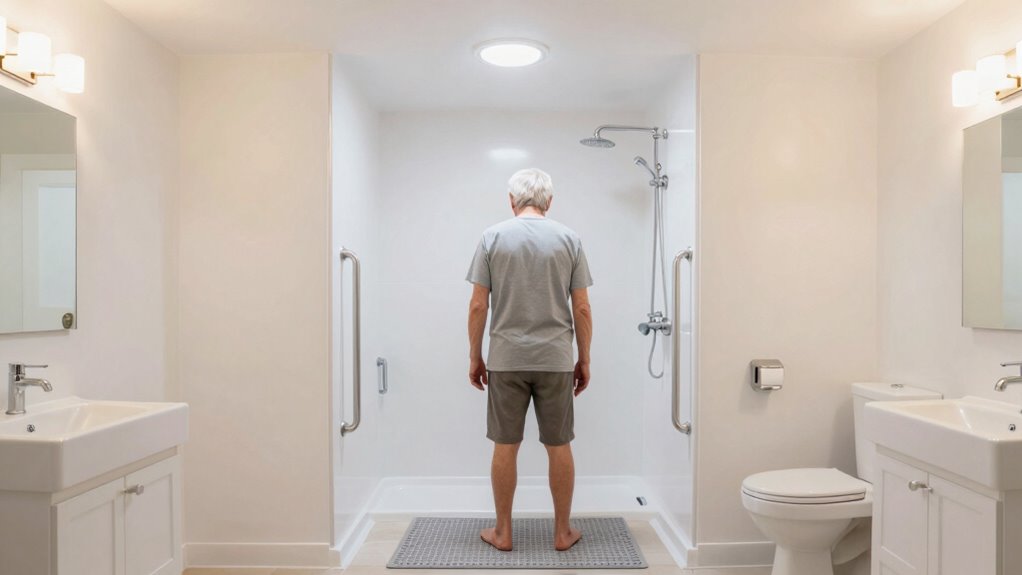
Installing enhanced overhead lighting guarantees the bathroom is bright enough to see clearly. Adding nightlights and motion sensors helps your loved one navigate safely, even during nighttime visits. These simple upgrades can make a big difference in preventing falls and increasing confidence. Incorporating essential oils for respiratory health, like eucalyptus or peppermint, nearby can also promote easier breathing if needed during nighttime visits. Ensuring proper lighting can also reduce trip hazards, further supporting safety.
Enhanced Overhead Lighting Options
Bright, well-placed overhead lighting can make a significant difference in preventing falls in a senior’s bathroom. Upgrading your overhead lighting fixtures ensures the space is evenly lit, reducing shadows that can cause accidents. Consider installing fixtures with adjustable brightness, so you can customize lighting levels as needed. To make control easy, replace standard switches with user-friendly lighting control switches, such as dimmers or switches with large, tactile buttons. This allows you to quickly adjust lighting without fumbling in the dark. Here are three impactful improvements:
- Use bright, glare-free overhead fixtures for consistent illumination.
- Incorporate dimmers for flexible lighting at different times.
- Install easy-to-use lighting control switches for quick adjustments.
These simple upgrades create a safer, more accessible bathroom environment.
Use Nightlights and Motion Sensors
Using nightlights and motion sensors can substantially reduce the risk of falls in a senior’s bathroom, especially during nighttime visits. Proper nightlights placement ensures areas like the toilet and sink are well-lit without being overpowering. When installing motion sensors, position them where they’ll detect movement early, such as near the entrance or along pathways. This setup provides instant lighting without fumbling for switches, helping seniors see obstacles clearly. Here’s a quick guide:
| Nightlights Placement | Motion Sensor Installation |
|---|---|
| Near the toilet | Doorway entrances |
| By the sink | Pathways across the bathroom |
| On the floor or wall | Close to shower or tub areas |
| At ankle height | Corners with potential hazards |
This strategic placement enhances safety and minimizes fall risks.
Organize Fixtures and Storage for Easy Accessibility
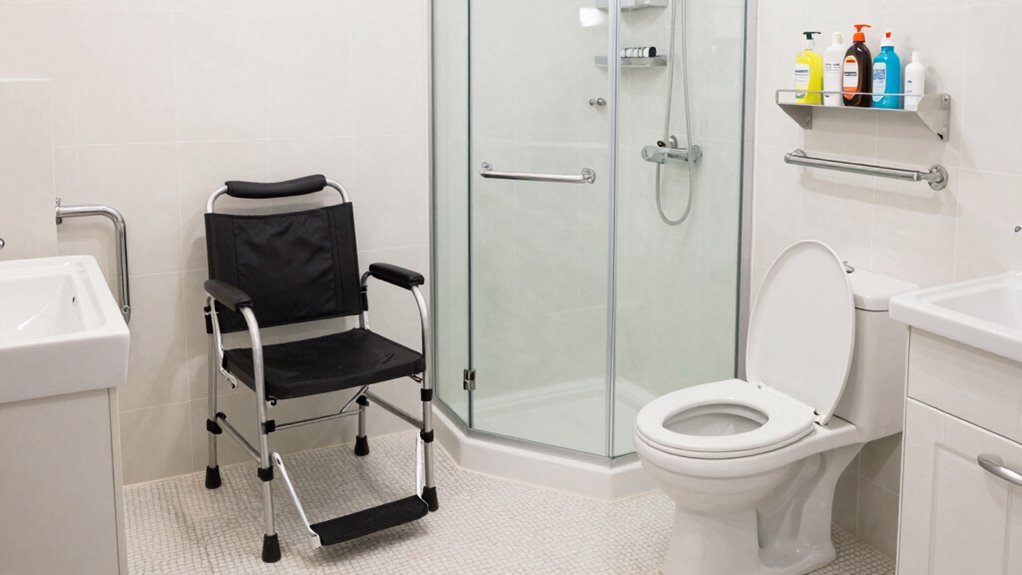
To make a senior’s bathroom safer, it’s essential to organize fixtures and storage in a way that promotes easy access. Start with shower organization: keep frequently used items within arm’s reach, and consider installing a shower bench or grab bars for added stability. Next, ensure toilet accessibility by placing the toilet at a comfortable height and removing any obstacles nearby. Finally, declutter countertops and shelves so essentials are clearly visible and easy to grab. With these steps, you create a safer environment that reduces slips and falls.
Organize fixtures and storage for easy access to enhance senior bathroom safety and reduce falls.
- Keep daily toiletries close to the sink for quick access.
- Use wall-mounted storage to free up floor space.
- Arrange items logically to avoid unnecessary reaching or bending.
Making these adjustments can greatly improve safety and independence in the bathroom.
Enhance Overall Bathroom Safety With Emergency Alert Systems

Adding an emergency alert system to the bathroom is a simple way to boost safety and provide peace of mind. With emergency alerts in place, seniors can quickly summon help if they fall or experience a medical issue. Many systems now include fall detection technology, which automatically notifies caregivers if a fall occurs, even if the senior can’t press a button. This immediate response can prevent serious injuries and reduce anxiety for both seniors and their loved ones. Installing a waterproof, easy-to-use device near the toilet or shower ensures help is always accessible. Regularly test the system to confirm it works properly. By investing in emergency alerts with fall detection, you make your bathroom safer and ensure help is just a button away in an emergency.
Quick Tips for Maintaining a Safe Bathroom Environment
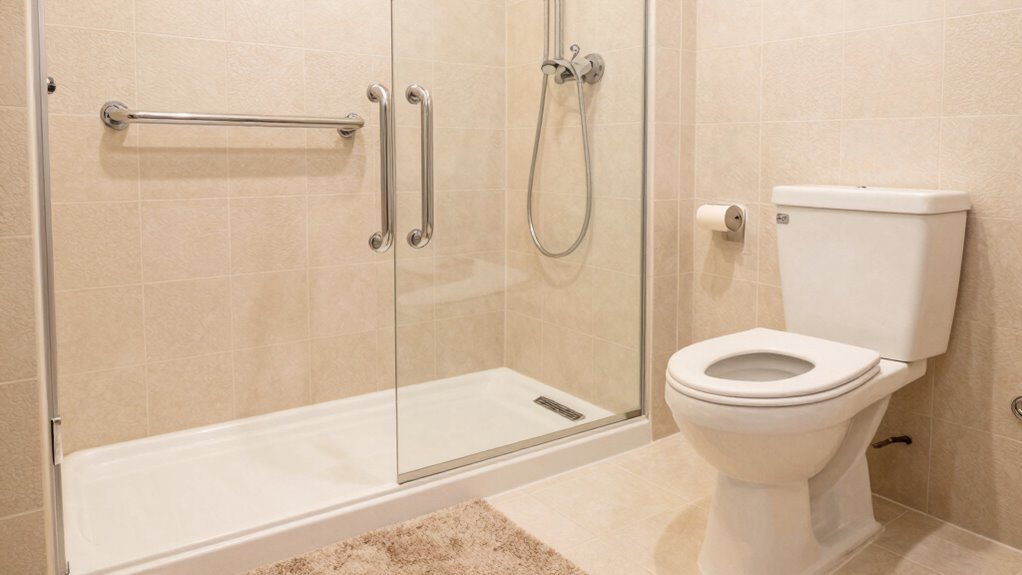
Maintaining a safe bathroom environment involves regular checks and simple modifications that can prevent accidents. Start by inspecting your bathroom decor—ensure grab bars are secure and accessible, and remove clutter that could cause trips. Next, schedule routine plumbing repairs to avoid leaks or water on the floor, reducing slip hazards. Finally, keep the bathroom well-lit to improve visibility and prevent falls.
Here are quick tips to keep things safe:
- Regularly check grab bars and replace loose fixtures immediately.
- Keep floors dry and use non-slip mats in the shower and tub.
- Update bathroom decor with bright, contrasting colors to highlight hazards and enhance visibility.
These small steps make a big difference in creating a safer environment for seniors.
Frequently Asked Questions
What Budget Should I Allocate for Bathroom Safety Upgrades?
You should allocate around $200 to $500 for bathroom safety upgrades, depending on your safety assessment and specific needs. Start with budget planning by identifying essential items like grab bars and non-slip mats. Prioritize safety features based on the senior’s mobility and balance. Remember, investing in key safety upgrades can prevent accidents and save costs on future healthcare expenses, making your budget both effective and essential for a safer bathroom.
How Can I Involve Seniors in Safety Modifications?
Did you know seniors are 50% more likely to experience bathroom falls? To involve seniors in safety modifications, encourage their active participation through safety education and listening to their preferences. Engage them in choosing non-slip mats, grab bars, and accessible fixtures. By respecting their input and fostering senior engagement, you’ll make safety upgrades feel personalized and empowering, increasing their confidence and ensuring the modifications truly meet their needs.
Are There Specific Brands Recommended for Grab Bars?
Some top grab bar brands include Moen, Grab Bars by Allied Brass, and Vitality Collection, offering durable safety hardware options. These brands are known for sturdy construction and easy installation, making them ideal choices for senior bathroom safety. When selecting grab bars, consider weight capacity, slip-resistant coating, and proper placement to guarantee maximum support. Investing in reputable brands helps create a safer environment that’s reliable and user-friendly.
How Long Does a Typical Bathroom Safety Upgrade Take?
A bathroom safety upgrade typically takes about a weekend. You’ll install better bathroom lighting to reduce shadows, add non-slip mats for secure footing, and secure grab bars in key areas. With some planning, you can complete these improvements in a couple of days, ensuring a safer environment for your senior loved one. Prioritize high-traffic spots like the shower and toilet for maximum safety benefits.
Can DIY Modifications Meet Safety Standards?
Yes, DIY modifications can meet safety standards if you carefully follow home improvement guidelines and safety regulations. You should research local codes, choose appropriate fixtures like grab bars and non-slip mats, and verify proper installation. While some projects are straightforward, complex upgrades might require professional help to guarantee they comply with safety regulations. Always prioritize quality materials and proper techniques to create a safe, accessible bathroom for seniors.
Conclusion
So, in just a weekend, you’ve turned a potentially hazardous bathroom into a safe haven—who knew safety could be so quick? Ironically, the most important upgrades are often the simplest ones we overlook, like adding grab bars or better lighting. Now, your senior can enjoy independence without the fear of falls—proof that a little effort really does go a long way. Because nothing says “safe and sound” like a bathroom that’s been crash-test approved in just two days.