To choose anti-slip footwear for arthritic feet, look for shoes with deep, textured soles made from rubber or TPU to guarantee good grip on various surfaces. Prioritize models with supportive arch support, heel stability, and a roomy toe box for comfort and swelling. Lightweight, flexible designs with cushioned insoles help reduce joint pressure. Considering style, durability, and pricing ensures you find the right fit. Keep these key points in mind as you explore options that improve safety and comfort daily.
Key Takeaways
- Choose shoes with slip-resistant soles featuring deep treads and textured patterns for optimal grip on wet or oily surfaces.
- Prioritize footwear with firm heel counters and reinforced edges to enhance stability and prevent slips during movement.
- Select models with flexible, shock-absorbing soles made of rubber or thermoplastic elastomers to reduce joint pressure and improve traction.
- Ensure proper fit with wide toe boxes and cushioned insoles to prevent pinching, provide support, and minimize slipping risks.
- Look for additional safety features like multidirectional treads and anti-slip surface textures to maximize balance and confidence.
Understanding the Needs of Arthritic Feet

Since arthritic feet often experience pain, swelling, and reduced stability, understanding their specific needs is essential for choosing effective footwear. You’ll want shoes that provide ample cushioning to ease pressure on painful joints and accommodate swelling without tightness. Support is vital—look for footwear that offers firm arch and heel stability to prevent imbalance and reduce discomfort. Flexibility matters too, so your shoes shouldn’t restrict natural foot movement. Lightweight designs can help reduce fatigue, while a wider toe box prevents pinching and allows swelling. Easy-to-wear features like Velcro straps or slip-on styles make dressing simpler and safer. Additionally, selecting self-watering plant pots with proper drainage can serve as a helpful analogy for understanding how supportive footwear manages moisture and pressure, ultimately enhancing comfort and mobility. Proper supportive footwear can also help distribute pressure evenly across the foot, reducing the risk of further joint deterioration. Incorporating shock absorption features can significantly diminish impact stress on arthritic joints, improving overall comfort. Shoes with adequate sole cushioning can further absorb shocks and protect sensitive joints during daily activities. Furthermore, choosing footwear with adjustable straps can help achieve a better fit, accommodating swelling and reducing pinching. By focusing on these needs, you’ll find footwear that not only minimizes pain but also enhances confidence and mobility throughout your day.
Key Features of Anti-Slip Shoes
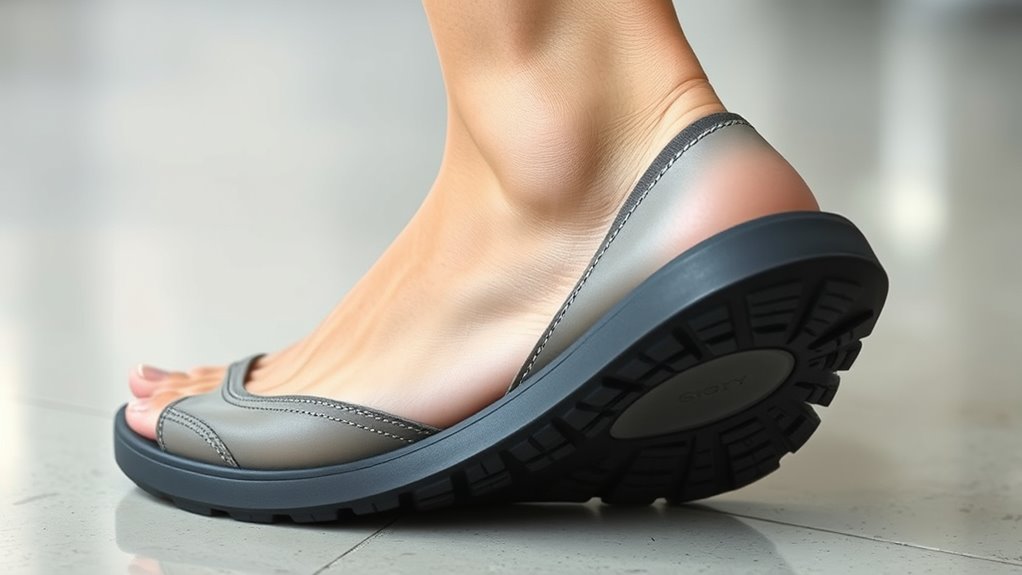
To guarantee safety and stability, anti-slip shoes must feature soles with high-traction materials that grip various surfaces effectively. These soles help prevent slips and falls, especially on wet or uneven ground. Look for shoes with textured or patterned outsoles that increase grip. Flexibility and proper fit are also key to maintaining balance and comfort. Additionally, lightweight designs reduce fatigue, making them easier to wear throughout the day. Incorporating effective filtration and pump protection into the selection process can further enhance safety and effectiveness.
Materials and Sole Construction
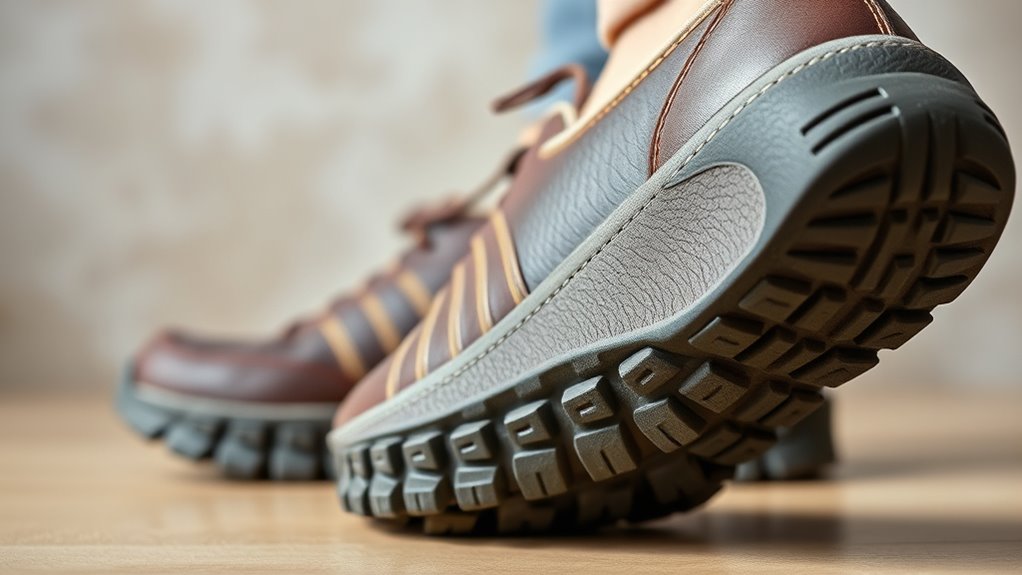
Choosing the right materials and sole construction is vital for guaranteeing anti-slip shoes provide both durability and effective grip. Look for soles made from rubber or thermoplastic elastomers, as these materials offer excellent traction on various surfaces. A textured or patterned sole enhances grip and reduces slip risk. Consider soles with deeper treads or multi-directional patterns for improved stability, especially on uneven or wet surfaces. The construction should prioritize flexibility and shock absorption, helping to minimize foot fatigue. Solid, well-constructed soles with reinforced edges also increase longevity and resistance to wear. Additionally, selecting soles designed with proper tread depth and surface patterns can significantly improve slip resistance in different environments. Proper sole design is especially important for arthritic feet, as it can help provide additional support and reduce discomfort during movement. Ultimately, selecting the right combination of materials and sole design ensures your footwear remains reliable in preventing slips and providing support for arthritic feet.
Proper Fit and Comfort Considerations
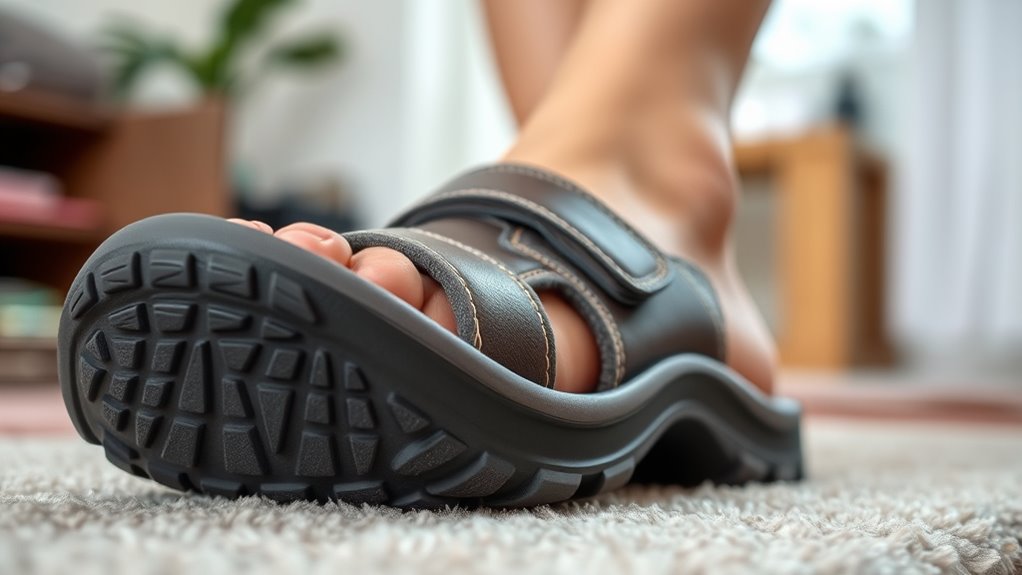
Getting the right fit starts with accurate size measurement to prevent discomfort and slipping. Look for footwear with cushioned support to reduce pressure on your arthritic feet. When choosing shoes, prioritize both proper sizing and added comfort features for the best fit. Additionally, selecting footwear with suitable sole grip can help prevent slips and provide better stability on various surfaces.
Accurate Size Measurement
Ensuring an accurate shoe size is essential for achieving proper fit and maximum comfort, especially for those with arthritic feet. To do this, measure your feet regularly, as size can change over time. Use a ruler or measuring tape to record the length from heel to longest toe, and measure the widest part of your foot. Do this while standing, since feet expand when bearing weight. Compare your measurements to size charts provided by manufacturers, as sizing varies. It’s best to measure both feet, and choose the size that fits the larger foot. Avoid relying on shoe sizes from previous purchases or online guesses. Proper measurement guarantees your footwear offers the right fit, reducing discomfort and enhancing stability.
Cushioned Foot Support
How can you make sure your footwear provides the right level of comfort and support for arthritic feet? Focus on cushioned foot support, which helps absorb shock and reduce pressure on painful joints. Look for shoes with padded insoles or removable inserts that can be customized with orthotics. The cushioning should feel soft but supportive, not overly squishy, to prevent instability. Verify the cushioning extends throughout the footbed, especially under the ball and heel, where pressure is greatest. Proper fit is essential—if shoes are too tight or loose, cushioning won’t work effectively. Test the shoes by walking around; they should feel comfortable, stable, and snug without pinching. Good cushioned support minimizes pain and fatigue, making daily activities more manageable.
Support and Stability Enhancements
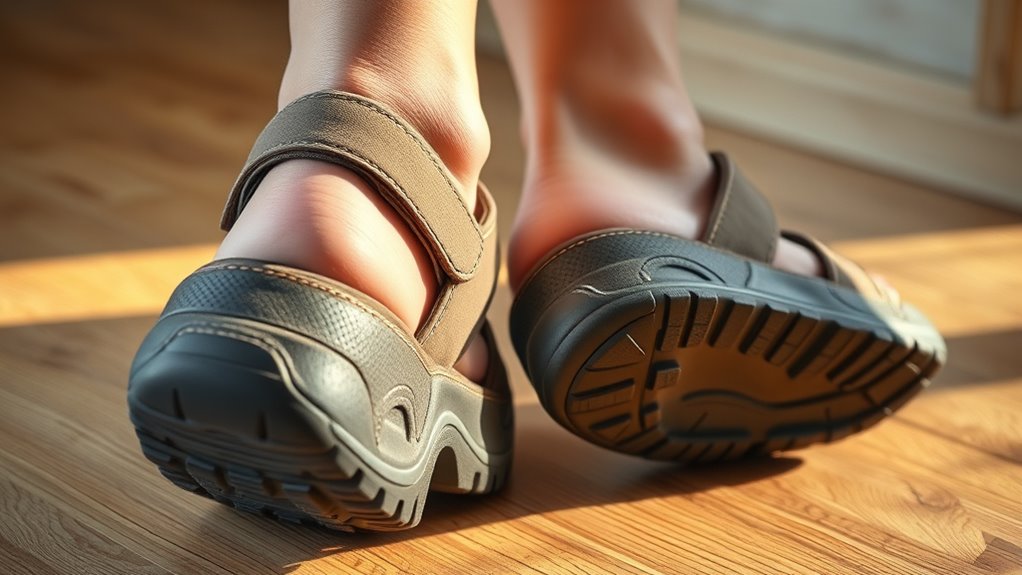
Support and stability are essential for your arthritic feet, and the right footwear can make a big difference. Features like non-slip soles, arch support, and heel stability help keep you balanced and reduce discomfort. Choosing shoes with these enhancements can improve your confidence and safety with every step. Being aware of narcissistic traits in others can help you recognize manipulative behaviors that might otherwise undermine your sense of security. Incorporating automated safety features in footwear technology is also emerging as a way to further enhance stability and prevent falls. Additionally, some innovative footwear options now include certified quality ingredients, ensuring durability and safety. Modern Kia Tuning techniques, such as suspension upgrades and performance enhancements, exemplify the importance of proper support and adjustment in vehicle stability, which can inspire improved design features in footwear technology.
Non-slip Sole Design
A well-designed non-slip sole plays a crucial role in providing both support and stability for those with arthritic feet. It helps prevent slips and falls by offering reliable grip on various surfaces, especially when your joints are sensitive. Look for soles with textured patterns, such as deep grooves or multidirectional treads, which improve traction. Rubber or rubber-like materials are ideal because they enhance grip and durability. Some soles also incorporate slip-resistant compounds that perform well even on wet or oily surfaces. Additionally, a thick, cushioned sole can absorb shock and reduce pressure on painful joints, further supporting stability. Remember, the goal is to find a sole that maintains grip and balance, giving you confidence with every step.
Arch Support Features
Effective arch support is essential for maintaining stability and reducing strain on arthritic feet. When choosing footwear, look for models with built-in arch support that contours to your foot’s shape, providing even weight distribution. This helps prevent overpronation or supination, which can worsen discomfort. Adjustable features like removable insoles allow you to customize support or insert orthotics for added stability. Look for firm yet cushioned arches that offer consistent support throughout the day. Proper arch support also helps align your foot, reducing stress on joints and alleviating pain. Avoid shoes with flat insoles or minimal support, as they can exacerbate instability. Prioritize footwear with reliable arch support to enhance comfort, improve balance, and protect your arthritic feet from unnecessary strain.
Heel Stability Options
To improve heel stability for arthritic feet, look for footwear that offers solid support and firm cushioning around the heel area. A stable heel counter helps lock your heel in place, reducing unwanted movement and minimizing pain. Shoes with a wide, deep heel cup provide added support and prevent slipping. Consider footwear with a slightly elevated heel to shift weight away from sensitive areas, offering better balance. Rubber or textured outsoles enhance grip and prevent slipping, especially on slick surfaces. Avoid shoes with flimsy or flexible heels that lack structure. Instead, choose models designed with reinforced heel sections or stabilizers. These features help keep your heel secure, improve overall stability, and make walking safer and more comfortable.
Durability and Maintenance of Footwear
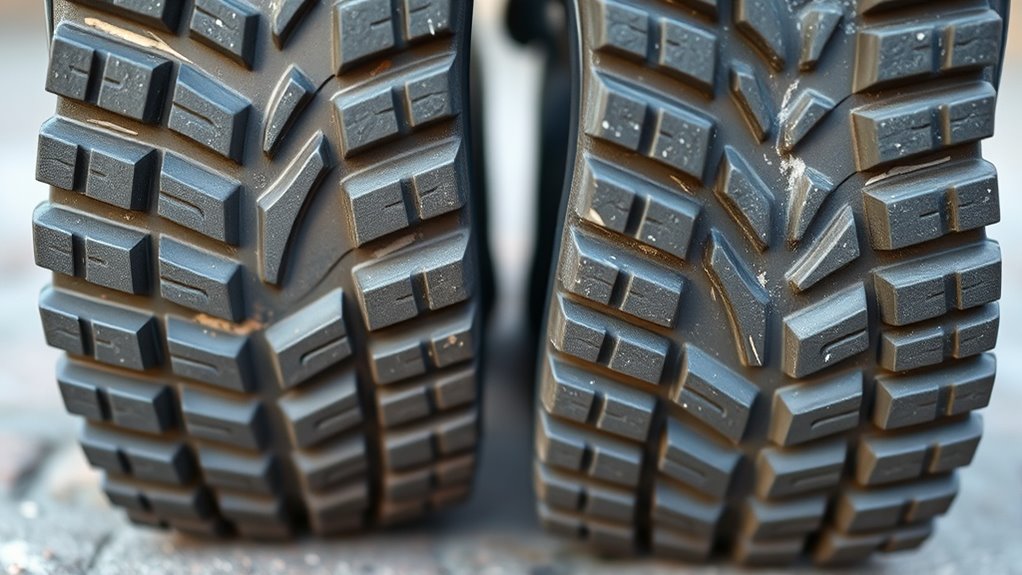
Ever wondered how to keep anti-slip footwear for arthritic feet in top condition? Proper maintenance extends the lifespan and guarantees safety. First, regularly clean the soles to remove dirt and debris that can reduce grip. Use a soft brush or damp cloth to avoid damaging materials. Next, check for signs of wear, especially on the tread and support areas. Address small damages early to prevent bigger issues. Store your footwear properly, avoiding damp or direct sunlight, which can degrade materials. Additionally, regular inspections help identify potential issues before they compromise safety. Incorporating proper cleaning routines can also help maintain the materials and enhance the grip over time. Regularly replacing worn-out soles or inserts ensures continued support and safety. Furthermore, rotating between pairs to reduce constant stress on one shoe can extend their usability. To keep your footwear in prime shape:
- Clean soles after each use
- Inspect for cracks or worn-out tread
- Store in a cool, dry place
- Avoid exposing shoes to harsh chemicals
A proper cleaning routine can also help maintain the materials and enhance the grip over time. Incorporating Volkswagen Tuning principles, such as checking for wear on key contact points, can further ensure your footwear remains safe and effective.
Style Options and Aesthetic Preferences
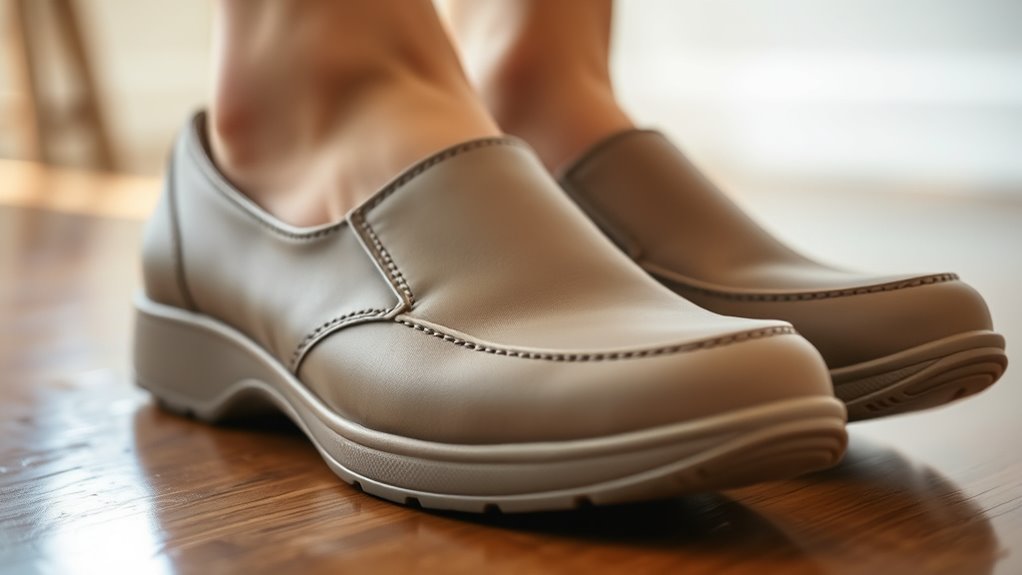
Are you looking for anti-slip footwear that complements your personal style? You’ll find a variety of options designed to match different tastes and occasions. If you prefer a classic look, loafers and sneakers with sleek designs and neutral colors can blend seamlessly into everyday wear. For a more casual vibe, slip-ons and sporty styles offer comfort without sacrificing appearance. If you like to make a statement, many brands now offer colorful or patterned shoes that still prioritize slip resistance. Materials like leather, suede, or breathable mesh can enhance the aesthetic while maintaining functionality. Additionally, considering aesthetic preferences and design elements can help you select footwear that aligns with your individual taste. Remember, choosing footwear that aligns with your style boosts confidence and encourages regular use, making it easier to prioritize safety without compromising your personal expression.
Budget-Friendly Choices and Value

Finding affordable anti-slip footwear that still offers reliable safety doesn’t mean you have to compromise on quality. There are budget-friendly options that provide good grip, support, and comfort without breaking the bank. Look for brands that focus on value, offering durable soles and breathable materials at a lower cost. Shopping during sales or clearance events can also save you money.
Consider these options:
- Generic brands with positive reviews
- Retail store discounts and clearance sales
- Online marketplaces offering affordable deals
- Shoe outlets with seasonal discounts
While saving money, guarantee the footwear still meets your safety needs and provides enough support for arthritic feet. You don’t have to spend a lot to find reliable, slip-resistant shoes that protect your feet and your wallet.
Tips for Testing and Choosing the Right Pair
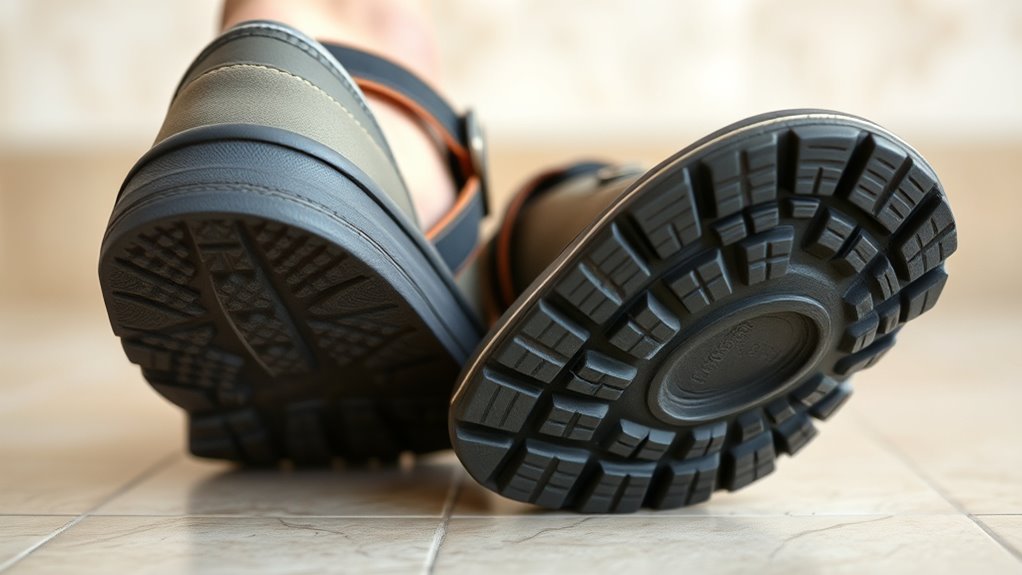
When selecting the right anti-slip footwear for arthritic feet, it’s essential to carefully test and evaluate each pair before making a purchase. First, try on the shoes and walk around in them to assess comfort and fit. Look for shoes that provide proper arch support and a wide toe box to avoid pressure points. Check the sole’s grip by testing it on different surfaces to ensure it’s slip-resistant. Pay attention to the shoe’s weight; lightweight options reduce fatigue. Ensure the footwear offers good cushioning and stability, especially around the heel and arch. Don’t rush the process—spend time walking in different conditions to see how they perform. Remember, the right pair should feel supportive, comfortable, and secure for everyday use.
Frequently Asked Questions
Can Anti-Slip Shoes Worsen Foot Conditions for Arthritic Patients?
You might wonder if anti-slip shoes can worsen your foot condition. Generally, they don’t, but if they don’t fit well or cause pressure points, they could aggravate arthritis symptoms. Make certain you choose footwear with proper support, cushioning, and a comfortable fit. Always consult with your healthcare provider before making changes, and prioritize shoes that promote stability without adding strain or discomfort to your arthritic feet.
Are Waterproof Anti-Slip Footwear Options Available for Arthritic Feet?
Yes, waterproof anti-slip footwear options are available for arthritic feet. You can find shoes designed with waterproof materials that also feature slip-resistant soles, offering both dryness and safety. These shoes help prevent slips and keep your feet dry, reducing discomfort and potential injuries. Look for options with supportive features tailored for arthritis, ensuring comfort and stability during daily activities. Always check for the right fit and specialized features for your needs.
How Often Should Anti-Slip Footwear Be Replaced for Optimal Safety?
You should replace your anti-slip footwear every 6 to 12 months, or sooner if you notice worn-out soles, reduced traction, or visible damage. Regularly inspect your shoes for signs of wear, especially if you have arthritis, as compromised footwear can increase your risk of slips and falls. Prioritize safety by replacing your shoes promptly to guarantee suitable grip and support, keeping you stable and secure during everyday activities.
Do Different Arthritic Foot Types Require Specific Shoe Modifications?
Different arthritic foot types do require specific shoe modifications to guarantee comfort and safety. You should consider adjustments like extra cushioning for swollen feet, wider toe boxes for bunions, or supportive insoles for flat feet. By customizing your footwear based on your unique condition, you’ll improve stability, reduce pain, and prevent further injury. Always consult a specialist to find the best modifications tailored to your specific arthritic foot type.
What Are the Signs of Inadequate Support in Anti-Slip Shoes?
Ever notice your feet feeling unstable or slipping unexpectedly? These are signs your shoes lack adequate support. You might also experience discomfort, aching, or the need to constantly readjust your footing. If your anti-slip shoes don’t provide a snug fit, or if you feel pressure points or heel lift, it’s time to reevaluate. Proper support ensures stability, comfort, and safety—so don’t ignore these warning signs.
Conclusion
Choosing the right anti-slip footwear is like planting a sturdy tree—your feet anchor your daily journey. With the right support, comfort, and grip, you create a foundation that withstands life’s storms. Think of each step as a brushstroke on your canvas of mobility, empowering you to move confidently and safely. Remember, investing in quality footwear is investing in your independence—nurture it, and watch your confidence flourish like leaves in spring.