
To make bathroom transfers safer after a stroke, assess the environment for hazards like slippery floors and clutter. Install sturdy grab bars near the toilet and shower, and consider adding a built-in or fold-down seat for comfort. Use non-slip flooring and ensure good lighting to improve visibility. Regularly check all fixtures and surfaces for safety. If you keep exploring, you’ll find practical tips to help you modify your bathroom for greater independence and safety.
Key Takeaways
- Install sturdy grab bars and support rails near toilet, shower, and tub for stable transfers.
- Use non-slip flooring and textured mats to prevent slips during bathroom movements.
- Improve lighting with bright, even illumination and night lights for visibility and safety at all times.
- Incorporate built-in or portable shower chairs and raised seats to facilitate comfortable sitting and transfers.
- Regularly inspect and maintain fixtures, grab bars, and flooring to ensure ongoing safety and stability.
Assessing Bathroom Safety Needs
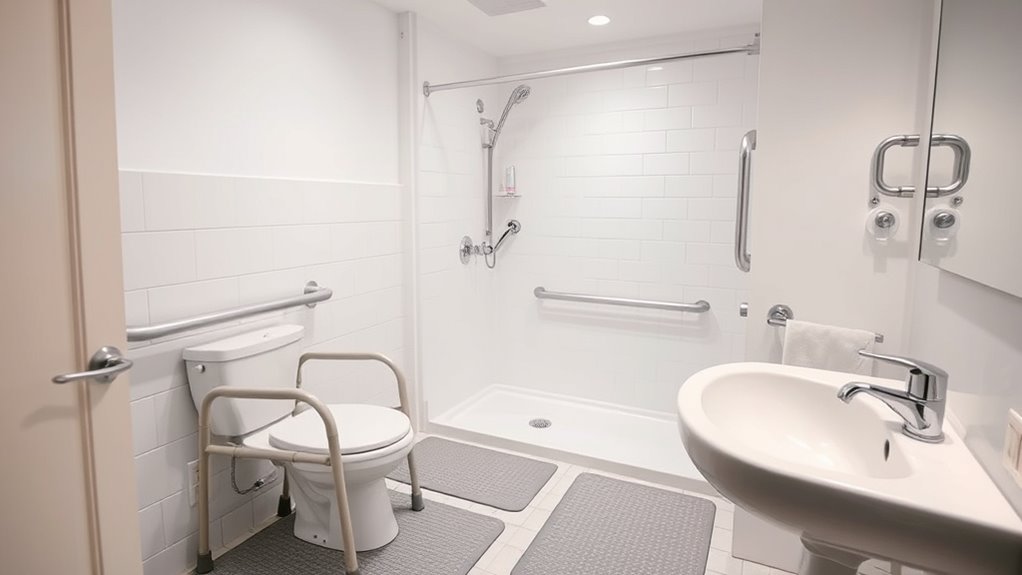
Before making any modifications, you should thoroughly assess your bathroom’s safety needs. Start by inspecting the space for potential hazards, such as slippery floors, uneven surfaces, or clutter that could cause falls. Check if the toilet and shower are easily accessible and if there’s enough room to maneuver with mobility aids. Consider the height of fixtures like the sink and toilet—are they suitable for your needs? Look for areas where additional support might be necessary, such as grab bars or raised toilet seats. Evaluate lighting to ensure the space is well-lit, minimizing shadows and glare. Making a detailed assessment helps you identify specific risks and creates a clear plan for modifications that will improve safety and independence during bathroom transfers. Additionally, understanding the importance of contrast ratio can help optimize lighting conditions to reduce shadows and improve visibility, which is especially critical for safe bathroom transfers. Incorporating accessible design principles can further enhance safety and usability for individuals with mobility challenges.
Installing Support Grab Bars and Handrails
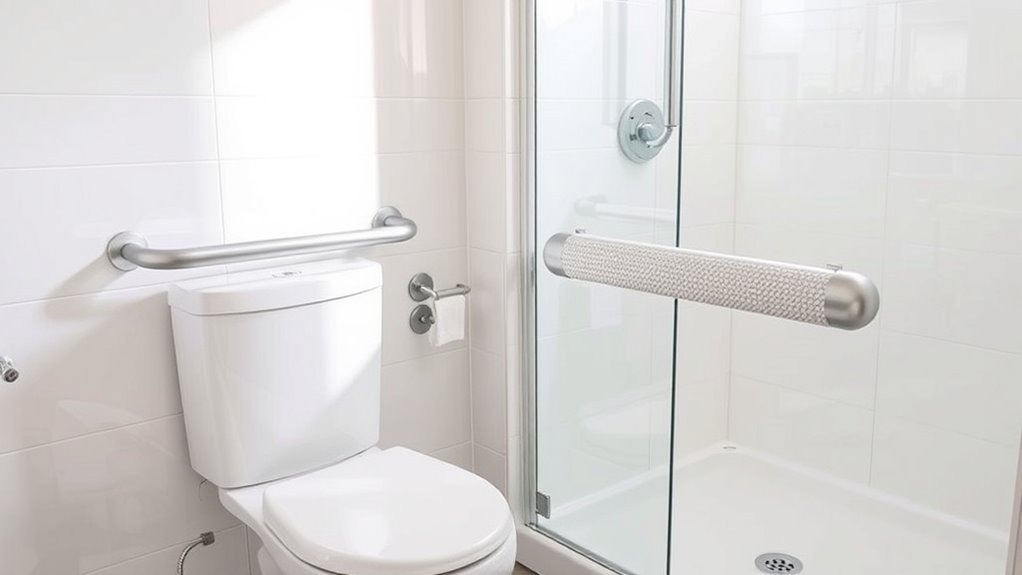
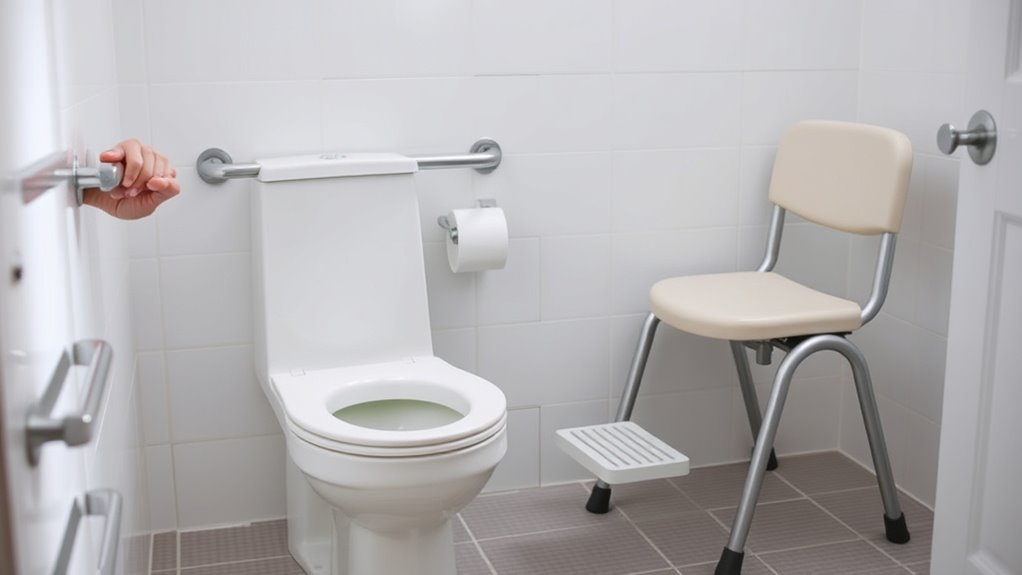
Installing support grab bars and handrails is a essential step to enhance bathroom safety after a stroke. These fixtures provide stability and support during transfers, reducing the risk of falls. Choose sturdy, corrosion-resistant materials designed to hold your weight securely. Position grab bars near the toilet, shower, and tub—ideally, they should be within easy reach and at a comfortable height. Confirm they are mounted into wall studs or with appropriate anchors to support your weight safely. Use textured or non-slip surfaces for a firm grip. Proper installation is a critical; if you’re unsure, hire a professional to ensure everything is secure. Additionally, understanding air purifier technologies can help you select devices that improve indoor air quality, which is especially beneficial during recovery. Being aware of different dog breeds can also help in selecting a pet that fits your changed mobility needs, providing companionship and support. Remember that childproofing your bathroom can further prevent accidents and enhance safety. With well-placed grab bars and handrails, you gain confidence in moving around your bathroom independently and safely.
Choosing Appropriate Shower and Tub Modifications
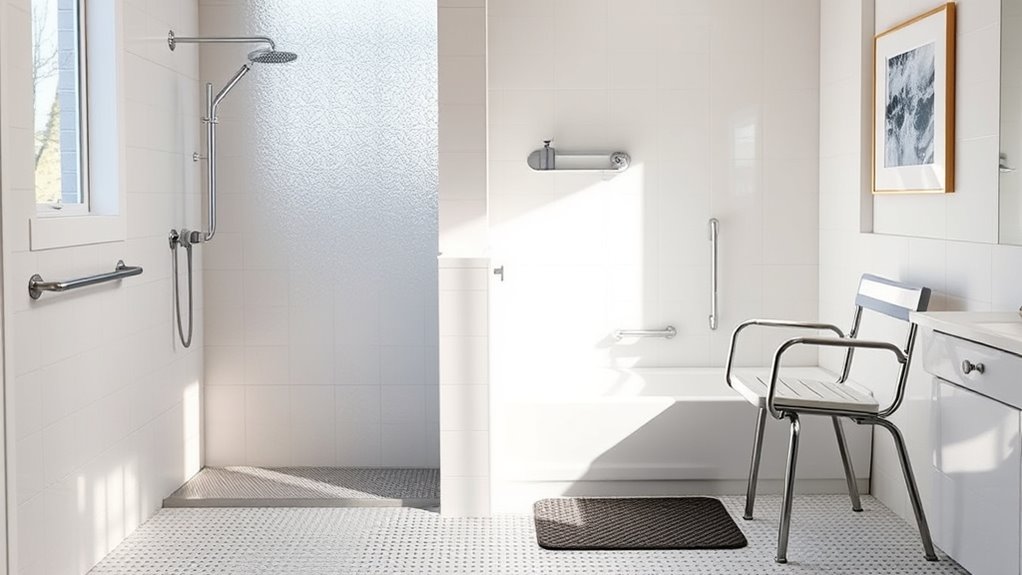
Choosing appropriate shower and tub modifications is essential for making bathing safer and more accessible after a stroke. Your goal is to prevent slips and falls while maintaining independence. Consider options like walk-in tubs or low-threshold showers that reduce the need to step over high edges. Installing built-in seats or fold-down benches allows you to sit comfortably during bathing. Grab bars positioned strategically provide stability when entering or exiting. Non-slip surfaces and textured flooring further enhance safety. Think about your specific needs, mobility level, and space constraints to select modifications that support confidence and safety. Incorporating non-slip flooring options is especially important, as studies highlight their role in reducing fall risk. Additionally, utilizing track development techniques can help in planning the layout for optimal safety and ease of use. Moreover, understanding the Horsepower of Electric Dirt Bikes can be useful if considering motorized assistance for mobility in larger bathroom spaces.
Utilizing Non-Slip Flooring Solutions
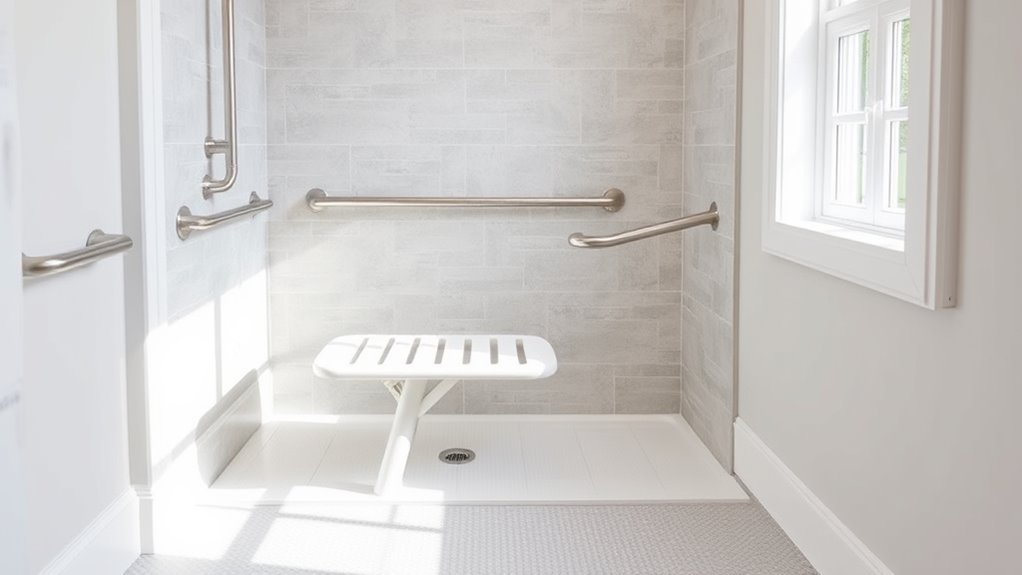
Adding non-slip flooring to your bathroom is a key step in creating a safer environment for post-stroke transfers. Non-slip surfaces reduce the risk of slips and falls, especially when floors are wet. You can choose textured vinyl, rubber mats, or textured ceramic tiles designed for increased grip. Make sure the flooring material covers all high-traffic and wet areas thoroughly. Installing slip-resistant coatings or adhesives can also enhance safety without replacing existing flooring. Regularly clean and dry the surface to prevent buildup of soap scum or moisture, which can reduce traction. Check for any loose tiles or uneven areas that might cause tripping. Proper installation of shower bases and ensuring they are level can further improve safety and stability. Incorporating non-slip flooring solutions can significantly decrease the likelihood of accidents in your bathroom. Additionally, selecting flooring materials with enhanced grip features can provide extra security for those with limited mobility. Prioritizing slip-resistant flooring is essential for a safer bathroom environment and can help prevent falls.
Incorporating Transfer Aids and Seating Options

Adding the right transfer aids and seating options can make bathroom transfers safer and easier. You should choose devices that fit your needs and guarantee seats are accessible and stable. Proper training on how to use these aids is essential for safe, confident transfers.
Selecting Appropriate Transfer Devices
Selecting the right transfer devices is essential for guaranteeing safe and effective bathroom transfers after a stroke. The devices you choose should match your mobility level, strength, and specific needs. Properly selected aids reduce the risk of falls and injury while promoting independence. Consider devices that provide stability, are easy to use, and fit comfortably in your bathroom space.
- Assess your mobility to determine the necessary support level
- Focus on ease of transfer, minimizing strain and fatigue
- Verify devices are compatible with your bathroom layout
- Prioritize safety features like non-slip surfaces and secure grips
- Regularly evaluate device condition for wear and effectiveness
Choosing appropriate transfer devices helps create a safer environment and builds confidence during bathroom routines.
Installing Accessible Seating Solutions
Installing accessible seating solutions is a crucial step in creating a safe and comfortable bathroom environment after a stroke. You should choose chairs or benches that are sturdy, with non-slip surfaces and armrests for added stability. Placing these seats near the toilet or shower allows you to sit securely during transfers, reducing the risk of falls. Consider installing shower chairs or benches that are adjustable in height to accommodate your needs and ensure proper positioning. Adding grab bars nearby provides additional support when sitting down or standing up. Make sure the seating options are easy to clean and resistant to moisture. Properly installed, these solutions promote independence, safety, and comfort during bathroom transfers, giving you confidence and reducing your risk of injury.
Training for Safe Transfers
To guarantee safe and effective bathroom transfers after a stroke, proper training is essential, especially when using transfer aids and seating options. You need to learn correct techniques to prevent falls and injuries for yourself and caregivers. This training includes understanding how to position your body, use assistive devices properly, and communicate with support persons. Practice builds confidence and ensures safety during each transfer.
- Focus on body mechanics to minimize strain
- Learn how to position transfer aids correctly
- Practice safe grip and posture techniques
- Communicate clearly with caregivers during transfers
- Regularly review and refine your transfer skills
Ensuring Adequate Lighting and Visibility
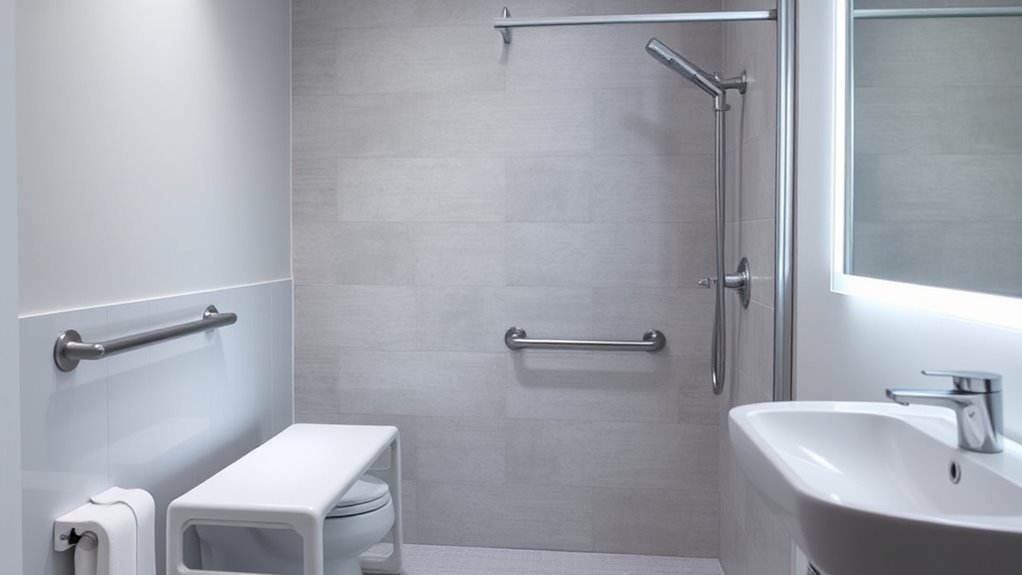
Good lighting is essential for safe bathroom transfers after a stroke. You should brighten the space, add night lights, and consider reflective surfaces to improve visibility. These adjustments make it easier to see and move safely during every visit. Incorporating active listening and empathy into your routine can also help identify areas where additional lighting or safety features may be necessary. Additionally, understanding environmental considerations can guide you in choosing sustainable lighting options that minimize ecological impact. Being aware of adaptive equipment options can further enhance safety and independence during transfers. Recognizing unique and wicked planters in your environment can also help in creating a calming and visually accessible space that supports comfort and orientation.
Brighten Bathroom Spaces
Have you considered how proper lighting can make bathroom transfers safer and easier? Brightening your bathroom reduces shadows and enhances visibility, helping you move confidently and avoid accidents. Use bright, energy-efficient LED bulbs to illuminate all areas, including corners and under sinks. Install fixtures at eye level for even light distribution. Consider adding reflective surfaces like large mirrors to amplify light. Keep switches easily accessible and clearly marked. Good lighting also highlights potential hazards, such as uneven flooring or clutter. Remember, a well-lit space boosts your confidence and independence, making daily routines safer.
- Use multiple light sources for even coverage
- Choose bulbs with natural white light for clarity
- Install switches within easy reach
- Keep fixtures clean and dust-free
- Regularly replace burnt-out bulbs
Install Night Lighting
Installing night lighting guarantees you can see clearly during late-night bathroom visits, reducing the risk of falls or accidents when lighting from your main fixtures isn’t enough. Place low-level lights along pathways, near the toilet, and around the sink to provide gentle illumination. Use motion-activated lights so they turn on automatically when you enter the bathroom, eliminating the need to fumble for switches. Choose bulbs with warm, soft light to avoid harsh glare that could impair your vision. Make certain lights are positioned where they won’t cause glare or shadows that might obscure obstacles. By strategically installing night lighting, you create a safer environment, making nighttime bathroom trips more manageable and reducing the chance of accidents.
Use Reflective Surfaces
Using reflective surfaces in your bathroom can considerably enhance visibility, especially during nighttime trips or when lighting is limited. Mirrors and shiny fixtures bounce light around the space, making it easier to see and navigate safely. Proper placement of reflective surfaces helps you quickly assess your surroundings, reducing the risk of slips or falls. Additionally, reflective surfaces can highlight obstacles or hazards you might otherwise overlook. To maximize safety, consider installing large mirrors near sinks or showers, and use glossy tiles or fixtures that reflect light well. Remember, the goal is to improve your awareness and confidence during transfers, so choose surfaces that brighten the space without creating glare. Small adjustments can make a significant impact on your safety and independence.
Creating a Maintenance and Safety Check Routine

Establishing a regular maintenance and safety check routine is essential to guarantee your bathroom modifications remain secure and functional. Start by inspecting grab bars, handrails, and non-slip mats weekly to ensure they’re securely attached and free of damage or wear. Check the flooring for any signs of moisture, mold, or deterioration, and clean as needed to prevent slips. Test all fixtures, including faucets and shower controls, to confirm they operate smoothly. Make sure emergency call buttons or alarms are within reach and working properly. Regularly review your setup for any changes in your mobility or health that might require adjustments. Keeping a checklist helps you stay organized and proactive, ensuring your bathroom stays a safe environment for your post-stroke needs. Additionally, consider the use of anti-slip surfaces, which can significantly reduce the risk of falls and enhance overall safety. Incorporating popular no-sugar-added juice brands into your routine can also promote hydration, which is vital for overall health and recovery. Staying informed about Law of Attraction principles can help you maintain a positive outlook during your recovery journey. Moreover, educating yourself about home safety assessments can further empower you to make necessary modifications proactively.
Frequently Asked Questions
How Do I Choose the Best Bathroom Modifications for My Specific Needs?
When choosing bathroom modifications, you should consider your mobility level, strength, and any balance issues. Think about installing grab bars, a raised toilet seat, or a walk-in shower with seating. Consult with an occupational therapist or home modification specialist who can assess your needs and recommend customized solutions. Prioritize safety, ease of use, and comfort to create a bathroom that supports your independence and reduces fall risks.
What Are Cost-Effective Options for Bathroom Safety Upgrades Post-Stroke?
You’re probably imagining expensive renovations, right? Ironically, some of the most cost-effective upgrades are simple: grab bars, non-slip mats, and a shower chair. These small changes can make a huge difference in safety without breaking the bank. You don’t need fancy tech—just practical, affordable solutions that keep you secure during bathroom transfers. Start with these easy upgrades to boost safety without draining your wallet.
Can I Implement These Modifications Myself or Do I Need Professional Help?
You can often handle simple bathroom safety modifications yourself, like installing grab bars or non-slip mats, if you’re comfortable with basic tools. However, for more complex changes such as installing grab bars into drywall or modifying plumbing, it’s best to seek professional help. Professionals ensure the modifications are secure and safe, reducing the risk of accidents. Always evaluate your skills and comfort level before attempting any installation.
What Are the Latest Innovative Products for Safe Bathroom Transfers?
You’re curious about the latest innovative products for safe bathroom transfers. Today’s options include advanced transfer benches with ergonomic designs, motorized lifts that easily assist in transfers, and smart grab bars with sensors for added safety. These products are user-friendly, compact, and designed to improve independence. You can find them through specialized medical suppliers or online retailers, but it’s wise to consult a professional to guarantee proper fit and safety for your specific needs.
How Often Should Bathroom Safety Assessments Be Updated?
Ever wondered how often you should review your bathroom safety plans? You might think it’s just once, but the truth is, you need to update assessments regularly—at least every six months or after any health change. Life’s unpredictable, and so are needs. Staying proactive guarantees your environment remains safe, preventing accidents before they happen. Don’t wait for an incident—schedule routine safety checks now and keep your space secure.
Conclusion
By transforming your bathroom into a safe harbor, you’re building a fortress of independence after a stroke. With sturdy grab bars, slip-resistant floors, and thoughtful lighting, you turn potential hazards into stepping stones. Regular checks keep this sanctuary secure, so you can navigate your space with confidence. Remember, each small modification is like planting a seed of safety—growing stronger and more resilient with every step you take toward independence.