Creating an effective behavior emergency plan for in-home care involves evaluating potential risks and triggers, recognizing early signs of escalation, and developing clear response strategies. Involve your care team and family members, train everyone on emergency procedures, and practice scenarios regularly. Make sure to create safe spaces and update the plan as needs evolve. Staying proactive ensures safety and confidence—continue exploring how to craft a plan that offers peace of mind during challenging situations.
Key Takeaways
- Assess triggers and behavioral patterns to tailor proactive strategies and early warning signs for effective emergency response.
- Involve and train all caregivers and family members regularly through drills and role-playing scenarios.
- Develop clear, accessible plans that include contact information, safety modifications, and specific response procedures.
- Review and update the emergency behavior plan quarterly or biannually to ensure relevance and effectiveness.
- Incorporate safety components, stress-reduction strategies, and individual needs to create a dynamic, adaptable plan.
Amazon Product B0F62GYY19
As an affiliate, we earn on qualifying purchases.
Assessing Potential Risks and Triggers

Understanding potential risks and triggers is essential for creating effective behavior emergency plans. You need to identify what specific situations, environments, or interactions might cause a person to become distressed or escalate. Observe their reactions in different settings and note patterns that lead to challenging behaviors. Consider factors like loud noises, unfamiliar people, changes in routine, or physical discomfort. By understanding these triggers, you can develop strategies to prevent escalation or respond appropriately when they occur. Keep detailed records of past incidents and look for common themes. Recognizing potential triggers early is key to effective intervention. Additionally, awareness of celebrity lifestyle insights can sometimes provide context for understanding individual behaviors and stressors, especially when considering the environment and social influences. Recognizing behavioral triggers can also help you tailor your approach to specific individuals’ needs and sensitivities. Being familiar with regional legal resources can also help you access support and guidance if a behavioral emergency escalates to a legal or safety concern. This proactive approach helps you tailor your emergency plan to the individual’s needs, reducing the likelihood of crises and ensuring safer, more supportive care. Paying attention to behavioral patterns can also help anticipate future challenges and refine your response strategies.

Achairgo Patient Lift Transfer Chair - Electric Assist Lift Aid for Home Care Use - Portable Folding for Car - Transport Wheelchair for Seniors, Adults & Disabled
3-Year Guarantee eligibility: allowing customers to have the product reliability. Purchase now with confidence!
As an affiliate, we earn on qualifying purchases.
Identifying Early Warning Signs of Escalation

Once you’ve identified potential risks and triggers, the next step is to recognize the early warning signs that indicate someone is beginning to escalate. These signs often appear before a full-blown crisis, giving you a chance to intervene. Look for changes in behavior, such as restlessness, pacing, or increased agitation. Verbal cues like raised voices or repetitive statements can also signal escalation. Physical signs include clenched fists, tense posture, or rapid movements. Recognizing these indicators early helps you respond calmly and effectively, preventing situations from worsening. Understanding the importance of headphone types and their features can make a significant difference in managing escalation effectively.

MAHOMICO Power Lift Recliner Chair for Elderly with Vibration Massage and Lumbar Heating, Electric Lift Recliner Single Sofa with Side Pocket, Two Cup Holders and USB Charge Port for Living Room
𝗣𝗼𝘄𝗲𝗿 𝗟𝗶𝗳𝘁 𝗥𝗲𝗰𝗹𝗶𝗻𝗲𝗿 𝗖𝗵𝗮𝗶𝗿: Elevate your relaxation with the MAHOMICO power recliner chair. This advanced lift chair recliner...
As an affiliate, we earn on qualifying purchases.
Developing Clear Response Strategies

Developing clear response strategies is essential for managing escalating behaviors effectively. When a situation begins to escalate, you need specific steps to de-escalate quickly and safely. Start by defining immediate actions, such as offering calm reassurance, removing triggers, or redirecting attention. Establish clear verbal cues to use, like soothing phrases or simple commands that help calm the individual. Decide on non-verbal signals or gestures to communicate silently if needed. It’s also important to set boundaries to prevent harm while respecting the person’s dignity. Ensuring your responses are consistent helps the individual know what to expect, reducing confusion and agitation. Having these strategies clearly outlined helps you act confidently under pressure, minimizing chaos and making the environment safer for everyone involved. Being familiar with animated movies can also provide insight into understanding emotional cues and responses, which can be beneficial during sensitive situations. Additionally, understanding divorce processes in different states can help caregivers better navigate legal or procedural challenges if needed. Familiarity with retail hours can assist caregivers in planning visits or managing time effectively during emergencies. Moreover, incorporating knowledge of remote hackathons can offer innovative ideas for caregiver training or support networks in virtual environments. Recognizing narcissistic traits in individuals can help tailor your response strategies to better manage their specific behaviors.

Vive Electric Patient Lift for Home Use with Sling - Portable, Adjustable Medical Patient Lift for Home Use - Electric Sit to Stand Chair for Elderly, Adults & Handicap - Person Floor Transfer Assist
EFFORTLESS AND SAFE TRANSFERS: Elevate the care of patients and loved ones with the Vive Electric Patient Lift....
As an affiliate, we earn on qualifying purchases.
Involving Family and Care Team Members

Involving family and care team members is essential because their collaboration guarantees consistent and effective responses to challenging behaviors. When everyone understands the plan, responses become more predictable, reducing confusion and stress for the person receiving care. Make certain all team members are informed about the behaviors that may occur and the specific actions to take. Regular communication helps identify changes in behavior and adjust the plan accordingly. Encourage family members and caregivers to share insights and observations, which can improve the plan’s effectiveness. Clear roles and responsibilities prevent overlaps or gaps during emergencies. By fostering open dialogue and input, you create a unified approach that supports the individual’s needs and promotes safety for everyone involved.
Training and Practicing Emergency Scenarios
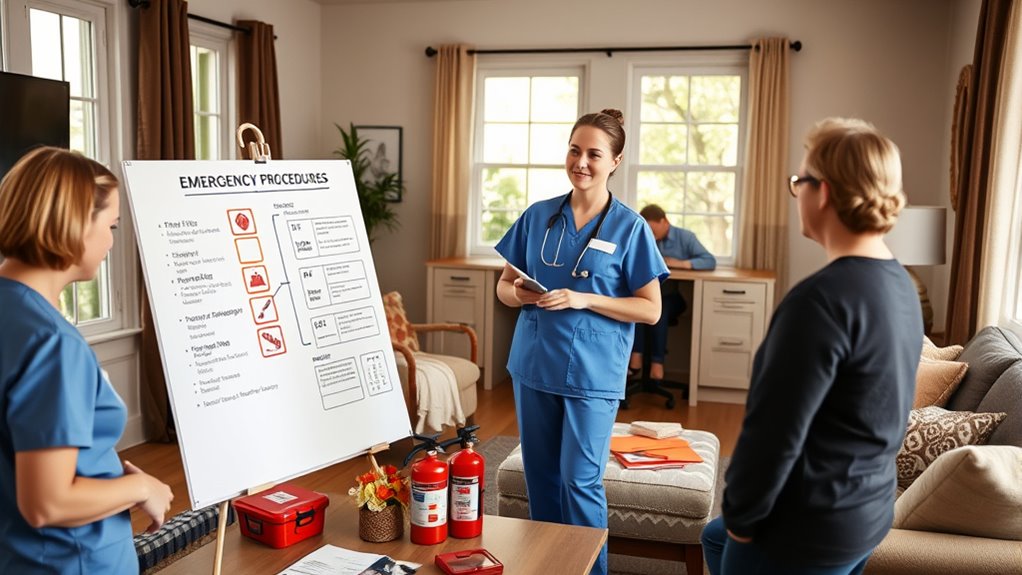
Practicing emergency scenarios guarantees that everyone involved knows exactly how to respond when a challenging behavior occurs. You should run through realistic situations regularly, so responses become second nature. This helps identify any gaps in your plan and makes sure that caregivers, family members, and the individual understand their roles. During these practice sessions, stay calm and focused, emphasizing clear communication and quick decision-making. Use role-playing to simulate different scenarios and encourage feedback to improve responses. Repetition builds confidence, reducing panic during actual emergencies. Keep a checklist handy to review procedures after each practice. Consistent training ensures everyone reacts swiftly and appropriately, minimizing risks and promoting safety for the individual and caregivers alike.
Creating Safe Spaces and Environment Modifications

Creating a safe and supportive environment is essential for managing challenging behaviors in in-home care. By making thoughtful modifications, you reduce risks and promote calmness. Start by removing clutter that can cause confusion or accidents. Install locks or alarms on doors to prevent wandering. Use soft lighting to create a soothing atmosphere. Anchor furniture to walls to prevent tipping. Add non-slip rugs and clear pathways to reduce falls. These adjustments help prevent triggers and ensure safety during episodes. Additionally, incorporating safety devices such as motion sensors or monitoring systems can further enhance security. Implementing noise reduction technology can also contribute to a calmer environment by minimizing disruptive sounds. Creating a secure environment is essential to reduce anxiety and prevent dangerous situations. Regularly evaluating your space through safety audits helps identify potential hazards and address them promptly. These modifications help prevent triggers and ensure safety during episodes. Remember, a well-designed space empowers both you and your loved one to navigate daily routines with confidence. Small changes can make a big difference in reducing anxiety and promoting a sense of security. Your proactive approach creates a more peaceful environment for everyone involved.
Reviewing and Updating the Plan Regularly

Regularly reviewing and updating your emergency behavior plan guarantees it remains effective and relevant as your loved one’s needs change. Life circumstances, health conditions, and behaviors evolve, so your plan must adapt accordingly. Set a schedule—such as quarterly or biannually—to revisit the plan, and involve caregivers and family members for fresh insights. Check if current strategies are working or if new approaches are needed. Update contact information, emergency procedures, and safety modifications as necessary. Keep documentation clear and accessible, so everyone knows their responsibilities during an emergency. Reviewing home safety best practices can also help ensure your plan incorporates the latest safety standards. Additionally, tracking behavioral changes over time can help tailor the plan more effectively. Incorporating sustainable practices in your safety routines can enhance long-term effectiveness. Staying informed about cybersecurity threats can help protect any digital components of your emergency plan from potential breaches. Remember, a dynamic plan helps you respond confidently and effectively, reducing stress during critical moments. Consistent updates ensure your loved one’s safety and comfort in any emergency situation.
Frequently Asked Questions
How Do I Handle Emergencies Involving Visitors or Strangers?
When visitors or strangers cause an emergency, stay calm and assess the situation quickly. Gently but firmly ask the person to stop or leave if needed. If safety is compromised, call emergency services immediately. Use clear communication and keep the person’s safety your priority. Afterward, document what happened and inform the appropriate family member or supervisor to help prevent future incidents. Always have a plan in place for these situations.
What Legal Considerations Should Be Included in the Plan?
You should include legal considerations like consent, privacy laws, and reporting requirements in your plan. Make sure you understand your state’s regulations on visitor access and emergency disclosures. Clarify who has authority to make decisions if your client can’t, and document any necessary legal permissions or notices. By addressing these issues, you’ll guarantee you’re compliant and prepared to handle emergencies involving strangers or visitors effectively.
How Can I Support Emotional Well-Being During Crises?
Did you know that during a crisis, emotional support can reduce stress levels by up to 50%? To support emotional well-being, stay calm and reassuring. Use gentle words, maintain eye contact, and listen actively. Offer comfort objects or distraction techniques. Your calm presence helps de-escalate tension, making your loved one feel safe and understood during difficult moments. Your steady support can truly make a difference in their emotional resilience.
What Resources Are Available for Additional Training or Support?
You can find various resources for additional training or support online, through local agencies, or professional organizations. Look for certified courses in emergency planning, behavioral management, and caregiver support. Many organizations offer webinars, workshops, and printed guides. Reach out to local health departments or caregiver networks for personalized assistance. These resources help you build confidence, improve your skills, and make sure you’re prepared to handle emergencies effectively.
How Do I Coordinate Emergency Responses With Local Emergency Services?
They say, “It takes a village,” and that’s true for emergency responses. To coordinate with local emergency services, you should establish contact beforehand, share your care plan, and provide clear information about the individual’s needs. Create a communication protocol, keep emergency contacts updated, and practice drills. Building a strong relationship with local responders guarantees swift, effective help when emergencies occur, making you better prepared for any situation.
Conclusion
By creating a behavior emergency plan, you’re like a skilled navigator steering through unpredictable waters. You’ll identify risks early, develop clear strategies, and involve your team, ensuring everyone knows what to do. Regular practice keeps everyone prepared, and environment tweaks create a safer space. Just as a lighthouse guides ships safely home, your plan will light the way during emergencies, giving you confidence and peace of mind to care for your loved ones effectively.