
📊 Full opportunity report: Anonymous daily check-ins for 12-step sponsors on IdeaNavigator AI — validation score, market gap, and execution plan.

Turn quiet afternoons into listening time
- Thousands of audiobooks, podcasts and originals
- Listen on your phone, tablet or Echo — also offline
- Cancel anytime
TL;DR
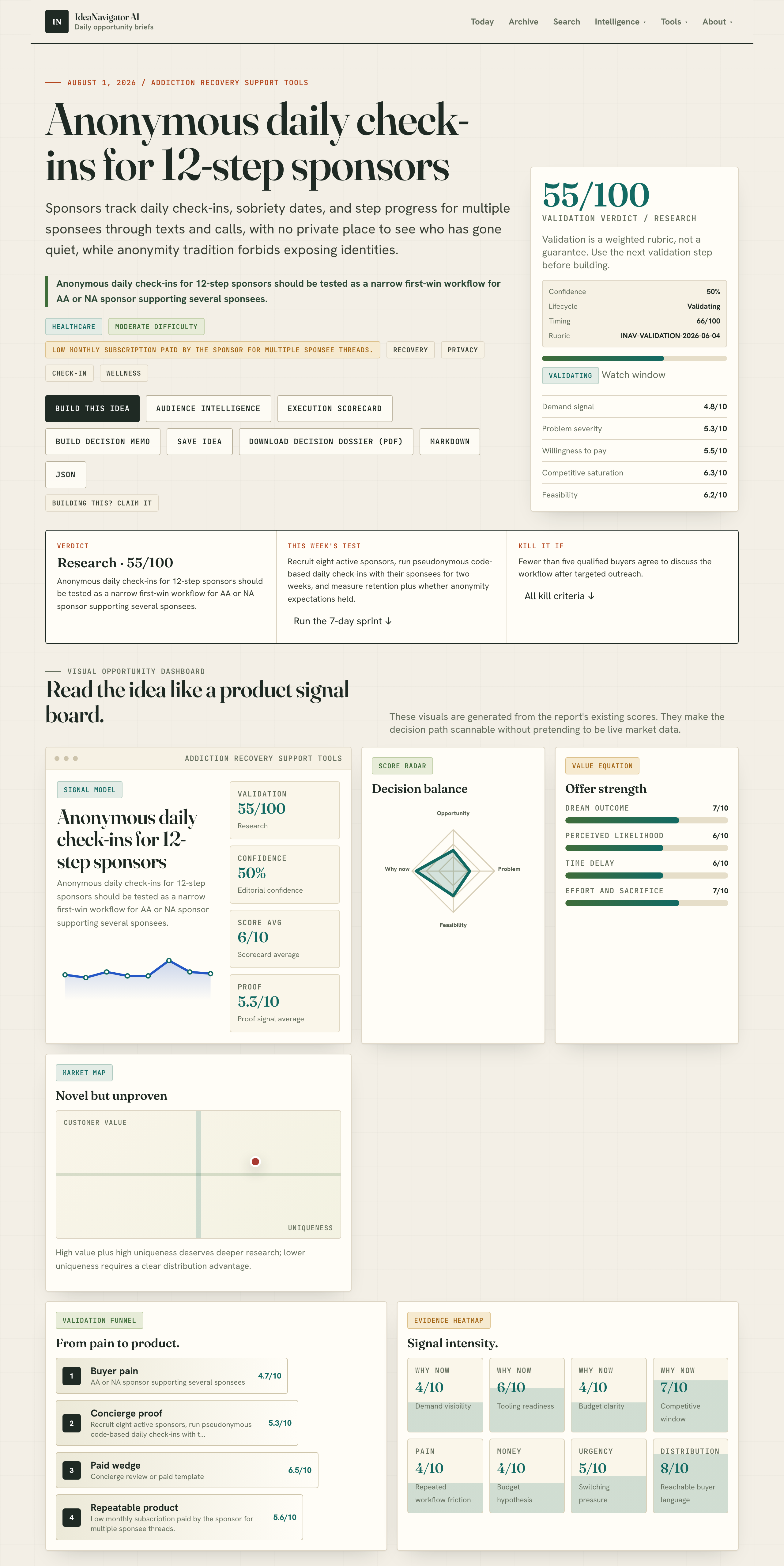
A proposed system for anonymous daily check-ins for 12-step sponsors is entering pilot testing. It aims to address privacy concerns while supporting sobriety tracking. The initiative is in early validation stages.
Recovery support tools are increasingly shifting to digital platforms, but existing messaging and habit apps often compromise anonymity by exposing personal contacts and names. To address this, developers are testing a pseudonymous check-in system that allows sponsors to track daily sobriety status via one-time codes, without storing real names or phone numbers.
The proposed platform enables sponsors to invite sponsees through unique codes, with daily check-ins represented by simple green or red indicators. Optional notes can be added, but the system is designed to prevent any personally identifiable information from being stored or shared. The goal is to provide a private, easy-to-use tool that aligns with the traditions of anonymity in twelve-step programs.
According to an anonymous researcher involved in development, the initial plan is to recruit eight active sponsors to test the system over a two-week period. The focus will be on measuring retention and whether the anonymity expectations are maintained effectively. The platform will operate on a low monthly subscription model paid by sponsors supporting multiple sponsees.
Potential Impact on Privacy and Support in Recovery
This initiative could significantly improve privacy protections for individuals in recovery, encouraging more honest participation and consistent check-ins. By offering a secure, pseudonymous alternative to mainstream messaging apps, it addresses longstanding concerns about data leaks and exposure of personal contacts. If successful, the system may set a new standard for digital support tools in addiction recovery, balancing confidentiality with accountability.
As an affiliate, we earn on qualifying purchases.
Digital Shift in Recovery Support Sparks Privacy Innovation
As addiction recovery increasingly relies on digital communication, concerns about data privacy and anonymity have grown. Traditional 12-step programs emphasize confidentiality, but many existing apps and messaging platforms risk exposing identities through contact lists and profile data. Recent efforts have focused on developing tools that respect these traditions while leveraging technology to facilitate daily support. The proposed pseudonymous check-in system is part of this broader movement, aiming to provide a privacy-first alternative for sponsors and sponsees.
Preliminary discussions among sponsors highlight a need for a simple, secure way to monitor multiple sponsees without risking privacy breaches. The concept has gained interest among a subset of active sponsors, with pilot testing planned to evaluate its practicality and effectiveness.
“The goal is to create a system that respects the core value of anonymity while providing meaningful support through daily check-ins.”
— an anonymous researcher
Unclear Details on System Adoption and Long-Term Effectiveness
It is not yet confirmed how widely the system will be adopted beyond the initial pilot or whether it will be integrated into existing recovery support networks. The effectiveness of maintaining anonymity expectations over longer periods remains untested, and user feedback from the pilot phase will be crucial in determining future development and scaling.
Next Steps in Pilot Testing and Evaluation
The development team plans to recruit eight active sponsors for a two-week trial, monitoring retention and privacy adherence. Based on feedback and data collected, further refinements will be made before considering broader rollout. Results from this pilot will inform whether the system becomes a standard tool in digital recovery support.
Key Questions
How does the pseudonymous check-in system protect my privacy?
The system uses one-time codes and does not store real names or phone numbers, ensuring that personal identities remain confidential while enabling daily support tracking.
Can sponsees add notes or comments during check-ins?
Yes, optional notes can be added, but they are limited to prevent revealing personal information or identifiers.
Will this replace traditional in-person sponsorship?
No, the system is designed as a supplementary support tool, not a replacement for face-to-face or voice-based interactions.
When will the system be available for wider use?
Following the pilot testing and evaluation, developers will decide on further development and potential wider deployment, but no specific timeline has been announced.
Source: IdeaNavigator AI
Columbus Day / Indigenous Peoples' Day Picks
long weekend sales
As an affiliate, we earn on qualifying purchases.