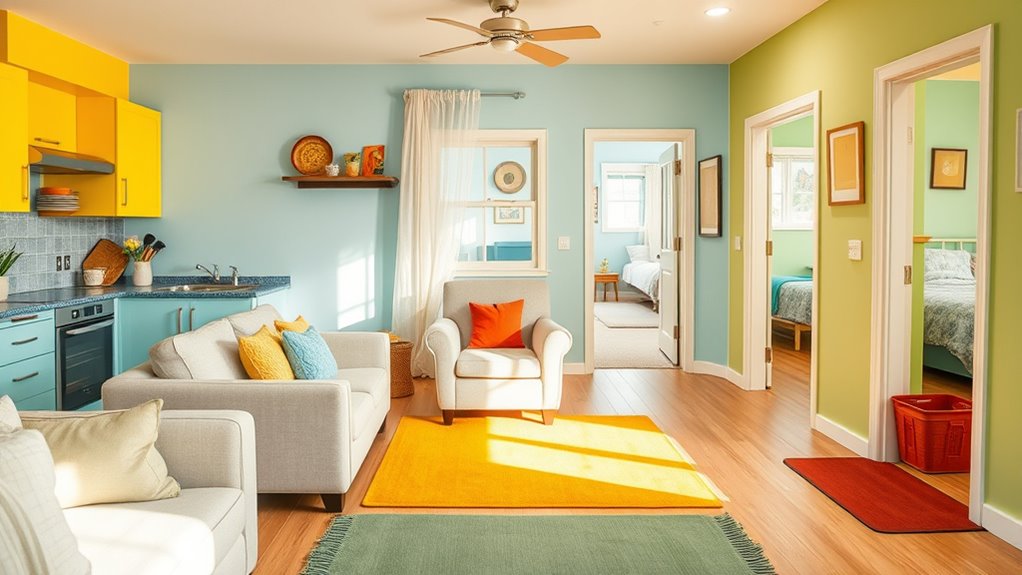

Color-coding your home helps people with Alzheimer’s distinguish rooms and objects, reducing confusion and promoting independence. Use bright, warm colors like yellow for activity areas and calm blues or greens for bedrooms. Assign specific colors to key spaces, doors, and handles to reinforce recognition. Keep the scheme consistent and simple to build familiarity. Incorporate visual cues like labels and accents, and regularly check if your system works well—if you want to explore how, keep going.
Key Takeaways
- Use distinct, consistent colors for key areas like bathrooms (blue) and kitchens (red) to aid quick recognition.
- Apply high-contrast color cues on doors, switches, and handles to improve visibility and orientation.
- Incorporate visual cues such as rugs and labels with specific colors to reinforce navigation and routines.
- Maintain uniform color schemes throughout the home to create familiarity and reduce confusion.
- Engage caregivers in implementing and reinforcing the color-coding system for effective daily use.
Understanding the Benefits of Color-Coding
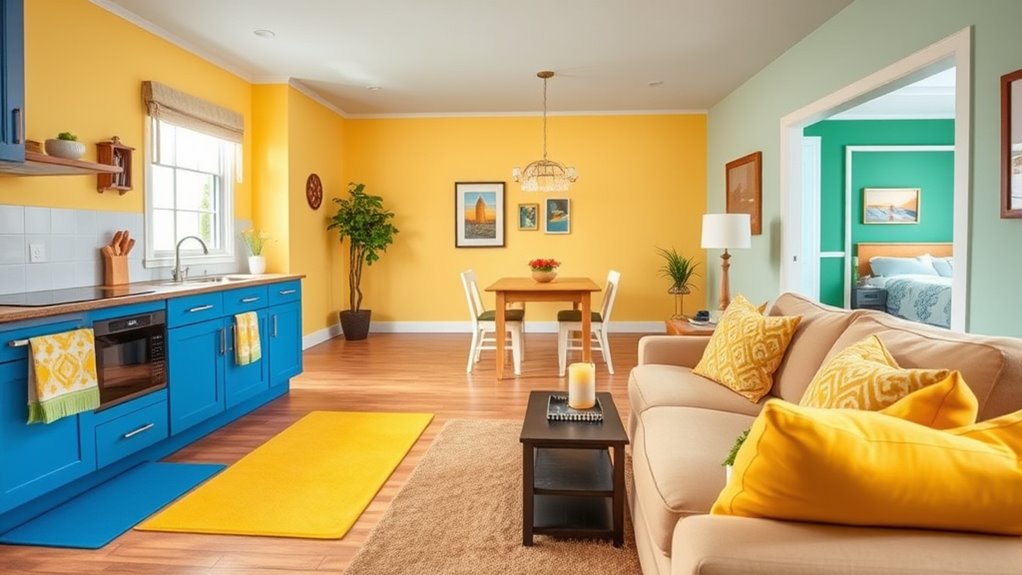
Color-coding your home can markedly improve daily life for individuals with Alzheimer’s by making navigation easier. When you assign specific colors to different areas or objects, it helps your loved one recognize and remember where things are. This visual cue reduces confusion and frustration, promoting independence and safety. Color-coding also provides a consistent way to differentiate spaces, making it easier for them to find the bathroom, kitchen, or bedroom. It’s a simple yet powerful tool that taps into the brain’s ability to process visual information quickly. Using proper home maintenance techniques, such as keeping the environment clean and organized, further supports a safe and accessible living space. Additionally, understanding aura variations can inspire creative and calming color choices that resonate with personal energy and emotional states. Incorporating contrast ratios into your color selections can enhance visibility and differentiation of objects and areas. Recognizing that visual processing varies among individuals with Alzheimer’s can help tailor the environment to their specific needs. For example, many supermarkets now have extended hours to accommodate shoppers, which can be helpful for families managing busy schedules. As a result, your loved one can move around more confidently, with less reliance on memory or verbal instructions. Overall, color-coding fosters a calmer environment and supports their sense of control.
Selecting Effective Colors for Different Spaces
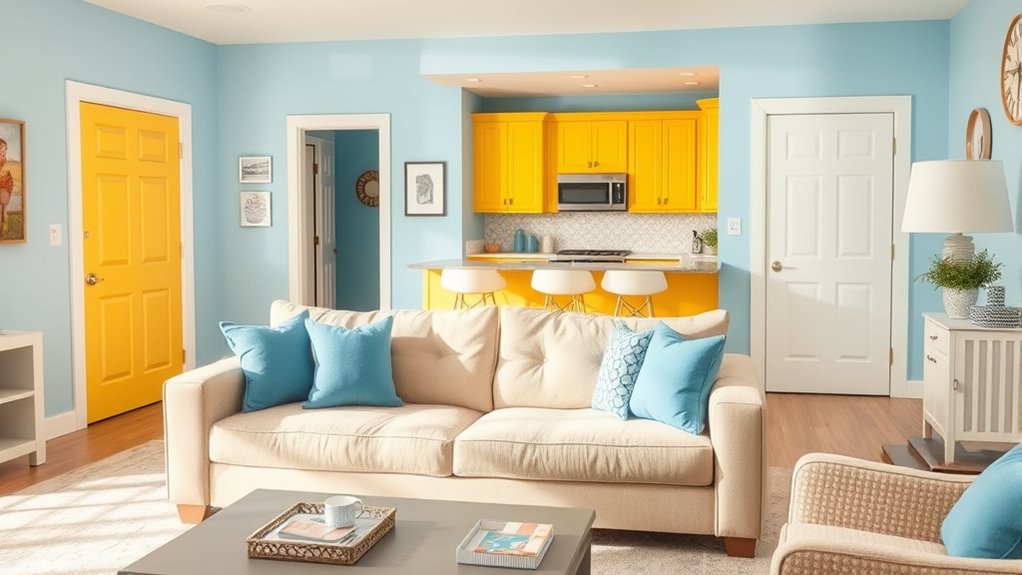
Choosing the right colors for each space can considerably enhance their effectiveness. Bright, warm tones like yellows and soft oranges work well in areas where you want to promote alertness and positivity, such as kitchens or activity rooms. Calm, cool colors like blues and greens are ideal for bedrooms or relaxation zones, helping to reduce anxiety and promote rest. Avoid overly vibrant or contrasting colors in spaces where calmness is essential, as they can cause confusion or overstimulation. Use high-contrast colors carefully—bright white against dark or bold hues can highlight important areas or objects. Remember, consistency is key: sticking to specific color schemes for each type of space helps create clear visual cues, making navigation easier and reducing confusion for someone with memory challenges.
Implementing Color Cues in Key Areas of the Home

To effectively implement color cues in key areas of your home, start by assigning specific colors to each essential space based on their function. This helps create clear visual signals that reduce confusion. Once you’ve chosen your colors, apply them consistently across all relevant items and surfaces. Use bright, recognizable hues for safety zones, like red for the kitchen or bathroom. In living areas, opt for calming colors like blue or green. Mark door frames, drawers, or switches with the assigned color to reinforce their purpose. Consider using colored rugs, labels, or wall accents to strengthen the cue. This approach creates a visual map that guides your loved ones naturally, minimizing frustration and helping them navigate daily routines more easily. Incorporating visual cues can also enhance the effectiveness of your color-coding system by providing additional reminders and signals. Additionally, understanding how attention impacts the ability to follow these cues can improve their overall effectiveness, as sustained focus is crucial for recognizing and remembering color associations. Utilizing color contrast effectively can further improve visibility and recognition, making cues more intuitive. Being mindful of lighting conditions can also significantly impact how well these cues are perceived and followed, especially in different times of day. Furthermore, considering individual differences in visual perception ensures that the color system remains accessible to all users, including those with visual impairments.
Creating Visual Consistency for Better Recognition

Using consistent color schemes throughout your home helps create an intuitive environment that’s easier to recognize. Clear signage with simple visuals guides your loved one and reduces confusion. When you keep these elements uniform, it’s simpler for them to navigate daily routines confidently.
Consistent Color Schemes
Establishing consistent color schemes throughout your home helps create a familiar environment that reduces confusion for individuals with Alzheimer’s. When colors stay uniform in specific areas, it becomes easier for them to recognize and navigate spaces confidently. Use the same color for key rooms like the kitchen, bathroom, and bedroom to foster familiarity. Incorporate colors thoughtfully to evoke calm and clarity. Visual cues become stronger when colors are predictable. Imagine walking into a room where the walls, furniture, and accessories share a cohesive hue, making the space feel safe and recognizable. To help visualize, consider:
- A soft blue for all bedrooms and resting areas
- Warm beige or tan for hallways and entryways
- Bright yellow for the main bathroom
- Light green for the kitchen
- Muted gray accents throughout common spaces
These consistent schemes reinforce recognition and reduce stress.
Clear Signage Strategies
Clear signage strategies play a crucial role in helping individuals with Alzheimer’s navigate their home confidently. You should use simple, easy-to-read signs with large fonts and clear icons to identify key areas like the bathroom, kitchen, and bedroom. Consistency is essential; place signs at the same height and location to create visual cues that are easy to recognize. Use bold colors that contrast with the background to enhance visibility. Keep signage uncluttered, minimizing unnecessary information. Incorporate familiar symbols or images to reinforce understanding. Regularly review and update signs as needed to guarantee they remain effective. By creating clear, consistent signage, you help reduce confusion and foster independence, making your home a safer, more supportive environment for your loved one.
Tips for Applying Color to Doors and Handles
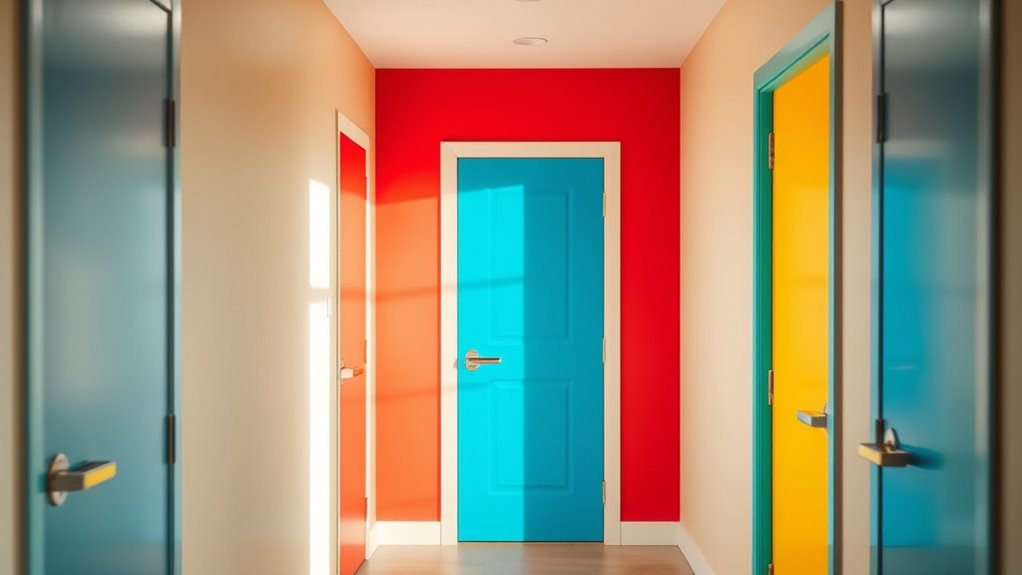
Using consistent colors for doors and handles helps create clear visual cues, making it easier to recognize different rooms. Choose a specific color for each area and stick with it to avoid confusion. Applying these simple tips can improve navigation and provide a sense of familiarity.
Consistent Color Coding
To help reduce confusion, assign consistent colors to specific doors and handles throughout your home. This creates a reliable visual cue, helping identify rooms quickly. Use a uniform color for the bathroom door, for example, so it’s always recognizable. For handles, assign a specific color to frequently used items like the closet or pantry. Keep the color scheme simple—stick to two or three hues for clarity. Consider these tips:
- Use bright, contrasting colors for main doors and handles
- Apply the same color to all bedroom doors
- Choose a bold color for the bathroom door and handle
- Use muted tones for less critical doors to reduce visual clutter
- Maintain consistency across levels of the house for easy navigation
This approach helps create a predictable environment, reducing confusion and promoting independence.
Clear Visual Cues
Applying color effectively to doors and handles creates strong visual cues that guide navigation and reduce confusion. Use bold, contrasting colors for different rooms, so your loved one can easily identify each space. For example, paint bedroom doors a specific color, while the bathroom door gets a different shade. Handles can also be color-coded to match or stand out from the door, making them easier to locate. Keep the colors simple and consistent throughout the home to build familiarity. Avoid overly bright or busy patterns that may be overwhelming. Clear visual cues help your loved one recognize and remember important areas, promoting independence and reducing anxiety. When done thoughtfully, color-coding transforms your home into a more navigable and reassuring environment.
Using Color to Differentiate Commonly Confused Rooms
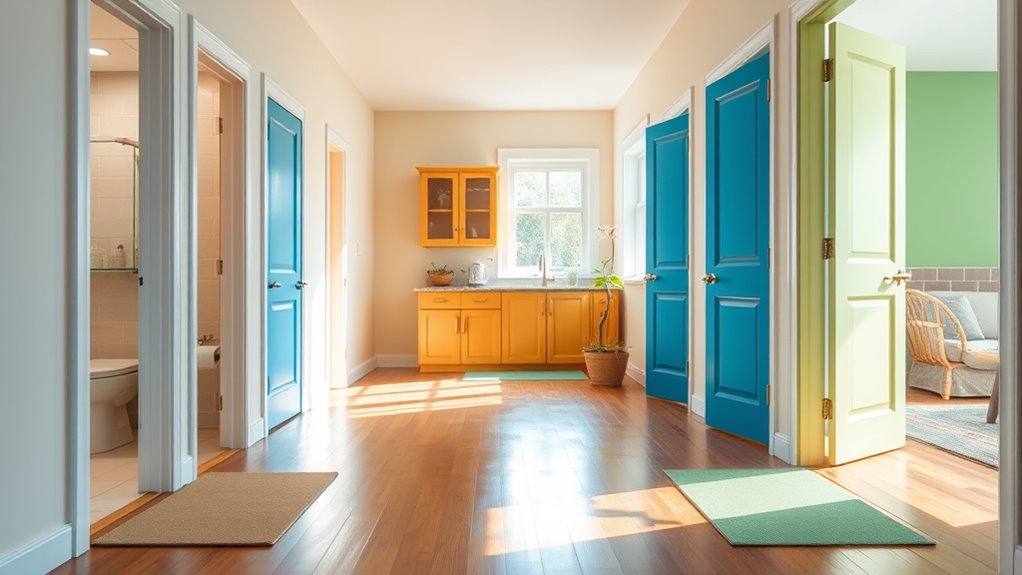
Because many homes have rooms with similar appearances, color-coding can be an effective way to help you distinguish them quickly. Assign distinct colors to rooms that often cause confusion, making navigation easier. For example, use a calming blue for the bathroom, a warm yellow for the kitchen, or a soft green for the bedroom. Visual cues like these help you recognize spaces at a glance, reducing hesitation and frustration. Imagine walking into a hallway and immediately knowing it’s the living room because of its bright red walls. Or seeing the bathroom door painted light blue, signaling it’s the place to wash up. These simple yet powerful color choices create clear mental markers, helping you feel more confident and independent in your home. Incorporating dog names that reflect the room’s color or purpose can also enhance recognition and familiarity. Additionally, consistent color patterns throughout the house can reinforce memory cues and foster a sense of routine. Using visual cues, such as symbols or patterns alongside colors, can further improve recognition and navigation, especially when they align with established color associations that aid memory retention.
Incorporating Color in Household Items and Labels

Adding color to household items and labels can substantially enhance daily navigation for individuals with memory challenges. Bright, distinct colors make it easier to identify essential items quickly, reducing confusion and frustration. Use bold colors for frequently used objects like dishes, utensils, or personal care items, making them stand out. Label drawers, cabinets, and storage containers with color-coded tags or stickers that match the item’s purpose. For example, assign blue for bathroom supplies and green for kitchen tools. Keep color schemes consistent to build familiarity. Avoid cluttering with too many colors, which can cause confusion. Instead, focus on a simple, clear palette that reinforces recognition. Establishing a consistent color system can further support memory cues and daily routines. Incorporating visual cues such as color can also reduce reliance on memory alone and promote greater independence. Using color coding as part of a structured system helps reinforce routines and makes daily tasks more manageable for individuals with memory impairments. Additionally, understanding the importance of cognitive support can guide the development of effective color-based strategies.
Monitoring and Adjusting the Color System Over Time

Regularly monitoring how well your color-coding system works allows you to identify what’s effective and what needs adjustment. Pay attention to how easily your loved one navigates the space and whether they seem confused or comfortable. Observe their reactions and note any signs of frustration or hesitation. Incorporate visual contrast to ensure that colors stand out clearly against backgrounds, which can enhance recognition and reduce confusion. To help you refine your system, consider these aspects:
- Are the colors consistently used in the same areas?
- Do labels remain visible and clear?
- Is there enough contrast between colors and backgrounds?
- Do certain colors seem more confusing than others?
- Are cues still intuitive over time?
Being attentive to visual cues can further support your loved one’s independence and safety in the home.
Engaging Family and Caregivers in the Color-Coding Process
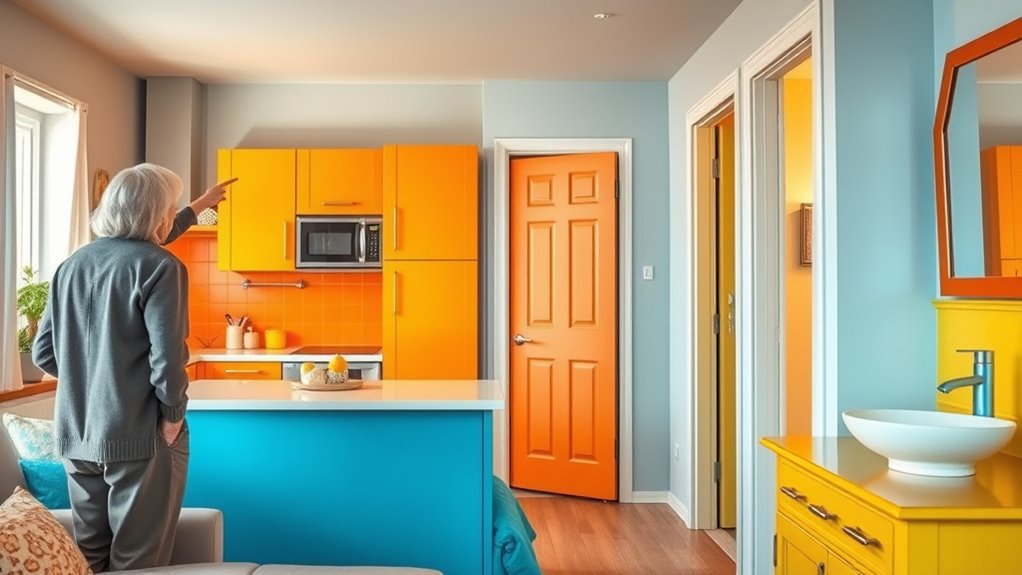
Involving family members and caregivers in the color-coding process guarantees everyone stays aligned and supportive of your loved one’s navigation needs. Share your color system plan with them, explaining what each color signifies and how it helps reduce confusion. Encourage their input to ensure the system fits seamlessly into daily routines. Training caregivers on how to use and reinforce the color cues promotes consistency, which is essential for effectiveness. Regularly update them on any adjustments you make to the system, emphasizing the importance of uniform messaging. When everyone understands and actively participates, your loved one benefits from a cohesive approach that minimizes disorientation. Engaged caregivers and family create a supportive environment, making the home safer and easier to navigate for someone with Alzheimer’s. Additionally, incorporating color-coding into other household cues can enhance overall clarity and support memory retention.
Frequently Asked Questions
How Long Does It Typically Take for Residents to Adapt to Color-Coding?
You might wonder how quickly residents adapt to color-coding. Usually, it takes a few days to a couple of weeks for residents to become comfortable with the system. Consistent use and clear, simple color choices help speed up the process. You should observe improved orientation and confidence as residents start recognizing and responding to the color cues, making daily routines smoother and reducing confusion effectively.
Are There Any Safety Concerns With Using Certain Colors or Materials?
Did you know that nearly 60% of accidents in homes happen due to poor visibility? When using color-coding, you should consider safety concerns like avoiding slippery or toxic materials, especially on floors or in high-traffic areas. Bright, contrasting colors can help, but verify materials are non-slip, durable, and non-toxic. Always test for safety first, and consult with professionals to avoid unintended hazards.
Can Color-Coding Help With Other Cognitive Impairments Besides Alzheimer’S?
You wonder if color-coding can aid people with other cognitive impairments. It definitely can. By using clear, distinct colors, you help individuals recognize spaces, objects, or routines more easily. This visual strategy supports memory, orientation, and independence in conditions like dementia, traumatic brain injuries, or developmental disabilities. Consistent color cues simplify daily tasks, reduce confusion, and promote confidence, making environments more accessible and less overwhelming for those with various cognitive challenges.
What Are Cost-Effective Options for Implementing Color-Coding Systems?
Have you considered how cost-effective color-coding can be? You can start with simple, inexpensive solutions like colored labels, tape, or painted doorframes to designate different areas. Using everyday items like colored sticky notes or washable paints keeps costs low. Why spend a lot when small, strategic changes make a big difference? These options are affordable, easy to implement, and adaptable to any home, helping reduce confusion without breaking the bank.
How Should I Handle Changes in Residents’ Preferences or Perceptions Over Time?
You should regularly check in with residents to understand their evolving preferences and perceptions. Keep communication open, ask for feedback, and observe their reactions to color-coding changes. Be flexible and willing to adjust your system as needed, ensuring it remains effective and comfortable. Building trust and staying attentive helps you tailor the environment, making residents feel understood and supported as their needs change over time.
Conclusion
By embracing color-coding in your home, you turn everyday spaces into a vibrant, easy-to-navigate wonderland that even the most confused loved ones can recognize instantly. Imagine doors glowing with bold hues, labels popping with bright clarity, and every room shouting its purpose in a symphony of color. This simple system transforms your home into a sanctuary of understanding, making confusion vanish faster than you can say “home sweet home.”