
To use a comfort menu at end of life, start by understanding your loved one’s preferences and core values. Collaborate with healthcare providers to create a personalized list of comfort measures, like favorite scents, foods, or activities. Clearly communicate this menu to caregivers and family, and verify everyone understands and respects it. Be flexible, regularly update the plan as needs change, and follow through consistently. Continuing will help you learn how to adapt and honor wishes compassionately.
Key Takeaways
- Collaborate with the individual and loved ones to develop a personalized comfort menu reflecting preferences and needs.
- Clearly explain each item and its significance, ensuring understanding and open communication.
- Regularly review and update the menu to accommodate changing physical, emotional, or spiritual needs.
- Document the comfort plan and share it with caregivers to ensure consistent implementation.
- Maintain a calm, supportive environment to promote trust, flexibility, and respect during end-of-life care.
Understanding the Purpose of a Comfort Menu

A comfort menu serves as a personalized tool that helps you communicate your preferences and needs at the end of life. Its main purpose is to give you a way to express what makes you comfortable, whether that’s specific foods, activities, or environments. By creating this menu, you’re ensuring your wishes are known, reducing confusion or unnecessary medical interventions. It also helps your loved ones and healthcare team understand what matters most to you, making it easier to honor your choices. Think of it as a way to maintain dignity and control during a vulnerable time. Understanding its purpose empowers you to make thoughtful decisions now, so your comfort and wishes are respected when it matters most. Additionally, recognizing personalized preferences can significantly improve your quality of life during this stage, ensuring that your individual needs are prioritized. For example, incorporating elements like electric bikes or generators can provide a sense of independence and comfort in various situations. Having a diverse range of options in your comfort menu allows you to tailor your end-of-life experience to align with your values and lifestyle.
Collaborating With Healthcare Providers to Develop the Menu

To create an effective comfort menu, you need to build trust with your healthcare providers and openly share your preferences. Collaborating with them helps guarantee your care options reflect what matters most to you. Personalizing these choices makes your end-of-life experience more meaningful and comfortable.
Building Trust With Providers
Building trust with healthcare providers is essential for creating an effective comfort menu that truly reflects your values and needs. When you openly share your concerns and preferences, providers see you as a partner rather than just a patient. Be honest about what matters most to you, and ask questions to clarify any uncertainties. Consistently communicate your wishes and listen to their insights; this ongoing dialogue helps build mutual respect. Trust is reinforced when providers respect your decisions and provide clear, compassionate explanations. Remember, developing a comfort menu is a collaborative process. When you establish a foundation of trust, it becomes easier to work together to create a plan that honors your end-of-life priorities and ensures you feel heard and supported.
Personalizing Care Options
Once you’ve established a trusting relationship with your healthcare team, you can actively work together to personalize your care options. This collaborative approach guarantees your comfort and preferences are central to your end-of-life experience. Share your values, wishes, and specific needs with your providers, and ask questions to clarify options. Together, you can craft a comfort menu that truly reflects what matters most to you.
Consider these aspects when personalizing your care:
- Identifying specific treatments you want or want to avoid
- Incorporating cultural or spiritual preferences
- Including non-medical comfort measures, like music or massage
- Setting clear boundaries for interventions you’re comfortable with
This process empowers you to shape your care in alignment with your vision for quality of life.
Assessing the Patient’s Preferences and Needs

To create a meaningful comfort menu, you need to understand what matters most to the patient. Ask about their core values and what brings them peace or relief. Identifying these comfort priorities helps make certain the care aligns with their individual needs. Incorporating essential oils known for their calming and healing properties can enhance the comfort options offered. Recognizing dog names that resonate with the patient’s personality or cultural background can also provide comfort and familiarity during this time.
Understanding Patient Values
Understanding patient values is vital to providing compassionate end-of-life care, as it guides decision-making and guarantees treatments align with what matters most to the patient. When you listen carefully, you can uncover their core beliefs, cultural background, and personal priorities. This helps you create a care plan that respects their dignity and autonomy. Remember, patient values often extend beyond medical preferences to include emotional, spiritual, and social aspects. By clarifying these, you ensure their final days reflect their true wishes.
- Recognize the importance of cultural and spiritual beliefs in decision-making
- Respect emotional needs alongside physical comfort
- Prioritize open, honest conversations to uncover core values
- Incorporate personal stories and life experiences to guide care choices
Identifying Comfort Priorities
Building on what you’ve learned about patient values, the next step is to identify their comfort priorities. Talk openly with the patient and family to understand what matters most to them—whether it’s pain relief, emotional support, spiritual needs, or maintaining dignity. Ask specific questions about preferences for comfort measures, preferred environment, and any previous coping strategies. Pay attention to non-verbal cues and emotional responses, as they can reveal unspoken priorities. Remember, comfort isn’t just physical; it also involves emotional and spiritual well-being. By clearly understanding these priorities, you can tailor the comfort menu to meet their unique needs, ensuring that care aligns with their wishes and enhances their quality of life in this stage.
Designing a Personalized List of Comfort Measures

Creating a personalized list of comfort measures allows you to focus on what truly matters to your loved one. Think about their preferences, routines, and what has brought them peace in the past. Tailoring these measures guarantees that their final days are meaningful and respectful of their wishes. Consider their favorite scents, comforting sounds, or gentle touch. Include practical items that ease discomfort, like soft blankets or specific medications. Remember, this list is flexible and can evolve as needs change. The goal is to create a plan that provides reassurance and a sense of control, both for your loved one and you. Recognizing the significance of comfort-focused products can help enhance their sense of well-being during this time. Prioritizing personalized comfort measures can make their final moments more peaceful and meaningful. Honor their favorite sensory experiences. Prioritize comfort over medical interventions. Focus on familiar routines and environments. Keep the list adaptable and open to updates. Incorporating elements from Italian cuisine, such as the soothing aroma of a homemade tomato focaccia or the comforting taste of cheesy polenta, can evoke familiar and calming sensations that contribute to their comfort.
Communicating the Comfort Menu to Caregivers and Family Members

Once you’ve developed a personalized comfort menu, it’s essential to clearly communicate it to caregivers and family members. Start by sitting down with them in a calm setting, explaining each item on the list and why it’s important. Use simple language and check for understanding, encouraging questions to clarify any uncertainties. Provide written documentation of the comfort menu so they can reference it as needed. Be transparent about your intentions and emphasize that the menu is flexible and tailored to your needs. Make sure everyone understands that following this plan helps ensure your comfort and dignity. Open, honest communication builds trust and reduces confusion during a challenging time, making it easier for caregivers and family members to support your wishes effectively. Remember, inspirational quotes about fatherhood can serve as a reminder of the importance of love and support during difficult moments.
Implementing the Comfort Menu During Care
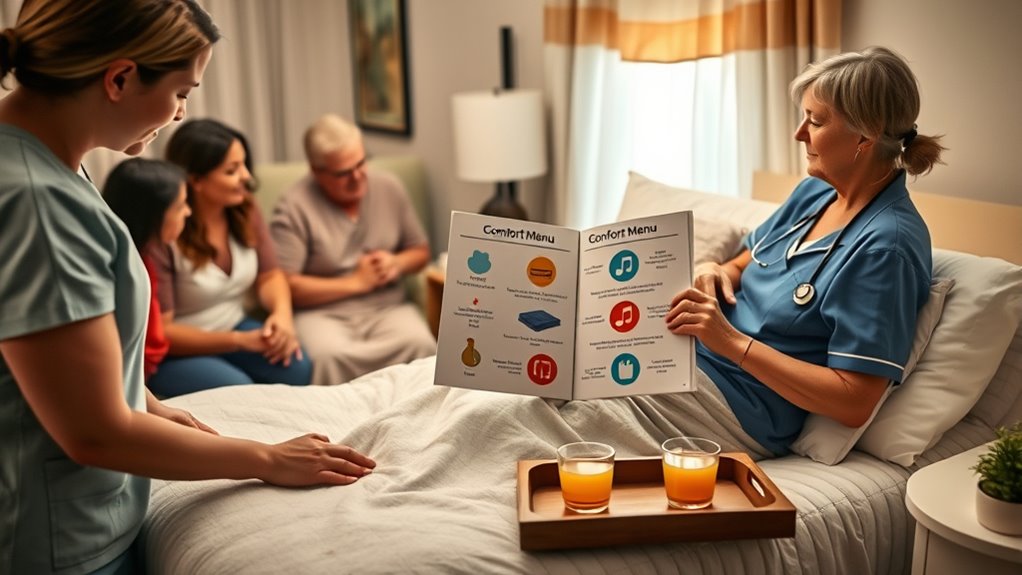
After sharing the comfort menu with caregivers and family members, it’s time to put the plan into action. Begin by observing your loved one’s responses and preferences closely. Encourage open communication, allowing them to express what feels right in the moment. Be flexible and ready to adapt the plan as needs change. Remember, comfort isn’t static—what works today might differ tomorrow. Keep the environment calm and supportive, ensuring they feel safe to choose their preferred comfort measures. Incorporating support systems can also help in maintaining a consistent and attentive approach. Paying attention to their reactions to various flavors or textures, similar to the variety found in gelato options, can guide adjustments to enhance their comfort and enjoyment. Recognizing the importance of patient-centered care can further tailor the experience to meet their individual needs. Monitoring retail hours of nearby stores can help in planning timely access to comfort items, ensuring their preferences are met without unnecessary stress. Additionally, leveraging predictive analytics in healthcare settings can assist caregivers in anticipating needs and adjusting comfort strategies proactively.
Reviewing and Updating the Menu as Conditions Change

As your loved one’s condition evolves, it’s essential to regularly review and update the comfort menu to guarantee it continues to meet their changing needs and preferences. Schedule periodic check-ins to discuss how they’re feeling and any new concerns or desires. Pay close attention to their physical and emotional state, adjusting comfort options accordingly. For example, if pain levels decrease, you might add more relaxing activities or favorite treats. If new symptoms emerge, update the menu to include comfort measures tailored to those issues. Keep communication open and involve your loved one as much as possible in these updates. Flexibility is key, ensuring the comfort menu remains a relevant, supportive tool that adapts to their evolving circumstances. Incorporating snacks like Marinated Olives and Feta or Creamy Cheesy Lemon Greek Yogurt Pasta can provide enjoyable comfort options tailored to their preferences. Regularly assessing patient comfort with input from healthcare providers can further improve the effectiveness of the menu. Developing an understanding of adaptability in care can help caregivers respond more effectively to sudden changes. Embracing a mindset of embracing failure in creativity can help caregivers develop innovative approaches to comfort, especially when standard options aren’t sufficient. Additionally, understanding the importance of variety in comfort measures can enhance the overall well-being of your loved one by addressing diverse needs.
Respecting the Patient’s Wishes and Maintaining Flexibility

Respecting your loved one’s wishes is fundamental to providing compassionate end-of-life care. It means honoring their preferences, even if they change over time, and adjusting the comfort menu accordingly. Flexibility is key; what they want today might differ tomorrow. Be aware that dietary restrictions should always be taken into account to ensure safety and comfort during this sensitive time. Additionally, understanding ice cream flavors can help in offering suitable options that align with their preferences and dietary needs. Keep these principles in mind: – Listen carefully to their expressed desires without judgment. – Reassess regularly, acknowledging that needs and feelings evolve. – Communicate openly with the healthcare team to ensure wishes are understood. – Respect decisions about comfort measures, even if they differ from previous choices. Furthermore, being aware of nutritional content can help tailor offerings that meet their specific health requirements. Additionally, understanding advanced care planning can help clarify their wishes and guide decision-making in these moments.
Frequently Asked Questions
How Can I Ensure the Comfort Menu Respects Cultural or Spiritual Preferences?
You can guarantee the comfort menu respects cultural or spiritual preferences by actively involving the individual and their family in the planning process. Ask about their beliefs, customs, and specific needs, and incorporate these into the options you offer. Stay open-minded, listen carefully, and adapt the menu accordingly. This approach shows respect, honors their values, and helps provide truly personalized comfort at the end of life.
What Are Common Challenges in Implementing a Comfort Menu Effectively?
You might face challenges like ensuring staff understands the comfort menu, balancing individual preferences with available resources, and addressing diverse cultural or spiritual needs. Communication can also be tricky, as you need to make sure everyone involved is on the same page. Additionally, adjusting the menu as needs change requires flexibility. Overcoming these hurdles involves staff training, open dialogue, and ongoing assessment to make sure comfort measures truly meet each person’s wishes.
How Do I Address Disagreements Among Family Members About Comfort Measures?
When family members disagree on comfort measures, you need to facilitate open communication. Listen to each person’s concerns and preferences without judgment. Encourage everyone to share their thoughts, and gently remind them that the goal is to honor the patient’s wishes and comfort. If disagreements persist, involve a healthcare professional or mediator to help find common ground. Your compassion and patience will guide everyone toward consensus and peace.
Can a Comfort Menu Be Used in Both Hospital and Home Settings?
You wonder if a comfort menu can be used in both hospital and home settings. Yes, it can. You can implement it in hospitals, ensuring staff follow the patient’s preferences, and at home, allowing family members to honor wishes comfortably. The key is clear communication, coordination, and flexibility. Whether in a clinical or personal environment, a comfort menu helps prioritize what matters most, making end-of-life care more personalized and respectful.
What Legal Considerations Should Be Taken Into Account When Developing a Comfort Menu?
When developing a comfort menu, you should guarantee it complies with legal standards like patient rights, informed consent, and advance directives. You need to verify that all listed options are ethically appropriate and legally permissible in your jurisdiction. Consulting with legal professionals and healthcare providers helps you avoid liability and ensure the comfort menu respects patient autonomy while aligning with healthcare regulations.
Conclusion
Creating a comfort menu helps guarantee your loved one’s final days are peaceful and personalized. Studies show that patients with tailored comfort measures experience 30% less distress. By collaborating with healthcare providers, respecting wishes, and staying flexible, you can make meaningful choices that improve quality of life. Remember, regularly reviewing and updating the menu makes certain it continues to meet changing needs, providing comfort and dignity during this important time.