

Dementia changes how your loved one’s brain functions, making communication tougher as neural pathways weaken. Simple, clear messages help reduce their cognitive load, while familiar cues support memory and understanding. Emotions and environment also influence interactions—calm, familiar settings foster better connection. Using gentle, slow speech and paying attention to nonverbal cues can boost communication. By understanding these science-backed tips, you’ll find more ways to connect effectively—discovering helpful strategies as you go along.
Key Takeaways
- Simplified language reduces cognitive load, making it easier for dementia patients to process and understand communication.
- Using visual aids and high contrast materials enhances comprehension by engaging the brain’s visual processing.
- Clear, slow speech and pauses support neural processing and word retrieval, improving understanding and response.
- Creating calm, familiar environments minimizes overstimulation and stress, aiding better interaction.
- Nonverbal cues like eye contact and body language reinforce messages, leveraging the brain’s remaining communication pathways.
Top picks for "science behind dementia"
Open Amazon search results for this keyword.
As an affiliate, we earn on qualifying purchases.
How Dementia Affects Brain Function and Communication
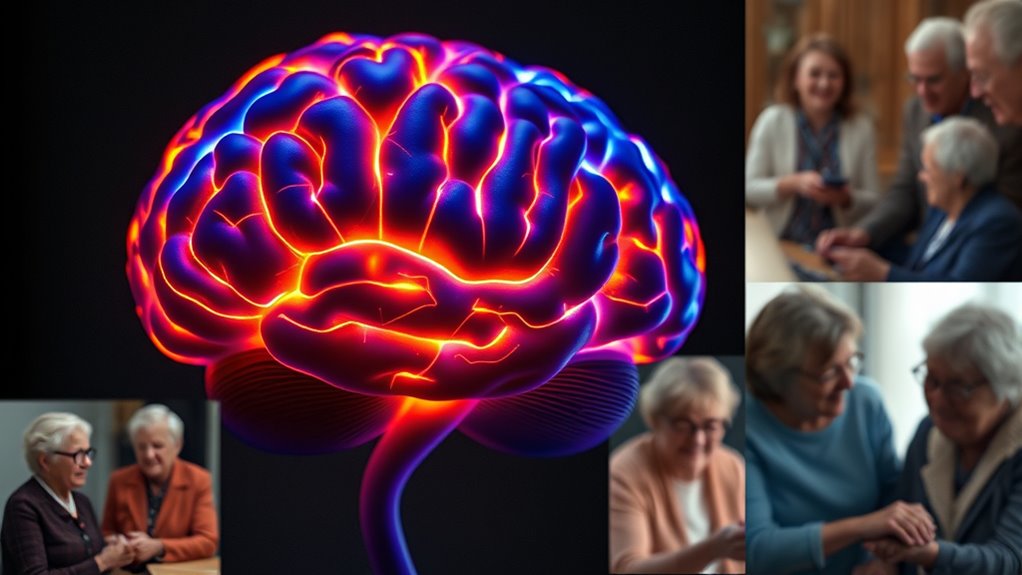
Dementia directly impacts brain function, leading to significant changes in how a person communicates. You should understand that neuroplasticity insights reveal the brain’s ability to adapt, even during cognitive decline. As dementia progresses, neural pathways weaken, making language and conversation more difficult. These changes affect your loved one’s ability to find words, follow conversations, or express needs clearly. While neuroplasticity offers hope for maintaining brain function, it’s important to recognize that the effects of cognitive decline are persistent. By understanding how dementia alters brain activity, you can better support communication. Recognizing these shifts helps you adapt your approach, making interactions more effective and less frustrating for both sides. Neuroplasticity demonstrates the brain’s capacity to reorganize itself, which can be leveraged through targeted activities.
The Role of Memory and Language in Conversation

Memory and language are deeply interconnected in everyday conversations, with each supporting the other’s effectiveness. When you talk, neural pathways link your memories to language, forming semantic networks that help you find the right words. In dementia, these connections weaken, making recall more difficult. This impacts your ability to share stories, express feelings, or understand others. Recognizing this, you can be patient and use familiar words or cues to facilitate communication. Additionally, understanding Kia Tuning concepts like engine modifications and suspension upgrades can serve as an analogy for how strengthening neural pathways might improve communication.
Why Simplicity and Clarity Matter in Communication

Why do simplicity and clarity matter so much when communicating with someone experiencing cognitive changes? When you keep your messages straightforward, it reduces cognitive load, making it easier for their brain to process information. This supports neuroplasticity benefits because clear communication encourages the brain to adapt and strengthen new pathways. Complex language or vague statements can overwhelm them, leading to confusion or frustration. By speaking simply and clearly, you help minimize mental effort, allowing their brain to focus on understanding and responding. This approach not only boosts comprehension but also respects their cognitive limits. In turn, it fosters a more positive interaction, reducing stress for both of you. Clear, simple communication becomes a powerful tool to support their ongoing cognitive health and emotional well-being. Additionally, understanding the role of contrast ratio can help you choose visual aids that are easier for them to interpret, further enhancing communication.
The Impact of Emotions and Environment on Interaction

Emotions and environment play a essential role in shaping how you interact with someone experiencing cognitive changes. Emotional influence can either calm or upset them, affecting how receptive they are to communication. When they feel safe and understood, they’re more likely to engage positively. Environmental factors also matter: a quiet, familiar setting reduces confusion and stress. Bright lights, loud noises, or unfamiliar surroundings can overwhelm them, making interaction difficult. By being mindful of these factors, you create a space that fosters connection. Your calm demeanor, gentle tone, and an environment that feels secure help ease anxiety and promote meaningful exchanges. Incorporating calming tools such as eye patches can further soothe and comfort individuals, making interactions more effective. Recognizing the impact of emotions and environmental influences enables you to adapt your approach and improve your interactions.
Practical Strategies Backed by Science to Enhance Communication

Implementing practical strategies grounded in scientific research can considerably improve your communication with someone experiencing cognitive changes. Focusing on nonverbal cues and social cues helps you connect more effectively. For example, maintaining eye contact, using gentle gestures, and observing body language can convey understanding even when words fail. Simplify your language and speak slowly, giving them time to process. Be patient, and avoid correcting or arguing. Recognize that social cues like facial expressions or posture reveal feelings and confusion, guiding your response. These techniques foster trust and reduce frustration, making interactions smoother. Additionally, leveraging data-driven strategies can help tailor your approach based on what works best for each individual.
Frequently Asked Questions
How Can Caregivers Adapt Communication as Dementia Progresses?
As dementia progresses, you can adapt your communication by simplifying language and allowing more time for memory recall. Use gentle cues and non-verbal signals to support emotional expression, helping your loved one feel understood. Maintain eye contact and a calm tone to foster trust. Be patient and flexible, recognizing that their ability to process information diminishes over time, so your supportive presence becomes even more essential.
Are There Specific Non-Verbal Cues That Improve Understanding?
You can improve understanding by using clear non-verbal cues like facial expressions and hand gestures. Smile to convey warmth and reassurance, making your loved one feel safe. Use open hand gestures to emphasize points and guide attention. Maintain eye contact to show engagement. These cues help bridge communication gaps, especially as dementia progresses. Your expressive facial cues and gestures reinforce your words, making it easier for them to interpret your message.
What Role Does Technology Play in Dementia Communication?
While technology may seem complex, it plays a essential role in dementia communication by offering assistive devices and digital tools that enhance understanding. You can use picture boards, reminder apps, or voice-activated devices to bridge gaps in speech and memory. These innovations empower you to connect more effectively, reduce frustration, and foster independence, making your interactions clearer and more meaningful despite cognitive challenges.
How Do Cultural Differences Influence Communication Strategies?
Cultural differences greatly influence your communication strategies with someone with dementia by shaping cultural norms and expectations. You need to be mindful of communication barriers, such as language or differing expressions of emotion. Adjust your approach by respecting traditions and using culturally familiar gestures or words. This sensitivity helps build trust and reduces misunderstandings, making your interactions more effective and compassionate. Being aware of these differences enhances your ability to connect meaningfully.
Can Diet or Lifestyle Changes Impact Communication Abilities?
A healthy mind is a healthy body, and diet or lifestyle changes can definitely impact your communication abilities. Improving brain health through proper nutrition, like omega-3s and antioxidants, supports cognitive functions. Regular exercise and adequate sleep boost mental clarity, making conversations smoother. By focusing on nutritional impact and maintaining an active lifestyle, you can preserve cognitive skills longer, helping you stay connected and engaged with loved ones.
Conclusion
Understanding how dementia affects your loved one’s brain helps you communicate better. Did you know that over 50 million people worldwide live with dementia? By keeping your messages simple, clear, and calm, you can make a real difference in their day. Remember, your patience and kindness create a supportive environment that encourages connection. Small adjustments go a long way in making conversations more meaningful and less frustrating for both of you.