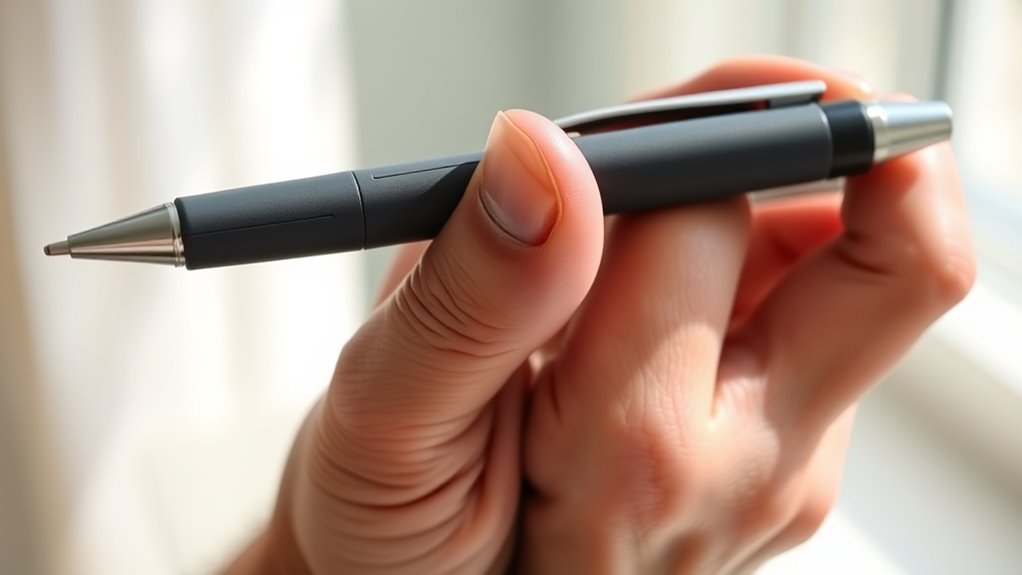

If you have arthritic fingers, ergonomic pens can be worth it because they reduce strain, improve comfort, and support better handwriting. Features like cushioned, contoured grips and easy-to-press buttons help lessen joint pain and fatigue. Though they may have a higher price and require an adjustment period, many users find the benefits outweigh the costs. To discover if these pens suit your needs and how to choose the right one, keep exploring.
Key Takeaways
- Ergonomic pens reduce finger strain and improve comfort, making writing easier for arthritic fingers.
- They promote natural grip and decrease fatigue, potentially enhancing handwriting quality over time.
- While more expensive, they can prevent joint pain and improve hand mobility, offering long-term benefits.
- Some users experience an adjustment period; effectiveness varies based on individual arthritis severity.
- Overall, ergonomic pens are worth considering for improved comfort and functionality despite higher costs.
Understanding Arthritis and Its Impact on Writing

Arthritis can profoundly hinder your ability to write comfortably and effectively. When your joints become inflamed and painful, gripping a pen feels more like a struggle than a simple task. You might notice increased stiffness, reduced strength, and limited mobility in your fingers and hands. These symptoms make controlling a standard pen difficult, leading to fatigue and frustration during writing. Over time, arthritis can cause deformities that further impair your grip and precision. It’s not just about discomfort; it’s about how these changes disrupt your daily activities and overall independence. Understanding how arthritis impacts your hand function is essential for finding solutions that help you write more comfortably and preserve your ability to communicate effectively. Incorporating ergonomic tools like specialized pens can significantly improve your writing experience and reduce strain. Additionally, using assistive devices designed for arthritis can help support and stabilize your grip, making writing less painful and more manageable. Recognizing arthritis symptoms early can also lead to better management strategies to maintain hand strength and dexterity over time, especially through targeted exercises and joint protection techniques. Being aware of regional flavors and traditions in culinary experiences can also inspire creative ways to adapt your writing environment for more comfort.
Features to Look for in Ergonomic Writing Instruments
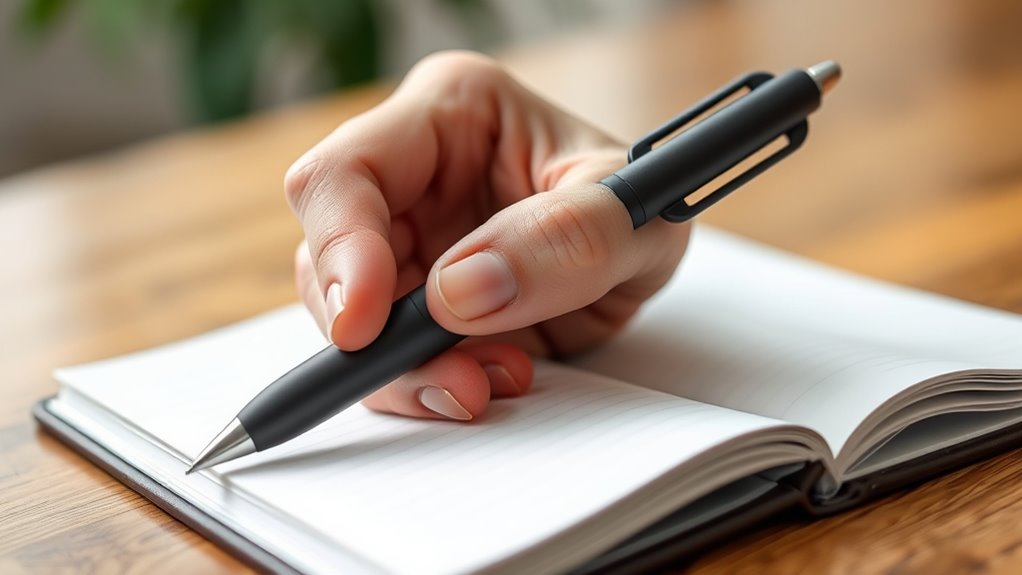
When choosing ergonomic writing instruments, it’s vital to prioritize features that reduce strain and enhance comfort. Look for pens with a thick, cushioned grip to minimize pressure on your fingers. A contoured shape fits naturally in your hand, promoting relaxed writing. Additionally, easy-to-press clips or buttons reduce the force needed to operate the pen. Consider the ink flow; smooth, consistent ink prevents unnecessary pressure and stops skipping. Incorporating ergonomic design principles in pen design can further improve ease of use for arthritic fingers. Moreover, selecting pens made from sustainable materials can contribute to environmentally conscious choices without compromising functionality.
How Ergonomic Pens Can Alleviate Discomfort

Ergonomic pens are designed to reduce the physical strain often caused by prolonged writing, making them a practical solution for those with arthritic fingers. They improve comfort by encouraging a natural grip and reducing the pressure needed to write. This can help decrease pain and fatigue during extended use. Additionally, ergonomic pens often feature larger, cushioned grips that prevent slipping and reduce finger tension. They also promote better handwriting by providing stability and control. By easing the effort required, these pens can make writing feel less like a chore. Using ergonomic tools can also complement other assistive technologies for better hand health and mobility. Moreover, selecting a pen with ergonomic features can contribute to more comfortable and sustainable writing habits over time.
Comparing Different Types of Ergonomic Pens
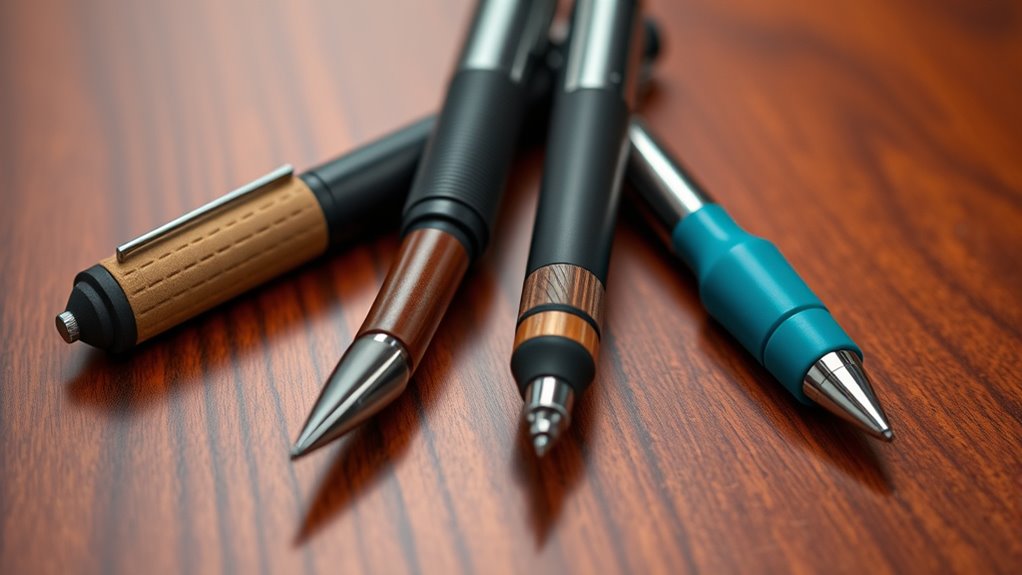
When comparing ergonomic pens, you’ll want to think about grip designs that reduce strain and fit comfortably in your hand. Material and comfort play a big role in how long you can write without discomfort, while price and value help determine which option fits your budget. Understanding these points can help you find a pen that eases your arthritis pain and meets your needs. Additionally, considering tableware with ergonomic features can provide insights into designing comfortable and functional grips for everyday objects. Exploring relationships in design principles can also inspire innovations that improve usability and user satisfaction. Incorporating knowledge of Bedroom design elements can further influence the development of ergonomic tools that blend form and function seamlessly. Engaging with home organization strategies can help ensure that ergonomic tools are stored and accessed conveniently, promoting consistent use and comfort. Recognizing the influence of dog names trends and preferences can also inspire more personalized and appealing ergonomic designs for everyday use.
Pen Grip Designs
Different grip designs in ergonomic pens are tailored to reduce strain and improve comfort for arthritic fingers. These designs focus on minimizing pressure points and promoting a natural hand position. Some popular options include:
- Cushioned grips that absorb pressure and reduce fatigue
- Contoured shapes that fit the hand’s natural curves for better control
- Thick barrels that require less grip strength, easing joint stress
- Tri-grip or triangular designs that encourage a relaxed, proper hold
Each design aims to lessen the effort needed to write and prevent pain. Your choice depends on which feels most comfortable and supportive for your specific needs. Exploring different grip styles can help you find the pen that makes writing easier and less painful.
Material and Comfort
Choosing the right material for an ergonomic pen can substantially impact your comfort and ease of writing. Pens made from soft, rubberized grips offer cushioning that reduces pressure on arthritic fingers, making extended writing sessions less painful. Plastic bodies are lightweight and affordable but can sometimes feel less comfortable if they lack cushioning. Metal pens provide durability and a premium feel but might be heavier, which could cause fatigue. Silicone grips blend comfort with flexibility, conforming to your hand’s shape for better control. Some pens feature a combination of materials, balancing firmness and softness. When selecting a pen, consider how the material interacts with your skin and grip strength. Ultimately, the right material enhances comfort, helping you write more effortlessly and with less discomfort.
Price and Value
The cost of ergonomic pens varies widely, and understanding their value helps you make smarter choices. Cheaper options might seem appealing, but they often lack durability or comfort. Mid-range pens typically balance cost and quality, offering better grip and design features. Premium ergonomic pens can be expensive but often provide long-lasting comfort and improved writing ease.
Consider these factors when evaluating value:
- Durability and build quality
- Ease of grip and comfort
- Compatibility with arthritis-specific needs
- Long-term cost savings through durability
Ultimately, investing in a higher-quality pen may save you money over time by reducing discomfort and the need for frequent replacements. Choosing the right ergonomic pen depends on your needs and budget, ensuring you get the best bang for your buck.
Potential Limitations and Drawbacks of Ergonomic Designs
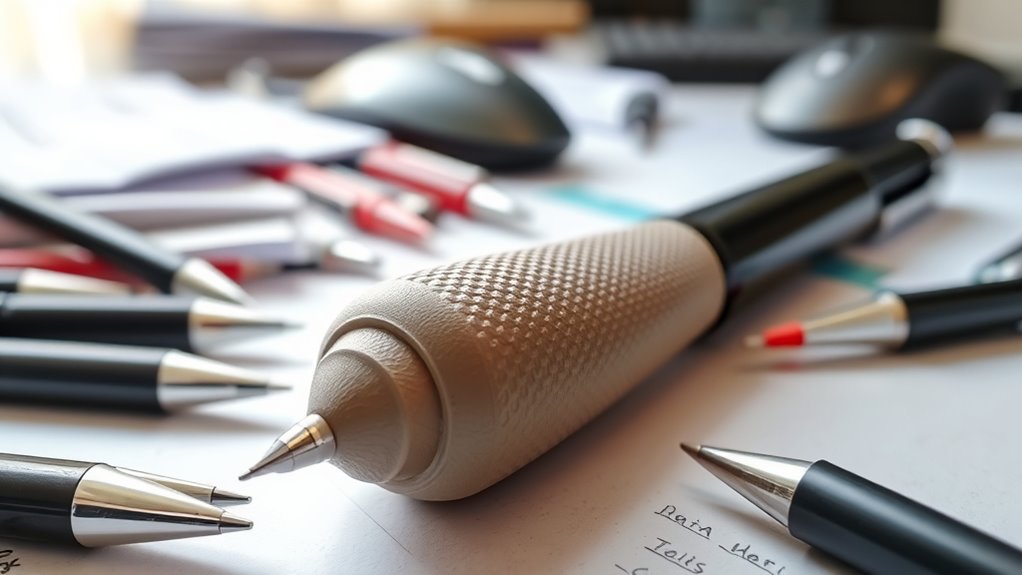
While ergonomic pens can be beneficial, they often come with higher costs that might deter some users. You may also find limited style options, making it harder to match your personal preferences. Additionally, adjusting to their unique design can take time, which might be frustrating initially.
Higher Cost Concerns
Although ergonomic pens can offer significant relief for arthritic fingers, their higher price tag often raises concerns about affordability. You might wonder if the extra cost is justified. Keep in mind, these pens typically feature specialized grips, quality materials, and innovative designs, all of which add to the expense. Here are some key points to contemplate:
- They often cost more than standard pens, sometimes considerably so.
- Investing in ergonomic pens may strain tight budgets or lead to fewer pens purchased.
- The higher upfront cost might not always be justified if you only need them temporarily.
- Some options may lack discounts or bulk purchase deals, increasing overall expense.
Balancing comfort with budget is essential to determine if ergonomic pens are a worthwhile investment for you.
Limited Style Options
Limited style options are a common drawback of ergonomic pens, which can make it difficult to find a design that suits your personal taste or professional setting. Many ergonomic pens prioritize function over aesthetics, resulting in limited choices in color, shape, and overall appearance. This can leave you feeling confined to utilitarian designs that may not match your style. To help visualize, here’s a quick comparison:
| Style Aspect | Typical Ergonomic Pens | Standard Pens |
|---|---|---|
| Color Options | Limited, often muted | Wide variety of vibrant shades |
| Design Variety | Minimal, focus on comfort | Diverse styles and shapes |
| Professional Look | Often utilitarian | Can be sleek or decorative |
If style matters to you, these limitations might influence your decision.
Adaptation Challenges
Despite their focus on comfort and support, ergonomic pens can present some adaptation challenges that you should consider. You might find it takes time to get used to the new grip and weight distribution. Some pens have a bulkier design, which can feel awkward at first, especially if you’re accustomed to traditional styles. Additionally, switching to an ergonomic pen may require adjusting your writing pressure, which can initially cause fatigue or frustration. You might also encounter limited compatibility with certain pen refills or ink types, restricting your options. Be prepared for a learning curve as you develop a new writing rhythm. These challenges can slow your progress initially, but with patience, you’ll likely find the ergonomic design becomes more natural and beneficial over time.
User Experiences and Personal Testimonials
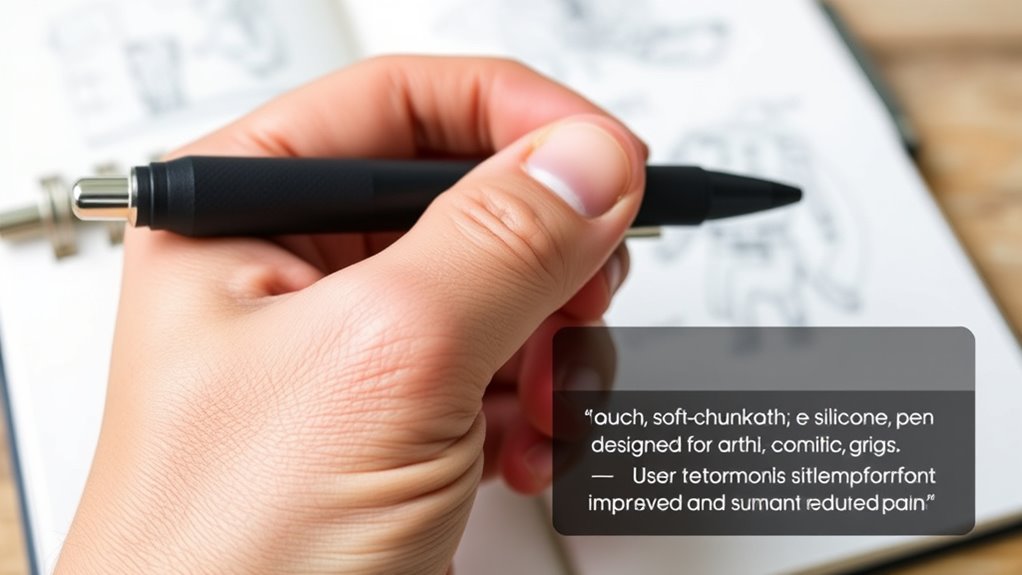
Many users with arthritic fingers find ergonomic pens make a noticeable difference in their writing comfort and control. They report less hand fatigue after prolonged writing sessions and notice improved grip stability. Personal testimonials often highlight how these pens reduce joint pain and stiffness, making everyday tasks like signing documents or jotting notes easier. Some users share that switching to ergonomic pens restored their confidence in writing, especially during long writing periods. Others mention how the comfortable grip helps them maintain better posture, reducing strain elsewhere. Additionally, ergonomic pens can help improve writing accuracy and make handwriting more legible for those with arthritis. The design features of these pens are specifically tailored to accommodate joint limitations, which further enhances their effectiveness. Proper ergonomic design can also help prevent further joint deterioration over time. The vibrational benefits of comfort and ease of use contribute to a more positive writing experience overall. Incorporating ergonomic principles into pen design can enhance both comfort and functionality for users with joint issues. Overall, these personal stories emphasize that ergonomic pens can substantially enhance writing experience for those with arthritis, making daily writing tasks less painful and more manageable. Your experiences align with many who’ve found relief and improved control with these specialized tools.
Cost Considerations and Value for Money

When considering ergonomic pens for arthritic fingers, understanding the cost and value for money is essential. These pens range widely in price, so it’s important to weigh what you’re getting. Cheaper options may save you money upfront but might lack durability or comfort. More expensive pens often feature high-quality materials, better grip, and longer-lasting designs, potentially saving you money over time. Keep in mind:
- Initial purchase price
- Durability and longevity
- Comfort and ergonomic features
- Potential health benefits and reduced strain
- Ergonomic design features can influence how effectively a pen reduces hand fatigue and discomfort during extended use. Additionally, selecting pens with appropriate grip designs can enhance comfort and support for arthritic fingers, making them a worthwhile investment. Incorporating ergonomic pens with specialized features such as cushioned grips or contoured shapes can further improve ease of use and reduce strain. Choosing pens with durable construction can also contribute to long-term savings by preventing frequent replacements.
Investing in a well-made ergonomic pen can lead to less pain and improved handwriting, making it a worthwhile expense. Assess your budget and priorities carefully to find the best balance of cost and value.
Making the Decision: Are Ergonomic Pens Right for You?
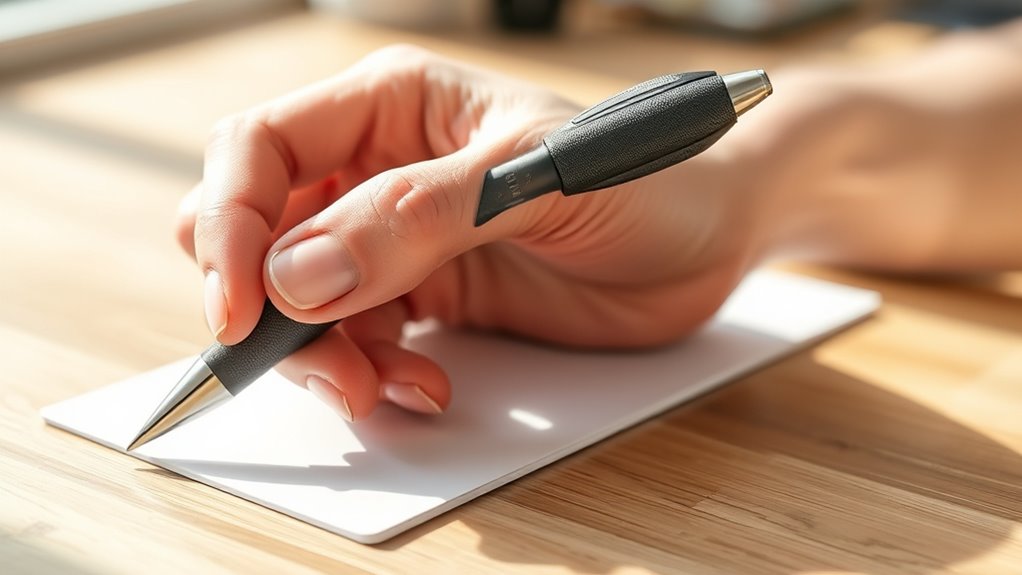
Are ergonomic pens the right choice for your needs? If you experience pain or discomfort when writing, these pens might be worth trying. Consider how much you write daily and whether traditional pens cause fatigue or strain. Ergonomic pens are designed to reduce pressure on arthritic fingers, making writing easier and more comfortable. However, they can vary in size, grip, and style, so it’s essential to find one that feels natural in your hand. Think about your budget and whether investing in an ergonomic pen will improve your writing experience enough to justify the cost. Ultimately, testing different options and listening to your body’s signals will help you decide if an ergonomic pen is a practical solution for you.
Frequently Asked Questions
Can Ergonomic Pens Improve Handwriting Quality for Arthritic Individuals?
If you’re wondering whether ergonomic pens can improve your handwriting, they might help. These pens are designed to reduce strain and provide a better grip, making writing more comfortable. As a result, you may notice improved control and steadiness, leading to clearer handwriting. While individual results vary, trying an ergonomic pen could be a worthwhile step toward making writing easier and enhancing your handwriting quality.
Are There Specific Brands Recommended for Arthritis-Friendly Pens?
You’ll find several brands recommended for arthritis-friendly pens, such as Pilot’s Dr. Grip series, which feature cushioned grips that reduce strain. Bic’s Cristal Easy-Click and Zebra’s Rubber Grip pens also offer comfortable handling for arthritic fingers. Look for pens with thicker barrels, soft grips, and easy-to-press mechanisms. Trying different brands helps you identify which one offers the best comfort and control for your specific needs.
How Long Can I Expect Ergonomic Pens to Last With Regular Use?
You can expect ergonomic pens to last anywhere from several months to a year with regular use, depending on the quality and how often you write. Higher-quality pens with durable materials tend to last longer and withstand daily wear better. Be mindful of the grip and ink refillability, as these factors also influence longevity. Proper care, like cleaning and storing them properly, can help extend their lifespan even further.
Do Ergonomic Pens Require Special Refills or Replacements?
You might wonder if ergonomic pens need special refills or replacements. Usually, they do require specific refills designed for their unique grip and mechanism. Check the manufacturer’s instructions to find compatible refills, as using the wrong ones can affect performance. Replacement is generally straightforward, and many brands offer refill packs online or at office supply stores, making it easy for you to keep writing comfortably without hassle.
Are Ergonomic Pens Suitable for Children or Only Adults?
Kids and adults both need comfortable writing tools, but ergonomic pens are especially helpful for children with developing fine motor skills or those who struggle with grip. While some pens are designed specifically for adults, many ergonomic options suit children too. You’ll find models with smaller grips and lightweight designs that fit smaller hands, making writing easier and less tiring for young users. So, yes, ergonomic pens are suitable for children; they just come in different sizes.
Conclusion
If your fingers ache like stubborn knots each time you write, ergonomic pens can be your gentle escape. Picture gliding smoothly across paper, your grip relaxed, pain fading into the background like a distant hum. These pens are designed to cradle your hand, transforming a frustrating task into a more comfortable experience. Whether they’re worth it depends on your needs, but with the right choice, you might just find your writing flow again, pain-free and effortless.