To host a family care meeting that gets results, start by setting clear goals and choosing participants who are directly involved and skilled. Prepare an agenda that keeps discussions focused, and establish ground rules for respectful communication. Encourage open dialogue, manage conflicts calmly, and take detailed notes to track decisions. Use visuals or technology to boost engagement, and schedule follow-ups to maintain momentum. If you want strategies for effective facilitation, keep exploring these essential tips.
Key Takeaways
- Set clear objectives and prepare a detailed agenda to keep the meeting focused and goal-oriented.
- Invite relevant participants and communicate roles and expectations beforehand to ensure productive engagement.
- Establish ground rules for respectful communication, active listening, and equal participation to foster collaboration.
- Facilitate open dialogue, manage conflicts respectfully, and document decisions with assigned tasks and deadlines.
- Use visual aids and technology to clarify information, engage participants, and support remote family members.
Setting Clear Objectives for Your Meeting

Before you hold a family care meeting, having clear objectives is vital. You need to know what you want to accomplish to keep the discussion focused and productive. Start by identifying the main purpose: are you creating a care plan, discussing financial concerns, or addressing emotional needs? Break this down into specific goals, such as reviewing current care arrangements or exploring new options. Write these objectives down to guide your agenda and prevent drifting off-topic. Clear goals help everyone stay on track, feel prepared, and understand their roles. When everyone knows what you’re aiming for, the meeting becomes more efficient and effective. Setting objectives upfront ensures you cover essential topics without wasting time. Incorporating a structured approach can further improve the meeting’s effectiveness, especially when considering care-related needs and how to address them comprehensively. Additionally, utilizing diverse planning tools from innovative options like unique and creative planters can inspire fresh perspectives in problem-solving and collaboration. For example, using music therapy techniques during sessions can foster emotional well-being and enhance engagement in discussions. Recognizing the importance of collaborative efforts can help ensure all voices are heard and ideas are integrated effectively.
Choosing the Right Participants

Choosing the right participants is key to ensuring your family care meeting stays productive and focused. You want to invite those directly involved in decision-making or caregiving, such as family members, close friends, or trusted advisors. Avoid including too many people, as it can lead to confusion or conflicting opinions. Consider each person’s ability to contribute constructively and their willingness to participate openly. Your goal is to gather individuals who can provide valuable insights, support, and consensus. Make sure everyone invited understands the meeting’s purpose. If someone’s role is unclear or they might dominate the conversation, assess whether their participation is necessary or if a one-on-one discussion is better. Thoughtful participant selection helps keep the meeting efficient and focused on your family’s needs. Additionally, selecting participants with relevant educational and skill-building toys can facilitate more meaningful and productive discussions. Recognizing the importance of family dynamics can also influence who is best suited to participate, as it ensures the meeting remains harmonious and aligned with your goals. Incorporating performance metrics related to past meetings can help identify the most effective participants for future gatherings. Furthermore, understanding anime culture can sometimes provide unexpected insights into team-building and engagement strategies, enriching the overall effectiveness of your meetings. Moreover, considering paint sprayer technology can offer innovative ideas for organizing and conducting engaging family activities or projects that foster teamwork.
Preparing an Agenda to Stay Focused

Creating a clear agenda is essential to keep your family care meeting focused and productive. Start by listing the main topics you want to cover, such as caregiving responsibilities, financial planning, or legal concerns. Prioritize these issues to ensure the most important items are addressed first. Keep each item specific and manageable—avoid vague topics like “discuss arrangements” and instead specify “review current caregiving schedule” or “update on medical appointments.” Allocate a set amount of time for each point to stay on track. Share the agenda in advance so everyone can prepare their thoughts. This preparation helps keep the discussion organized, prevents tangents, and guarantees you make the most of your meeting time.
Establishing Ground Rules for Respectful Communication

To make certain everyone feels heard, you should set clear expectations for respectful communication. Encourage active listening by asking participants to focus on what others share without interrupting. Promote an equal voice so each person has the opportunity to contribute and feel valued. Incorporating self-awareness can also help participants understand their own communication styles and improve overall interactions. Recognizing emotional intelligence can further foster empathy and understanding within the group. Additionally, understanding the benefits of exfoliation, such as improved skin texture and brightness, can help family members appreciate skin care routines and support each other’s goals. Incorporating mindfulness practices, like deep breathing exercises, during discussions can help maintain a calm and focused environment, ensuring everyone’s perspectives are considered respectfully. Cultivating a positive vibrational environment can also enhance the group’s overall harmony and effectiveness.
Set Clear Expectations
Setting clear expectations is essential for making sure everyone feels heard and respected during the meeting. Before starting, communicate your goals and outline what you hope to achieve. Let everyone know how you expect them to participate—whether it’s listening without interruptions or sharing their concerns openly. Clarify the importance of staying on topic and respecting differing opinions. If needed, establish time limits for each person’s input to keep the discussion balanced. Be transparent about the meeting’s structure and what outcomes you’re aiming for. When everyone understands the ground rules upfront, it creates a safe space for honest dialogue. Clear expectations help prevent misunderstandings and guarantee the meeting stays productive and respectful for all involved.
Encourage Active Listening
Encouraging active listening is essential for fostering respectful communication during a family care meeting. When everyone feels heard, conflicts decrease, and collaboration improves. You can set clear ground rules to promote this, such as making eye contact, not interrupting, and summarizing what others say. To help everyone understand, consider this table:
| Rule | Purpose | Example |
|---|---|---|
| Listen without interrupting | Show respect and understanding | Wait your turn to speak |
| Paraphrase and summarize | Confirm understanding | “So you’re saying…” |
| Keep an open mind | Foster empathy | Avoid dismissive comments |
| Use respectful tone | Maintain a calm environment | Speak kindly |
| Focus on the speaker | Reduce distractions | Put away phones |
These guidelines help create a safe space for honest, respectful dialogue.
Promote Equal Voice
Promoting an equal voice during family care meetings guarantees that everyone’s opinions are valued and heard. To do this, establish clear ground rules for respectful communication at the start. Encourage everyone to share their perspectives without interruption or judgment. Make it clear that all voices matter, regardless of age or role. Set guidelines such as raising hands to speak, listening without interrupting, and avoiding dismissive language. Remind participants to focus on solutions rather than blame. By creating a safe environment where each person feels comfortable expressing themselves, you foster collaboration and trust. Respectful dialogue ensures that all viewpoints are considered, leading to better decisions and stronger family bonds. Ultimately, equal participation keeps the meeting productive and inclusive.
Facilitating Open and Honest Conversations

Creating an environment where family members feel safe to share their thoughts honestly is key to facilitating open conversations. To do this, set a respectful tone from the start, emphasizing that everyone’s opinions matter. Encourage each person to speak without interruptions and listen actively. Avoid judgment or dismissiveness, even if you disagree. Use open-ended questions to invite deeper discussion and clarify points without pressuring anyone. Acknowledge feelings and validate concerns, which helps build trust. Keep the focus on understanding, not debating. Recognizing the importance of emotional safety can significantly enhance honest dialogue. Incorporating air quality considerations, such as ensuring the environment is free from pollutants, can also help create a more comfortable space for sharing. Maintaining a comfortable environment also involves interior factors like proper lighting and temperature, which contribute to a relaxed atmosphere. Additionally, paying attention to organization and clutter management can reduce distractions and create a calm setting conducive to open discussion. Remember, the goal is to foster transparency and mutual respect, so everyone feels comfortable sharing. When people sense they’re heard, honest dialogue naturally follows, leading to better collaboration and solutions.
Managing Conflicts and Differing Opinions

When conflicts arise, it’s important to keep the dialogue open and respectful. Set clear boundaries to guarantee everyone feels heard without crossing personal lines. Focus on finding common ground, so the meeting stays productive and solutions are reached more easily. Additionally, understanding the divorce process can help manage expectations and facilitate more constructive discussions. Recognizing the importance of effective communication can further improve conflict resolution during family meetings. Incorporating positive affirmations into discussions can also foster a more supportive environment and promote mutual understanding.
Embrace Open Dialogue
Open dialogue is essential for resolving conflicts and steering differing opinions during a family care meeting. When everyone feels safe to share their thoughts openly, it becomes easier to find common ground and address concerns before they escalate. Encourage each person to speak honestly without fear of judgment, and listen actively to understand their perspective. Use neutral language to keep conversations respectful and focused on solutions, not blame. If disagreements arise, acknowledge them calmly and invite others to share their views. Remember, the goal is collaboration, not winning arguments. By fostering an environment of openness, you help build trust and ensure that all voices are heard, making the meeting more productive and inclusive.
Establish Respectful Boundaries
Establishing respectful boundaries is essential for managing conflicts and differing opinions during a family care meeting. Setting clear limits helps everyone stay focused and prevents emotions from spiraling. To do this effectively:
- Clearly define topics that are off-limits to avoid unnecessary arguments.
- Encourage each person to listen without interrupting, showing respect for differing views.
- Maintain a calm tone, even when disagreements arise, to foster a respectful environment.
Seek Common Ground
To effectively manage conflicts and differing opinions during a family care meeting, focus on finding common ground. You can do this by actively listening to each person’s perspective without interrupting or dismissing their feelings. Acknowledge shared goals, like ensuring your loved one’s well-being, to create a collaborative atmosphere. Look for areas where opinions overlap or align, and use those as a foundation for compromise. Encourage everyone to voice their concerns calmly and respectfully. Remind the group that disagreements are natural but should lead to solutions, not division. By emphasizing shared interests and maintaining an open, respectful dialogue, you’ll foster understanding and build consensus, making the meeting more productive and ensuring everyone feels heard and valued.
Documenting Decisions and Action Items
Keeping clear records of decisions and action items is essential to make certain everyone stays on the same page. When you document these, you create a reliable reference that prevents misunderstandings. To do this effectively:
- Write down key decisions immediately after they’re made.
- Assign specific tasks with deadlines, so responsibilities are clear.
- Share the notes with all participants promptly to ensure transparency.
- Incorporate ethical considerations in documenting AI-generated suggestions to maintain trust and originality.
Following Up and Maintaining Momentum

To maintain the momentum going, you need to assign clear responsibilities so everyone knows their tasks. Set specific follow-up dates to ensure progress stays on track, and regularly check in on how things are going. Incorporating regular safety checks ensures all equipment and procedures remain reliable and effective. Additionally, understanding the role of cookie management can help in maintaining transparency and trust during ongoing communications about care plans. This approach helps the family stay organized and committed to the care plan.
Assign Clear Responsibilities
Assigning clear responsibilities is essential to make certain everyone knows what they need to do and stays engaged. When roles are defined, it reduces confusion and ensures tasks progress smoothly. To do this effectively:
- Clearly specify each person’s task and expected outcomes.
- Match responsibilities to individual strengths to boost confidence and efficiency.
- Confirm understanding and agreement before ending the meeting, so everyone leaves knowing their role.
Set Follow-Up Dates
Once responsibilities are assigned, it’s important to establish a clear timeline for follow-up. Setting specific dates keeps everyone accountable and maintains momentum. Decide when to check in on progress, whether it’s a week later or at the next family gathering. Be realistic about what can be accomplished by each deadline. Communicate these dates clearly to all participants so everyone knows what’s expected. You can also schedule reminders to ensure follow-up doesn’t slip through the cracks. Having firm dates helps prevent delays and keeps the care plan moving forward. Remember, follow-up isn’t just about checking off tasks, but ensuring ongoing communication and support. Clear follow-up dates create a structured path that guides your family toward achieving shared caregiving goals.
Track Progress Regularly
Regularly tracking progress is essential to keep your family caregiving efforts on track and maintain momentum. It helps identify what’s working and where adjustments are needed. To do this effectively:
- Review goals and action steps at each meeting to assess what’s been accomplished.
- Keep a shared progress log so everyone stays informed and accountable.
- Celebrate small wins to motivate the family and reinforce positive momentum.
Using Visual Aids and Technology Effectively

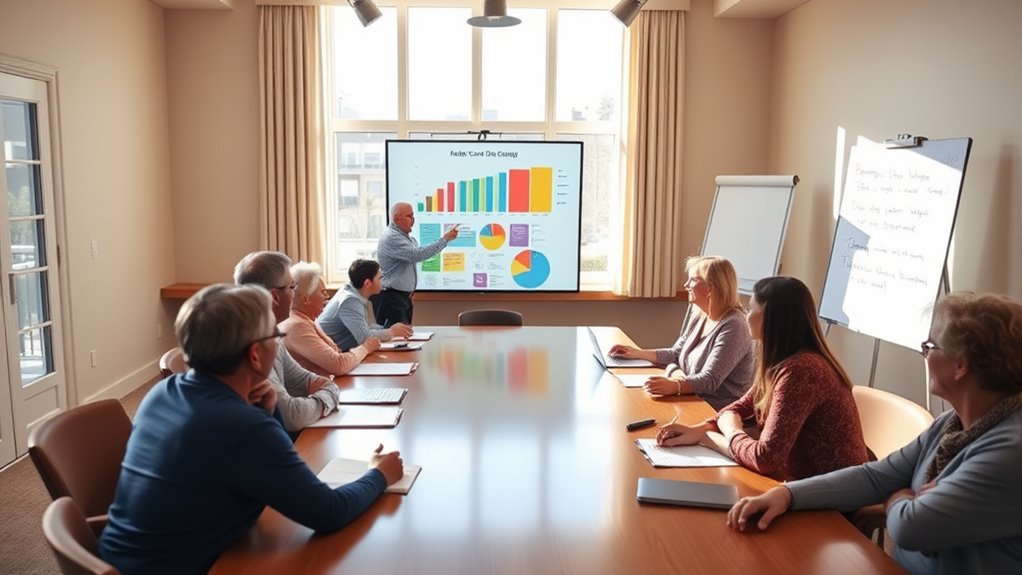
Using visual aids and technology can substantially enhance your family care meeting by making information clearer and more engaging. Visual tools like charts, graphs, and photos help illustrate complex care plans or progress updates, making them easier to understand. Technology such as presentation slides, shared online documents, or video calls can keep everyone on the same page, especially if family members are remote. Keep visuals simple, focused, and relevant to your discussion. Use clear labels and avoid clutter. During the meeting, interact with your visuals to emphasize key points and encourage participation. Technology also allows for real-time editing and sharing, ensuring everyone has access to current information. When used effectively, visual aids and technology create a more dynamic, informative, and inclusive family care meeting.
Evaluating and Improving Future Meetings

To guarantee your family care meetings become more effective over time, you should actively evaluate how each session went and identify areas for improvement. Reflect on what worked well and what didn’t, so you can adjust your approach. Consider these steps:
Regularly evaluate each family care meeting to improve and tailor your approach effectively.
- Gather feedback from participants to understand their perspectives.
- Review meeting goals and determine if they were achieved.
- Implement specific changes, like adjusting agenda items or communication methods, to enhance future meetings.
Frequently Asked Questions
How Can I Handle Dominant Personalities During the Meeting?
When you face dominant personalities during a meeting, stay calm and assertive. Gently steer the conversation by acknowledging their points, then redirect attention to others. Set clear ground rules early, like raising hands or taking turns speaking. If someone monopolizes, politely interject and invite quieter voices. Remember, your confidence and respectful approach help create a balanced discussion, ensuring everyone’s input is valued and the meeting stays productive.
What’S the Best Way to Encourage Quieter Family Members to Share?
Did you know that quieter family members often hold valuable insights? To encourage them to share, create a safe space by asking open-ended questions and giving everyone equal time to speak. Use gentle prompts like, “What do you think?” or “Would you like to add anything?” You can also pair them with others or ask for their written input to boost their confidence and participation.
How Do I Manage Unexpected Disruptions or Side Conversations?
When unexpected disruptions or side conversations happen, stay calm and gently redirect attention. You can acknowledge the distraction briefly, then remind everyone of the meeting’s purpose. Use a firm but friendly tone to ask the disruptive person to share their thoughts later, ensuring respect. Keep the flow going by smoothly returning to the agenda, making sure everyone feels heard and the meeting stays productive.
What Tools Are Recommended for Virtual Family Care Meetings?
Imagine you’re using a trusty Swiss Army knife for a modern challenge. For virtual family care meetings, tools like Zoom or Microsoft Teams are essential for seamless communication. You can use shared documents on Google Drive or Dropbox to keep everyone on the same page. Incorporate polling tools and breakout rooms to engage participants actively. These tech tools make your meetings more effective and guarantee everyone’s voice is heard.
How Should I Address Sensitive or Emotional Topics Effectively?
When addressing sensitive or emotional topics, you should approach them with empathy and patience. Start by creating a safe space where everyone feels comfortable sharing. Use active listening to show you genuinely care, and validate feelings without judgment. Keep your tone calm and respectful, and avoid rushing the conversation. If emotions run high, suggest taking a break and revisit the topic later to assure a constructive, supportive discussion.
Conclusion
Now that you know the key steps to host a successful family care meeting, imagine the impact of your next gathering. Will your conversations lead to real change? Can you gain new understanding and cooperation? The power is in your hands—every decision, every discussion shaping a brighter future for your family. Are you ready to take that essential step? The next meeting could be the one that transforms everything.