Using fidget mats can help calm Alzheimer’s restlessness by engaging their senses with varied textures and vibrant colors. When you introduce the mats during familiar routines, they can redirect restless energy and reduce agitation through tactile stimulation and repetitive motions. Observing their responses allows you to personalize activities and adjust textures or positioning. Combining fidget mats with calming techniques enhances their effectiveness. To learn how to make the most of these tools, discover more strategies tailored for your loved one’s comfort.
Key Takeaways
- Fidget mats provide tactile stimulation with varied textures to redirect restless energy and promote calming behaviors.
- Use consistent timing and calm explanations to introduce fidget mats for better engagement.
- Select safe, durable, and appropriately textured mats tailored to individual preferences and needs.
- Incorporate fidget mats into routines alongside calming activities like music or gentle touch.
- Regularly monitor responses and safety to adjust activity and ensure comfort for individuals with Alzheimer’s.
How Fidget Mats Support Sensory Engagement
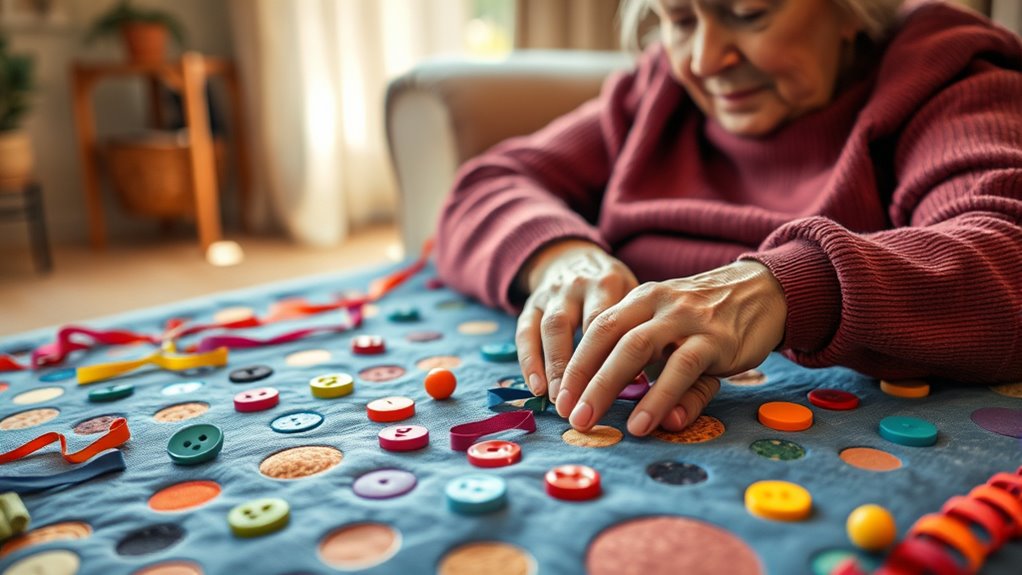
Fidget mats support sensory engagement by providing a variety of textures and tactile stimuli that can capture a person’s attention. When you use a fidget mat, you offer different surfaces like soft fabric, bumpy textures, smooth ribbons, and ridged patterns. These textures stimulate the senses, encouraging exploration and focus. For someone with Alzheimer’s, sensory input can help ground them in the present moment and reduce feelings of confusion or agitation. The variety keeps their mind engaged and prevents boredom. As they touch, feel, and manipulate the different textures, they receive sensory input that can promote calmness. Incorporating color accuracy into the design of the fidget mats, such as using vibrant or contrasting hues, can further enhance visual stimulation and engagement. Fidget mats turn simple tactile experiences into tools for engagement, helping to address restlessness with gentle, soothing stimulation.
The Science Behind Fidget Mats and Calmness

Understanding how fidget mats promote calmness involves exploring their impact on the brain’s sensory processing. When you or your loved one manipulate a fidget mat, it stimulates tactile receptors in the skin, sending signals to the brain. This sensory input helps redirect restless energy and reduces anxiety. The repetitive motions and varied textures activate the brain’s calming pathways, releasing neurotransmitters like serotonin and dopamine, which improve mood and relaxation. Fidget mats also engage the brain’s sensory integration system, helping to focus attention and decrease feelings of agitation. This combination of tactile stimulation and emotional regulation promotes a sense of calm, making fidget mats effective tools for managing restlessness in individuals with Alzheimer’s. By providing controlled sensory input, they help create a soothing environment for sensory processing. Additionally, incorporating these tools into daily routines can help foster a sense of security and stability, especially for those with a tendency toward restlessness.
Choosing the Right Fidget Mat for Your Loved One
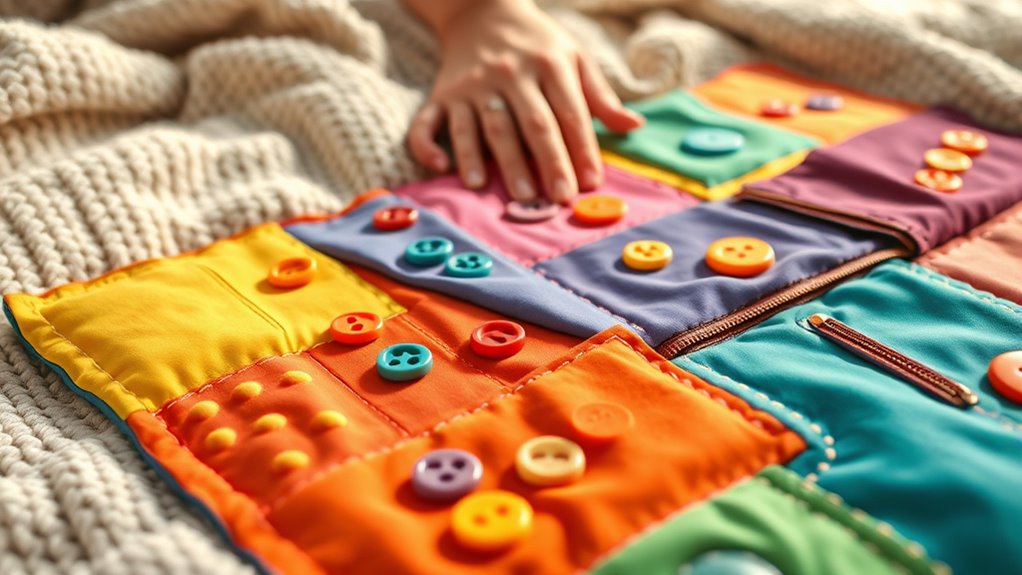
Choosing the right fidget mat involves considering your loved one’s specific needs, preferences, and sensory sensitivities. Think about their favorite textures, colors, and shapes—these will help make the mat engaging and comforting. Pay attention to any sensory sensitivities; if your loved one is sensitive to certain textures or sounds, choose a mat that avoids those. Consider mobility and dexterity as well—if they have trouble grasping or manipulating objects, opt for a mat with larger, easier-to-handle elements. Durability matters too; select a sturdy, washable mat that can withstand frequent use. Understanding cybersecurity vulnerabilities can help you choose a safe and compliant product. Additionally, selecting a mat made with nourishing ingredients may enhance its soothing qualities and overall appeal. Incorporating safe, well-designed materials ensures the fidget mat is both effective and secure for use. Being aware of recognizing and identifying angel numbers can also improve your understanding of subtle cues and signs that might help in caregiving situations. Ultimately, observing what your loved one responds to best guides your choice, ensuring the fidget mat provides comfort and reduces restlessness effectively.
Tips for Introducing Fidget Mats Into Daily Routines

Introducing fidget mats into your loved one’s daily routine can be smooth and effective with a few simple strategies. Start by choosing a consistent time each day to introduce the mat, such as morning or afternoon, when your loved one is most receptive. Gently introduce the mat, explaining its purpose calmly and positively. Use familiar cues or routines, like placing it on their lap or table, to build familiarity. Keep sessions short initially, gradually increasing as they become comfortable. Observe their reactions and adjust accordingly, ensuring the experience feels safe and enjoyable. Optimal angles for pinball machines help maximize engagement and comfort during activities. Incorporating the use of Glycolic Acid benefits can enhance skin health if your loved one uses skincare routines that include exfoliation, making the process more comfortable. Additionally, understanding how AI’s impact on privacy influences caregiving practices can help you make informed decisions about selecting and using calming tools responsibly. Being aware of indoor gardening options can also inspire creative ways to create a soothing environment for your loved one.
Creative Ways to Use Fidget Mats to Reduce Anxiety

To effectively reduce anxiety with fidget mats, get creative by incorporating them into engaging activities that capture your loved one’s interest. For example, turn fidgeting into a storytelling moment by guiding their fingers to different textures while sharing a familiar story or memories. You can also create themed sessions, like matching objects on the mat to seasonal decorations or favorite hobbies. Incorporate gentle, rhythmic movements—like tracing patterns or pressing buttons—to increase focus and calm nerves. Encourage exploration by asking open-ended questions about what they feel or see on the mat. By making the experience interactive and fun, you help divert their attention from anxiety triggers, fostering a sense of control and comfort. Understanding the divorce process in various states can help caregivers plan for support and stability during challenging times, which can be beneficial for managing stress and anxiety. Exploring sensory engagement techniques can further enhance the calming effects of fidget mats. These creative approaches make fidget mats a versatile tool to soothe and engage.
Monitoring and Adjusting Fidget Mat Activities

You should regularly assess how engaged your loved one is with the fidget mat and watch for signs of emotional responses. If they seem restless or uninterested, consider adjusting the activity components to better suit their preferences. Making these modifications helps make certain the fidget mat remains a calming and effective tool. Incorporating features that account for individual preferences can enhance the overall effectiveness of the activity. Additionally, monitoring the safety of the activity ensures that the materials used are appropriate and pose no risk to your loved one. Incorporating skin sensitivity considerations can help prevent irritation and ensure comfort during use. Recognizing patterns in angel numbers, like repeated sequences, can also provide insights into their emotional and spiritual state, helping you tailor activities accordingly. Engaging in creative practice by experimenting with different textures and colors on the fidget mat can also stimulate your loved one’s senses and promote relaxation.
Assess Engagement Levels
Monitoring engagement levels while using fidget mats is essential to guarantee they effectively soothe Alzheimer’s restlessness. You should observe how your loved one interacts with the mat—are they touching, exploring, or using the different textures? Notice if their focus increases or if they seem distracted or agitated. If engagement drops, consider changing the activity or introducing new textures to reignite interest. Keep track of their responses over time to identify patterns and preferences. Adjust the complexity or type of fidget items accordingly, aiming to maintain their interest without overwhelming them. Regularly evaluating engagement helps you tailor activities to meet their current needs, ensuring the fidget mat remains a calming, effective tool in managing restlessness.
Observe Emotional Responses
By paying close attention to your loved one’s emotional responses during fidget mat activities, you can better understand how they’re feeling and whether the activity is calming or causing frustration. Look for signs like smiling, relaxed body language, or calm breathing, which indicate comfort. Conversely, frowns, agitation, or repeated movements may signal frustration or boredom. Monitoring these cues helps you decide if you should continue, pause, or adjust the activity. Use this table as a guide:
| Emotional Response | Possible Meaning | Action to Take |
|---|---|---|
| Smiling or relaxed | Calm, engaged | Continue or encourage |
| Frowning or fidgeting | Frustration or boredom | Pause or modify |
| Restlessness | Anxiety | Provide reassurance |
| Tears or agitation | Overstimulation | Reduce activity intensity |
| Calm breathing | Comfort | Maintain activity |
Observing emotional cues allows you to support your loved one more effectively.
Modify Activity Components
Adjusting the components of a fidget mat is essential to guarantee it remains calming and engaging. Pay attention to your loved one’s reactions and be ready to swap out items that no longer hold their interest or cause frustration. If they seem overwhelmed, simplify the activities or remove objects that are too complex. Conversely, if they appear bored, add new textures or items to stimulate their senses. Regularly check the condition of the fidget mat, ensuring all parts are safe and intact. Personalize the components based on their preferences and changing needs. Keep the activities fresh and appropriate, and don’t hesitate to experiment with different objects or textures. This ongoing adjustment helps maintain a calming experience that adapts to their evolving emotional and cognitive state.
Combining Fidget Mats With Other Calming Strategies
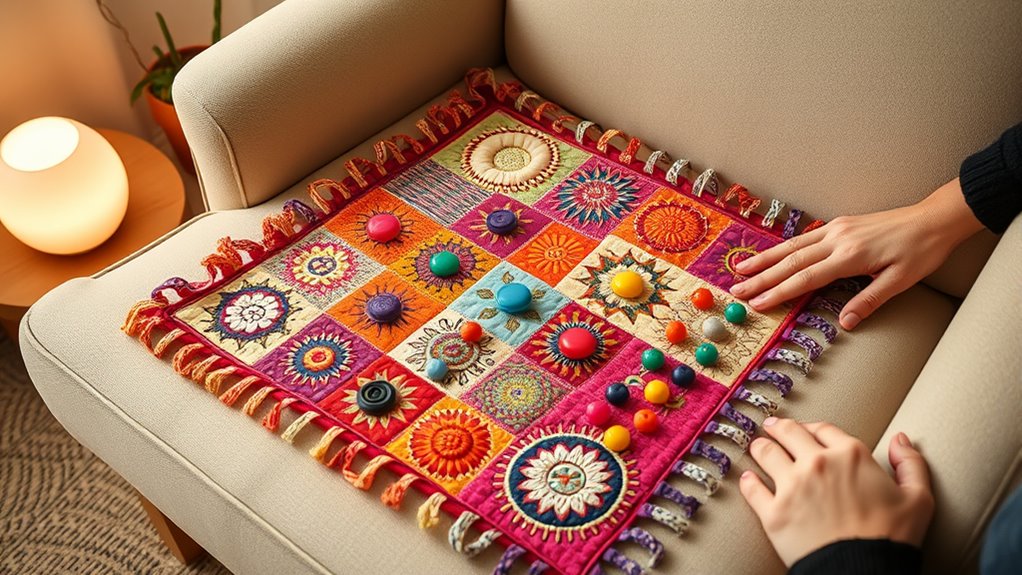
Combining fidget mats with other calming strategies can considerably enhance their effectiveness in soothing restlessness. You might find that integrating multiple approaches creates a more calming environment for your loved one. For example, pairing a fidget mat with gentle music can deepen relaxation. Incorporating aromatherapy with calming scents like lavender can also help reduce agitation. Using soft lighting or dimming the room can create a soothing atmosphere. Additionally, gentle touch or hand massage combined with the fidget mat can reinforce a sense of security. Finally, establishing a consistent routine that includes these strategies helps your loved one associate certain activities with calmness, making it easier to manage restlessness effectively.
- Play calming music during activity
- Use soothing scents like lavender
- Dim lighting for a relaxed environment
- Incorporate gentle touch or massage
- Maintain a predictable routine
Safety Considerations When Using Fidget Mats
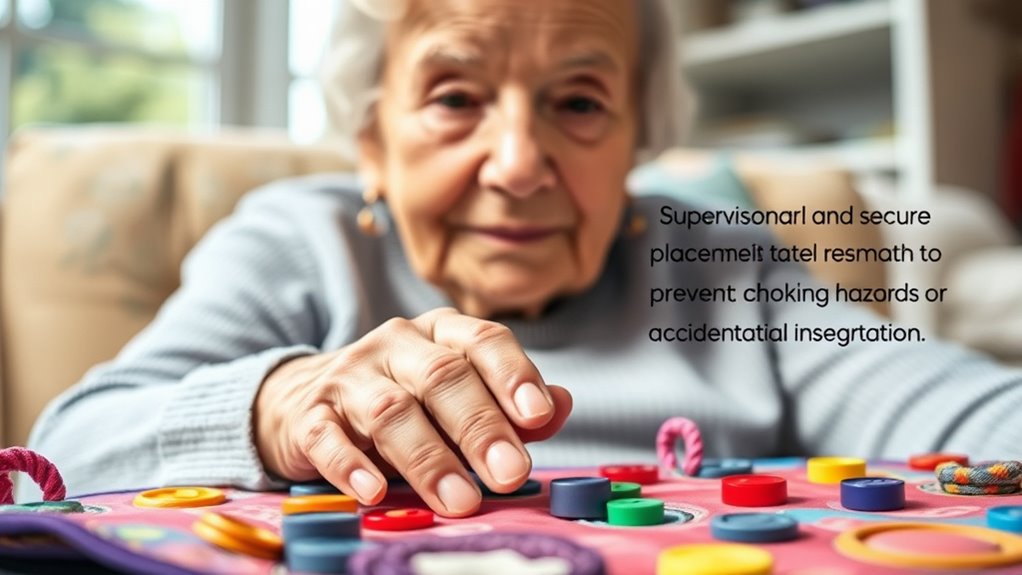
When using fidget mats, it’s important to consider material safety to prevent any allergic reactions or choking hazards. You should also supervise your loved one closely and make sure the mat is easily accessible and secure. Taking these precautions helps keep them safe while enjoying the calming benefits of the fidget mat. Additionally, choosing safe and non-toxic materials for the fidget mat can further reduce health risks. Ensuring the materials meet safety standards can provide added peace of mind. Being aware of personal debt forgiveness bills can also help you manage financial stress related to health expenses. Considering the variety of textures and sensory inputs available on different mats can enhance their calming effect and engagement.
Material Safety Precautions
To guarantee safety when using fidget mats for individuals with Alzheimer’s, it’s essential to select materials that are non-toxic and free from harmful chemicals. Verify fabrics, dyes, and fillings meet safety standards and are labeled as child-safe or non-toxic. Avoid materials that could cause allergic reactions or contain choking hazards. Regularly inspect mats for wear, tears, or loose parts that could pose risks. Keep in mind these safety tips:
- Choose organic, chemical-free fabrics
- Ensure dyes are non-toxic and colorfast
- Avoid small or detachable parts
- Check for labels indicating safety standards
- Regularly clean and inspect for damage
Taking these precautions helps protect your loved one and ensures the fidget mat remains a safe calming tool.
Supervision and Accessibility
Supervision is essential when using fidget mats with individuals who have Alzheimer’s, as their ability to recognize hazards or respond to discomfort may be limited. Always stay nearby to monitor their interaction with the mat, ensuring they don’t swallow small parts or become frustrated. Accessibility is key; place the mat on a stable surface and within easy reach. Use simple, clear instructions and observe their response. To help you visualize, consider this table:
| Aspect | Tips |
|---|---|
| Supervision | Keep within sight, ready to intervene if needed |
| Accessibility | Place on stable surface, within easy reach |
| Safety Precautions | Remove small parts, monitor discomfort |
This ensures a safe, calming experience while reducing risk.
Success Stories: Transforming Care With Fidget Mats

Many caregivers have seen remarkable improvements after introducing fidget mats into their loved ones’ routines. These mats offer a calming outlet, reducing restlessness and anxiety. Families report better sleep, improved focus, and more peaceful interactions. One caregiver shared how her mother’s agitation decreased notably, allowing for more meaningful conversations. Others noticed a decline in pacing, repetitive movements, and vocal outbursts. Fidget mats create a sense of comfort and security, helping your loved one feel grounded. Awareness of Alzheimer’s symptoms can help caregivers better understand and address challenging behaviors. Here’s what you might observe:
Fidget mats promote calmness, reduce anxiety, and foster a sense of security for loved ones.
- Reduced agitation and pacing
- Increased engagement and calmness
- Fewer outbursts and restlessness
- Better sleep patterns
- Enhanced overall mood and well-being
Frequently Asked Questions
Are Fidget Mats Suitable for All Stages of Alzheimer’s?
You wonder if fidget mats suit all stages of Alzheimer’s. While they can help reduce restlessness and provide comfort, their effectiveness varies. In early stages, you might find fidget mats engaging and soothing, but in advanced stages, they may be less effective or harder to use. Always observe your loved one’s response and adjust accordingly, ensuring the activity remains safe and beneficial throughout their journey.
How Often Should Fidget Mats Be Used for Best Results?
You should use fidget mats regularly to help calm Alzheimer’s restlessness, ideally several times a day. Observe how your loved one responds and adapt the frequency accordingly. Consistent use, such as during periods of agitation or before bedtime, can enhance their comfort. However, avoid overuse, which might reduce effectiveness. Keep sessions gentle and engaging, and always monitor their reactions to ensure the mats continue to provide comfort.
Can Fidget Mats Be Customized for Individual Preferences?
You can definitely customize fidget mats to suit individual preferences. Tailor the textures, colors, and objects on the mat to match what the person finds soothing or engaging. Add familiar items or sensory elements that resonate with their interests or past experiences. By personalizing the fidget mat, you make it more effective in calming or stimulating, helping the person feel more comfortable and connected during moments of restlessness.
Are There Any Contraindications for Using Fidget Mats?
When considering contraindications for using fidget mats, you should be aware that some individuals may have allergies to materials used or skin sensitivities. If someone has limited mobility or cognitive issues, they might not benefit from or could even be overwhelmed by the sensory input. Always observe their reactions and consult a healthcare professional if you notice adverse effects or if you’re unsure whether the fidget mat is suitable for their specific needs.
How Do Fidget Mats Compare to Other Sensory Tools?
When comparing sensory tools, fidget mats stand out because they offer tactile stimulation and visual engagement, which help reduce agitation. Unlike smaller stress toys, mats provide a larger, more interactive experience that can be more calming for some individuals. You can easily customize or add different textures, making fidget mats versatile. Overall, they’re a practical choice for calming, especially when you want a sensory tool that’s engaging and easy to use.
Conclusion
Incorporating fidget mats into your loved one’s routine can truly make a difference, helping reduce restlessness and promote calmness. With patience and creativity, you can turn this simple tool into a source of comfort and engagement. Remember, “A gentle hand can turn the tide,” so stay attentive and adaptable. Over time, these small steps can lead to meaningful improvements in their well-being and quality of life.