
Spending time in green spaces can considerably lower your stress levels as a family caregiver. Immersing in nature reduces cortisol, relaxes your nervous system, and boosts mood through sunlight and soothing sights and sounds. You can easily add quick outdoor breaks, tend to small indoor plants, or visit parks during quieter times. These simple steps help rejuvenate your energy and mental clarity. Keep exploring to discover more practical ways to incorporate nature into your daily routine.
Key Takeaways
- Green spaces lower cortisol levels, reducing stress and promoting mental well-being for family caregivers.
- Spending time outdoors boosts mood, energy, and physical health, helping caregivers manage burnout.
- Immersing in nature stimulates relaxation through sights, sounds, and smells, calming the nervous system.
- Creating personal green sanctuaries at home provides ongoing stress relief and mindfulness opportunities.
- Visiting parks and gardens during off-peak hours offers peaceful environments for restorative breaks.
The Science Behind Nature’s Calming Effect

Research shows that spending time in green spaces can substantially reduce stress and improve mental well-being. When you immerse yourself in nature, your body responds by lowering cortisol levels, the hormone linked to stress. This triggers a calming effect, helping your mind relax and reset. Green environments also stimulate your parasympathetic nervous system, which promotes rest and recovery. The sights, sounds, and smells of nature engage your senses and distract you from worries. Additionally, exposure to sunlight boosts serotonin production, enhancing your mood. Scientific studies confirm that even brief encounters with parks or gardens can lead to measurable improvements in mental health. As a caregiver, understanding this science encourages you to seek out natural settings as a simple yet powerful way to manage stress. Incorporating natural light into your daily routine can further amplify these benefits by supporting your circadian rhythm and overall well-being. Recognizing the importance of natural environments can motivate you to spend more time outdoors, even during busy days. Engaging with green spaces has been shown to offer quick mental health boosts, making it an accessible tool for stress relief.
Practical Ways to Integrate Green Spaces Into Your Routine

Incorporating green spaces into your daily routine can be simple and highly effective for managing stress. Start by scheduling short walks in nearby parks or gardens, even if it’s just for 10 minutes. Use your lunch break to step outside and breathe in fresh air. Consider creating a small garden or container plants on your balcony or windowsill; caring for them provides a calming routine. If time is limited, listen to nature sounds or view greenery through your window or during video calls. Make it a habit to take breaks outdoors whenever possible, and encourage family members to join you. These small, consistent actions help you reconnect with nature and create moments of peace amid your busy caregiving schedule. Exploring the benefits of green spaces can also enhance your overall well-being, as green spaces are proven to reduce stress and improve mental health. Engaging with natural materials such as wood or stone in your surroundings can further deepen this calming effect.
Benefits of Spending Time Outdoors for Caregivers

Spending time outdoors offers caregivers a powerful way to boost their mental and physical well-being. When you step outside, you reduce stress levels and clear your mind, helping you feel more centered. Nature exposure can lower blood pressure, improve mood, and increase energy, making caregiving tasks feel more manageable. Being outdoors also encourages physical activity, which strengthens your body and boosts overall health. The fresh air and natural light help regulate sleep patterns, leaving you more rested and alert. Additionally, spending time outside provides a mental break from daily worries, allowing you to reconnect with yourself. Connecting with inspirational quotes about fatherhood can motivate and uplift caregivers during challenging times. These benefits support your resilience, helping you maintain a positive outlook and better cope with the demands of caregiving, especially when you understand the beneficial effects of nature on mental health. Engaging regularly in outdoor activities can also promote physical activity, which is essential for maintaining strength and endurance in caregiving roles. Incorporating natural elements into daily routines, such as gardening or outdoor walks, can further amplify these mental health benefits. Regular exposure to nature and green spaces has been shown to reduce cortisol levels, contributing to lower stress levels.
Creating a Personal Green Sanctuary at Home
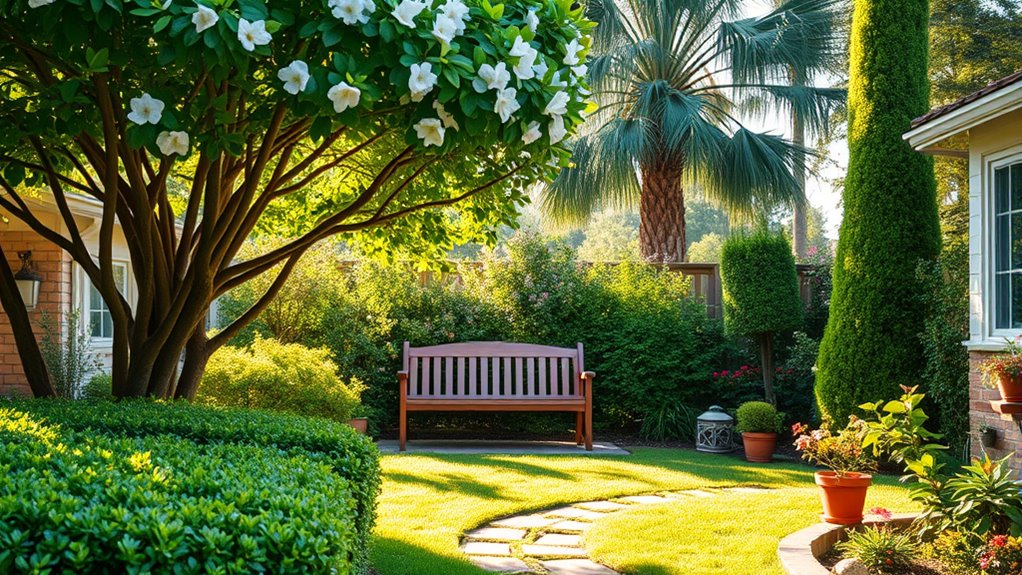
Creating a personal green sanctuary at home allows you to craft a peaceful retreat where you can recharge and find calm amidst caregiving demands. Start by selecting a small space, like a corner balcony, windowsill, or a designated nook. Fill it with easy-to-maintain plants such as succulents, herbs, or leafy greens. Incorporate comfortable seating, soft lighting, or calming decor to enhance the atmosphere. Regularly tending to your plants provides a therapeutic routine and a moment of mindfulness. Engaging with indoor gardening can further deepen your connection with nature and boost your well-being. Incorporating urban ecology principles can help you create a more sustainable and resilient green space. You don’t need a large yard or elaborate setup—simple, intentional touches make a difference. This dedicated space becomes your go-to spot for relaxation, reflection, and stress relief, helping you regain strength to care for your loved ones. Creating a green space aligned with environmental sustainability can also provide long-term benefits for your mental health and the planet.
Tips for Making the Most of Public Parks and Gardens

Public parks and gardens offer a perfect escape for caregivers seeking a brief respite, but making the most of these spaces requires some planning. Before visiting, check park hours and amenities to choose a quiet area that suits your needs. Bring essentials like water, comfortable footwear, and sun protection. Consider packing a small picnic or snack to enjoy during your visit. Use the time to take deep breaths, walk at your own pace, or simply sit and observe nature. If possible, schedule visits during less crowded times, like early mornings or weekdays. Remember, even a short, mindful walk can profoundly reduce stress. Be mindful of park cleanliness and choose well-maintained areas to ensure a safe and pleasant experience. Taking advantage of green spaces can significantly improve mental well-being and help manage the emotional strain of caregiving. Incorporating attention into your outdoor time can enhance relaxation and mental clarity. By preparing ahead, you ensure your time in these green spaces is restorative and rejuvenating, helping you recharge for your caregiving responsibilities.
Frequently Asked Questions
How Much Time Should Caregivers Spend in Green Spaces Weekly?
You might wonder how much time you should spend outdoors each week. Ideally, aim for at least 2 to 3 hours of green space exposure, such as parks or gardens. This time helps you reduce stress, improve mood, and boost overall well-being. Even short daily visits, like 20-30 minutes, can make a significant difference. Prioritizing regular outdoor time supports your mental health and caregiving resilience.
Are There Specific Plants or Environments More Effective for Stress Relief?
Did you know spending just 20 minutes in a green space can markedly lower stress? When choosing plants or environments for relief, opt for natural settings with diverse greenery, like parks or gardens, which boost mood and reduce anxiety. Plants such as lavender and jasmine release calming scents, while water features enhance relaxation. You’ll find that immersing yourself in these environments helps you recharge and better care for your loved ones.
Can Indoor Plants Provide Similar Benefits as Outdoor Green Spaces?
Indoor plants can definitely provide stress relief similar to outdoor green spaces. When you bring plants inside, they improve air quality, boost your mood, and create a calming environment. You might notice a reduction in stress levels and increased focus. While outdoor spaces offer more room and natural scenery, your indoor plants still deliver many mental health benefits, making them a practical option for stress reduction, especially when outdoor access is limited.
What Are the Best Green Space Activities for Busy Caregivers?
You can maximize green space benefits by taking short, intentional breaks outdoors. Try quick walks in a nearby park, sitting quietly amidst trees, or tending to potted plants at home. Even five-minute activities like deep breathing in a garden or enjoying a view of greenery can lower stress. Incorporate these moments into your busy schedule to rejuvenate your mind and regain energy, helping you better care for your loved ones.
How Do Green Spaces Benefit Caregivers With Mental Health Conditions?
You might think mental health conditions make stress worse, but green spaces actually help. They boost your mood, lower anxiety, and improve your overall mental well-being. Spending time outdoors reduces cortisol levels and promotes relaxation, giving you a much-needed mental break. So, ironically, the very environments society often overlooks can become your greatest allies, helping you manage mental health challenges more effectively and find moments of peace amid chaos.
Conclusion
By embracing green spaces, you open nature’s gentle balm for your stressed soul. Whether you create your own sanctuary or explore nearby parks, each moment outdoors is a breath of fresh hope, a reminder that even in life’s busiest chapters, peace blooms where nature is allowed to flourish. So step outside, let the greenery whisper calm into your busy days, and watch your stress melt away like snow in spring.