
When the audiologist isn’t nearby, you can prepare by checking and charging your hearing devices, carrying necessary tools, and choosing quiet spaces with good lighting. Use assistive tech effectively, maintain eye contact, and engage your facial expressions and gestures to support understanding. Opt for environments with minimal background noise and soft surfaces. Practice active listening and don’t hesitate to ask for clarification. Keep building your support network for tougher situations—exploring these strategies further can help you communicate more confidently.
Key Takeaways
- Carry and regularly update assistive listening devices or tools for on-the-go communication.
- Use clear visual cues like facial expressions and gestures to enhance understanding.
- Find quiet, low-background-noise environments to facilitate easier conversation.
- Practice active listening, paraphrasing, and asking for clarification when needed.
- Inform trusted contacts about your hearing needs for support and effective communication.
Preparing Your Communication Tools Beforehand
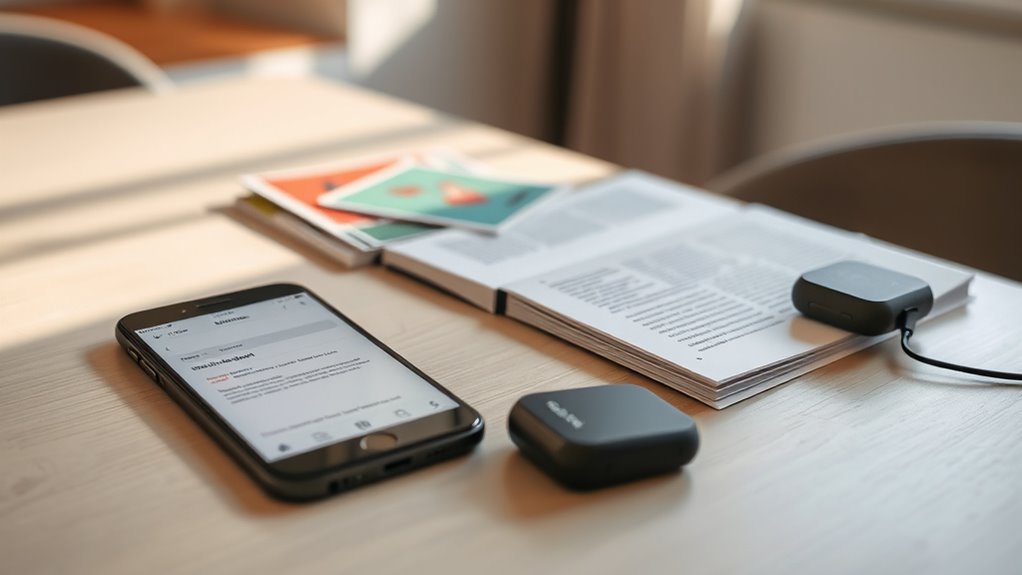
Preparing your communication tools before an interaction is essential to guarantee smooth and effective conversations. You should check your hearing aids or cochlear implants to verify they’re working properly. Replace or recharge batteries if needed. Keep a spare set nearby, just in case. Consider carrying a notepad or a digital device to write down key points, especially if you find it easier to communicate that way. If you use an assistive listening device, test it beforehand to make sure it’s functioning correctly. Organize your tools in a dedicated case or bag, making them easy to access. Being prepared helps you avoid unnecessary frustration and allows you to focus on the conversation itself. Additionally, understanding net+ certification benefits can help you develop foundational skills that improve your ability to navigate communication devices effectively. Familiarity with glycolic acid benefits can also enhance your understanding of how various assistive tools improve audio clarity and skin health. Regular maintenance of your devices and understanding their filter replacement indicators ensures they operate at peak efficiency, reducing potential communication barriers. Taking these steps ensures you’re ready to communicate confidently, even when the audiologist isn’t nearby.
Using Assistive Devices and Technology Effectively

Choosing the right assistive devices can make a big difference in your communication. Once you have the right tools, learn how to use them to their full potential. This way, you can get the most out of your technology and stay connected with others. Incorporating wall organization systems can also help create a more accessible environment, making it easier to keep your assistive devices organized and within reach.
Choosing the Right Devices
Selecting the right assistive devices and technology is essential for effectively managing hearing loss. To make the best choice, consider your specific needs and environment. First, evaluate your daily activities—do you need devices for conversations, TV, or phone calls? Next, think about comfort and ease of use, ensuring you can operate the device confidently. Third, assess compatibility with your existing equipment or accessories. Finally, consult with a professional to confirm the device’s features match your hearing loss level. Here are four key considerations:
- Suitability for your hearing loss type and severity
- Ease of operation and maintenance
- Compatibility with other devices or assistive tech
- Personal comfort and fit
Choosing wisely helps you maximize the benefits of your hearing technology.
Maximizing Technology Benefits
Once you’ve chosen the right assistive devices, the next step is to use them effectively to get the most benefit. Make sure your devices are properly fitted and functioning correctly. Regularly update your technology’s software to guarantee peak performance. Take time to learn all features and settings—many devices have customizable options for different environments. Use your hearing aids or assistive listening devices consistently, especially in challenging situations like noisy restaurants or group conversations. Consider pairing your devices with smartphones or other smart technology for seamless connectivity. Keep spare batteries or chargers handy. Finally, don’t hesitate to seek guidance from your audiologist or manufacturer resources to troubleshoot issues and maximize your devices’ capabilities. Proper use ensures you get the full advantage of your hearing technology.
Developing Clear and Visible Speech Cues

To effectively support individuals with hearing loss, it’s essential to develop clear and visible speech cues that enhance understanding. You can do this by emphasizing specific techniques that make speech more perceptible. Here are four strategies:
- Use exaggerated facial expressions to convey emotion and emphasis.
- Maintain eye contact to help the listener focus on your face and lips.
- Incorporate gestures and body language to reinforce spoken words.
- Enunciate words clearly, avoiding unnecessary mumbling or rapid speech.
Practicing these techniques regularly can also help in maximizing space and organization, ensuring your communication remains effective across different situations. These cues help bridge the gap when auditory signals aren’t enough. By making your speech more visually accessible, you improve comprehension and reduce frustration. Remember, consistent practice in using these cues makes communication smoother and more effective for everyone involved.
Choosing Optimal Environments for Conversation

Choosing the right environment for conversation can considerably improve understanding for individuals with hearing loss. Seek out quiet, low-background-noise spaces, like a small room or a corner away from busy areas. Minimize distractions by turning off TVs, radios, or fans that can drown out speech. Position yourself so that your face is well-lit and visible, making it easier to see facial cues and lip movements. Face each other directly, maintaining eye contact to help interpret speech better. Avoid crowded or noisy places, such as restaurants or outdoor markets, where background sounds interfere. If possible, choose environments with soft surfaces like carpets or curtains that absorb sound and reduce echo. Creating an ideal setting boosts clarity and makes conversations more comfortable. Being aware of acoustic conditions can significantly enhance communication effectiveness for those with hearing difficulties. Additionally, selecting environments with optimal sound absorption can further improve speech clarity and reduce auditory distractions. Paying attention to environmental acoustics is crucial for fostering effective communication in various settings. Moreover, understanding the impact of background noise levels can guide individuals to select more suitable environments for conversation. Considering room size and shape can also influence sound quality and help minimize reverberation, further aiding comprehension.
Practicing Active Listening and Clarification Techniques

To improve your communication, focus on maintaining eye contact to stay engaged. Paraphrase what you hear to guarantee understanding and ask for clarification when needed. Also, try to reduce background noise to make conversations easier to follow. Incorporating active listening techniques can further enhance your ability to interpret and respond effectively during conversations. Additionally, being aware of common air quality concerns can help you create a healthier environment that supports better communication by reducing distractions caused by poor air quality.
Maintain Eye Contact
Have you ever noticed how maintaining eye contact can enhance your understanding during a conversation? When you focus on your conversation partner’s eyes, you pick up on visual cues like facial expressions and lip movements that support hearing. To effectively maintain eye contact:
- Keep your gaze steady without staring aggressively.
- Blink naturally to stay relaxed and attentive.
- Shift your gaze occasionally to avoid discomfort.
- Pay attention to their facial expressions for emotional context.
This practice not only shows you’re engaged but also helps you process information more accurately. Eye contact encourages a connection that makes communication clearer, especially when hearing is challenging. By staying present visually, you improve your overall understanding and foster better dialogue.
Paraphrase for Clarity
Practicing active listening and asking for clarification helps guarantee you fully understand what’s being communicated, especially when hearing is difficult. Paraphrasing what you hear confirms your understanding and shows the speaker you’re engaged. For example, repeat or rephrase key points in your own words. This encourages the speaker to clarify if needed and reduces misunderstandings. Remember, effective communication isn’t just about hearing; it’s about ensuring both parties are on the same page. Use the table below to see how paraphrasing can improve understanding:
| What You Say | Why It Helps |
|---|---|
| “So, you’re saying…” | Confirms understanding |
| “Did I get that right?” | Invites clarification |
| “If I understand correctly…” | Shows engagement |
| “You mean that…” | Summarizes key points |
| “Can you clarify that part?” | Asks for specifics |
Minimize Background Noise
Since background noise can substantially hinder understanding, taking steps to minimize it is essential for effective communication. You can improve clarity by:
- Moving to a quieter location whenever possible.
- Asking others to reduce their noise or speak one at a time.
- Using sound-absorbing materials, like curtains or cushions, to dampen ambient sounds.
- Positioning yourself close to the speaker to catch more of their voice and reduce the impact of background noise.
Building a Support Network for Challenging Situations

Building a strong support network is essential when facing challenging situations related to hearing loss. You need people who understand your struggles and are willing to help. Start by informing close friends and family about your hearing challenges, so they can provide patience and support. Join local or online hearing loss communities to exchange tips and encouragement. Consider connecting with others who have similar experiences for mutual understanding. Your support network can also include professionals like audiologists, support groups, or counselors who offer guidance. When you face a difficult situation, don’t hesitate to ask for help. Building these connections guarantees you have reliable assistance and emotional support, making it easier to navigate challenging moments confidently.
Frequently Asked Questions
How Do I Recognize Signs of Worsening Hearing Loss?
You notice signs of worsening hearing loss when you struggle to follow conversations, especially in noisy environments. You might frequently ask others to repeat themselves or turn up the volume on devices. If you feel more isolated or miss out on sounds you once heard clearly, it’s a sign to see your audiologist. Prompt action helps manage your hearing health before it worsens, keeping your communication strong.
What Are Emergency Communication Strategies for Sudden Hearing Loss?
When facing sudden hearing loss, you need quick, effective communication strategies. First, use visual cues like gestures or written notes to get your message across. If possible, move to a quiet area to minimize background noise. Alert others immediately and ask for assistance if needed. Stay calm and try to communicate your situation clearly. These steps can help you manage the emergency until professional help is available.
How Can I Explain My Hearing Needs to Unfamiliar People Quickly?
Explaining your hearing needs to unfamiliar people is like opening a window to clear communication. Start with a brief, clear statement like, “I have hearing loss, so I might miss some sounds or words.” Use simple gestures or written notes if needed. Be direct and polite, and don’t hesitate to ask for patience or repeats. This helps others understand and supports effective, respectful communication.
Are There Specific Brands or Types of Assistive Devices Recommended?
When choosing assistive devices, look for trusted brands like Phonak, Oticon, or Resound, which offer reliable options. Consider devices like personal amplifiers, Bluetooth-enabled hearing aids, or captioned phones that suit your lifestyle. It’s best to test different models and consult with an audiologist to find what works best for your specific needs. Always prioritize comfort, ease of use, and compatibility with your existing devices.
How Can I Maintain Confidence When Facing Communication Barriers?
Think of confidence as a shield you carry into every conversation. When facing barriers, stay positive and remember that patience and clear gestures can bridge gaps. Practice active listening and don’t hesitate to ask for repeats or clarification. Embrace technology and assistive devices as your allies, turning communication hurdles into stepping stones. With resilience and a proactive attitude, you’ll navigate conversations smoothly, like a skilled sailor steering through choppy waters.
Conclusion
Remember, communicating with hearing loss is like maneuvering a busy city street—you need to plan your route, use the right tools, and stay alert. My friend Sarah once carried her hearing device everywhere, turning a noisy café into a quiet chat. With patience and preparation, you can turn challenging moments into meaningful conversations. Think of each tip as your map, guiding you smoothly through the busy streets of communication, even when the audiologist isn’t nearby.