

If you have Parkinson’s and struggle with micrographia, using specialized writing aids can make a big difference. Try ergonomic pens with cushioned grips, larger or weighted pens, or digital devices like tablets and styluses for smoother writing. Adaptive surfaces and visual guides also help improve control and legibility. Incorporating these tools into your daily routine can boost independence and confidence. Keep exploring options to find what works best for you and enhance your writing skills.
Key Takeaways
- Ergonomic pens with thick, cushioned grips reduce hand fatigue and improve control for better handwriting.
- Digital devices like tablets and styluses facilitate smoother, less effortful writing and enhance legibility.
- Writing aids such as larger-lined paper and visual templates provide helpful visual cues and spacing.
- Adaptive tools, including weighted pens and angled surfaces, support stability and reduce tremors during writing.
- Assistive technology like speech-to-text software can bypass handwriting difficulties altogether.
Understanding Micrographia in Parkinson’s Disease

Micrographia, a common symptom of Parkinson’s disease, causes your handwriting to become small, cramped, and difficult to read. You might notice that your letters shrink over time or that your writing feels shaky and inconsistent. This happens because Parkinson’s affects the muscles responsible for fine motor control, making precise movements harder. As your handwriting diminishes, it can become frustrating and impact your ability to communicate clearly. Micrographia isn’t just a visual change; it reflects the broader motor challenges you face daily. Understanding this symptom helps you recognize its role in Parkinson’s. It’s important to know that micrographia results from neurological changes, and different strategies can help you manage or improve your handwriting. Exploring best anime movies and other engaging activities may also provide a helpful distraction and boost your mood. Additionally, writing aids such as specialized pens or grips can make a significant difference in maintaining legibility and comfort while writing. Incorporating fine motor exercises and practicing hand dexterity regularly can also support improved hand control over time. Research indicates that targeted therapy approaches, including occupational therapy, can further enhance motor skills affected by Parkinson’s.
Types of Writing Aids and Assistive Devices

To help manage the challenges of micrographia, various writing aids and assistive devices are available that can enhance your ability to communicate effectively. These tools include weighted pens or pens with larger grips, which reduce hand fatigue and improve control. Mechanical or electric pens can help steady your handwriting, making it more legible. Additionally, writing guides, such as lined paper with wider spacing or letter templates, provide visual cues to maintain consistent letter size. Some people find that digital devices like tablets or specialized apps enable clearer writing and easier editing. Ergonomic grips and anti-slip mats can also stabilize your hand during writing. These aids are designed to support your motor skills and help you write more comfortably and legibly. Incorporating assistive technology can further optimize your writing experience and adaptability.
Selecting the Right Pen and Writing Tools

Choosing the right pen can make a big difference in your writing comfort and control. Look for ergonomic designs that fit your hand well and reduce fatigue, especially if you have tremors or limited grip strength. Pay attention to ink flow and grip features to find tools that support smooth, steady writing. Using a pen with a self-watering design can help maintain consistent ink flow, making writing easier over extended periods.
Ergonomic Pen Designs
Selecting the right ergonomic pen can make a significant difference in easing handwriting struggles for individuals with Parkinson’s. Look for pens with thick, cushioned grips that reduce the force needed to hold and control them. Pens with contoured or soft silicone grips help minimize hand fatigue and improve stability. Consider pens with a balanced weight distribution, which can lessen tremors and provide better control. Some designs feature angled barrels or unique shapes that fit naturally in your hand, promoting a more comfortable grip. Avoid pens with small or slippery barrels, as they can be difficult to hold steady. Choosing a pen that feels comfortable and secure encourages better control, making writing less tiring and more legible over time.
Ink and Grip Features
The type of ink and grip features can greatly influence writing comfort and legibility for individuals with Parkinson’s. Choose ink that flows smoothly and dries quickly to reduce smudging and effort. Gel or rollerball pens often require less pressure, making writing easier. For ink color, black or dark blue provides clear contrast, but colored inks can add visual interest if they don’t compromise visibility. Grip features matter too; look for pens with cushioned or textured grips that fit comfortably in your hand, providing stability and reducing fatigue. Avoid pens with slippery or overly thin grips, as they can cause strain. Selecting a pen with the right ink flow and grip can make writing smoother, less tiring, and more legible.
Adaptive Writing Surfaces and Ergonomic Supports

Since fine motor control can be markedly affected by Parkinson’s disease, using adaptive writing surfaces and ergonomic supports can make a meaningful difference. These tools help stabilize your hand, reduce fatigue, and improve writing accuracy. For example, textured or angled surfaces provide better grip and control, while cushioned supports minimize strain. You can choose from various options based on your needs: ergonomic design can further enhance comfort and functionality to suit individual preferences. Incorporating assistive devices tailored to your specific challenges can also promote independence and confidence in your daily tasks. Selecting vetted products ensures safety and effectiveness in your adaptive writing tools. Additionally, exploring specialized accessories designed for specific conditions can further optimize your writing experience. Using adaptive writing surfaces that are compatible with ergonomic supports can amplify the benefits and help you write more comfortably.
Technological Solutions for Improved Writing

Technological solutions have revolutionized the way individuals with Parkinson’s enhance their writing skills. Digital devices like tablets and styluses allow you to write more smoothly and with less effort, reducing tremors’ impact. Speech-to-text software can convert your spoken words into written text, bypassing handwriting difficulties altogether. Specialized apps provide adjustable line thickness, magnification, and visual aids that help you focus and maintain legibility. Electronic pens with built-in sensors track your handwriting, offering real-time feedback and adjustments. Some devices also integrate voice commands for easier navigation. These tools empower you to communicate more effectively, maintain independence, and reduce frustration caused by micrographia. Assistive technology continues to evolve rapidly, incorporating artificial intelligence and machine learning to offer more personalized support. AI-driven assistive technologies are increasingly being developed to further support individuals in overcoming micrographia. Additionally, support hours for technical assistance are often flexible and accessible online, ensuring users can get help when needed. With the growing availability of fitness center hours, users can plan their practice sessions during times that suit their routines, enhancing consistency and motivation. The integration of WWE Raw’s revenue impact and other entertainment industry insights highlights the importance of innovative solutions in improving quality of life.
Tips for Incorporating Writing Aids Into Daily Life

Integrating writing aids into your daily routine can considerably improve your ability to communicate and maintain independence. To make this process smooth, start by choosing tools that feel comfortable and suit your needs. Consistency is key—use your aids regularly to build familiarity and confidence. Keep your writing space organized, so your aids are easily accessible when needed. Experiment with different aids to find what works best, and don’t hesitate to adjust your approach as you learn. Lastly, involve loved ones or caregivers for support and encouragement. Using adjustable tools can help tailor your writing aids to your changing needs and abilities.
Encouraging Independence Through Effective Support Strategies
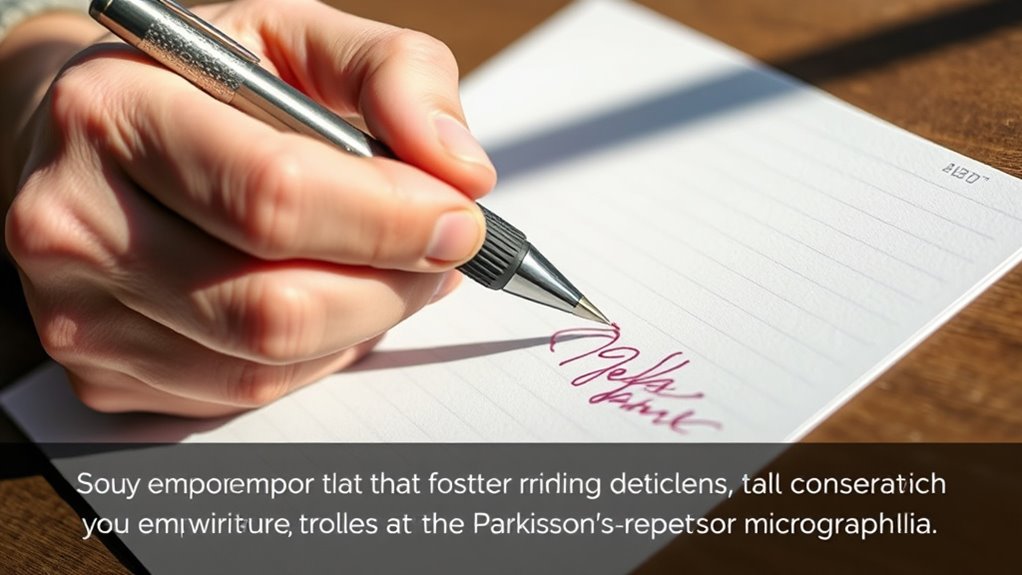
Supporting independence for individuals with Parkinson’s relies on implementing practical strategies that empower them to perform daily tasks confidently. Start by creating a structured routine, which helps reduce confusion and build consistency. Use visual cues and labeled organizers to simplify tasks like meal prep or medication management. Encourage the use of adaptive tools, such as ergonomic pens or writing aids, to make writing easier. Break tasks into smaller, manageable steps to prevent overwhelm. Offer positive reinforcement to boost confidence and motivation. Regularly reassess needs and adjust support strategies accordingly. By fostering an environment that promotes autonomy and providing tailored assistance, you help maintain their independence and quality of life. Remember, patience and understanding are key to supporting their ongoing efforts.
Frequently Asked Questions
Are There Specific Exercises to Improve Micrographia in Parkinson’S Patients?
You can improve micrographia through specific exercises that focus on handwriting and fine motor skills. Practice writing large, slow letters regularly, gradually decreasing size over time. Incorporate activities like tracing, squeezing a stress ball, or using hand-strengthening tools. Consistent practice helps improve coordination and control. Remember, staying patient and committed to these exercises can make a noticeable difference in your handwriting quality and overall hand function.
How Do I Determine the Best Assistive Device for My Handwriting Needs?
Imagine trying different tools and noticing which feels most comfortable and effective. To determine the best assistive device, consider your specific needs—do you need larger grips, specialized pens, or ergonomic supports? Test various options, like grip-enhancing pens, and see which helps improve your control and comfort. Consulting an occupational therapist can also guide you in selecting the device that best suits your handwriting challenges and lifestyle.
Can Writing Aids Be Customized for Individual Handwriting Styles?
Yes, writing aids can be customized to suit your individual handwriting style. You can work with occupational therapists or specialists who analyze your specific needs and preferences. They’ll help you select or design tools like grip modifications, adjustable pen sizes, or tailored writing surfaces. By customizing these aids, you’ll find it easier to write comfortably and legibly, improving your overall writing experience and confidence.
What Are the Costs Associated With Advanced Technological Writing Solutions?
Imagine stepping into a tech store where every device promises to transform your handwriting journey. Advanced writing solutions come with costs like a high toll for access to cutting-edge features, customization, and ongoing support. Prices vary widely, depending on complexity and brand, ranging from affordable apps to premium devices. While they’re an investment, they can turn your writing struggles into a smooth, flowing river, making every word count.
How Often Should I Replace or Update My Writing Aids for Optimal Support?
You should replace or update your writing aids when they show signs of wear, lose effectiveness, or no longer meet your needs. Regularly assess their condition—if grips become loose or devices malfunction, it’s time for an upgrade. Staying proactive ensures you get maximum support. Typically, reviewing your aids every 6 to 12 months helps maintain their effectiveness, but listen to your comfort and functionality needs for the best results.
Conclusion
By embracing these writing aids and strategies, you can regain confidence and independence, much like a knight armed for battle. Don’t let micrographia hold you back—think of your tools as your Excalibur, turning challenges into triumphs. With patience and the right support, your writing can become clearer and more comfortable. Remember, even in this modern age, sometimes a simple pen and a little ingenuity are all you need to conquer the obstacles before you.