Personalizing music playlists can effectively reduce sundowning by tapping into your loved one’s favorite genres and meaningful memories. Observe how they respond to different styles, and include familiar songs that evoke comfort and joy. Keep sessions brief and schedule them during late afternoon or early evening to promote calmness. Remember to monitor reactions and adjust the playlist as needed. If you want to discover more ways to create personalized, soothing playlists, keep exploring these helpful strategies.
Key Takeaways
- Incorporate favorite genres and songs linked to positive memories to evoke comfort and reduce agitation.
- Observe individual reactions to different music styles and adjust playlists accordingly.
- Schedule listening sessions during late afternoon or early evening for optimal calming effects.
- Use familiar tunes with consistent tempo to promote relaxation and emotional stability.
- Regularly update playlists to reflect evolving preferences and monitor responses for personalized adjustments.
Understanding the Impact of Music on Sundowning

Understanding the impact of music on sundowning reveals how tailored playlists can help ease agitation and confusion in individuals with dementia. When you use music intentionally, you tap into the brain’s emotional and memory centers, which often remain intact longer than other cognitive functions. This can create a calming effect, reducing feelings of anxiety and agitation during the late afternoon or evening hours. Music’s rhythm and melody can also provide a sense of familiarity and comfort, helping your loved one feel more grounded. As a result, they may become less restless and more relaxed, making evenings more manageable for both of you. Recognizing how music influences mood and behavior is the first step toward creating effective, personalized playlists for sundowning. Incorporating music therapy approaches can further enhance these benefits by leveraging evidence-based methods to improve emotional well-being. Additionally, understanding how brain regions involved in emotion respond to music can help tailor interventions to maximize calming effects, especially considering the way certain neural pathways remain receptive to musical stimuli even in advanced dementia. Research also suggests that precise selection of music can significantly boost the therapeutic impact, emphasizing the importance of choosing songs that resonate personally with the individual. Moreover, the neural mechanisms activated by music can sustain emotional responses, making it a powerful tool for managing sundowning symptoms.
Assessing Personal Preferences and Memories

To personalize a playlist, you need to understand your preferences and memories. Think about your favorite genres and the songs that bring back special moments. This process allows you to craft a music experience that resonates deeply with you. Recognizing your musical preferences and how certain songs evoke memories can help tailor your playlist more effectively. Incorporating emotional responses to different melodies can further enhance the personalization process. Additionally, understanding how sustainable practices influence your overall well-being can help you select music that promotes relaxation and reduces stress. Considering the safety features of your listening devices, such as volume limits and secure wiring, can also contribute to a safer, more comfortable experience.
Identifying Favorite Genres
Have you ever noticed how certain songs instantly evoke specific memories or emotions? That’s the power of identifying favorite genres. When you understand which types of music resonate most, you can create playlists that truly comfort and engage your loved one. Pay attention to the music they naturally enjoy, whether it’s jazz, classical, pop, or country. Notice which genres seem to lift their spirits or calm their nerves. Ask family members or caregivers about their preferences, and observe their reactions to different styles. By focusing on preferred genres, you tailor the musical experience to their tastes and memories, making it more meaningful. This personalized approach can markedly reduce feelings of confusion or agitation, especially during challenging times like sundowning.
Recalling Cherished Memories
Ever wonder how certain songs or melodies can instantly bring back vivid memories? You might find yourself transported to a special moment, a family gathering, or a favorite holiday. To personalize playlists effectively, you need to assess which songs hold sentimental value. Talk with loved ones or caregivers about the music that evokes strong feelings or memories. Keep an eye on stories or details they share—these clues reveal what resonates most. Incorporate familiar tunes that evoke warmth, comfort, and joy. Remember, it’s not just about the melody but the emotions tied to it. By understanding these cherished memories, you create a playlist that not only soothes but also ignites positive connections, helping to reduce feelings of confusion or agitation.
Selecting Appropriate Musical Genres and Styles

Choosing the right genres and styles helps your playlist reflect your preferences and memories. When you match music to your mood, it enhances your listening experience. Including familiar tunes can also create a sense of comfort and connection. Incorporating creativity in music selection can further personalize your playlist to suit specific needs or occasions.
Matching Preferences and Memories
When selecting musical genres and styles for your playlist, it’s essential to take into account both your personal preferences and the memories associated with certain sounds. Think about songs or genres that evoke positive feelings or remind you of happy times. Familiar tunes can provide comfort and a sense of stability, especially during challenging moments. Incorporate music that resonates with your past experiences, whether it’s a favorite childhood song or a genre you loved in your youth. This connection can help soothe anxiety and promote calmness. Be mindful to balance nostalgic pieces with other styles, ensuring your playlist remains engaging and comforting. By matching your preferences with meaningful memories, you create a personalized soundtrack that encourages emotional well-being.
Aligning Mood With Music
Aligning your mood with the right musical genres and styles can profoundly enhance your emotional experience. When you’re feeling calm or anxious, choose soothing genres like classical, jazz, or soft acoustic music to promote relaxation. If you need an energy boost or feel restless, upbeat styles such as pop, dance, or lively folk can elevate your mood. Pay attention to how different sounds influence your emotions; for example, slow tempos and gentle melodies often reduce agitation, while faster rhythms may energize or excite. Tailoring your playlist to match your current state helps create a sense of control and comfort, which is especially helpful during sundowning. By consciously selecting music aligned with your mood, you can foster a more peaceful, balanced emotional environment.
Incorporating Familiar Tunes
Incorporating familiar tunes into your playlist can make a significant difference in how music impacts your mood and comfort. When you choose songs and styles that your loved one recognizes and enjoys, it fosters feelings of security and calm. Familiar genres like oldies, folk, or gentle classical music often resonate well, especially if they evoke positive memories. It’s important to select tunes that match their personal history and preferences, avoiding unfamiliar or jarring sounds. You might notice increased relaxation or even moments of joy when they hear a favorite melody. Keep the playlist simple and consistent, and update it gradually based on their responses. By focusing on familiar tunes, you create a comforting environment that can help reduce confusion and agitation during sundowning.
Incorporating Familiar Songs and Artists
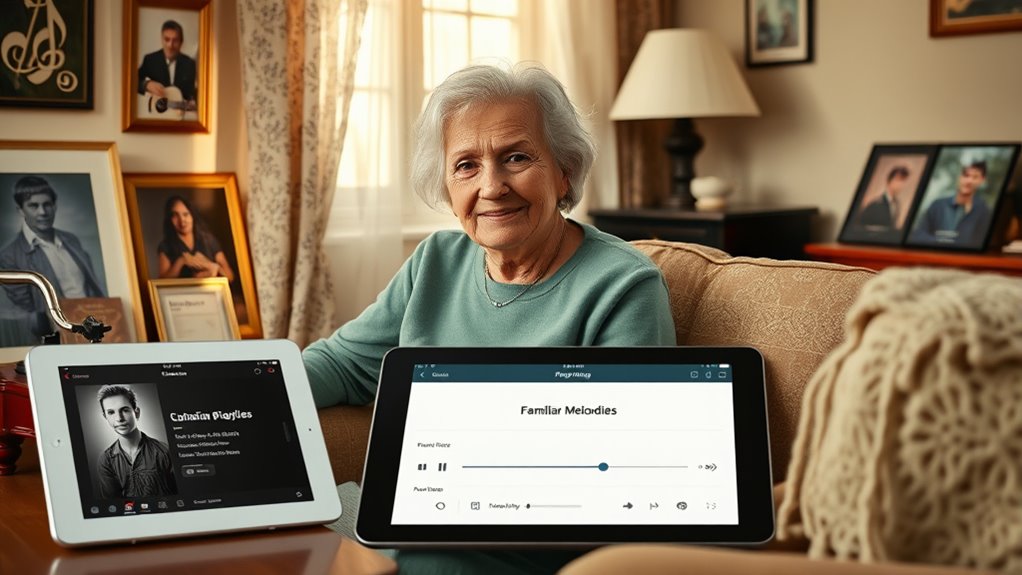
Including familiar songs and artists in your playlist can instantly create a sense of comfort and nostalgia, making your listening experience more enjoyable. To maximize this effect, consider these steps:
- Identify songs that evoke positive memories or feelings of safety.
- Choose artists your loved one has enjoyed in the past.
- Incorporate music from their favorite genres or time periods.
- Keep the playlist consistent, so it remains a familiar and calming presence.
Creating a Customized Playlist for Each Individual

To create a playlist that truly fits your style, start by considering your personal music preferences. Think about your mood and choose songs that match how you feel or want to feel. Keep your playlist fresh by updating it regularly with new favorites and trending tracks. Additionally, selecting songs with consistent tempo and rhythm can help maintain a seamless listening experience. Remember to consider user preferences and how they influence your playlist choices to better personalize music and suit individual needs. Incorporating crochet styles for locs inspiration can also inspire a calming, creative atmosphere during listening sessions. Being aware of emotional regulation can help tailor your playlist to support mood stabilization during sundowning episodes.
Personal Music Preferences
Personal music preferences play a essential role in crafting playlists that truly resonate with each individual. Knowing what genres, artists, or songs bring comfort helps you create a more effective playlist. To personalize effectively, consider these steps:
- Identify favorite genres or artists that evoke positive feelings.
- Gather songs that hold personal significance or nostalgic value.
- Observe which melodies or tempos soothe or energize the person.
- Avoid songs that might trigger agitation or negative memories.
Mood-Based Song Selection
When selecting songs based on mood, you can craft playlists that directly influence how someone feels, making the listening experience more meaningful. Start by identifying the emotional state you want to evoke, such as calmness or happiness, and choose songs that align with that mood. Pay attention to tempo, lyrics, and instrumentation, as these elements can enhance the desired feeling. For example, slow, soothing melodies can promote relaxation during stressful moments, while upbeat tunes can energize someone who feels sluggish. Be mindful of personal associations with certain songs or genres, as they can strengthen emotional responses. By intentionally selecting music that matches or shifts moods, you create a powerful tool to help manage sundowning and improve overall well-being.
Regular Playlist Updates
Updating playlists regularly guarantees that they stay aligned with your loved one’s evolving preferences and emotional needs. This ongoing process guarantees the music remains meaningful and effective. To keep playlists fresh and relevant, consider:
- Reassessing their favorite songs every few weeks to include new favorites or remove outdated ones.
- Observing how they respond to different tracks and adjusting accordingly.
- Incorporating seasonal or mood-specific music to match their current state.
- Seeking feedback from family members or caregivers to identify new preferences.
Using Technology to Streamline Playlist Creation

Advances in technology have made playlist creation faster and more intuitive than ever before. With user-friendly apps and software, you can easily gather and organize songs tailored to your loved one’s preferences. Many platforms offer automatic suggestions based on listening history, mood, or favorite genres, saving you time and effort. You can create playlists collaboratively, sharing updates with family or caregivers to ensure everyone stays involved. Voice-activated devices enable hands-free control, making adjustments simple even when you’re busy. Additionally, cloud-based services let you access and modify playlists from any device, guaranteeing flexibility. These tools help you quickly compile personalized playlists that adapt to changing needs, streamlining the process and reducing stress while ensuring your loved one’s music therapy remains consistent and effective. Incorporating music personalization techniques can further enhance engagement and comfort during therapy sessions.
Timing and Duration of Music Sessions

Effective timing and duration of music sessions can considerably enhance their impact on your loved one. To maximize benefits, consider these key points:
- Schedule sessions during late afternoon or early evening when sundowning symptoms typically peak.
- Keep sessions short—around 15 to 30 minutes—to prevent fatigue or overstimulation.
- Establish a consistent routine, so your loved one anticipates and associates music with calming moments.
- Avoid sessions immediately before bedtime, giving time for relaxation to settle in afterward.
- Incorporate high-quality, exclusive music experiences to elevate the calming effects and create a sense of luxury and comfort.
- Recognize the importance of familiarity and comfort in selecting music, as it can enhance the soothing effect and create a more personalized experience.
Observing Responses and Making Adjustments

Pay close attention to how your loved one responds during and after music sessions, as their reactions can guide you in making helpful adjustments. Notice if they seem calmer, more agitated, or distracted. Track these responses to fine-tune playlists effectively. Use the table below to assess reactions and decide on modifications:
| Response | Observation | Adjustment |
|---|---|---|
| Calm and relaxed | They enjoy gentle tunes | Increase similar songs |
| Agitated or restless | Music seems to overstimulate | Shorten sessions or change genre |
| No noticeable change | Limited effect, try different music | Experiment with new styles |
Being aware of the skin type can help tailor the music session duration and intensity for better comfort. Additionally, observing emotional responses can provide valuable insight into how music influences mood and behavior.
Furthermore, utilizing advanced segmentation techniques can help target specific reactions and personalize music choices more effectively. Incorporating individual preferences can greatly enhance the calming effects of music for your loved one.
Integrating Music Into Daily Routines

Integrating music into daily routines can enhance comfort and familiarity, making everyday activities more enjoyable. When you incorporate music thoughtfully, it becomes a natural part of your loved one’s day. Here are four ways to do it:
- Play calming playlists during meals to promote relaxation.
- Use favorite songs to signal changeover times, like waking up or bedtime.
- Incorporate background music during chores to boost mood and focus.
- Schedule short music sessions before activities that may cause agitation.
Tips for Caregivers to Enhance the Experience

To truly enhance the music experience for your loved one, it’s important to be attentive and adaptable. Observe their reactions carefully—notice which songs or genres lift their mood or soothe their anxiety. Adjust playlists based on their preferences and current state, avoiding overstimulation or boredom. Keep the environment calm and comfortable, minimizing noise and distractions. Engage with your loved one by singing along or sharing memories related to the music, creating a deeper connection. Timing matters; play calming music during the late afternoon or early evening to help reduce sundowning symptoms. Be patient and flexible, understanding that their needs and responses may change daily. Your attentiveness and willingness to adapt make the music experience more meaningful and effective.
Frequently Asked Questions
How Can I Involve the Person With Dementia in Playlist Selection?
Thinking about how you can involve someone with dementia in playlist selection, start by asking about their favorite songs or genres. Keep it simple and focus on their preferences. Encourage them to choose songs, or suggest options, and listen together. You can also observe which music calms or energizes them. This way, you make the process engaging and meaningful, helping them feel involved and valued.
Are There Specific Safety Considerations When Playing Music Aloud?
You might wonder if playing music aloud is safe. Studies show that loud sounds can startle or stress someone with dementia, so it’s best to keep the volume moderate. Always observe their reactions and adjust accordingly. Avoid sudden loud noises or music with harsh sounds. Use a gentle, steady volume, and guarantee the environment remains calm. This helps create a soothing atmosphere without risking discomfort or confusion.
How Do I Handle Negative Reactions to Certain Songs or Genres?
When handling negative reactions to certain songs or genres, you should stay calm and empathetic. Observe your loved one’s cues and respect their feelings. Try to identify specific triggers and avoid those styles. Offer alternative music choices that you know they enjoy, and involve them in selecting songs. This approach helps create a positive experience, reducing stress and making music a comforting activity rather than a source of distress.
Can Personalized Playlists Prevent Sundowning Episodes Entirely?
This question might feel like trying to hold back a tidal wave, but personalized playlists can profoundly reduce sundowning episodes. While they won’t prevent every instance, they create a calming routine that helps your loved one feel secure and relaxed. By choosing music they love, you tap into their emotions, easing anxiety and confusion. So, it’s a powerful tool, but don’t expect it to be a cure-all—consistency is key.
What Are the Best Ways to Introduce New Music Gradually?
When introducing new music, start slowly by adding a few familiar songs first. Gradually incorporate new tunes, giving yourself time to adjust. Listen during calm moments and observe how you feel. Keep the volume moderate and avoid sudden changes. Over days or weeks, increase the variety gradually. This gentle approach helps you get comfortable with new music without feeling overwhelmed, making the shift seamless and enjoyable.
Conclusion
By personalizing music playlists, you open a powerful tool to soothe and support those experiencing sundowning. Remember, just as every song tells a story, each person’s response is unique—so stay attentive and adaptable. With thoughtful selection and timing, you create a melody of comfort that transforms challenging evenings into moments of peace. Ultimately, music becomes more than sound; it’s a bridge to calm and connection—an artful symphony of care.