To help prevent aspiration in Parkinson’s, focus on swallowing exercises that strengthen and coordinate your muscles. Techniques like the Mendelsohn maneuver, effortful swallow, and supraglottic swallow can improve your swallowing safety and reduce choking risks. Incorporate tongue-strengthening routines into your daily routine, practicing consistently. Patience is key, and with the right exercises, you can maintain safer swallowing. Keep exploring to discover how these exercises can be tailored for your needs and improve your confidence during meals.
Key Takeaways
- Regular swallowing exercises like Mendelsohn and effortful swallow strengthen muscles and improve coordination, reducing aspiration risk.
- Tongue-strengthening exercises enhance swallowing safety by targeting key muscles involved in food passage.
- Techniques such as supraglottic swallow help protect the airway during swallowing, preventing material from entering the lungs.
- Consistent practice and routine integration are essential for gradual improvement and maintaining swallowing safety.
- Monitoring progress and working with healthcare professionals ensure exercises are effective and tailored to individual needs.
Understanding Swallowing Difficulties in Parkinson’s Disease

Understanding swallowing difficulties in Parkinson’s disease is essential because these problems often develop gradually and can considerably impact your quality of life. As Parkinson’s progresses, you might notice that swallowing becomes harder or less coordinated, leading to discomfort or choking. The disease affects the muscles involved in swallowing, causing delays or weakness that make it difficult to move food or liquids smoothly from your mouth to your stomach. You might also experience frequent drooling or a sensation of food sticking in your throat. Recognizing these early signs allows you to seek help sooner. It’s important to understand that these difficulties are common in Parkinson’s and can worsen over time if not addressed. Being aware helps you take proactive steps to manage symptoms and maintain your safety. Additionally, swallowing exercises can help strengthen the muscles involved and improve overall swallowing function. Early intervention with speech therapy techniques can further enhance swallowing safety and efficiency.
Key Benefits of Swallowing Exercises for Parkinson’s Patients

Engaging in swallowing exercises offers several key benefits for Parkinson’s patients, helping to improve the safety and efficiency of swallowing. These exercises can strengthen the muscles involved, reducing the risk of choking and aspiration. They also enhance coordination, making it easier for you to swallow food and liquids smoothly. Additionally, regular practice can slow the progression of swallowing difficulties, maintaining your independence longer. The table below highlights some specific benefits:
| Benefit | How It Helps | Impact |
|---|---|---|
| Muscle Strengthening | Builds muscle power in swallowing muscles | Reduces choking risk |
| Improved Coordination | Syncs muscle movements for smoother swallowing | Less food residue in mouth |
| Delay Progression | Maintains swallowing ability longer | Greater independence |
Consistent exercises empower you to swallow more confidently and safely. Understanding the role of muscle strength in swallowing can help guide your practice.
The Mendelsohn Maneuver: Technique and Benefits

The Mendelsohn maneuver involves specific steps to improve swallowing strength, and you’ll learn how to perform it correctly. By holding your larynx at the peak of a swallow, you can target key muscles involved in swallowing. Mastering this technique can make a noticeable difference in your swallowing efficiency and safety. Incorporating swallowing exercises into your routine can further enhance muscle strength and coordination.
Technique Overview and Steps
The Mendelsohn maneuver is a targeted swallowing exercise that can help strengthen the muscles involved in swallowing and improve safety. To perform it, start by swallowing normally, then consciously lift your larynx and hold it in the elevated position for about 2-3 seconds. This involves feeling the sensation of your Adam’s apple rising. Next, relax your larynx to return to the resting position. Repeat this process for 5-10 repetitions. Focus on maintaining control throughout each movement. You can do this exercise while sitting upright and in a comfortable position. Consistency is key to seeing benefits. Over time, this exercise helps improve the coordination and strength of muscles responsible for safe swallowing, reducing the risk of aspiration.
Enhancing Swallowing Strength
Enhancing swallowing strength is a key goal of practicing the Mendelsohn maneuver regularly. By actively holding your larynx and thyroid cartilage at the peak of a swallow, you engage and strengthen the muscles involved in swallowing. This technique helps improve the coordination and force of your swallow, making it easier to clear food and liquids from your mouth and throat. Consistent practice increases muscle endurance, reducing the risk of aspiration. You’ll notice better control over swallowing, less choking, and improved safety during meals. The maneuver also promotes better opening of the esophagus, aiding in smoother passage of food. Regularly performing this exercise can notably enhance your swallowing strength, supporting safer eating and reducing discomfort associated with swallowing difficulties.
Effortful Swallow: How to Perform and Its Impact

Performing an effortful swallow involves actively contracting your throat muscles to deliberately increase the force used when swallowing. This exercise strengthens the muscles involved in swallowing, making it easier to clear food and liquids safely. To perform it correctly:
Actively squeeze your throat muscles during swallowing to strengthen muscles and improve safety.
- Take a normal sip or swallow your current bolus.
- As you swallow, squeeze your throat muscles firmly, imagining you’re trying to push the food down with extra effort.
- Hold the contraction briefly before relaxing.
This technique enhances muscle strength and coordination, reducing the risk of aspiration. Regular practice improves your ability to generate a stronger swallow, which is especially beneficial for Parkinson’s-related swallowing difficulties. Incorporating muscle strengthening exercises like effortful swallowing can further support swallowing safety and efficiency. Consistent practice with targeted exercises helps to maintain or improve swallowing function over time, making daily activities safer and more comfortable. Engaging in swallowing therapy guided by a healthcare professional can also optimize your progress and help develop a comprehensive rehabilitation plan.
Supraglottic Swallow: Enhancing Safety During Swallowing
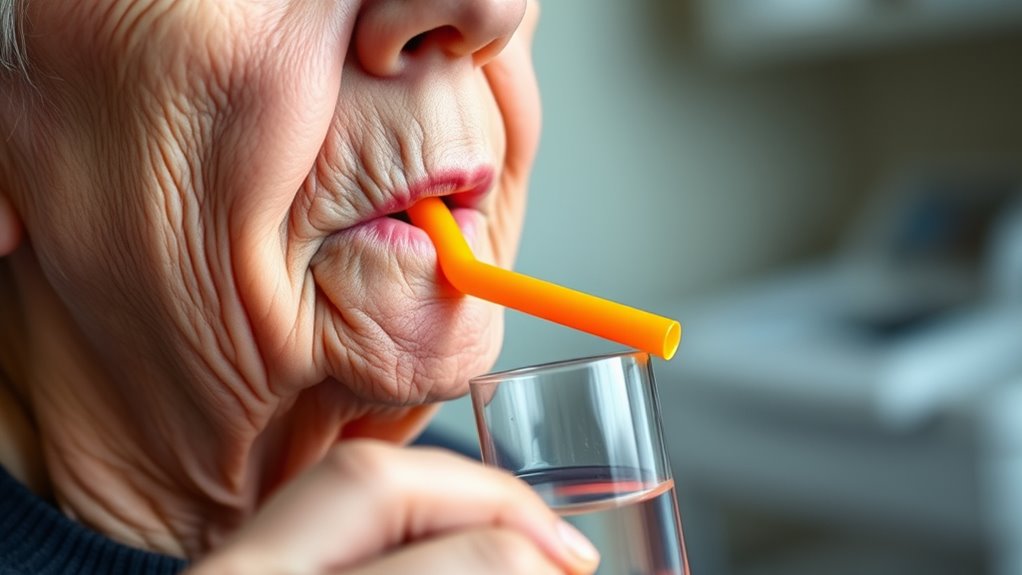
When swallowing safely becomes a concern, the supraglottic swallow technique offers an effective way to shield your airway. You start by taking a normal breath, then holding it gently while swallowing. This pause helps close your vocal cords, preventing food or liquids from entering your airway. After swallowing, you cough lightly to clear any residual material. This technique is especially useful if you have delayed swallow reflexes or weak airway closure. By consciously holding your breath and focusing on airway protection, you reduce the risk of aspiration. Incorporating airway protection techniques into your routine can also help manage mealtime clutter, making it easier to focus on proper swallowing techniques. It’s important to practice this exercise under the guidance of a healthcare professional to ensure proper technique. Consistent practice can help you improve swallowing safety and confidence during meals, especially when swallowing becomes more challenging.
The Masako Maneuver: Strengthening Pharyngeal Muscles

The Masako Maneuver targets the pharyngeal muscles to improve swallowing strength and coordination. You do this by gently sticking your tongue between your teeth and then swallowing. This exercise specifically engages the posterior pharyngeal wall, helping to enhance muscle contraction and reduce aspiration risk. To perform it effectively:
- Stick your tongue lightly between your upper and lower teeth.
- Keep your tongue in place as you swallow.
- Repeat for 5-10 repetitions, maintaining controlled movements.
This targeted exercise trains the muscles involved in the pharyngeal phase of swallowing, increasing their strength and responsiveness. Regular practice can help improve swallowing safety, especially in individuals with Parkinson’s, by reducing the likelihood of aspiration and improving overall swallowing efficiency.
Incorporating Swallowing Exercises Into Daily Routine

Integrating swallowing exercises into your daily routine can substantially improve your swallowing strength and safety over time. Consistency is key; performing these exercises regularly helps build muscle memory and confidence. Set specific times each day—morning, afternoon, or evening—to practice. Use reminders or alarms to stay on track. Start with simple exercises and gradually increase difficulty as your strength improves. Remember, patience is essential; progress may be slow but steady. Incorporate these exercises into activities you already do, like brushing your teeth or waiting in line. Here’s a quick guide to understanding the benefits:
| Routine Benefits | Practical Tips |
|---|---|
| Improves muscle strength | Schedule exercises daily |
| Reduces risk of aspiration | Use visual cues or alarms |
| Builds confidence | Track progress regularly |
Frequently Asked Questions
How Often Should Parkinson’S Patients Perform Swallowing Exercises?
You might wonder how often you should do swallowing exercises. Typically, it’s recommended to perform these exercises at least three times daily, but your healthcare provider may suggest a specific schedule based on your needs. Consistency is key to maintaining and improving swallowing function. Make sure you follow their guidance closely, as regular practice can help prevent aspiration and improve your overall safety and quality of life.
Are There Any Risks or Side Effects From Swallowing Exercises?
You might wonder if swallowing exercises have risks or side effects. Generally, they’re safe when guided by a healthcare professional. However, overdoing exercises or performing them incorrectly could cause discomfort, fatigue, or even aspiration if not done properly. Always follow your therapist’s instructions and communicate any pain or difficulty. If you experience issues, consult your healthcare provider promptly to adjust your routine and prevent complications.
Can Swallowing Exercises Improve Nutrition and Hydration?
Swallowing exercises can definitely help improve your ability to swallow, which in turn can boost your nutrition and hydration. By strengthening the muscles involved in swallowing, you may find it easier to eat and drink safely, reducing the risk of choking or aspiration. Consistent practice under a healthcare professional’s guidance guarantees you get the most benefit, helping you maintain better overall health and enjoy your meals more comfortably.
When Should a Patient See a Specialist for Swallowing Issues?
Wondering when you should seek a specialist for swallowing struggles? If you notice persistent problems like coughing during meals, choking, or food sticking, don’t delay. You should see a speech-language pathologist or healthcare professional promptly to prevent potential problems like aspiration. Early evaluation guarantees effective exercises, strategies, and support to safeguard your health. Don’t wait; your well-being warrants wise, timely intervention to ward off worsening issues.
Are There Specific Exercises for Different Stages of Parkinson’S?
You’re wondering if different stages of Parkinson’s require specific swallowing exercises. As your condition progresses, your needs may change, so exercises can be tailored to your current abilities. Early on, gentle maneuvers might focus on maintaining strength, while later stages might need more specialized techniques to prevent aspiration. It’s best to work closely with a speech-language pathologist who can customize your exercises based on your stage and symptoms.
Conclusion
By practicing these swallowing exercises regularly, you can markedly reduce the risk of aspiration and improve your quality of life. Consistency is key, so make these routines a part of your daily schedule. Remember, taking control of your swallowing health empowers you to stay safer and more confident during meals. Don’t you owe it to yourself to try these simple techniques and enjoy eating without fear? Your journey to better swallowing starts today.