
To address social isolation in hearing-impaired seniors, foster open conversations to reduce stigma and encourage sharing of feelings. Use assistive technologies like hearing aids, captioned phones, and visual cues to improve communication. Support their involvement in community activities and support networks that cater to their needs. Promote positive attitudes, challenge misconceptions, and create inclusive environments. By taking these steps, you help seniors reconnect and thrive—discover how to make a meaningful difference as you continue.
Key Takeaways
- Promote open conversations about hearing loss to reduce stigma and encourage social engagement.
- Utilize assistive listening devices and optimize environments to facilitate effective communication.
- Foster community involvement through local groups, activities, and online support networks.
- Educate seniors and their families about hearing health to dispel misconceptions and build understanding.
- Encourage emotional support and positive attitudes to boost confidence and reduce feelings of isolation.
Understanding the Impact of Hearing Loss on Social Engagement

Hearing loss can substantially reduce your ability to communicate effectively, which often leads to social withdrawal. When you struggle to hear conversations, you may feel embarrassed or frustrated, making you avoid social settings altogether. Over time, this avoidance can cause feelings of loneliness and isolation, as you miss out on shared experiences and emotional connections. You might find yourself withdrawing from friends and family, even in familiar environments. This social disconnect not only affects your mental health but also diminishes your quality of life. The frustration of not understanding speech clearly can lead to misunderstandings, hurt feelings, and a sense of disconnection from those around you. Recognizing how hearing loss impacts social engagement is the first step toward addressing these challenges. Additionally, utilizing assistive listening devices can help improve communication and encourage social participation, especially when combined with hearing aid technology that enhances speech clarity. Incorporating proper hearing healthcare can further support social engagement and emotional well-being for seniors with hearing impairments. Research shows that integrating hearing rehabilitation strategies can significantly boost confidence in social settings and reduce feelings of loneliness.
Enhancing Communication Through Assistive Technologies
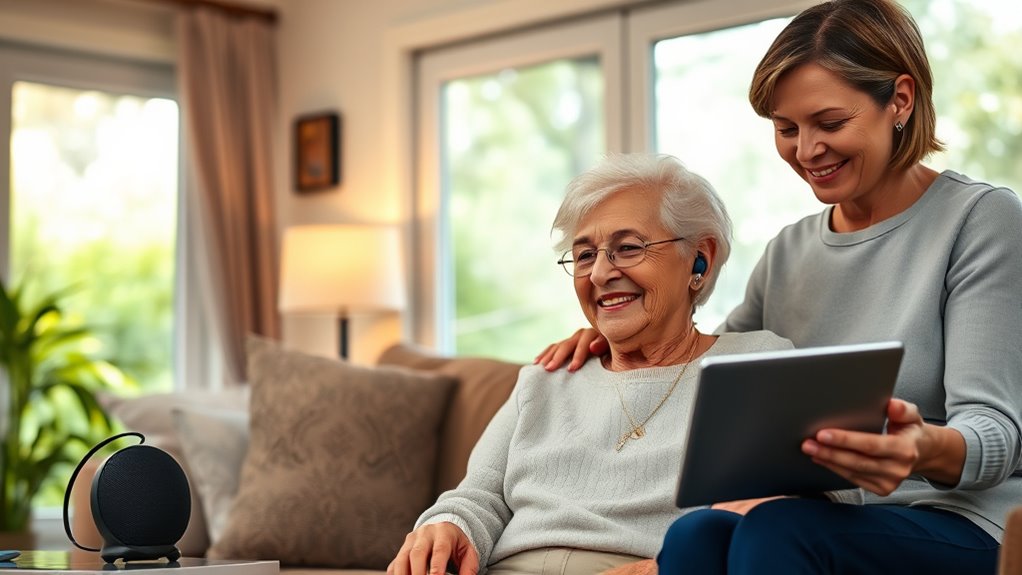
Advances in assistive technology offer practical solutions to improve communication for hearing-impaired seniors. Modern devices like hearing aids now feature advanced noise reduction and Bluetooth connectivity, making conversations clearer even in busy environments. Personal amplifiers help you hear better during one-on-one talks or group settings, reducing frustration and misunderstandings. Captioned telephones and speech-to-text apps enable you to follow phone conversations more easily, fostering independence. Wireless doorbells and alert systems notify you of visitors or emergencies, enhancing safety and awareness. Additionally, some devices incorporate smart features such as WiFi connectivity and voice assistant compatibility, allowing for more seamless integration into daily routines. These assistive technologies empower you to overcome communication barriers, reducing feelings of isolation and boosting your confidence in social interactions. Understanding technology integration can further enhance your ability to use these devices effectively. For example, support hours for technical assistance are often available through online resources, ensuring you can get help when needed. Exploring training programs can also help you maximize the benefits of these devices. By integrating these technologies into your daily life, you can reconnect with loved ones and participate more fully in social activities.
Promoting Community Involvement and Support Networks

Getting involved in community activities can help you feel connected and reduce loneliness. Building strong support networks guarantees you have assistance and companionship when needed. By actively participating, you create a sense of belonging that benefits your overall well-being. Participating in local groups or clubs can also provide opportunities for social interaction tailored to your interests. Additionally, engaging in safe and accessible activities designed for seniors can promote both mental and physical health. Engaging in community participation can also help combat social isolation by fostering meaningful relationships.
Community Activities Engagement
Engaging seniors in community activities can especially reduce social isolation by fostering connections and support networks. When you encourage participation, seniors gain opportunities to interact, share experiences, and build friendships. These activities can include local clubs, volunteer programs, or hobby groups tailored to their interests. Participation helps seniors feel valued and connected, boosting their confidence and emotional well-being. To make activities accessible, consider venues with good lighting and acoustics, and offer hearing-assistive devices. Creating inclusive environments ensures seniors with hearing impairments can fully engage and enjoy social interactions. By promoting involvement in community events, you help seniors establish meaningful relationships that sustain their social health and reduce feelings of loneliness. This proactive approach empowers seniors to stay active and socially connected.
Building Support Systems
Building strong support systems is essential for helping hearing-impaired seniors stay socially connected. You can encourage them to join local groups or clubs tailored to their interests, fostering new friendships and a sense of belonging. Connecting seniors with community resources, such as hearing loss associations or social services, provides valuable support and information. Family and friends play a pivotal role by staying engaged and offering consistent communication, even if it’s challenging. Technology also helps; introducing them to support networks or online communities can reduce feelings of isolation. By promoting involvement and ensuring access to reliable support, you help seniors build resilience, maintain social ties, and enhance their overall well-being. Strong support systems empower seniors to navigate their daily lives confidently and stay socially active.
Encouraging Positive Attitudes and Overcoming Stigma

You can help by challenging negative stereotypes about hearing impairment and showing that seniors with hearing loss lead full, active lives. Encouraging open conversations makes it easier for others to understand and accept hearing difficulties without judgment. When you promote positive attitudes, you foster a more inclusive environment that reduces stigma and isolation. Recognizing that some individuals may have specific health conditions or preferences, such as a dislike for ice cream, can also help tailor supportive interactions. Promoting mental health benefits of social engagement can further motivate community involvement and reduce feelings of loneliness among seniors.
Challenging Negative Stereotypes
How can we challenge the negative stereotypes that often surround hearing-impaired seniors? First, recognize that hearing loss doesn’t define a person’s abilities or worth. Second, share positive stories of seniors thriving with hearing aids and active lifestyles. Third, educate others about the realities of hearing impairment to dispel misconceptions. You can also:
- Highlight seniors participating in social activities, proving they remain engaged and vibrant
- Emphasize that hearing aids enhance communication, not diminish independence
- Challenge assumptions that hearing loss leads to cognitive decline or social withdrawal
Promoting Open Conversations
Why are open conversations essential in changing attitudes toward hearing impairment among seniors? When you encourage honest discussions, you help break down misconceptions and reduce stigma. Open conversations allow seniors to express their feelings and experiences without fear of judgment, making them feel heard and understood. This fosters a positive mindset, helping them see hearing challenges as manageable rather than embarrassing. By talking openly, you also educate others about hearing loss, promoting empathy and patience. When everyone feels comfortable discussing hearing issues, it becomes easier for seniors to seek help and adopt effective solutions. Promoting these dialogues creates an environment where positive attitudes flourish, and stigma diminishes, making social interactions more inclusive and reducing feelings of isolation.
Developing Tailored Social Programs for Hearing-Impaired Seniors

Creating effective social programs for hearing-impaired seniors requires understanding their unique communication needs and social barriers. You need to design activities that foster inclusion and ease communication challenges. This might involve incorporating assistive listening devices or visual cues, ensuring venues are acoustically optimized, and training staff to be sensitive to hearing impairments. To make these programs engaging, consider diverse formats like small group conversations, interactive workshops, or outdoor activities that promote social interaction without overwhelming participants. Tailoring programs also means involving seniors in planning, so their preferences and feedback shape the activities. Additionally, understanding ethical hacking principles can help protect participants’ privacy and security during digital activities or virtual gatherings. By focusing on accessibility and personalized approaches, you create an environment where seniors feel comfortable, confident, and motivated to participate, reducing their risk of social isolation and enhancing their overall well-being.
Supporting Emotional Well-Being and Building Confidence

Supporting emotional well-being and building confidence in hearing-impaired seniors are essential steps toward enhancing their quality of life. You can help by encouraging open communication and validating their feelings, which fosters trust and reduces feelings of isolation. Introducing coping strategies, such as relaxation techniques or mindfulness, can help manage frustration or anxiety related to hearing challenges. Celebrate their successes, no matter how small, to boost self-esteem and motivate ongoing efforts. Providing education about hearing aids and communication tools empowers seniors, giving them a sense of control. Creating a supportive environment where they feel understood and confident encourages social engagement. Being aware of religious and spiritual resources can also provide comfort and a sense of community that nurtures emotional well-being. This holistic approach not only addresses emotional needs but also promotes resilience and a positive outlook. By actively addressing emotional needs, you help seniors regain independence and develop resilience, ultimately reducing social withdrawal and enhancing their overall well-being.
Frequently Asked Questions
How Can Family Members Best Support Socially Isolated Hearing-Impaired Seniors?
You can support socially isolated hearing-impaired seniors by actively engaging with them, showing patience, and creating a comfortable environment for conversations. Use clear speech, maintain eye contact, and minimize background noise to improve communication. Encourage participation in social activities suited to their interests, and assist with hearing aid maintenance. Your consistent presence and understanding help reduce feelings of loneliness, making them feel valued and connected.
What Are the Latest Advancements in Hearing Aid Technology for Social Engagement?
Imagine opening a window to clearer conversations; latest hearing aid tech now offers smarter noise reduction and seamless connectivity. You’ll notice features like Bluetooth streaming, AI-powered sound adjustments, and rechargeable batteries that make social interactions more natural and enjoyable. These advancements mean you can engage confidently, hear conversations with less effort, and stay connected with loved ones, enriching your social life and reducing feelings of isolation effortlessly.
How Can Healthcare Providers Identify Early Signs of Social Withdrawal?
You can spot early signs of social withdrawal by paying attention to changes in your patient’s interactions and mood. Notice if they’re avoiding social activities, showing less interest in conversations, or becoming more isolated. Ask open-ended questions about their social life and listen carefully to their responses. Monitoring these behaviors allows you to intervene early, providing support or referrals that help prevent further social isolation.
Are There Specific Community Programs Tailored for Culturally Diverse Seniors?
You’ll find that many community programs are designed specifically for culturally diverse seniors, offering culturally sensitive activities and language support. These programs aim to foster social connections and include cultural celebrations, language classes, and health workshops tailored to different backgrounds. By participating, you can help seniors feel more included and engaged, reducing social isolation. Check local community centers or cultural organizations for programs that match your loved ones’ cultural needs.
What Funding Options Are Available for Seniors to Access Assistive Communication Devices?
Imagine opening a treasure chest of funding options for assistive communication devices! You can explore government grants, like Medicaid or Medicare, which often cover hearing aids and communication tools. Nonprofits and community programs may also offer financial assistance or discounted devices. Don’t forget about local health departments and charitable organizations—they sometimes provide free or low-cost options. With these resources, you’re closer than ever to improving your communication and reconnecting with loved ones.
Conclusion
By actively supporting hearing-impaired seniors, you can help reduce their social isolation. Imagine Mrs. Johnson, who, with a simple hearing aid and encouragement to join local groups, now happily chats with neighbors and feels connected again. Your efforts—whether through assistive tech, community programs, or positive attitudes—make a real difference. Together, you can create an inclusive environment where every senior feels valued, heard, and part of the community.