Practicing mindful Tai Chi offers a gentle, effective way to ease arthritis symptoms by focusing on slow, controlled movements that improve joint flexibility and balance. It encourages body awareness, proper alignment, and deep breathing, all while minimizing joint stress. To maximize benefits, create a safe, comfortable space and modify movements to suit your comfort level. Keep practicing regularly; you’ll discover simple strategies to enhance your joint health and overall well-being as you continue.
Key Takeaways
- Practice slow, gentle Tai Chi movements focused on proper alignment to reduce joint stress and improve flexibility.
- Incorporate breathing techniques like deep, mindful inhalations and exhalations to enhance relaxation and body awareness.
- Use modifications and props to support stiff joints and prevent discomfort during routines.
- Maintain a safe, clutter-free environment with comfortable clothing and non-slip surfaces for optimal safety.
- Establish a consistent practice schedule, starting with short sessions to build strength, flexibility, and long-term arthritis relief.
Understanding the Benefits of Tai Chi for Arthritis

Because Tai Chi involves slow, gentle movements, it is particularly effective for managing arthritis symptoms. When you practice regularly, you can improve your joint flexibility and reduce stiffness, making daily activities easier. Tai Chi also promotes better balance and coordination, helping to prevent falls and injuries. The gentle nature of these movements minimizes joint stress, providing relief without causing pain or discomfort. Additionally, practicing Tai Chi encourages mindfulness and relaxation, which can lower stress levels that often worsen arthritis symptoms. Incorporating proper projector calibration techniques can further optimize visual clarity and comfort during your practice sessions. Engaging in gentle exercise like Tai Chi can also support overall joint health and mobility over time. Many people find that consistent Tai Chi practice not only eases their symptoms but also boosts their energy and mood. Furthermore, attention to detail in your practice can help maximize the benefits and ensure safe movements. Regular practice can also help improve mind-body awareness, leading to better management of arthritis flare-ups. Consistent practice also supports joint mobility, which is essential for maintaining independence and reducing discomfort.
Essential Principles for Safe Practice

To practice Tai Chi safely, focus on maintaining proper alignment to prevent strain and injury. Always listen to your body and stop if you feel any discomfort or pain. By staying mindful of these principles, you can enjoy the benefits while minimizing risks. Incorporating a Gold IRA Rollovers strategy can also contribute to your overall financial security, allowing you to invest in assets that hedge against market volatility. Being aware of water park amenities can also inspire you to choose environments that support relaxation and physical activity in a safe manner. Additionally, choosing the right crochet styles for locs can serve as a gentle form of movement and self-care, promoting mindful engagement with your body. Using an airless paint sprayer for home improvement projects can help you complete tasks more efficiently, reducing physical strain and ensuring a smooth finish. Regularly practicing gentle glycolic acid exfoliation can further support skin health and flexibility, complementing your mindful movement routine.
Proper Alignment Techniques
Maintaining proper alignment during Tai Chi routines is essential for safety and effectiveness, ensuring that your movements are both balanced and efficient. Keep your head upright, aligned with your spine, and avoid tilting or leaning forward. Your shoulders should relax and be level, not hunched or pulled back. Maintain a gentle bend in your knees to distribute your weight evenly, preventing strain on your joints. Keep your chest open and your back straight, avoiding slouching or arching. Your arms should move smoothly from your shoulders, with wrists relaxed and aligned with your forearms. Focus on a stable center, engaging your core muscles to support your posture. Proper alignment minimizes strain, enhances flow, and helps you get the most benefit from each movement.
Listening to Your Body
Paying close attention to how your body responds during Tai Chi helps prevent injury and guarantees you practice safely. Listen for signs of discomfort, pain, or fatigue, and adjust your movements accordingly. If a posture or movement feels strained, ease up or modify it to suit your comfort level. Respect your limits, especially if you’re dealing with arthritis, and never push through pain. Regularly check in with your body, noting areas of tension or stiffness. This mindfulness ensures you stay safe and avoid overexertion. Remember, Tai Chi is about gentle, deliberate movements. By tuning into your sensations and making adjustments, you create a sustainable practice that supports healing and keeps you injury-free.
Preparing Your Space and Gear
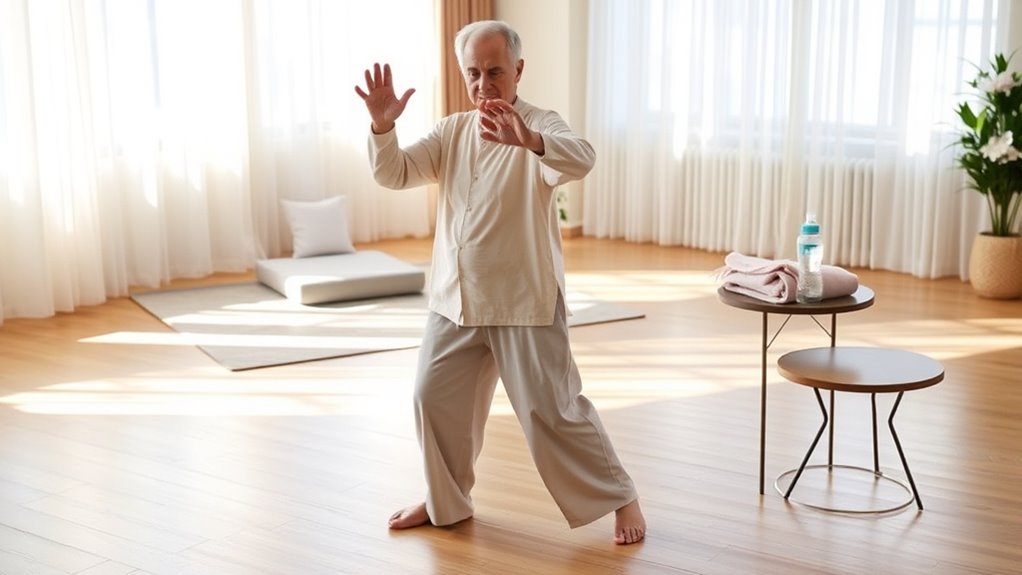
Before you start, make sure your practice space is clear of obstacles to avoid any accidents. Wear loose, comfortable clothing that allows full movement without restriction. Setting up a safe and comfortable environment helps you focus on your Tai Chi routine and reduces the risk of injury.
Clear Practice Area
Creating a clear and safe practice area is essential for your tai chi routine, especially when working to alleviate arthritis symptoms. Choose a spacious, clutter-free spot with enough room to move comfortably without obstacles. Guarantee the surface is flat and non-slip, reducing the risk of falls or strain. Remove any sharp or hard objects, and consider using a mat or padded surface for added comfort and safety. Good lighting helps you see your movements clearly and stay aware of your surroundings. Keep nearby water accessible in case you need a quick sip. A well-organized space helps you focus on your movements and maintain mindfulness, making your practice both safe and effective. Prioritizing safety allows you to fully enjoy the healing benefits of tai chi.
Comfortable Clothing Selection
Choosing the right clothing is essential for a comfortable and effective tai chi practice, especially when managing arthritis. You want garments that are loose, breathable, and allow free movement without restriction. Avoid tight or restrictive clothing that can cause discomfort or hinder your range of motion. Soft fabrics like cotton or moisture-wicking materials help keep you comfortable throughout your session.
| Clothing Tips | Benefits |
|---|---|
| Loose-fitting attire | Allows unrestricted movement and comfort |
| Breathable fabrics | Keeps you cool and reduces irritation |
| Elastic waistbands | Provides flexibility without pressure |
Warm-Up Exercises to Get Started

Starting your Tai Chi routine with gentle warm-up exercises helps prepare your joints and muscles, making it easier to perform the movements smoothly and safely. Begin with slow neck rolls, turning your head gently from side to side to loosen neck muscles. Next, do shoulder circles, lifting your shoulders up toward your ears and then rolling them back and down. Follow with arm swings, gently swinging your arms forward and backward to loosen shoulder joints. Incorporate gentle torso twists, turning your upper body side to side to enhance mobility. Finish with ankle circles, rotating each foot to warm up your ankles. These simple movements increase circulation, reduce stiffness, and help prevent injury, setting a mindful tone for your Tai Chi practice. Incorporating warm-up exercises that promote joint flexibility can also help reduce the risk of injury during your routine. Additionally, being aware of AI vulnerabilities in safety measures underscores the importance of cautious preparation and mindful movement to protect your joints and overall health.
Foundational Tai Chi Movements for Joint Health
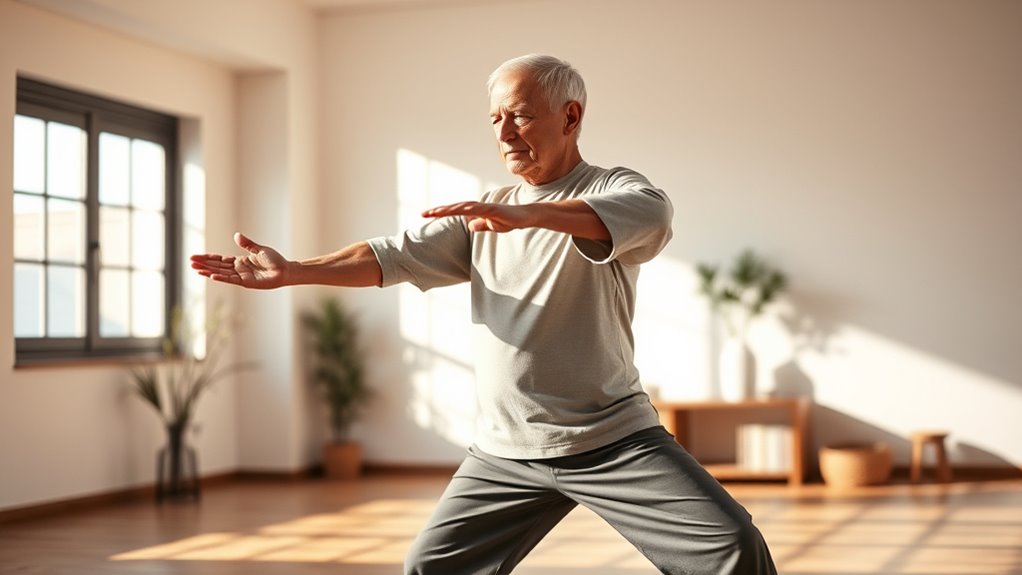
Mastering foundational Tai Chi movements is essential for supporting joint health and improving mobility. These basic moves help you develop proper alignment, balance, and gentle strength, reducing strain on your joints. Focus on slow, controlled motions like the “Ward Off” or “Brush Knee,” which promote smooth joint articulation and muscle engagement. Pay attention to your posture, keeping your spine straight and your movements relaxed. As you practice, you encourage the flow of energy through your joints, easing stiffness and improving flexibility. Incorporating mindful movement can inspire a calming environment that complements your mindful movement practice. Additionally, paying attention to proper technique enhances the effectiveness of each movement and minimizes the risk of strain or injury. Emphasizing joint-friendly practices during your routine can further protect your joints and enhance overall comfort. Using local resources or seeking guidance from experienced instructors can support your progress and ensure correct form. Consistency is key; performing these movements regularly builds a strong foundation for more advanced routines. Remember, the goal isn’t speed but mindful awareness of your body’s movements, ensuring your joints stay healthy and resilient over time. Cultivating mindful movement enhances the benefits of your practice and supports overall joint well-being.
Incorporating Breathing and Mental Focus
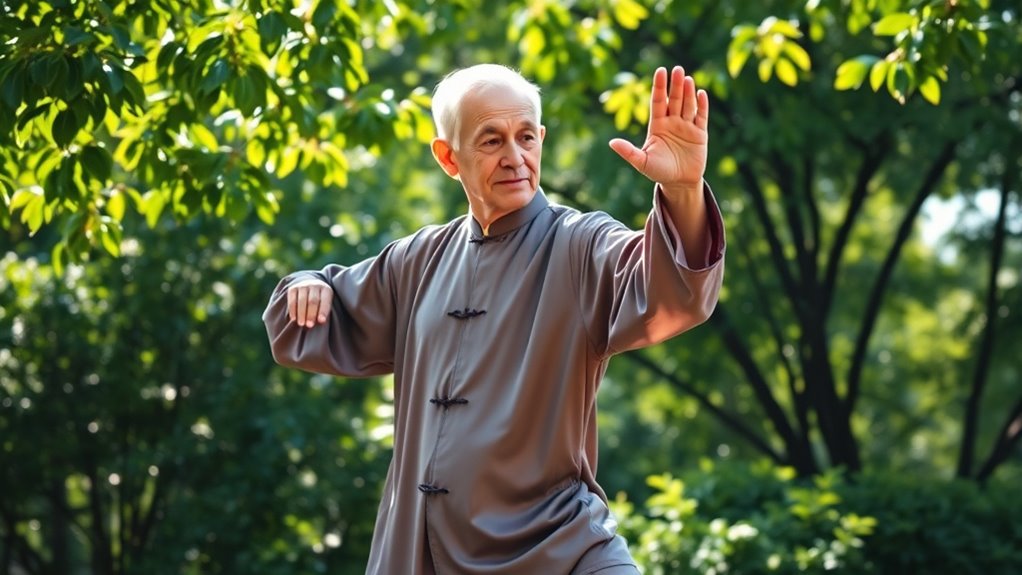
Incorporating breathing and mental focus into your Tai Chi practice enhances the benefits for joint health and overall well-being. As you move through each posture, pay close attention to your breath, inhaling slowly through your nose and exhaling gently through your mouth. Deep, mindful breathing helps relax tense muscles, improves circulation, and reduces stress, all of which support joint health. Additionally, maintaining proper essential oil dilution during practice can create a calming environment that further promotes relaxation and mental clarity. Using HEPA filtration in your environment can help ensure the air remains free of allergens and pollutants, supporting respiratory health. Incorporating air purifiers with multiple functions like UV light and ionizers can further enhance indoor air quality, benefiting your breathing during practice. Simultaneously, focus your mental energy on the movements, visualizing energy flowing through your joints and muscles. This mental engagement increases body awareness, helping you perform each movement with intention and control. By syncing your breath with your movements and maintaining mental focus, you create a calming, meditative experience that amplifies the physical benefits of Tai Chi for arthritis relief.
Tips for Modifying Movements for Comfort

To make Tai Chi more comfortable for your joints, it’s important to modify movements as needed rather than forcing full range or intensity. Listen to your body and adjust each movement to avoid pain or discomfort. Use smaller, gentle motions instead of large, sweeping ones. Support stiff joints with props like cushions or chairs when necessary. Focus on slow, controlled movements to reduce strain. Incorporating gentle, low-impact exercises can further protect your joints while maintaining your routine. Consider these tips for better comfort:
- Reduce the range of motion if a movement feels too intense
- Use a chair or wall for balance and support
- Slow down your pace to minimize joint stress
- Skip or adapt movements that cause discomfort, and revisit them when ready
Making these adjustments helps you practice safely and sustain your routine.
Building a Consistent Practice for Long-Term Relief
Adjusting movements for comfort helps you stay engaged with Tai Chi over time. To build a consistent practice, set realistic goals and create a routine that fits your schedule. Start with short sessions, gradually increasing duration as your comfort improves. Make Tai Chi a daily habit, even if it’s just 10 minutes. Tracking your progress can keep you motivated and help identify what works best for you. Find a quiet space free of distractions and wear comfortable clothing. Remember, consistency is key—regular practice leads to long-term relief and improved mobility. Be patient with yourself, and celebrate small victories along the way. Over time, this steady commitment will help you experience lasting benefits and deepen your connection to the practice.
Frequently Asked Questions
Can Beginners With Severe Arthritis Safely Start Tai Chi?
You might wonder if beginners with severe arthritis can safely start tai chi. It’s essential to consult your healthcare provider first to verify it’s suitable for your condition. Start slowly with gentle movements, focusing on low-impact poses that don’t strain your joints. Listen to your body and stop if you feel discomfort. With proper guidance and modifications, tai chi can be a safe, beneficial activity for managing arthritis symptoms.
How Long Does It Typically Take to Notice Relief From Arthritis Symptoms?
You might wonder how soon you’ll see relief from arthritis symptoms. Research suggests that many people start noticing improvements within 4 to 6 weeks of regular activity. Consistency is key, and you’ll likely feel less stiffness and pain as your joints gain more mobility. Keep in mind, individual results vary, but sticking with your routine can lead to meaningful relief over time.
Are There Specific Tai Chi Styles More Effective for Arthritis?
You might wonder if certain Tai Chi styles work better for arthritis. While all styles promote gentle movement and joint health, some, like Yang or Wu, emphasize slow, flowing motions that are easier on painful joints. Try different styles to see which feels most comfortable and effective for you. Consistency is key, so choose a style you enjoy and can practice regularly to experience the best relief.
Can Tai Chi Be Combined With Other Arthritis Treatments?
You can definitely combine tai chi with other arthritis treatments to enhance your relief. It works well alongside medication, physical therapy, and lifestyle changes like diet and exercise. Just make sure to consult your healthcare provider before starting new routines. By integrating tai chi into your overall treatment plan, you may improve joint flexibility, reduce pain, and boost your overall well-being more effectively.
What Should I Do if I Experience Pain During Practice?
If you experience pain during practice, stop immediately and assess the situation. You should listen to your body and avoid pushing through discomfort. Consider adjusting your movements or reducing the intensity. Applying ice or taking over-the-counter pain medication might help. If pain persists, consult your healthcare provider to determine if you should continue or modify your routine. Prioritize safety to prevent further injury.
Conclusion
Imagine gentle movements flowing like a calming river, easing your joints and calming your mind. With consistent practice, tai chi becomes your steady sanctuary—a peaceful dance that nurtures your body and spirit. As you embrace each mindful step, you’ll find relief and renewed energy. Keep moving with patience and confidence, knowing this graceful practice is your path to comfort and balance. Let tai chi be the gentle breeze guiding you toward lasting wellness.