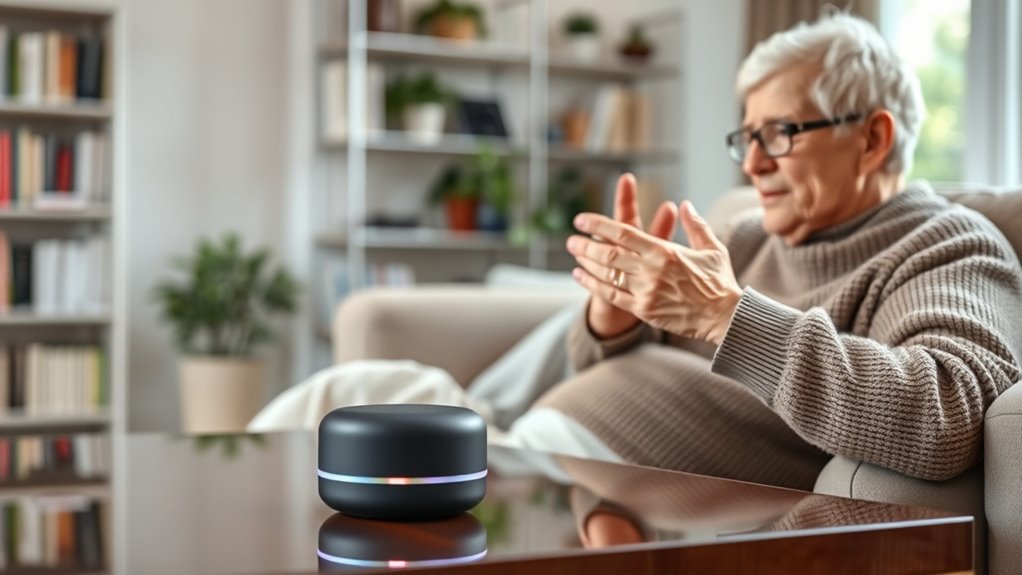

Voice-activated assistants can make daily tasks easier for you by helping manage reminders, control home devices, and organize your schedule hands-free. They also boost safety by enabling quick calls, emergency alerts, and monitoring environmental hazards. These devices support communication with loved ones through voice calls or messaging and can be customized to fit your specific needs. Exploring the latest technology can open up new possibilities for independence and safety in your everyday life.
Key Takeaways
- Enable hands-free management of medications, appointments, and daily routines to support independence.
- Provide instant emergency calls and environment monitoring for enhanced safety.
- Facilitate social interactions through voice commands for messaging and video calls.
- Personalize settings and routines to accommodate individual speech and mobility challenges.
- Integrate with health and home devices for real-time monitoring and adaptive support.
How Voice Assistants Support Daily Routine Management

Have you ever wondered how voice assistants can make managing daily routines easier for people with Parkinson’s? They act as helpful companions, allowing you to set reminders for medications, appointments, and daily tasks with simple voice commands. You can ask them to turn on lights, adjust thermostats, or play your favorite music without needing to find switches or remotes. Voice assistants also help keep you organized by creating to-do lists and providing step-by-step instructions. This reduces the stress of remembering multiple tasks or managing complex schedules. With these tools, you gain more independence and confidence, making everyday activities more manageable. They’re designed to adapt to your needs, offering a seamless way to stay on top of your daily routine. Assistive technology continues to evolve, further enhancing support for daily living.
Enhancing Safety and Emergency Response With Voice Technology
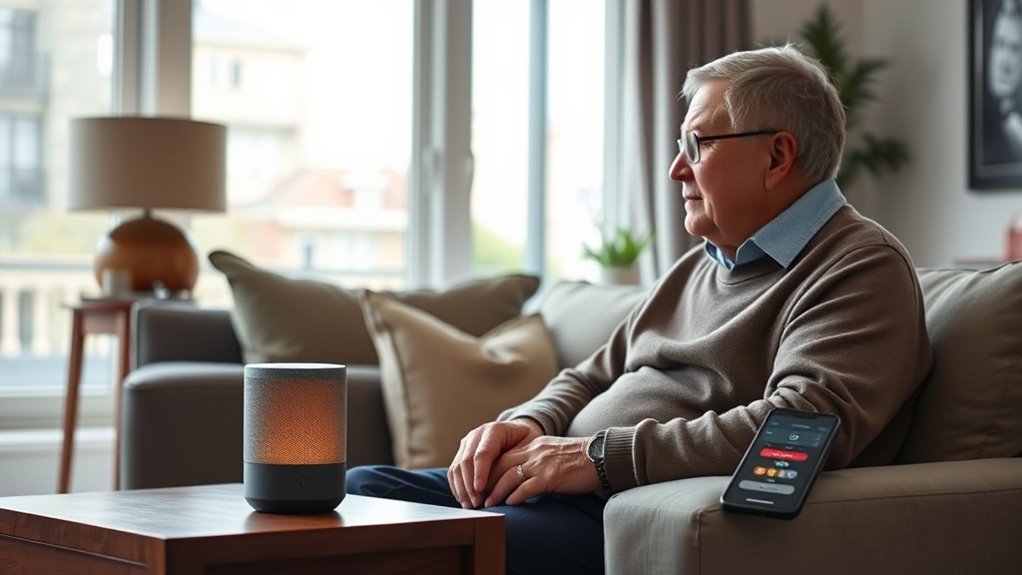
Voice assistants not only help manage daily routines but also play a vital role in enhancing safety and emergency response for people with Parkinson’s. When an emergency arises, you can simply voice your needs, such as calling a loved one, alerting emergency services, or requesting help. This instant access can be lifesaving, especially if mobility or speech difficulties make traditional communication difficult. Many voice assistants allow you to set up emergency contacts and alerts, ensuring help is always within reach. Additionally, some devices can monitor your environment for hazards like smoke or gas leaks, alerting you immediately. By providing quick, hands-free access to emergency services and safety features, voice technology empowers you to respond faster and stay safer in everyday situations. Properly configuring and understanding your device’s safety features can further enhance your security. Understanding assistive technology options can help you customize your device to better suit your specific needs. Incorporating user-friendly design can make these tools even more accessible for individuals with mobility or speech challenges, ensuring they are effective in emergencies. Using integrated health monitoring features can also provide additional safety by tracking vital signs and alerting caregivers if necessary, offering peace of mind. A focus on accessibility features can further improve usability and safety.
Simplifying Communication and Social Interaction
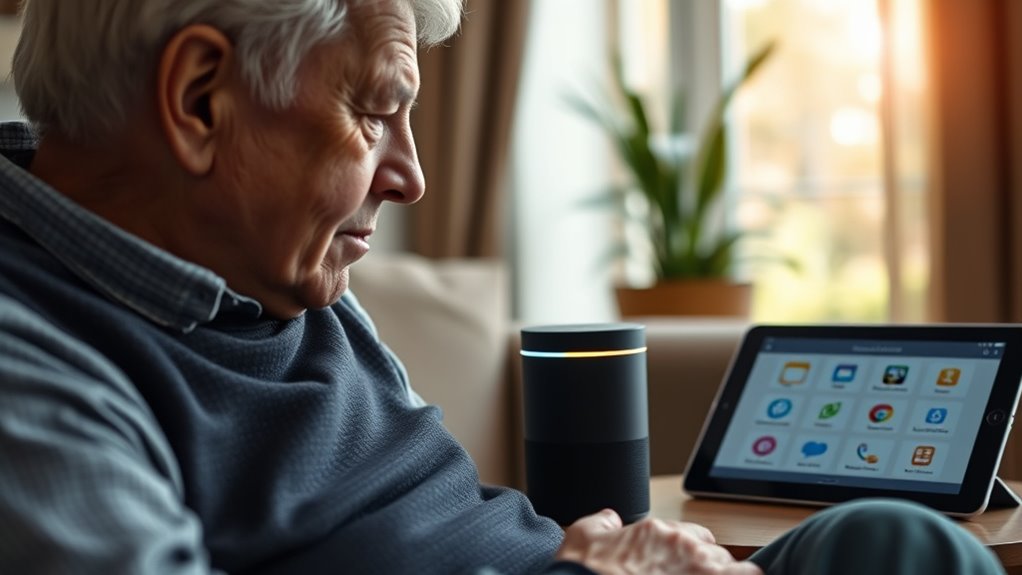
For many people with Parkinson’s, communicating can become challenging due to speech difficulties or fatigue. Voice‑activated assistants can help bridge this gap, making social interactions smoother. They enable you to send messages, make calls, or ask questions without speaking loudly or clearly. This reduces frustration and promotes independence. Additionally, these devices can facilitate social connections by providing reminders to reach out to loved ones or suggesting conversation starters. Here’s how they assist:
| Feature | Benefit |
|---|---|
| Voice commands for messaging | Quick, hands-free communication |
| Call and video initiation | Stay connected effortlessly |
| Reminders for social activities | Maintain social engagement |
| Speech-to-text conversion | Communicate more effectively in conversations |
| Personalized prompts | Encourage social interaction and participation |
These tools simplify social interactions, helping you stay connected and engaged with minimal effort. Incorporating sound design techniques into the development of these devices can enhance user experience by creating more natural and intuitive interactions. As technology advances, efforts to address data privacy challenges remain crucial to ensure user trust and security.
Customizing Voice Assistants for Individual Needs
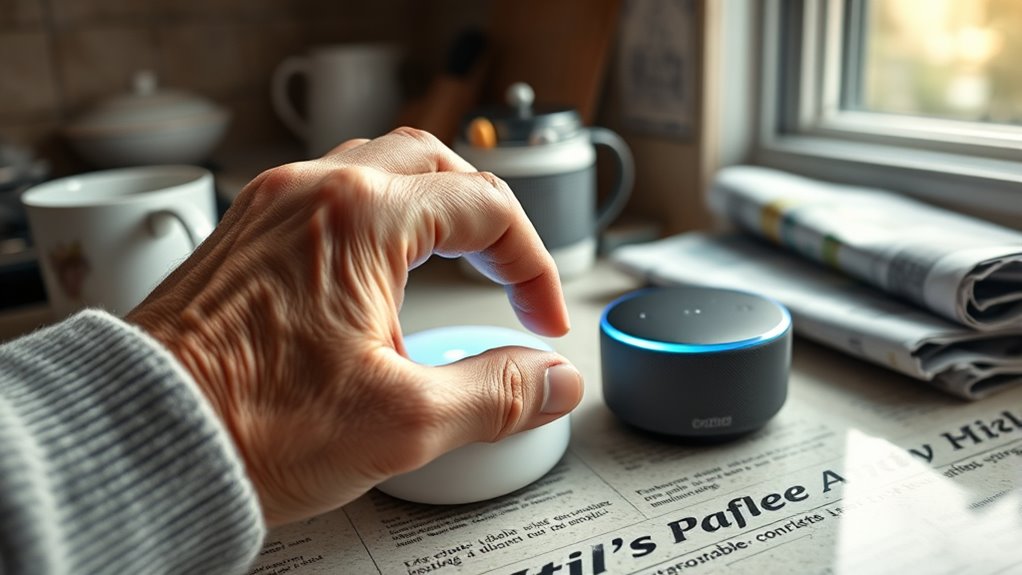
Personalizing your voice assistant guarantees it truly meets your unique needs and routines. You can customize commands, set preferred names, and prioritize frequently used tasks to make interactions smoother. Adjusting speech recognition settings can improve accuracy, especially if you have a softer voice or speech challenges. You might also program specific reminders, contacts, or shortcuts tailored to your daily schedule. Using voice profiles, you can ensure the assistant responds appropriately to different users if others also use the device. Personalization helps reduce frustration and increases independence, making technology work specifically for you. Additionally, cookie preferences can be set to improve your experience by enabling relevant feedback collection and performance analysis. Take the time to explore the settings and fine-tune your assistant, so it aligns perfectly with your habits and preferences. This way, your device becomes a seamless extension of your daily life.
Future Developments in Voice-Enabled Care for Parkinson’s Patients

As technology advances, future developments in voice-enabled care are poised to remarkably enhance how Parkinson’s patients manage daily challenges. Expect smarter, more intuitive systems that adapt seamlessly to your evolving needs. Voice assistants will gain better natural language understanding, making interactions feel more natural and less frustrating. They’ll integrate with wearable devices to monitor symptoms in real-time, providing timely alerts and personalized advice. Enhanced security features will protect your privacy without sacrificing convenience. Additionally, AI-driven personalization will allow voice assistants to learn your routines and preferences, offering proactive support. The integration of real-time symptom tracking and feedback will further improve personalized care, enabling more precise management of symptoms. Incorporating privacy protection measures will be essential to maintain user trust as these technologies become more sophisticated. Moreover, advances in AI security will ensure that sensitive health data remains protected from cyber threats, fostering greater confidence in these innovative solutions. Data privacy will become increasingly central to user acceptance and regulatory compliance as these systems evolve. Furthermore, ongoing research into home automation can help create more comprehensive support environments for Parkinson’s patients.
Frequently Asked Questions
How Affordable Are Voice Assistants for Parkinson’S Patients?
You might wonder how affordable voice assistants are for Parkinson’s patients. Generally, prices vary depending on the device, but many options are reasonably priced or even free with a compatible smartphone or smart speaker. Some insurance plans or assistance programs may help cover costs. Overall, these tools can be an economical way to improve daily independence, especially considering their potential to simplify tasks and enhance quality of life.
Can Voice Assistants Be Integrated With Other Healthcare Devices?
You wonder if voice assistants can connect with other healthcare devices. The good news is, many voice assistants are designed to integrate with smart health gadgets like blood pressure monitors, glucose meters, and fitness trackers. This integration allows you to easily share data with your healthcare team, monitor your health in real-time, and manage your condition more effectively. Compatibility varies by device, so check if your devices support specific voice assistant platforms.
What Privacy Measures Protect Users’ Personal Data?
You want to know how your privacy is protected, and that’s important. Manufacturers implement strong encryption, secure data storage, and strict access controls to keep your personal information safe. Regular security updates and user controls, like choosing what data to share and reviewing permissions, also help. Remember to stay informed about privacy policies and adjust your settings to guarantee your data remains private and secure.
Are Voice Assistants Easy for Seniors to Learn and Operate?
You might wonder if voice assistants are easy for seniors to learn and operate. Generally, they are designed with simplicity in mind, featuring clear commands and user-friendly interfaces. Many seniors find it helpful that they can activate tasks with just their voice, reducing the need for complex technology skills. With a bit of practice, you’ll likely find them intuitive and a useful tool to make daily activities easier.
How Do Voice Assistants Adapt to Changing Symptoms Over Time?
Did you know that 85% of users find voice assistants improve over time? As your symptoms change, voice assistants adapt by learning your speech patterns and preferences through machine learning. You don’t have to reprogram them; they automatically adjust to your evolving needs. This personalized approach helps you stay independent longer, making daily tasks easier even as your condition progresses.
Conclusion
Voice-activated assistants are like trusted companions, easing your daily tasks and enhancing safety with a gentle, reliable touch. They help you stay connected, manage routines, and respond swiftly in emergencies, making life more manageable and less stressful. As technology advances, these assistants will become even more personalized, adapting to your unique needs like a tailor fitting perfectly. Embracing these innovations can truly transform your daily experience, turning challenges into opportunities for greater independence and peace of mind.