Creating a “Yes‑Space” zone helps you provide a calm, safe environment where your loved one with Alzheimer’s feels secure and in control. Choose a quiet, clutter-free spot with familiar objects and soft lighting. Use gentle prompts to guide them into the space, making it a routine. Keep observing their reactions and adjust the environment as needed. Discover more strategies to reduce stubborn behaviors and foster cooperation.
Key Takeaways
- “Yes‑Space” zones provide a calming environment that fosters understanding, reducing frustration and oppositional behaviors in individuals with Alzheimer’s.
- Designing these spaces with familiar objects, soft colors, and minimal noise helps create a sense of safety and comfort.
- Introducing and guiding individuals gently to “Yes‑Space” zones using positive language and calm gestures encourages voluntary engagement.
- Regularly observing reactions and adjusting the environment ensures the “Yes‑Space” remains effective and tailored to the individual’s needs.
- Incorporating routines and reassurance within these zones promotes cooperation and decreases resistance during caregiving activities.
Understanding the Concept of “Yes‑Space” Zones
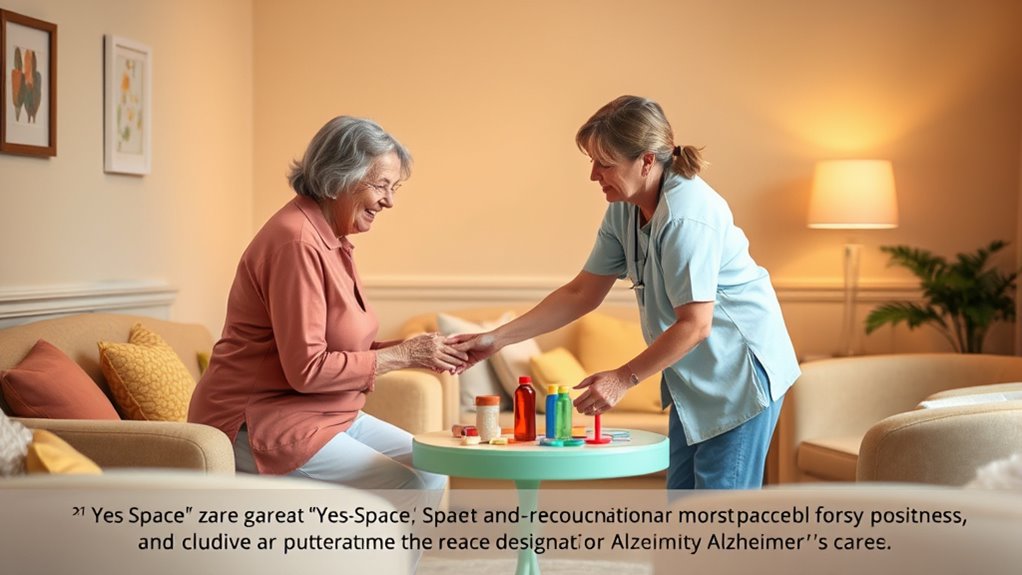
Understanding the concept of “Yes‑Space” zones is essential for managing Alzheimer’s-related behaviors effectively. These zones are designated areas where your loved one feels safe, comfortable, and in control. The idea is to create a space that encourages positive interactions and reduces feelings of confusion or frustration. When your loved one enters a “Yes‑Space,” they’re more likely to feel understood and accepted, which can decrease oppositional behaviors. These spaces are not about restriction but about providing a reassuring environment that promotes cooperation. By establishing a “Yes‑Space,” you help your loved one regain a sense of familiarity and security. This approach shifts the focus from confrontation to understanding, making caregiving less stressful for both of you.
Identifying Suitable Locations for “Yes‑Space” Areas

Selecting the appropriate site for a “Yes‑Space” is crucial to make certain your loved one feels secure and comfortable. You want a location that minimizes confusion and distractions while offering easy supervision. Ideal spots include quiet corners, unused rooms, or areas near common spaces. Consider accessibility, safety, and familiarity for your loved one. Avoid high-traffic zones or noisy areas that could cause agitation.
| Location Type | Key Considerations |
|---|---|
| Quiet Corner | Low traffic, cozy, familiar |
| Unused Room | Private, free of clutter |
| Near Common Area | Easy supervision, accessible |
Designing a Calm and Inviting Environment

Creating a calm and inviting environment in your loved one’s Yes‑Space helps reduce confusion and agitation, making it easier for them to feel secure. Focus on simplicity and familiarity to create a soothing atmosphere. Use soft, neutral colors and avoid clutter that can overwhelm. Guarantee good lighting, preferably natural light, to promote comfort and reduce shadows that may cause fear. Incorporate familiar objects and gentle textures to foster a sense of safety. Keep sounds minimal and avoid loud or sudden noises. Arrange furniture to allow easy navigation and prevent falls. Additionally, understanding the importance of environmental design in dementia care can enhance the effectiveness of the space and improve the well-being of your loved one. Creating a space with appropriate contrast can further support visual clarity and ease of movement within the environment.
Strategies for Introducing and Using “Yes‑Space” Zones

Introducing a “Yes‑Space” zone effectively involves clear planning and gentle guidance. Begin by identifying areas where the person feels safe and comfortable. Use simple, positive language to explain the space as a special area for relaxing or engaging in preferred activities. Consistently guide them toward the zone with calm gestures and reminders. To make the transition smooth, establish routines that incorporate the space naturally. Consider the following table to help organize your approach:
| Step | Action | Tips |
|---|---|---|
| Identify Location | Choose a quiet, familiar spot | Keep it clutter-free and inviting |
| Introduce Gradually | Use gentle language and cues | Avoid forcing; be patient |
| Reinforce Use | Encourage frequent, positive visits | Praise and reassurance |
Monitoring and Adjusting to Maximize Benefits

To guarantee your “Yes‑Space” zones continue to provide benefits, it’s essential to regularly monitor how the person responds and make adjustments as needed. Observe their reactions, noting any signs of frustration or confusion. Keep track of what works well and what doesn’t, modifying the zone’s boundaries or activities accordingly. Stay flexible, as their needs and abilities may change over time. Incorporating mindful decluttering strategies can also help maintain an organized environment that adapts to evolving needs. Additionally, implementing risk mitigation techniques from related fields can enhance safety and comfort. Being aware of financial considerations can help ensure the environment remains sustainable and supportive. Regularly updating your approach based on Dog names insights can further optimize the space for their well-being. Engaging in ongoing personal development practices can help caregivers stay receptive to adapting strategies. Consistent observation helps prevent frustration and ensures the zone remains a safe, calming space.
Frequently Asked Questions
How Do “Yes‑Space” Zones Impact Residents’ Overall Well-Being?
You might notice that creating designated positive environments helps residents feel safe and understood. “Yes‑space” zones provide calming areas where they can relax without feeling threatened or overwhelmed. This approach reduces agitation and promotes emotional well-being. By making these zones accessible, you support their sense of security and independence, leading to improved mood, better cognitive engagement, and a higher quality of life overall.
What Training Is Needed for Staff to Effectively Implement “Yes‑Space” Zones?
To effectively implement “yes‑space” zones, you need thorough staff training. You should focus on understanding Alzheimer’s behaviors, de-escalation techniques, and personalized communication skills. Training should include role-playing scenarios, active listening, and empathy exercises. You also need to teach staff how to create a calm environment and respond positively to residents’ needs. Ongoing education ensures they stay confident and consistent in applying these strategies, promoting better resident well-being.
Are “Yes‑Space” Zones Effective for All Stages of Alzheimer’S Disease?
Imagine a resident with moderate Alzheimer’s often resisting care. You find that “yes‑space” zones help reduce their distress, making interactions smoother. These zones are generally effective across all stages by providing a calming, non-confrontational environment. While early stages benefit from engagement, advanced stages may require tailored approaches. Overall, “yes‑space” zones support residents’ emotional needs, but flexibility and personalized strategies are key for maximum effectiveness at every stage.
How Can Family Members Support the Use of “Yes‑Space” Zones at Home?
You can support “yes-space” zones at home by creating a calming, familiar environment that encourages positive interactions. Keep the space simple, free of clutter, and filled with items your loved one enjoys. Use gentle cues and consistent routines to help them feel secure. Your patience and reassurance are key, helping them navigate the space confidently and reducing feelings of frustration or confusion.
What Are Potential Challenges When Establishing “Yes‑Space” Zones?
Like steering a ship through fog, establishing “yes‑space” zones can face challenges. You might struggle with consistency, as routines require patience and adaptability. Resistance from loved ones who see change as disruptive can also arise. Limited space or resources could hinder setup, and maintaining calm during shifts might be tough. Yet, with persistence and gentle guidance, these zones can become safe havens that ease daily struggles and foster trust.
Conclusion
By creating “yes‑space” zones, you gently guide your loved one toward calmer moments, fostering trust and reducing frustration. These peaceful areas become safe havens where positive interactions flourish, helping to soften the daily challenges of Alzheimer’s. With patience and thoughtful design, you turn potential struggles into opportunities for connection. Embrace these quiet retreats as a subtle way to bring comfort and reassurance, making each day a little brighter for both of you.