Yes, "caregiver" is one word. It refers to individuals who provide essential support to those in need due to illness, age, or disability. This role includes a range of responsibilities, from personal care to emotional support. The term emerged in the mid-1970s, capturing the evolving understanding of care in society. With millions of Americans in this role, you'll find insights on the challenges they face and resources available to help them manage their responsibilities.
Key Takeaways
- Yes, "caregiver" is one word, combining "care" and "giver" to denote someone who provides care and support.
- The term "caregiver" emerged in the mid-1970s in the United States, reflecting societal changes in views on caregiving.
- "Caregiver" is distinct from "caretaker," which refers to someone who manages properties rather than providing personal care.
- The use of "caregiver" emphasizes both physical and emotional dimensions of care, essential in healthcare and social services.
- Understanding the term helps clarify roles and responsibilities within caregiving contexts, especially for family and professional caregivers.
Top picks for "x201c caregiver x201d"
Open Amazon search results for this keyword.
As an affiliate, we earn on qualifying purchases.
Definition of Caregiver

A caregiver is someone who plays an essential role in the lives of those who need assistance due to illness, age, or disability. This term, emerging in the mid-1970s, includes family members, friends, and professional health providers.
As a caregiver, you may assist with daily activities, medical needs, and emotional support. Your responsibilities can range from administering medications to providing companionship and managing household tasks.
Whether you're a family caregiver or a professional nurse, your role is vital for the well-being and quality of life of individuals who can't care for themselves. The impact you have on both the care recipient and yourself is significant, highlighting the importance of the caregiver's presence in the lives of those in need.
Etymology of the Term

Understanding the etymology of "caregiver" reveals the rich history behind this essential term.
This closed compound word emerged in the mid-1970s in the United States, specifically to describe individuals who provide care for those unable to care for themselves. It combines "care," which comes from the Old English word "carian," meaning to feel concern or grieve, with "giver," denoting someone who supplies or provides.
The term emphasizes both the physical and emotional dimensions of care, setting it apart from "caretaker," which traditionally relates to property maintenance.
The increasing use of "caregiver" reflects changing societal views on care, especially regarding elderly and disabled populations, highlighting its significance in modern language and culture.
Differences Between Caregiver and Caretaker
While both "caregiver" and "caretaker" might sound similar, their meanings diverge considerably. A caregiver focuses on providing care—often to sick or elderly individuals—while a caretaker manages properties or facilities. This distinction is significant, especially for family caregivers who may handle emotional and physical support. Furthermore, caregivers play a crucial role in enhancing the emotional well-being of patients, similar to how pet therapy can benefit those with conditions like dementia and Parkinson's.
| Aspect | Caregiver | Caretaker |
|---|---|---|
| Definition | Provides care & support | Maintains properties |
| Focus | Personal care (e.g., medication) | Upkeep & safety of locations |
| Usage History | Mid-1970s | Mid-1700s |
| Employment Status | Family or professional caregivers | Typically a paid position |
Understanding these differences helps clarify roles in healthcare and social services, highlighting how caregivers directly influence well-being, unlike caretakers.
Types of Caregivers
Caregivers come in various forms, each playing a unique role in supporting individuals in need. Family members often step up as primary caregivers, providing unpaid support that adds up to an astounding 17.4 billion hours of care annually in the U.S.
Then there are professional caregivers, like home health aides and nurses, who deliver specialized medical and personal care for those with chronic illnesses or disabilities.
Respite caregivers offer temporary relief, allowing family members to take necessary breaks while ensuring care continuity.
Volunteer caregivers selflessly give their time in community settings, while specialized caregivers focus on unique populations, such as those living with dementia, providing tailored support.
Each type of caregiver is essential in creating an all-encompassing care network.
Roles and Responsibilities of Caregivers
As a caregiver, you play an essential role in helping with daily care tasks like bathing, dressing, and meal preparation.
You also provide emotional support, ensuring that those you care for feel valued and understood.
Balancing these responsibilities is key to enhancing their overall well-being and quality of life.
Daily Care Tasks
Providing daily care involves a variety of essential tasks that guarantee the comfort and well-being of those in need. As a caregiver, you help with daily care tasks like bathing, dressing, and preparing meals, ensuring your client's needs are met.
You also administer medications and monitor health conditions, making sure they follow medical instructions. Keeping the environment safe and clean is fundamental, so you handle light housekeeping, laundry, and grocery shopping as well.
Communication is key; you need to interact effectively with healthcare providers and family members to coordinate care. By managing these daily care tasks, you play an important role in improving your client's quality of life and maintaining their independence.
Emotional Support Roles
Offering emotional support is an important aspect of caregiving that goes beyond physical tasks. You provide companionship and understanding, greatly reducing feelings of loneliness and anxiety in those you care for.
By engaging in active listening, you help them cope with stress and emotional challenges related to their health. Emotional support from you can improve mental health outcomes, leading to better recovery rates and overall well-being.
You may also assist in managing mood swings or behavioral issues by using tailored strategies that meet their emotional needs. By fostering a stable and nurturing environment, you contribute to their emotional resilience, promoting a sense of safety and trust that's essential for healing.
Your role is critical in their journey toward recovery.
Importance of Caregivers in Society

Caregivers play an essential role in our health system by providing support that enhances the quality of life. Additionally, establishing family caregiver contracts can help clarify roles and responsibilities, ensuring that caregivers are recognized for their contributions.
Health System Support
While many people may not recognize it, caregivers play an essential role in our health system by providing necessary support to those with health needs. They deliver an estimated 17.4 billion hours of unpaid care annually in the U.S., showcasing their significance. This effort translates to a value exceeding $200 billion, highlighting caregivers' economic impact. As the population ages, the demand for caregivers is set to rise, emphasizing the need for more support and resources.
| Caregiver Impact | Importance |
|---|---|
| Unpaid Care Hours | 17.4 billion |
| Economic Contribution | Exceeds $200 billion |
| Support Necessity | Rising demand as population ages |
Effective communication between caregivers and healthcare providers is essential for ideal care.
Quality of Life
Quality of life hinges greatly on the support provided by caregivers, who enhance daily living for those facing health challenges. By offering essential assistance and emotional companionship, caregivers greatly improve the quality of life for individuals with chronic illnesses or disabilities.
Their contribution, valued at over $200 billion annually, highlights how essential they're to the healthcare system. Research shows that effective caregiving leads to better health outcomes, helping patients manage their conditions and boosting their emotional well-being.
However, caregivers often face high stress and burnout, which can affect their own health. It's important to provide them with support and resources, as their well-being directly influences the quality of life for those they care for.
Challenges Faced by Caregivers
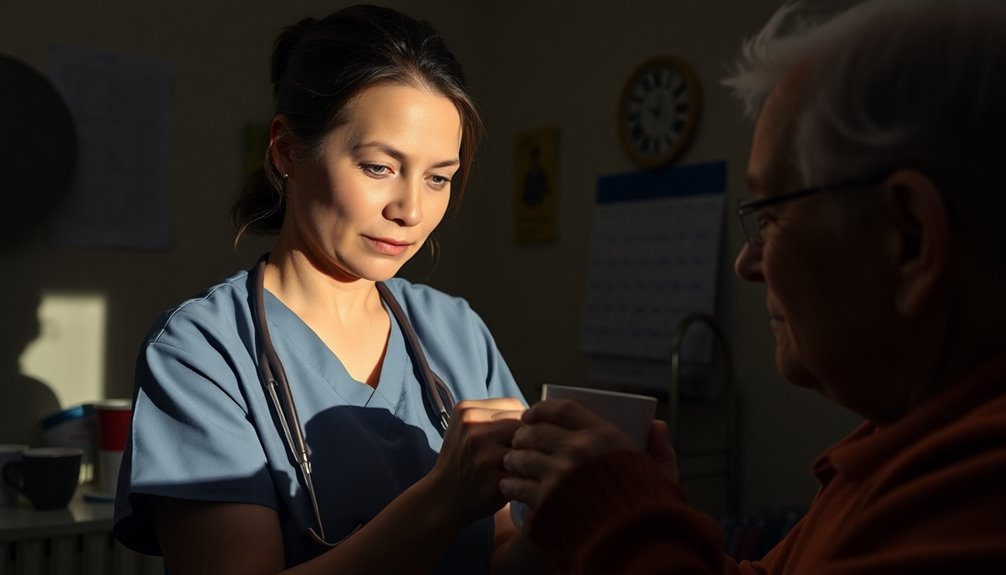
Taking on the role of a caregiver often brings immense emotional and physical challenges that can affect every aspect of life. You might find yourself battling high levels of emotional stress, with nearly 40% of caregivers experiencing symptoms of depression.
The physical demands can take a toll, leading to chronic health issues—about 20% of caregivers report a decline in their own health. Financial strain adds another layer of difficulty, as you may spend an average of $7,000 annually on caregiving-related expenses.
Burnout is a constant threat, with over 50% of family caregivers feeling overwhelmed. On top of that, balancing your caregiving responsibilities with work can lead to negative treatment at your job, compounding these challenges further.
Statistics on Caregiving

Statistics reveal the essential role caregivers play in our society. In 2020, around 53 million Americans provided unpaid care to an adult family member or friend, underscoring their importance in the healthcare system.
Family caregivers contribute an astonishing 17.4 billion hours of unpaid care each year, valued at over $200 billion. Yet, nearly 60% of these caregivers feel overwhelmed by their responsibilities, showing the emotional strain involved.
The demand for caregivers is expected to soar, with a projected 34% increase in home health and personal care aide jobs from 2019 to 2029. Significantly, women make up about 66% of family caregivers, often juggling these responsibilities alongside their own jobs and personal lives.
Resources for Caregivers

As a caregiver, you don't have to face your challenges alone.
Support groups offer a space to connect with others who understand your journey, while online educational resources provide valuable information to enhance your skills.
Together, these tools can make a significant difference in your caregiving experience.
Support Groups Availability
Although caregiving can often feel isolating, support groups provide an essential lifeline for those in this role. These groups create a crucial space for sharing experiences and receiving emotional support, which can greatly alleviate stress.
You'll find both local and online support groups, making them accessible no matter where you live. Research shows that participating in support groups can lead to better mental health, reducing anxiety and depression levels.
Many of these groups also offer valuable resources, like educational materials and workshops, to help you navigate caregiving challenges. Platforms such as social media and community centers host virtual support groups, allowing you to connect with others and share insights without any geographical constraints. Additionally, gaining insights into emotional regulation can empower caregivers to better manage their own emotional well-being while supporting those they care for.
Educational Resources Online
When you're steering through the challenges of caregiving, tapping into online educational resources can be a game-changer.
Platforms like the Family Caregiver Alliance and the National Alliance for Caregiving offer invaluable toolkits and guides to help you navigate your role. You can find free or low-cost online courses from community organizations covering essential topics like managing caregiver stress and understanding health conditions.
Additionally, many health organizations provide downloadable resources, such as checklists and care plans, that keep you organized and informed about your loved one's needs.
Virtual support groups and forums also connect you with others facing similar challenges, fostering a sense of community.
Embrace these educational resources to enhance your caregiving skills and well-being.
Synonyms and Related Terms

Understanding the terminology around caregiving is essential for recognizing the various roles involved. The terms "caregiver," "carer," and "caretaker" often get interchanged, but they have distinct meanings. Here's a quick comparison:
| Term | Definition | Context |
|---|---|---|
| Caregiver | Provides personal care to those in need | Emotional & physical |
| Carer | Commonly used in British English for caregiver | Personal support |
| Caretaker | Manages properties or facilities | Management & oversight |
While caregivers focus on emotional and physical support, caretakers are more about maintenance. Understanding these distinctions helps clarify the roles and responsibilities in caregiving, emphasizing their impact on the well-being of those they care for.
Frequently Asked Questions
Is Caregiver All One Word?
Yes, "caregiver" is all one word. This term describes someone who provides care to individuals in need, whether they're sick, disabled, or elderly.
It's important to recognize the emotional and physical support these individuals offer. While you might come across different terms like "carer" in British English, "caregiver" is the preferred term in American English.
Understanding this distinction can help you communicate more effectively in various contexts related to caregiving.
Should Caregiver Be Hyphenated?
You might think "caregiver" could be hyphenated, but that's not the case.
While "caretaker" has a long history with a hyphen, "caregiver" emerged in the mid-1970s as a closed compound word.
Hyphenating it as "care-giver" can confuse its meaning. Modern trends in English favor simplicity, and dictionaries confirm that "caregiver" is the accepted form.
Which Is Correct Caregiver or Caretaker?
When you're deciding between "caregiver" and "caretaker," it's crucial to understand their distinct meanings.
A caregiver provides emotional and physical support to individuals like the sick or elderly, while a caretaker manages properties or facilities.
You'll want to use "caregiver" when discussing someone who cares for a person and "caretaker" when referring to someone responsible for maintaining a place.
Knowing the difference helps you communicate more effectively in various contexts.
Is Care Taker One Word or Two?
Think of a superhero, always ready to help those in need.
When it comes to "care taker," you should know it's officially one word: "caretaker." This term has been recognized as a single entity for quite some time now.
If you're using it in writing, stick with "caretaker" instead of separating it into two words. It's the accepted form, and using it correctly shows your grasp of language.
Conclusion
In conclusion, being a caregiver is a significant and selfless role, filled with challenges and rewards. Whether you're providing personal care, emotional support, or simply companionship, your contribution is essential. Remember, you're not alone in this journey; resources and support systems are available to help you thrive. Stay strong, seek support, and savor the small victories along the way. Caregiving can be a challenging yet cherished chapter in your life's story.