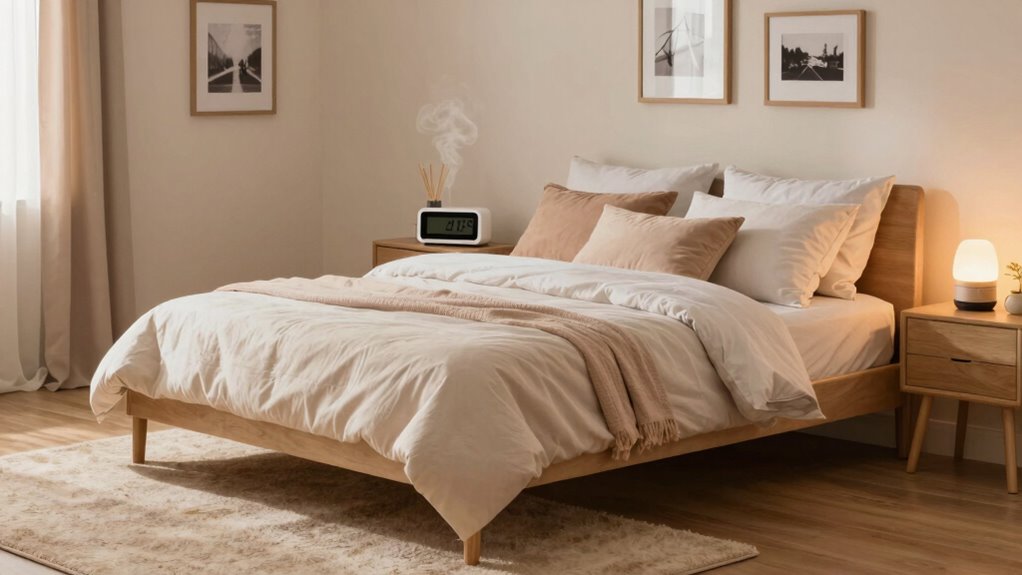

To set up a bedroom for a loved one with Alzheimer’s, start by evaluating safety needs like removing hazards, installing grab bars, and using nightlights. Design a calm, familiar space with soothing colors, clear pathways, and easy-to-reach items. Use simple signage and familiar decor to reduce confusion. Add safety features such as bed alarms and secure locks to prevent wandering. If you keep going, you’ll discover how to create a peaceful, secure environment that promotes comfort and independence.
Key Takeaways
- Use soft, soothing colors, gentle lighting, and familiar decor to create a calm, welcoming environment.
- Arrange furniture to ensure clear pathways, minimize clutter, and incorporate safety features like grab bars.
- Install nightlights, secure cords, and consider safety alarms to prevent falls and wandering.
- Label furniture, switches, and doors with simple, high-contrast signs for easy recognition.
- Keep essential items within reach, maintain a consistent routine, and incorporate personal belongings for comfort.
How to Assess Your Loved One’s Safety and Care Needs
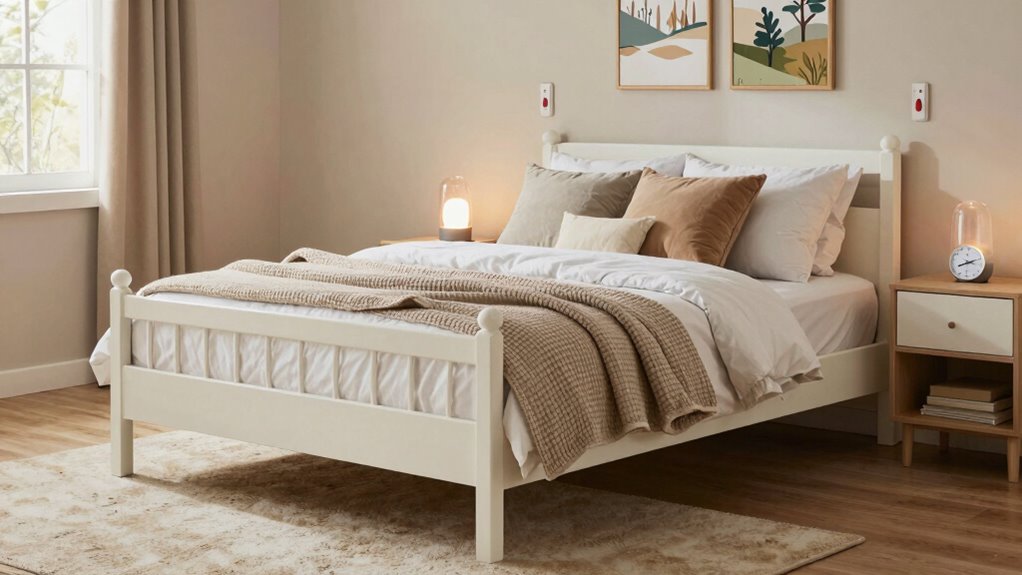
Before setting up a bedroom for your loved one with Alzheimer’s, it’s essential to evaluate their safety and care needs thoroughly. Start by assessing their medication management, ensuring medications are organized, accessible, and clearly labeled to prevent confusion or accidental overdose. Consider their daily routines and mobility limitations to identify potential hazards like loose rugs or sharp furniture edges. Support from caregivers is vital; involve family members or professional caregivers to gain insight into specific challenges and needs. This collaborative approach helps you determine safety modifications and care strategies, making the environment secure and comfortable. Additionally, understanding smart design principles can help create a space that adapts to evolving needs and promotes independence. Incorporating age-friendly home features can further enhance safety and accessibility, ensuring your loved one remains comfortable and secure. Being aware of home safety assessments can help you systematically address potential risks and improve the overall environment. Moreover, considering the horsepower of mobility aids or assistive devices can aid in selecting appropriate support tools for your loved one’s mobility. Recognizing the importance of environmental modifications ensures that adjustments are tailored to individual needs, enhancing safety and quality of life. By understanding these aspects upfront, you create a foundation that prioritizes your loved one’s well-being while easing your caregiving responsibilities.
Designing a Safe and Familiar Bedroom Layout
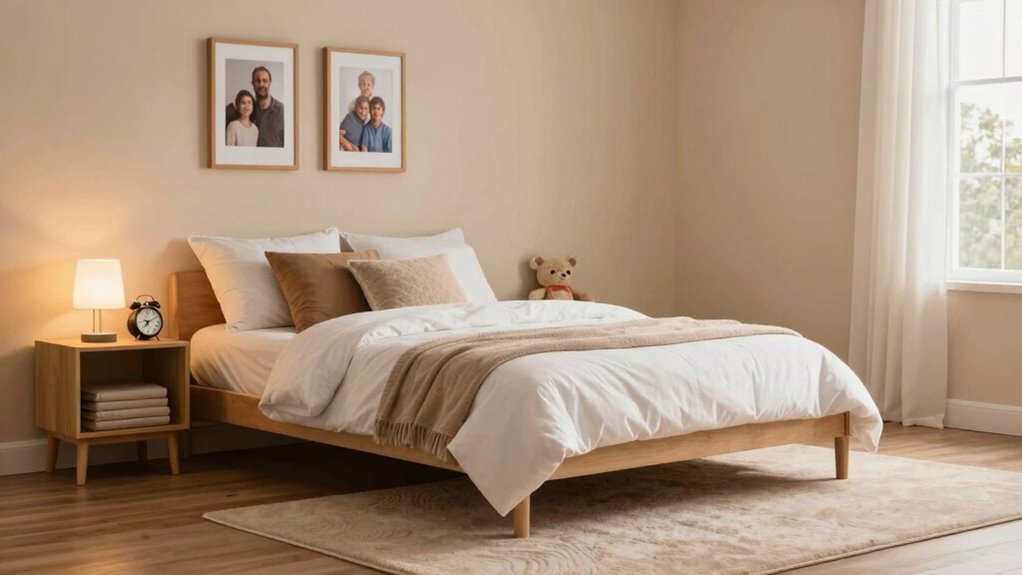
Creating a safe and familiar bedroom layout is essential for supporting your loved one’s independence and comfort. Focus on lighting design that minimizes shadows and glare, using soft, even lighting to reduce confusion and prevent falls. Keep light switches easily accessible and consider nightlights for added safety at night. Choose soothing color schemes with calming hues like soft blues, greens, or neutral tones to create a peaceful environment. Avoid overly bright or contrasting colors that might cause agitation. Arrange furniture to allow clear pathways and minimize clutter, making it easier for your loved one to move around confidently. Keep familiar items within reach and ensure the space feels warm and inviting. Incorporating sauna heaters and cold plunge systems can also promote relaxation and well-being in the bedroom environment. Being mindful of environmental modifications can further enhance safety and comfort for your loved one. Additionally, using appropriate lighting can significantly reduce shadows and improve visibility, further supporting a safe environment. Proper air quality is also crucial, as it can influence cognitive function and overall health. Maintaining good air circulation helps prevent the buildup of indoor pollutants that may impact health. A thoughtfully designed layout helps your loved one feel secure and at ease in their personal space.
Using Signage and Decor to Reduce Confusion
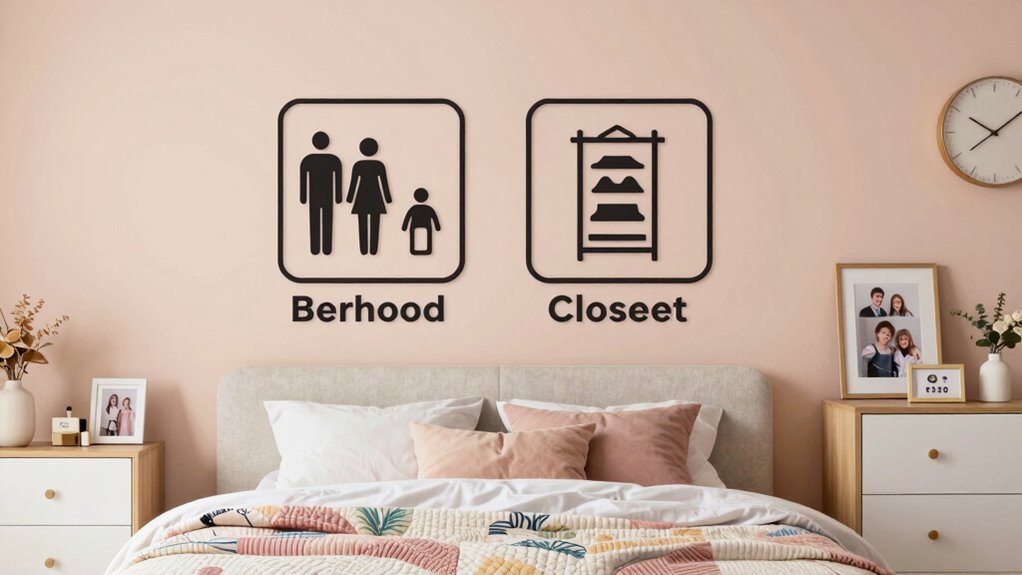
Using clear and consistent signage can markedly reduce confusion for a loved one with Alzheimer’s. Visual cues like simple labels on doors, drawers, and light switches help them recognize and navigate the space confidently. Incorporate personalized decor that reflects familiar images or colors, making the environment comforting and easily identifiable. For example, placing a framed photo or favorite artwork near the bed provides a visual anchor, reinforcing a sense of familiarity. Use bold, legible fonts and contrasting colors to ensure signs stand out and are easy to read. Consistency is key; keep signage in the same location and style to avoid creating new confusion. Incorporating visual organization such as familiar items or themes like trendy dog sweaters into the decor can add a sense of warmth and personality to the space. It’s also helpful to utilize memory aids like calendars or labeled cabinets to further support orientation. Utilizing assistive devices designed for dementia care can enhance safety and independence. These thoughtful visual cues and personalized decor create a calming atmosphere while promoting independence.
Adding Safety Features to Prevent Falls and Wandering
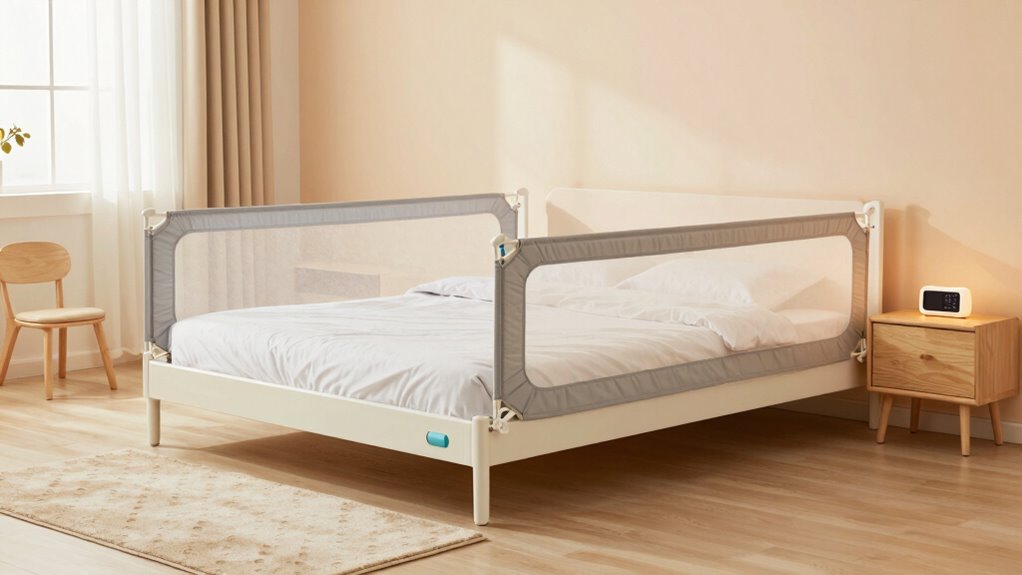
Incorporating safety features into the bedroom helps protect your loved one with Alzheimer’s from falls and wandering. Start by installing assistive technology, such as bed alarms or motion sensors, to alert you if they get up unexpectedly. Use door alarms or locks that are discreet but effective, preventing wandering while maintaining safety. Guarantee walkways are free of clutter and install grab bars near the bed and bathroom for extra support. Remember, caregiver support is vital—consider involving professionals to assess your loved one’s needs and recommend the best safety devices. Regularly check and maintain all safety features to assure they function properly. These measures create a safer environment, giving you peace of mind and helping your loved one stay secure. Creating a safe environment is essential for reducing risks and supporting independence. Additionally, understanding Alzheimer’s progression can help you anticipate and adapt safety measures over time. Staying informed about disease progression can help you plan ahead for potential safety challenges. Being aware of behavioral changes associated with Alzheimer’s can also guide you in modifying the environment appropriately. Furthermore, implementing security systems can enhance overall safety by providing remote monitoring capabilities.
Creating a Calm, Comfortable Bedroom Environment

A calm, comfortable bedroom can help soothe your loved one with Alzheimer’s and reduce anxiety. Use soft, warm color schemes like pastel blues or gentle greens to create a peaceful atmosphere. Incorporate decorative lighting, such as dimmable lamps or nightlights, to provide gentle illumination without startling your loved one. Keep clutter minimal and choose familiar, cozy bedding to promote comfort. Additionally, safety considerations are essential to ensure the environment remains secure and accessible. Incorporating environmental modifications can further support your loved one’s independence and safety within the space. Paying attention to lighting adjustments can help minimize confusion and disorientation, making the space more welcoming and easier to navigate. Using noise reduction techniques can also help create a more tranquil environment, minimizing auditory distractions that may cause agitation. Implementing these features with professional guidance can enhance safety and comfort for your loved one.
Frequently Asked Questions
How Can I Involve My Loved One in the Bedroom Design Process?
You can involve your loved one in the bedroom design process by discussing their preferences and incorporating personalized decor that reflects their personality. Take time to observe what colors, textures, or objects bring them comfort, and let them choose items like bedding or artwork. Engaging them in these decisions makes the space feel familiar and safe, helping them feel more comfortable and involved in their environment.
What Affordable Safety Modifications Are Most Effective?
An ounce of prevention is worth a pound of cure. To improve safety affordably, install grab bars near the bed and bathroom to prevent falls, and secure loose rugs or mats to avoid trips. Use nightlights to improve visibility at night, reducing fall risk. Keep medications out of reach to guarantee medication safety. These simple modifications create a safer environment, giving your loved one peace of mind and reducing hazards.
How Often Should I Update the Bedroom Environment?
You should update the bedroom environment regularly, about every few months, to accommodate your loved one’s changing needs and personal preferences. Keep seasonal adjustments in mind, such as adding warmer bedding in winter or brighter lighting in darker months. Regular updates guarantee safety, comfort, and familiarity, helping your loved one feel secure and at ease. Stay attentive to their behaviors and preferences, making adjustments as needed to support their well-being.
Are There Specific Colors or Lighting That Help Reduce Agitation?
You should use calming color schemes like soft blues, greens, or warm neutrals to help reduce agitation. Opt for ideal lighting choices, such as gentle, evenly distributed light, avoiding harsh or flickering bulbs. Natural light during the day can also be soothing. These adjustments create a peaceful environment, making your loved one feel more comfortable and less anxious, promoting better rest and overall well-being.
How Do I Balance Safety With Maintaining a Sense of Independence?
You balance safety with independence by choosing home décor that’s both secure and inviting, like furniture with rounded edges and clear pathways. Incorporate sensory stimulation through soft lighting, calming colors, and familiar objects to create a comforting environment. Use safety features subtly, such as door alarms or grab bars, so your loved one feels secure without feeling restricted. This approach encourages autonomy while prioritizing their safety and well-being.
Conclusion
Creating a safe and soothing bedroom for your loved one with Alzheimer’s is like planting a gentle garden—every element carefully chosen to nurture comfort and security. By evaluating needs, designing thoughtfully, and adding safety features, you turn their space into a sanctuary where confusion fades and peace blooms. Remember, your love is the guiding light that transforms this room into a warm embrace, helping them feel safe, understood, and at home every single day.