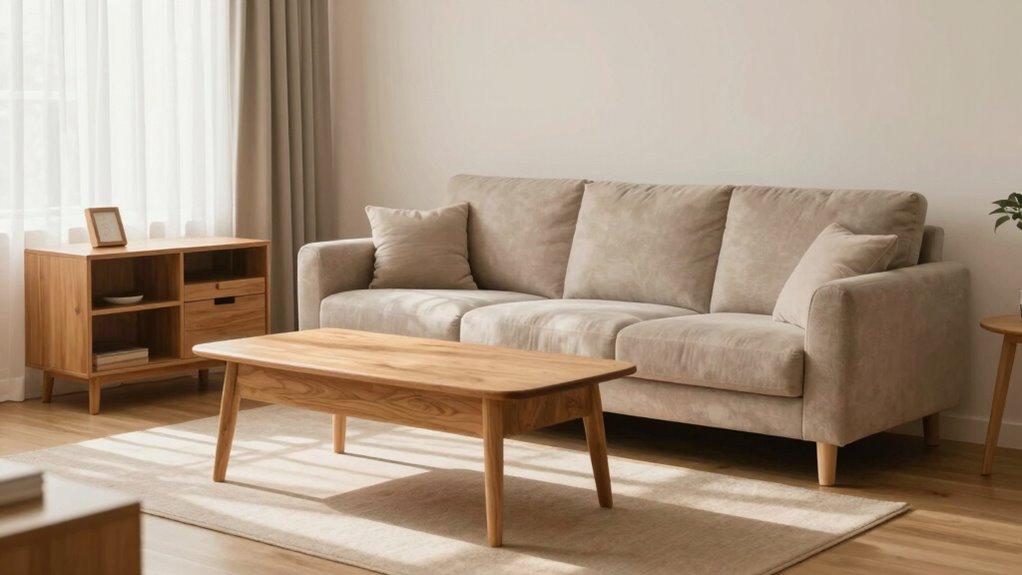
To reduce dementia confusion with furniture placement, create clear, unobstructed pathways by positioning furniture to foster familiarity and easy navigation. Use visual cues, landmarks, and contrasting colors that stand out, guiding your loved one safely through the space. Keep layouts simple and consistent across rooms, and avoid frequent rearrangements to build mental maps. Appropriately placed, sturdy furniture also supports independence. Continuing will help you discover more effective tips to enhance safety and orientation.
Key Takeaways
- Arrange furniture to create open, clear pathways that facilitate safe navigation and reduce confusion.
- Use consistent furniture placement and layout to help dementia patients recognize and remember their environment.
- Incorporate visual cues, such as contrasting colors and decorative accents, to serve as landmarks and orientation aids.
- Keep pathways unobstructed and well-defined with contrasting or lighter colors, guiding movement safely.
- Avoid frequent rearrangements, maintaining familiar furniture layouts to support mental mapping and reduce disorientation.
Why Proper Furniture Placement Is Key for Dementia Care
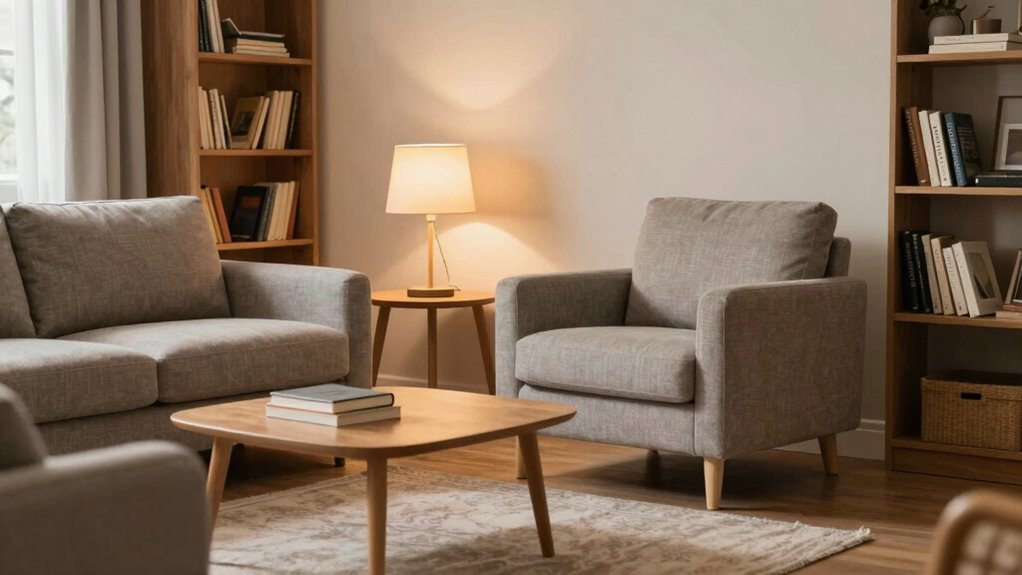
Proper furniture placement plays an essential role in creating a safe and supportive environment for individuals with dementia. Thoughtful arrangement helps reduce confusion and supports independence. Incorporate calming color schemes that are easy on the eyes, avoiding overly bright or contrasting hues that can be overwhelming. Use decorative accents sparingly but purposefully to provide visual cues, helping your loved one recognize key areas like seating or the bathroom. Position furniture to create open, clear pathways, but also consider how color schemes and accents can subtly guide navigation. These elements work together to foster a sense of familiarity and comfort. When you plan your space with intentional placement, calming colors, and meaningful decorative accents, you help minimize anxiety and promote a sense of security. Additionally, understanding the importance of environmental design can further enhance safety and comfort for those with dementia, especially when informed by principles like home theatre projector placement for optimal viewing and safety considerations. Incorporating smart layout strategies can also improve overall accessibility and ease of movement within the space. For example, incorporating essential oils known for their calming properties can also promote relaxation and reduce agitation in dementia patients. Paying attention to furniture ergonomics ensures that furniture is comfortable and easy for residents to use independently.
How to Create Clear Pathways to Reduce Confusion
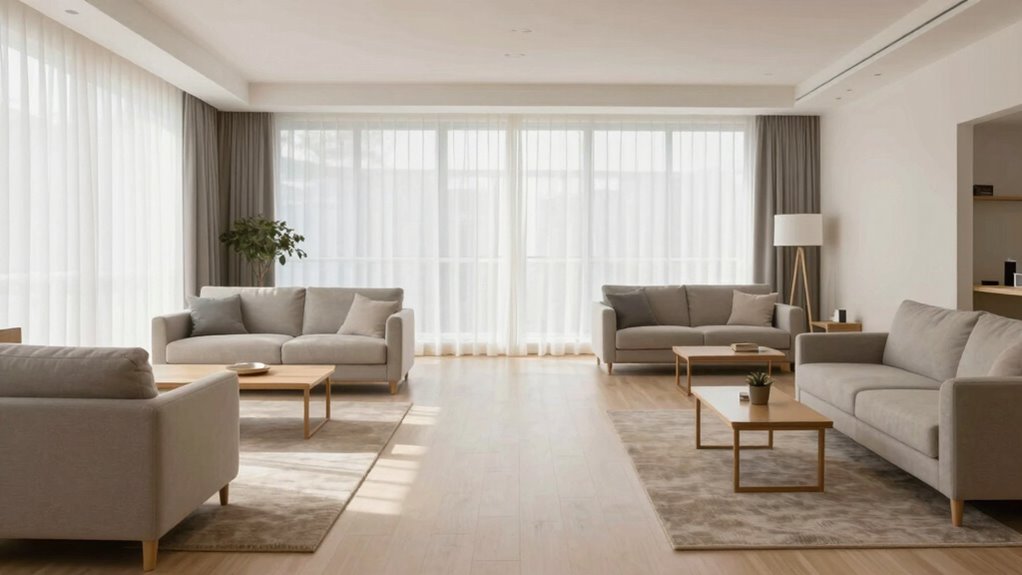
To reduce confusion, you should guarantee pathways are clear and easy to follow. Keep furniture layout consistent so residents recognize familiar routes, and remove any obstructions that could cause trips or hesitation. Clear, well-defined paths help residents navigate confidently and safely through their space. Incorporating consistent flight training costs can also help caregivers better understand the importance of planning for safe environments. Additionally, employing Free Floating principles in layout design can further enhance navigational clarity by allowing residents to recognize natural flow patterns without rigid structures.
Use Consistent Furniture Layout
Creating a consistent furniture layout helps residents navigate space more easily and reduces confusion. Keep furniture arrangements simple and predictable, avoiding frequent changes. Use decorative accents like lamps, rugs, or artwork to reinforce familiar patterns and create visual cues. Stick to cohesive color schemes throughout common areas to provide a sense of familiarity and stability. When furniture placement remains consistent, residents can recognize their surroundings more quickly, decreasing disorientation. Avoid cluttering pathways, and position key furniture pieces in the same spots to establish a familiar flow. This consistency supports independence and confidence, making daily routines smoother. Additionally, understanding home environment design principles can further enhance wayfinding and reduce confusion. Ultimately, a stable layout with thoughtful decorative accents and harmonious color schemes helps residents feel more secure and oriented in their environment.
Define Clear, Unobstructed Paths
Clear, unobstructed pathways are essential for helping residents move safely and confidently through their environment. To achieve this, keep furniture and decorative accents arranged to create smooth routes without clutter or hazards. Use color schemes to define pathways clearly—lighter shades or contrasting colors can highlight the walking areas and make them stand out. Avoid placing furniture or decorative items that block the way or cause confusion. Keep pathways wide enough for easy navigation, especially in high-traffic areas. Consistent, simple layouts help residents recognize routes quickly. Decorative accents should enhance the space without overwhelming it or creating visual confusion. By maintaining clear, open paths, you reduce the risk of falls and help residents feel more secure and independent.
Using Landmarks and Visual Cues to Help Navigation
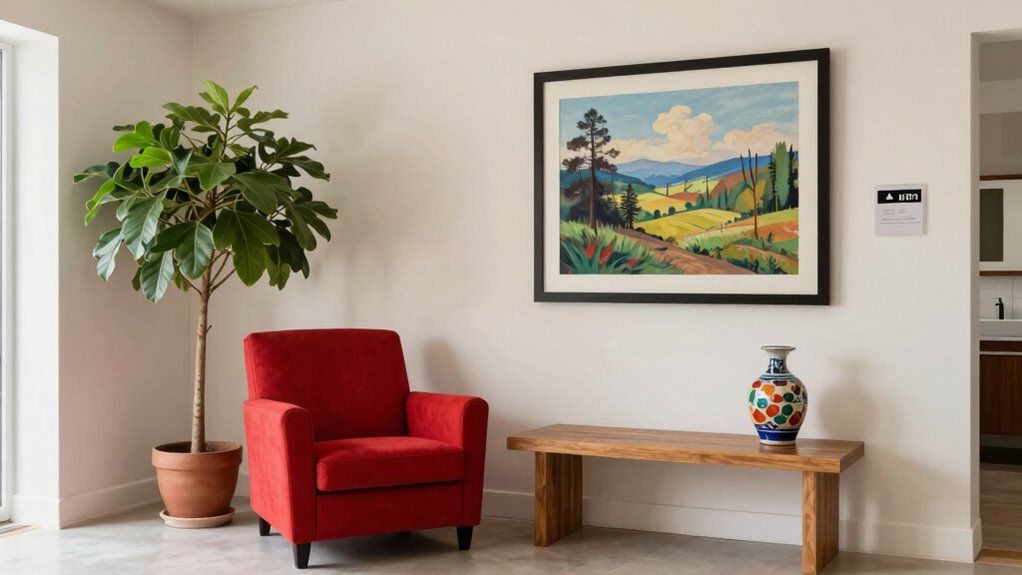
Using landmarks and visual cues can substantially improve navigation for someone with dementia. You should strategically place recognizable landmarks and keep visual pathways clear to guide movement smoothly. You can also incorporate educational resources to better understand the types of cues that are most effective. Consistent cues in each room help reinforce orientation and reduce confusion. Incorporating familiar kitchen tools and appliances as visual cues can also aid recognition and orientation within the space. Ensuring proper lighting and visibility enhances the effectiveness of these visual guides and minimizes disorientation. Additionally, understanding how spatial memory is affected can help in designing more effective visual cues. Recognizing how cognitive changes impact navigation allows for more tailored and supportive environment design.
Strategic Landmark Placement
Strategic placement of landmarks and visual cues can considerably improve navigation for individuals with dementia. Using decorative accents and distinct color schemes, you can create visual markers that are easy to recognize. Place decorative accents near doorways or hallways to signal *progression*, helping your loved one orient themselves. Bright, contrasting color schemes on walls or furniture serve as effective visual cues, guiding them toward key areas like the bathroom or kitchen. Consistent placement of landmarks reinforces mental maps, reducing confusion. Avoid clutter around these cues, ensuring they stand out clearly. The goal is to make navigation intuitive without overwhelming the senses. Thoughtful landmark placement helps your loved one find their way more confidently, fostering independence and reducing anxiety in everyday settings. Incorporating visual cues aligned with UST projector and ALR screen setups can enhance overall spatial awareness in multi-purpose living areas. Additionally, understanding how environmental design impacts cognitive function can guide you in creating safer, more navigable spaces. Recognizing the importance of security zone info can further optimize safety measures in these environments. Developing a comprehensive approach to risk management strategies ensures ongoing safety and adaptability. Implementing these strategies can also help establish stable environmental cues, providing additional support for orientation and safety.
Clear Visual Pathways
To help your loved one navigate more confidently, you can create clear visual pathways by strategically placing landmarks and cues along their route. Use color coordination to highlight key areas, making the path easily recognizable. Incorporate decorative accessories that stand out, such as vibrant cushions or artwork, to serve as visual anchors. Guarantee furniture and objects are arranged to avoid clutter, keeping pathways open and straightforward. Think about adding contrasting colors to doorways or hallways to guide their eye. These visual cues can reduce confusion and foster independence.
- Bright, contrasting colors on doors and walls evoke a sense of familiarity and safety
- Decorative accessories act as memorable landmarks in familiar spaces
- Clear pathways prevent accidental detours and confusion
- Thoughtful color coordination creates visual harmony and guidance
Consistent Room Cues
Establishing consistent room cues can substantially improve your loved one’s ability to navigate their space with confidence. Use clear landmarks and visual cues, such as a distinctive rug or artwork, to help them recognize different areas. Avoid distracting patterns on walls or floors, as these can cause confusion or disorientation. Keep cluttered spaces to a minimum, since excess objects can obscure important cues and create visual noise. Consistent cues create mental anchors, making it easier for your loved one to find their way and reduce anxiety. By simplifying visual elements and emphasizing familiar landmarks, you support independence and safety. Small adjustments, like using the same color for door frames or furniture, reinforce recognition and help prevent unnecessary confusion.
Choosing and Arranging Furniture to Keep Your Loved One Safe
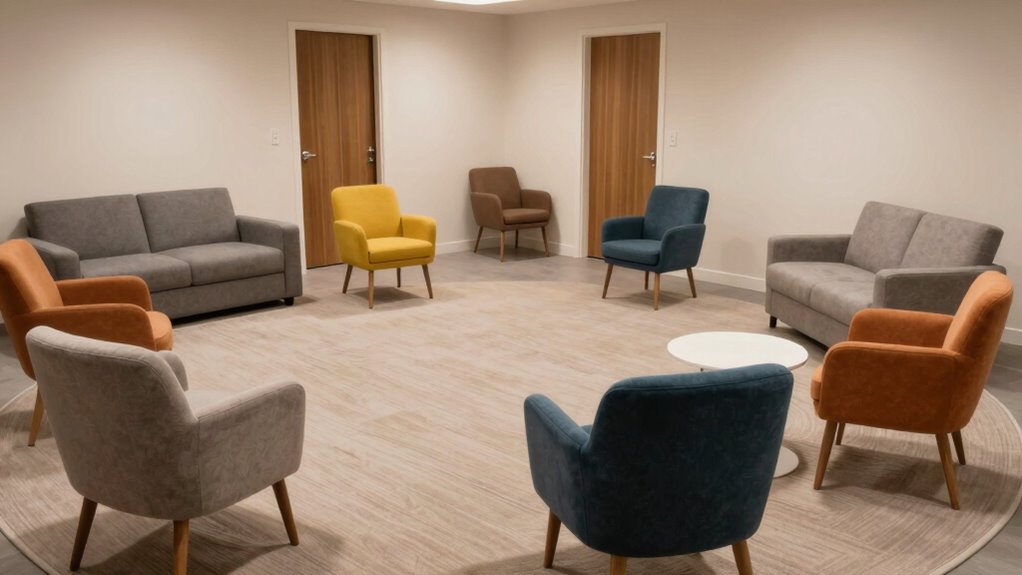
Choosing and arranging furniture thoughtfully is essential for creating a safe and comfortable environment for your loved one with dementia. You want to minimize confusion and prevent accidents by selecting sturdy, well-placed pieces that promote independence. Use artificial lighting to eliminate shadows and dark corners, reducing fear and disorientation. Keep decorative accessories simple and secure to avoid clutter that can cause trips or visual overload. Position furniture to create clear, unobstructed pathways, guiding your loved one safely through the room. Remember, small changes can make a big difference in safety and comfort. Incorporating filtration and airflow considerations into your space can also help improve overall well-being for your loved one. Additionally, optimizing air quality can reduce irritants that may contribute to agitation or discomfort.
Simplify Room Layouts to Minimize Overwhelm
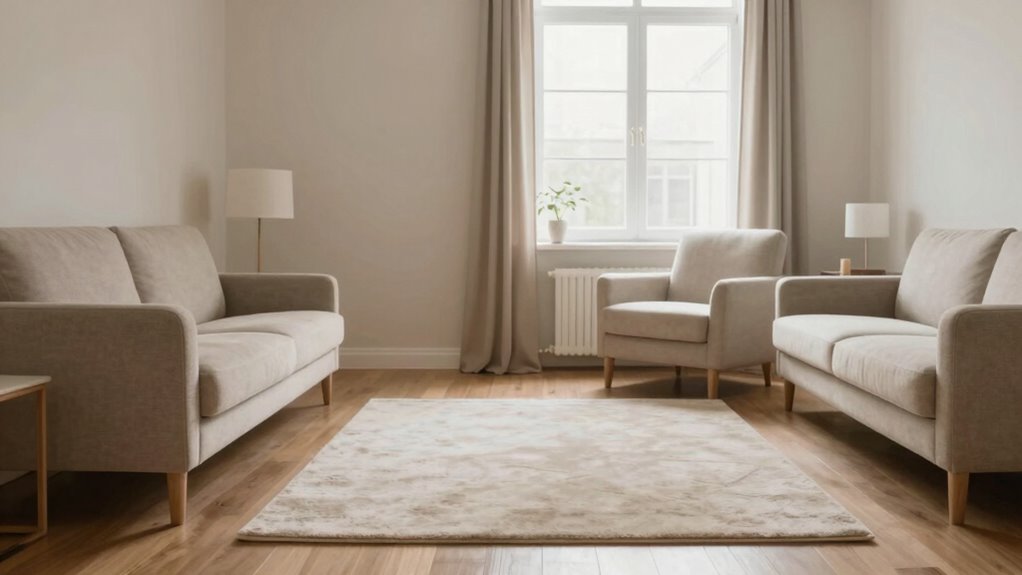
Simplifying room layouts can substantially reduce the sense of chaos for someone with dementia. Keep pathways clear and furniture arrangements straightforward to prevent confusion. Limit decorative accessories that can distract or overwhelm, focusing instead on essential items. Use consistent artificial lighting to create a calm, well-lit environment, avoiding harsh shadows or flickering lights that can cause disorientation. Position lighting fixtures strategically to illuminate key areas without overwhelming the space. Clear signage or subtle cues can also help orient your loved one. Removing clutter and unnecessary furniture makes the room less intimidating and easier to navigate. Additionally, implementing visual cues can further support orientation and independence. Incorporating sensory considerations based on the person’s preferences can also enhance their comfort and familiarity. Establishing a predictable environment by streamlining the layout and controlling lighting and decorations creates a more reassuring space that minimizes feelings of overwhelm and helps maintain their independence and confidence. Incorporating familiar objects can also promote a sense of security and recognition within the space.
Essential Furniture Pieces to Help With Orientation
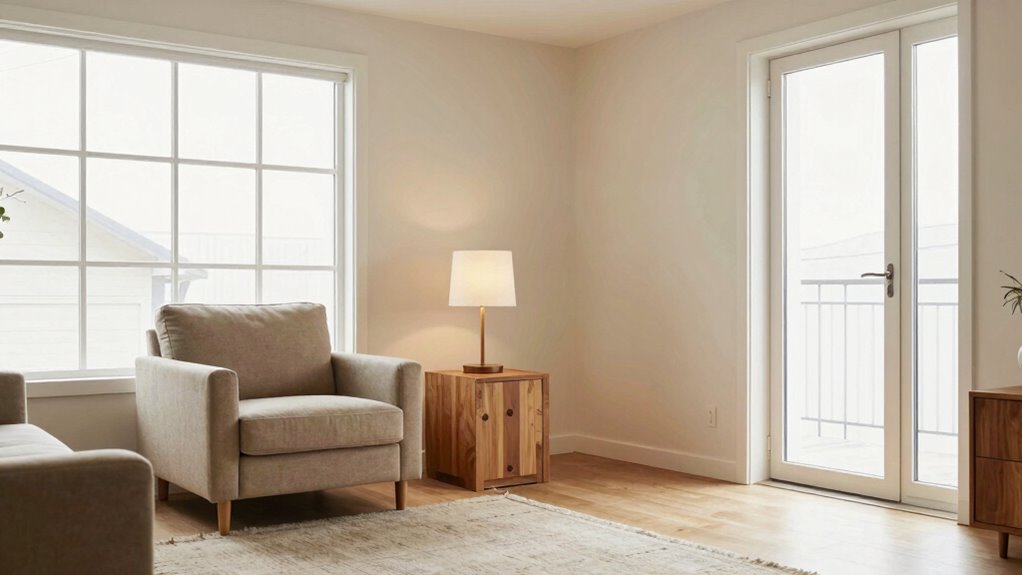
To support orientation in a dementia-friendly space, selecting the right furniture pieces is essential. These pieces help create familiar, inviting environments that reduce confusion. Consider a sturdy, clearly labeled armchair or recliner, providing a designated spot for relaxation. Incorporate low, accessible tables with decorative accessories like photos or cherished items to evoke comfort and recognition. Use artificial lighting strategically—warm, consistent lighting minimizes shadows and enhances visibility. A console or sideboard can serve as a visual anchor, helping residents locate key areas. Additionally, choosing furniture with lightweight design can facilitate easier movement and rearrangement as needed. These furniture pieces, paired with thoughtful lighting and meaningful accessories, foster a sense of familiarity and orientation, making daily navigation easier and less stressful for individuals with dementia.
Maintaining Consistency in Furniture Placement Across Rooms
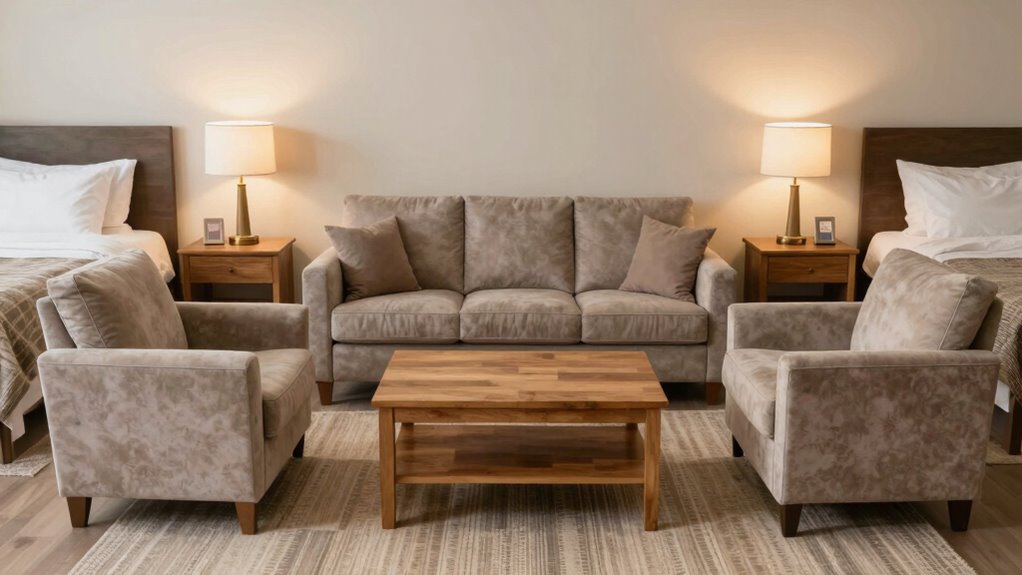
Maintaining consistency in furniture placement across rooms helps residents develop mental maps of their environment, reducing confusion and anxiety. When furniture and decor, like decorative accents, stay in familiar locations, residents can more easily recognize spaces and navigate confidently. Keep color schemes consistent throughout different areas to reinforce familiarity and avoid disorientation. For example, using similar tones for seating areas or wall decorations helps create a cohesive environment. Avoid moving furniture around frequently, as it can disrupt mental cues. Use decorative accents strategically to mark specific zones, but ensure they remain in the same position. Consistency in layout and style helps residents feel more secure and oriented, minimizing unnecessary confusion and promoting independence.
Adjusting Furniture Setup as Dementia Progresses
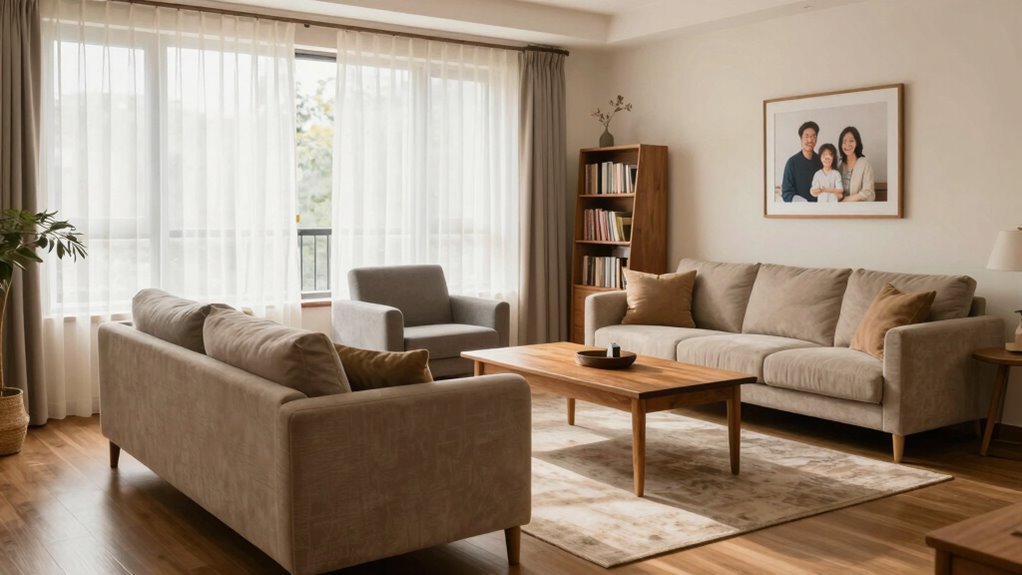
As dementia progresses, it’s important to modify furniture arrangements to support changing needs and safety concerns. You might need to rearrange furniture to prevent falls or confusion, ensuring pathways are clear and accessible. Adjusting dining etiquette can involve simplifying table setups and choosing comfortable furniture upholstery that’s easy to clean. Be attentive to signs your loved one needs more support, such as difficulty steering or increased agitation.
- Create designated areas for meals to reduce confusion and promote independence
- Use contrasting colors to prevent accidental bumps or falls
- Replace fragile or slippery furniture with stable, cushioned options
- Keep frequently used items within easy reach to minimize frustration and risk
Common Mistakes to Avoid When Arranging Furniture for Dementia
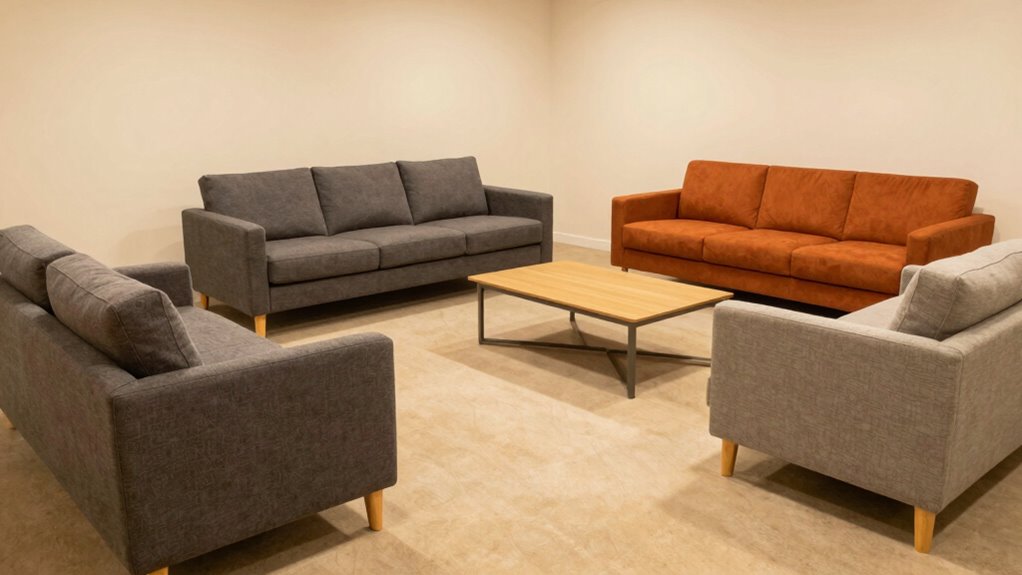
When rearranging furniture for someone with dementia, it’s easy to overlook common pitfalls that can unintentionally increase confusion or safety risks. One mistake is relying solely on decorative accents that aren’t functional or that create visual clutter, which can be confusing. Avoid using artificial lighting that’s too harsh or uneven, as poor lighting can cause disorientation or shadows that look like obstacles. Keep pathways clear and simple, steering clear of overly complex furniture arrangements. Also, don’t place items at confusing heights or positions that require effort to navigate. Using excessive decorative accents can distract or overwhelm, so choose functional, familiar pieces instead. Careful planning minimizes hazards, promotes comfort, and creates an environment that supports independence for someone with dementia.
Frequently Asked Questions
How Often Should Furniture Arrangements Be Reassessed for Dementia Patients?
You should reassess furniture arrangements for dementia patients at least every three to six months. Regular furniture maintenance and keeping the layout consistent help reduce confusion and promote comfort. Changes might be needed if the patient’s condition evolves or if safety concerns arise. By maintaining a predictable environment, you support their orientation and independence, ensuring the space remains functional and reassuring. Regular reviews help you adapt to their changing needs effectively.
Can Furniture Placement Influence Mood and Behavior in Dementia Care?
Think of furniture placement as your own personal Siren’s song, guiding mood and behavior. You can influence emotions by using color contrast and texture cues, creating calming or stimulating environments. Proper placement reduces frustration, encourages independence, and fosters positive interactions. When you strategically position furniture, you help dementia patients feel more secure and content, much like how a well-tuned orchestra creates harmony—making daily life smoother and more joyful.
Are There Specific Colors or Textures That Enhance Navigation Cues?
You should use high color contrast for navigation cues, like pairing dark furniture with light walls, to make key areas stand out. Tactile surfaces, such as textured rugs or door handles, also help residents recognize and navigate spaces more easily. Combining these elements creates clear visual and tactile signals, reducing confusion and promoting independence. This thoughtful approach supports their orientation and helps them feel more secure in their environment.
How Do I Balance Safety and Comfort in Furniture Choices?
Did you know that ergonomic design can considerably reduce falls in dementia patients? To balance safety and comfort, choose furniture with rounded edges and stable structures, ensuring safety without sacrificing aesthetic appeal. Prioritize ergonomic design to support proper posture and ease of movement, while selecting pieces that blend seamlessly with your décor. This approach helps create a space that feels welcoming and secure, promoting independence and peace of mind.
What Are Cost-Effective Ways to Update Furniture for Dementia-Friendly Living?
To update your furniture affordably for dementia-friendly living, consider DIY solutions like adding high-contrast tape or colorful edging to edges and handles for better visibility. You can also repurpose or refurbish existing furniture with paint or new cushions to create a safer, more comfortable environment. Look for secondhand pieces or clearance sales to find affordable upgrades. These simple, cost-effective changes make your space safer and more navigable for someone with dementia.
Conclusion
Think of your home as a gentle, guiding river for your loved one. By carefully arranging furniture, you’re creating calm currents that lead them safely through each room. With clear pathways and familiar landmarks, you help reduce confusion and foster confidence. Your thoughtful setup acts as a steady boat, steering them smoothly through daily life. Keep the course consistent and simple—because a well-arranged home is your loved one’s safe harbor amid the flow of dementia.