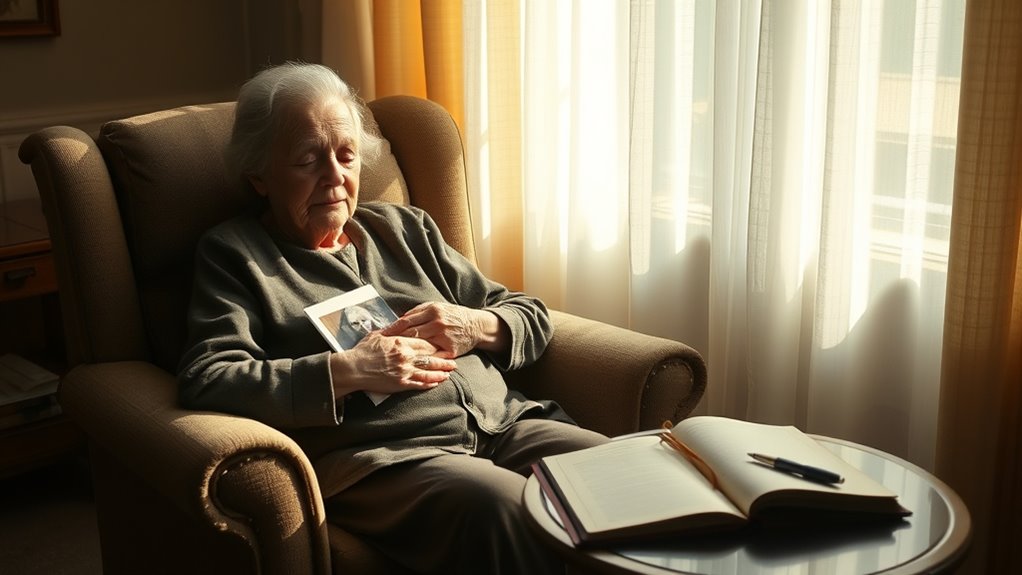

To handle regrets and unresolved issues at end of life, focus on honest reflection and open communication with loved ones. Share your feelings, express gratitude, and seek reconciliation to find emotional closure. Consider documenting your values and stories through legacy planning, which can bring peace and clarity. Addressing these aspects helps you embrace your final journey with acceptance and calm. Exploring more ways to achieve closure can guide you toward a meaningful end-of-life experience.
Key Takeaways
- Engage in honest conversations with loved ones to express feelings, seek forgiveness, and find emotional clarity.
- Reflect on life experiences to identify unresolved issues, then work toward accepting and releasing lingering regrets.
- Document personal stories, values, and wishes to create a meaningful legacy that offers closure for both you and your loved ones.
- Practice self-awareness and self-compassion, acknowledging emotions without judgment to foster peace and acceptance.
- Proactively plan practical arrangements, including estate and legacy planning, to reduce uncertainty and leave a lasting positive impact.

Have you ever wondered what it truly means to face the end of life with peace? It’s a question many people grapple with, especially when unresolved issues and lingering regrets weigh heavily on their minds. Achieving emotional closure becomes essential in these moments, allowing you to accept your life’s journey and find a sense of calm. You might start by reflecting on your experiences, relationships, and the things you wish you’d done differently. Addressing these feelings head-on helps prevent regret from fester and gives you the clarity needed to move forward.
Facing life’s end with peace begins with honest reflection and embracing unresolved feelings.
One powerful way to find emotional closure is through honest conversations with loved ones. Whether it’s sharing feelings, expressing gratitude, or seeking forgiveness, opening up creates an atmosphere of understanding and healing. These dialogues can bridge gaps, resolve misunderstandings, and provide a sense of peace that’s crucial during this stage of life. If direct communication feels too difficult or impossible, writing letters or notes can serve as a meaningful alternative. Putting your thoughts into words helps you process emotions and offers your loved ones insight into your perspective, easing their own sense of closure.
Alongside emotional closure, legacy planning becomes a vital component of handling unresolved issues. It’s not just about having a will or estate plan; it’s about intentionally shaping how you’ll be remembered. Taking the time to document your values, life lessons, and hopes for those you leave behind can provide a lasting sense of purpose. This process allows you to pass on meaningful stories, traditions, or beliefs that define who you are. In doing so, you create a legacy that transcends material possessions, offering your loved ones comfort and guidance long after you’re gone.
By actively engaging in legacy planning, you also confront any lingering regrets about unfulfilled dreams or unfinished business. You can set intentions for the future, ensuring your wishes are known and respected. This proactive approach can lessen feelings of guilt or regret, replacing them with a sense of accomplishment and peace. It’s about leaving behind something of value—be it wisdom, love, or memories—that affirms your life’s significance.
Ultimately, facing the end of life involves confronting both emotional and practical issues. Cultivating emotional closure through honest dialogue and meaningful legacy planning empowers you to let go of regrets, resolve unresolved issues, and embrace the remaining days with serenity. Additionally, understanding the importance of estate planning and its role in achieving peace can help you feel more prepared for this stage. It’s a gift you give yourself and your loved ones, ensuring that your life’s story concludes on a note of peace and fulfillment.
Frequently Asked Questions
How Can I Forgive Myself for Past Regrets?
You can forgive yourself by practicing self-forgiveness techniques like writing a letter to yourself or reframing negative thoughts. Focus on emotional healing by acknowledging your feelings without judgment and understanding that everyone makes mistakes. Take small steps to let go of regret, remind yourself of your growth, and be patient. Over time, these actions help you find peace and develop compassion for yourself.
What Resources Are Available for Unresolved Family Conflicts?
You can explore family therapy and mediation services to resolve unresolved family conflicts. Family therapy offers a safe space to discuss issues openly and work toward understanding. Mediation services facilitate constructive conversations, helping everyone find common ground. These resources empower you to address conflicts proactively, fostering healing and stronger relationships. Reach out to local mental health clinics or community centers to access these valuable options and begin repairing your family dynamics.
How Do I Communicate My End-Of-Life Wishes Effectively?
Imagine your wishes as a lighthouse guiding loved ones through fog. To communicate effectively, draft advance directives and a living will that clearly state your preferences. Share these documents openly with family and healthcare providers, ensuring everyone understands your guidance. Keep conversations ongoing, updating your wishes as needed, so your intentions remain a steady beacon even in life’s stormiest moments.
Can Unresolved Issues Be Truly Resolved Before Death?
Unresolved issues can often be addressed enough to provide emotional closure before death, but complete resolution may not always be possible. You can focus on acceptance strategies, like open communication and forgiveness, to find peace. By doing so, you create a sense of closure that eases regrets. Remember, the goal isn’t perfection but progress toward understanding and acceptance, helping you and your loved ones feel more at peace.
How Do I Handle Regrets About Unspoken Words or Feelings?
You can handle regrets about unspoken words or feelings by seeking emotional closure through honest reflection and forgiving yourself. Practice acceptance strategies like writing a letter you don’t send or speaking to a trusted friend or counselor. These steps help you release lingering guilt, allowing you to find peace. Focus on acknowledging your emotions and understanding that closure often comes from within, not necessarily from others.
Conclusion
As you stand at the crossroads of life’s sunset, remember that unresolved issues are like shadows lingering in the fading light. You have the power to let go of regrets, clearing the path ahead. Embrace forgiveness and closure as guiding stars, illuminating your journey. When you release what’s held you back, you open your heart to peace. In doing so, you transform your twilight into a dawn, where tranquility and acceptance shine brightest.