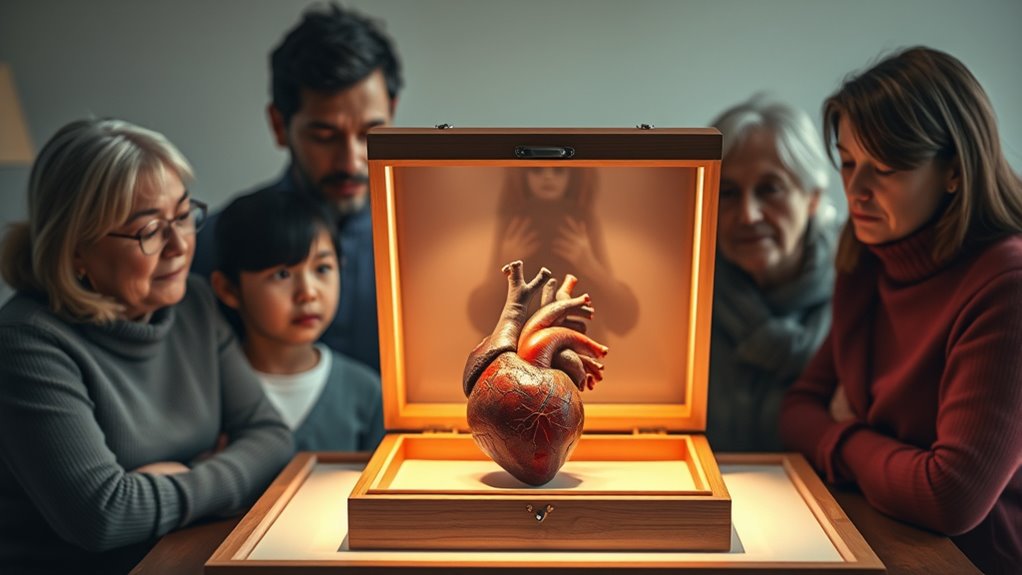

When considering organ or body donation, it’s important to understand ethical, cultural, and legal aspects. You should discuss your loved ones’ wishes and beliefs beforehand to respect their values. Be aware of the consent process and legal documentation to avoid confusion. Recognize how cultural or religious views may influence decisions and guarantee transparency with medical teams. To make the best choice for your family, familiarize yourself with these key factors—more helpful information awaits.
Key Takeaways
- Understand ethical, cultural, and religious beliefs to ensure donation aligns with family values and personal wishes.
- Clarify legal consent procedures and document donation preferences to prevent misunderstandings.
- Discuss with loved ones beforehand to respect their autonomy and address potential concerns.
- Recognize the importance of transparency and following ethical guidelines during the donation process.
- Consider the impact of donation on grieving and how it can provide meaningful comfort and purpose.

Organ and body donation save lives and advance medical science, making them powerful acts of generosity. When you consider donation, it’s natural to face some complex questions. One of the most significant aspects you’ll need to navigate involves ethical dilemmas. You might wonder about the morality of deciding who receives your loved one’s organs or whether it’s appropriate to consent on their behalf if they haven’t expressed clear wishes. These dilemmas can be challenging, especially when balancing respect for the deceased’s autonomy with the potential to save others’ lives. It’s important to understand that medical professionals follow strict ethical guidelines to guarantee decisions are made with integrity, and open conversations with your family can help clarify your loved one’s values and preferences.
Cultural considerations also play a vital role in the donation process. Different cultures and religious beliefs have varying views on body integrity after death, which can influence decisions about donation. Some traditions emphasize keeping the body intact for spiritual reasons, while others may see donation as a generous act aligned with their faith’s teachings. It’s essential to respect these cultural considerations, both for your family’s peace of mind and to honor your loved one’s beliefs. Many hospitals and donation organizations are sensitive to these cultural nuances and endeavor to accommodate diverse perspectives. Discussing these topics beforehand—whether through family conversations, religious leaders, or cultural elders—can help you make informed decisions that align with your values. Additionally, understanding the ethical guidelines that govern donation practices can provide reassurance that decisions are made responsibly and ethically.
You should also consider legal and logistical factors. Understanding the consent process, whether through an organ donor registry or a designated legal document, guarantees that your wishes are clear and legally binding. Some families find it helpful to document their loved one’s donation preferences explicitly, which can prevent uncertainty or disagreement later. Additionally, knowing what to expect during the donation process can ease anxiety. Medical teams work to handle donations respectfully, preserving the dignity of the deceased while maximizing the potential to help others.
In the end, becoming informed about ethical dilemmas and cultural considerations enables you to approach donation with confidence. It helps you respect your loved one’s wishes, honor your cultural values, and contribute to a cause that saves lives. Having these conversations and making thoughtful decisions now can bring peace to your family during a difficult time, knowing you’ve done something truly impactful.
Frequently Asked Questions
Can I Change My Mind After Registering for Donation?
Yes, you can change your mind after registering for donation. Consent flexibility allows you to update your decision at any time, ensuring your wishes are respected. If you choose to reconsider in the future, you can usually revoke or modify your registration through the same organization or registry. It’s important to communicate your current preferences clearly, so your future reconsideration is honored, making sure your donation wishes remain aligned with your choices.
Are There Any Religious Restrictions on Donation?
Think of religious beliefs as a guiding compass, shaping your choices about donation. Most major faiths support organ and body donation, viewing it as an act of compassion and charity. However, spiritual considerations vary; some traditions may have specific rituals or restrictions. It’s essential to discuss your beliefs with your spiritual advisor to guarantee your donation aligns with your faith, giving you confidence that your decision honors your spiritual values.
How Does Donation Impact Funeral Arrangements?
Donation usually doesn’t interfere with funeral arrangements. During funeral planning, you can coordinate donation procedures with the organ procurement organization, ensuring minimal disruption. The body may be taken for donation before the funeral, but you can still plan a viewing or traditional service afterward. It’s important to communicate your wishes clearly so that funeral arrangements align with your family’s needs and respect the donation process.
What Happens if the Family Disagrees With the Donor’s Decision?
Did you know that nearly 60% of families face disagreements over donation decisions? If your family disagrees with your loved one’s choice, family consent becomes essential. Laws vary by state, but legal disputes can delay or prevent donation. Open communication before death helps, yet if disagreement persists, the decision may fall to legal authorities or guardians. Knowing these factors empowers you to advocate for your loved one’s wishes confidently.
Is There Compensation or Financial Benefit for Donating Organs or Body?
There’s no financial incentive or compensation for donating organs or your body, as it’s illegal in most places. The legality of compensation varies, but generally, organ donation is based on altruism, not financial gain. You won’t receive money or benefits, and efforts focus on saving lives through voluntary donations. So, if you’re considering donation, know that it’s a generous act driven by compassion, not compensation.
Conclusion
Deciding on organ and body donation is a profound choice that can save lives or advance medical research. While some believe the body must remain intact for spiritual reasons, recent studies suggest that donation doesn’t hinder funeral plans or respect for loved ones. Ultimately, understanding the facts helps you make an informed decision. By considering both emotional and scientific perspectives, you ensure your legacy supports healing and hope for others.