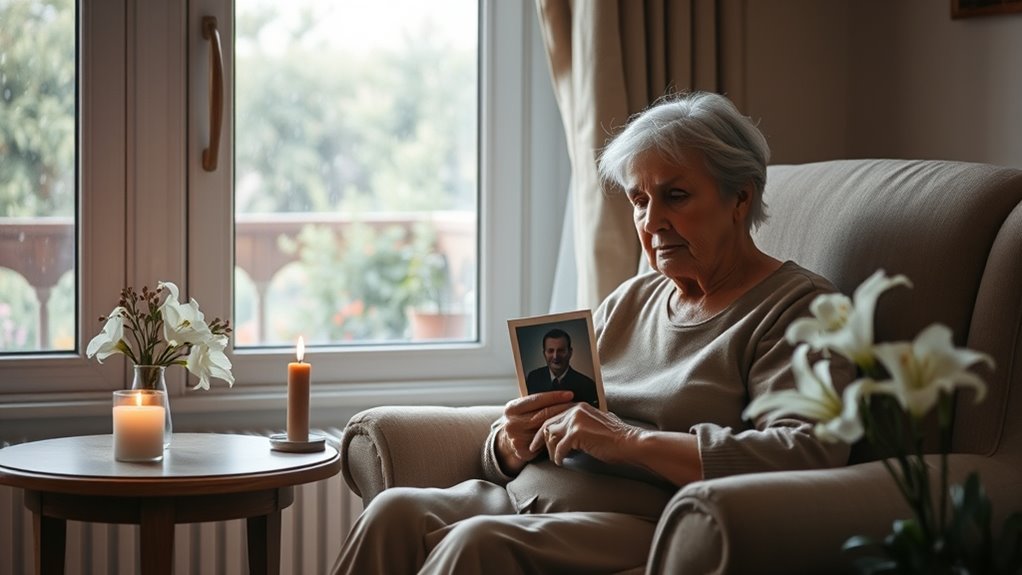

Supporting yourself after a loved one’s death involves prioritizing your emotional healing by reaching out to community resources like support groups, counseling, or spiritual organizations. Sharing your feelings and connecting with others helps reduce isolation and fosters understanding. Remember to care for your physical health through nourishing foods, rest, and gentle activities. Over time, this support guides you toward acceptance and hope, and with continued effort, you’ll discover more tools to help you navigate your loss.
Key Takeaways
- Prioritize emotional healing by seeking support from community groups, counseling, and spiritual organizations.
- Share your feelings in safe spaces to reduce isolation and foster understanding.
- Engage in physical self-care, such as rest, nourishing foods, and gentle activities, to strengthen emotional resilience.
- Utilize local resources like workshops and bereavement programs to aid in processing grief.
- Practice patience and allow yourself time for acceptance, understanding that healing is a non-linear journey.
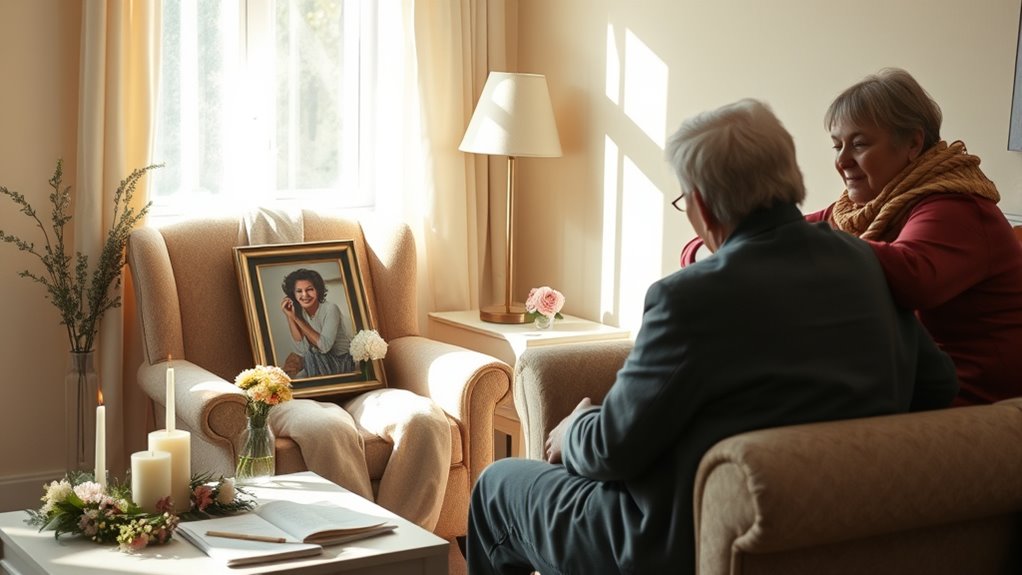
Losing a loved one is an overwhelming experience, and as a caregiver, you often put your own needs aside to support others. It’s natural to be consumed by grief, responsibility, and the demands of helping those around you. But in these moments, it’s essential to prioritize your emotional healing. Grief can feel isolating, but remember, you don’t have to navigate it alone. Community resources are there to help you process your emotions and find support. Local support groups, counseling services, and spiritual organizations can provide a safe space for you to express your feelings and connect with others who understand what you’re going through. Reaching out to these resources isn’t a sign of weakness; it’s a critical step toward healing.
You might find that sharing your experience in a support group allows you to release pent-up emotions and gain perspective. These groups often consist of individuals who have faced similar losses, which can create a comforting sense of solidarity. Professional counselors or therapists specializing in grief can also guide you through your emotional journey, helping you confront complex feelings like guilt, anger, or sadness. Remember, healing isn’t linear, and it’s okay to have good days and bad days. The key is to be gentle with yourself and accept that your emotions are valid.
Sharing your story in support groups offers comfort and perspective during grief.
Taking care of yourself physically also plays a pivotal role in emotional recovery. Ensure you’re eating nourishing foods, getting enough rest, and engaging in gentle activities that bring you peace. Sometimes, simply walking outside or practicing mindfulness can help you reconnect with your feelings and find moments of calm amid chaos. Additionally, investing in appropriate coping strategies**** such as mindfulness or journaling can further support your emotional resilience. As you work through your grief, consider integrating community resources into your routine. Many organizations offer workshops, bereavement counseling, or spiritual guidance tailored for caregivers coping with loss. These services can equip you with coping strategies and help you feel less isolated in your journey.
In time, you’ll begin to see moments of acceptance and even hope. Support from community resources can be a key bridge to emotional healing, helping you process your pain and rebuild your strength. Don’t hesitate to lean on these tools—they’re there for your well-being. Remember, caring for yourself isn’t selfish; it’s necessary so you can move forward and honor your loved one’s memory while continuing to live your life with resilience.
Frequently Asked Questions
How Can I Manage My Own Grief While Caring for Others?
You can manage your grief by practicing self-care strategies like taking breaks, staying connected with friends, and allowing yourself to feel your emotions. Set emotional boundaries to prevent burnout, letting others support you without feeling overwhelmed. Remember, it’s okay to ask for help and prioritize your well-being. By caring for yourself, you’ll be better equipped to support others while steering through your own grief.
What Legal Steps Should I Take After a Loved One’s Death?
After a loved one’s death, you should start by securing legal documentation like the death certificate and reading their will. Contact an estate planning attorney to help you navigate probate and other legal steps. Make sure to notify banks, insurance companies, and government agencies. Taking these steps guarantees the estate is settled properly and protects your loved one’s wishes, easing your burden during this difficult time.
Are There Specific Resources for Caregivers From Diverse Backgrounds?
Yes, there are resources tailored for caregivers from diverse backgrounds. You can find organizations that respect cultural traditions and offer services in multiple languages to bridge language barriers. Look for local community centers, cultural organizations, or faith-based groups that provide support, counseling, and information sensitive to your cultural needs. These resources help you navigate grief while honoring your traditions, ensuring you get the understanding and assistance you deserve.
How Do I Handle Financial Responsibilities Following a Death?
When handling financial responsibilities after a death, you should review estate planning documents and update beneficiaries. Focus on managing outstanding bills, taxes, and insurance policies. Create a financial plan to organize assets and expenses, and consider consulting a financial advisor for guidance. Staying organized and proactive helps you navigate this difficult time, ensuring you meet obligations while honoring your loved one’s wishes.
When Should I Seek Professional Mental Health Support?
Your heart pounding like a drum signals it’s time to seek professional mental health support. If you notice emotional warning signs such as persistent sadness, overwhelming anxiety, or intrusive thoughts, don’t wait for the storm to pass on its own. Therapy options like counseling or support groups can provide relief. Reach out now—your mental well-being is essential, and professional help can guide you through even the darkest moments.
Conclusion
Remember, you’re not alone in this journey. Nearly 60% of caregivers report feeling overwhelmed after losing someone they cared for, highlighting how common these feelings are. Seeking support can make a real difference, helping you navigate grief and find healing. Take small steps each day, reach out when needed, and trust that with time, you’ll find your way through this difficult period. Support is here for you—don’t hesitate to accept it.