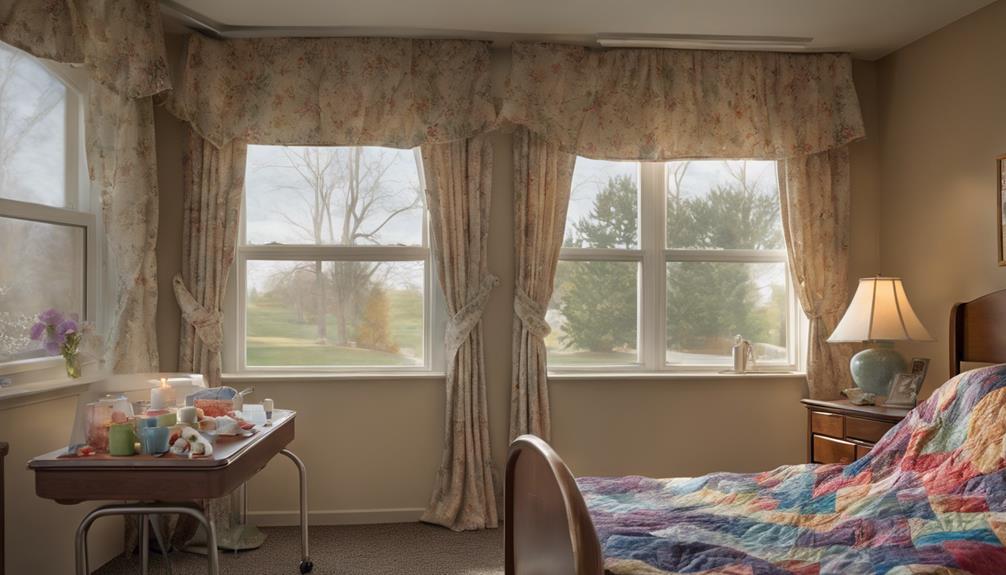

To address restlessness and insomnia in palliative dementia care, collaborate with healthcare providers to review and adjust medications, avoiding sedatives that may worsen symptoms. Create a calm, predictable environment by dimming lights, reducing noise, and maintaining routines that foster security. Use gentle activities before bedtime, ensure a comfortable sleep setting, and consider sensory cues like calming scents. Combining these strategies can improve comfort and sleep quality; persist in exploring effective approaches tailored to your situation.
Key Takeaways
- Collaborate with healthcare providers to review and adjust medications, minimizing sedatives and ensuring optimal dosing for sleep.
- Create a calming environment with dim lighting, reduced noise, and consistent routines to reduce agitation and promote restful sleep.
- Incorporate environmental modifications like night lights and sensory activities such as indoor gardening to enhance comfort and reduce confusion.
- Establish a predictable bedtime routine with calming activities, limiting stimulating stimuli and encouraging relaxation before sleep.
- Combine medication management with environmental and behavioral strategies to improve sleep quality and reduce restlessness effectively.

Restlessness and insomnia are common challenges faced by caregivers and individuals with dementia, often disrupting daily routines and quality of life. When these issues arise, it’s essential to approach them systematically, focusing on both medication management and environmental modifications. Proper medication management involves working closely with healthcare providers to review current medications, ensuring none contribute to agitation or sleep disturbances. Sometimes, adjusting dosages or switching medications can markedly improve sleep quality and reduce restless behaviors. Avoiding unnecessary sedatives is imperative, as they can cause daytime drowsiness or increase fall risk, so a tailored plan that balances benefits and side effects is best. Regular monitoring and communication with medical professionals ensure that medication use remains ideal, effective, and safe.
Alongside medication, environmental modifications can play a critical role in calming agitation and promoting restful sleep. Creating a soothing, predictable environment helps reduce confusion and anxiety that often trigger restlessness. Dimming lights in the evening, reducing noise levels, and minimizing clutter can help establish a calming atmosphere. Installing night lights can provide enough illumination for safe movement without causing overstimulation, and maintaining a consistent daily routine helps the individual feel more secure and less disoriented. It’s also helpful to avoid stimulating activities close to bedtime, like loud conversations or television, which can interfere with sleep. Consider using calming scents such as lavender or gentle background sounds like soft music or white noise to promote relaxation. Incorporating specialized indoor gardening with low-maintenance planters might also contribute to a peaceful environment, offering a calming activity and sensory stimulation.
You should also pay attention to the person’s sleep environment—ensure the bed is comfortable, and the room temperature is kept moderate. Limiting daytime naps can help consolidate nighttime sleep, but ensure they’re brief and occur early in the day. If restlessness persists, engaging the individual in calming activities before bed, like gentle stretching or reading, can ease the transition into sleep. Consistency is key here; sticking to a routine helps establish a sense of stability, which is often disrupted in dementia. Remember, every person responds differently, so it might take some experimentation to find what works best. Combining medication management with strategic environmental modifications creates a thorough approach, helping to reduce agitation, improve sleep, and ultimately enhance both your quality of life and that of your loved one.
dementia sleep aid products
As an affiliate, we earn on qualifying purchases.
As an affiliate, we earn on qualifying purchases.
Frequently Asked Questions
What Are Alternative Non-Pharmacological Interventions for Agitation?
You can try non-pharmacological interventions like music therapy and aromatherapy to reduce agitation. Playing calming music helps soothe the mind, while aromatic oils like lavender promote relaxation. These approaches create a peaceful environment, helping to calm restless patients. Incorporate gentle, familiar sounds and pleasant scents into their routine, ensuring comfort and reducing agitation naturally without medication.
How Can Family Caregivers Effectively Manage Nighttime Wandering?
You can tame nighttime wandering like a skilled conductor guiding an orchestra by incorporating music therapy and sensory stimulation. Play calming music or use gentle lights to create a soothing environment, making it almost impossible for your loved one to feel lost or restless. Consistent routines and safe spaces also help, ensuring they feel secure and less inclined to wander. Your attentive care transforms chaos into calm, restoring peaceful nights.
Are There Specific Dietary Adjustments to Improve Sleep Quality?
You can improve sleep quality by adjusting your loved one’s diet with nutritional timing and sleep-promoting foods. Offer a light, carbohydrate-rich snack an hour before bedtime to boost serotonin production, helping them relax. Include foods like bananas, cherries, or warm milk, which contain natural sleep aids. Avoid caffeine and heavy meals close to bedtime. These dietary changes support better rest and reduce nighttime restlessness in dementia patients.
What Signs Indicate Medication Side Effects Related to Restlessness?
Like a storm brewing on the horizon, medication side effects can signal trouble ahead. Watch for signs such as increased agitation, confusion, or unusual movements—these may indicate adverse reactions. You should consider medication interactions and consult healthcare providers for dosage adjustments promptly. Recognizing these cues early helps prevent escalation, allowing you to manage the situation calmly and keep your loved one comfortable and safe.
How Does Environmental Modification Reduce Insomnia in Dementia Patients?
You can reduce insomnia in dementia patients by modifying the sleep environment and providing sensory stimulation. Creating a calming, consistent sleep environment minimizes disruptions, helping patients feel secure. Incorporate gentle sensory stimulation like soft lighting, soothing sounds, or aromatherapy to promote relaxation. These changes help regulate sleep patterns, decrease restlessness, and improve overall sleep quality, making it easier for patients to fall asleep and stay asleep through the night.
calming scents for dementia
As an affiliate, we earn on qualifying purchases.
As an affiliate, we earn on qualifying purchases.
Conclusion
As you navigate the challenges of palliative dementia care, remember that addressing restlessness and insomnia isn’t just about immediate relief. There’s always more to uncover—new strategies, deeper understanding, and unexpected insights waiting just beyond what you see. Stay attentive, stay compassionate. Because in this delicate balance, the next breakthrough might be closer than you think, ready to transform your approach—and ultimately, the lives of those you care for. The next step could change everything.
night lights for dementia patients
As an affiliate, we earn on qualifying purchases.
As an affiliate, we earn on qualifying purchases.
white noise machine for sleep
As an affiliate, we earn on qualifying purchases.
As an affiliate, we earn on qualifying purchases.