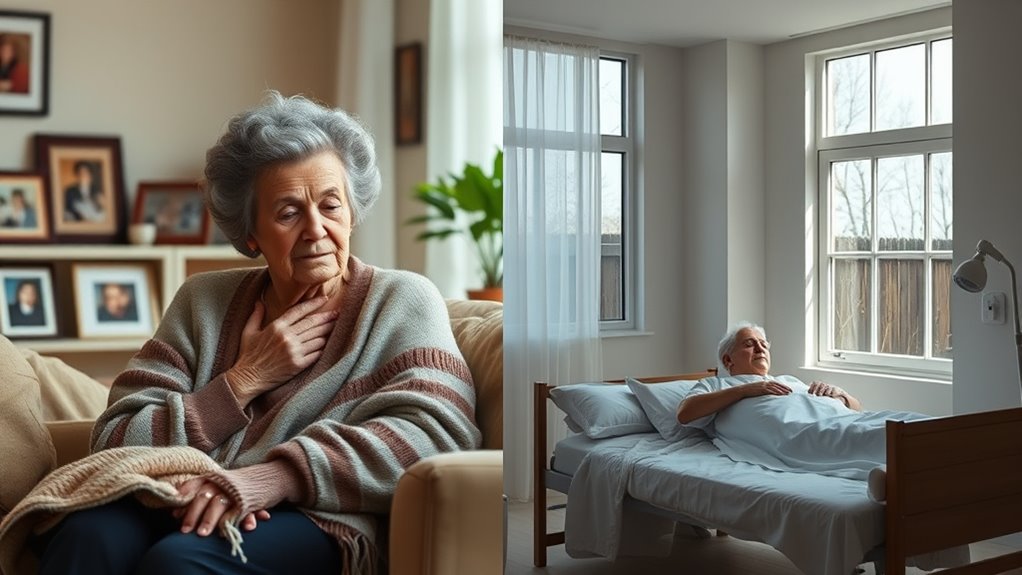

Early palliative care in dementia starts soon after diagnosis or when daily functioning declines, focusing on symptom relief, emotional support, and improving quality of life alongside ongoing treatments. Hospice, on the other hand, generally begins in later stages when curative options no longer work, prioritizing comfort and dignity in end-of-life care. Understanding these differences can guide your choices for the right support at each stage—more details will help you make informed decisions.
Key Takeaways
- Early palliative care begins soon after diagnosis to improve quality of life, while hospice starts in late stages when curative treatments stop.
- Palliative care is integrated alongside ongoing therapies; hospice focuses solely on comfort and end-of-life support.
- Palliative care manages symptoms and provides emotional support throughout illness; hospice emphasizes physical comfort and emotional care at the end.
- Timing influences care goals: early palliative care aims to enhance daily living, hospice prioritizes dignity in final days.
- Understanding these differences ensures appropriate care planning aligned with patient needs and disease progression.

When managing advanced dementia, understanding the differences between early palliative care and hospice can considerably impact quality of life for patients and their families. These two approaches aim to improve comfort and address emotional needs, but they serve different purposes and are introduced at different stages of illness. Recognizing these distinctions helps you make informed decisions that align with your loved one’s needs and values.
Early palliative care is typically introduced soon after a dementia diagnosis or when the disease begins to substantially affect daily functioning. Its focus is on enhancing quality of life by managing symptoms such as pain, agitation, and difficulty swallowing. It also emphasizes emotional support, ensuring that both patients and families feel heard and cared for throughout the disease progression. The goal is to address physical discomfort while providing psychological and spiritual assistance, helping families cope with the emotional toll of dementia. Because it’s initiated early, palliative care can be integrated alongside curative treatments or ongoing therapies, providing a supportive layer that improves overall well-being over time. Track development is crucial for creating a cohesive and compassionate care plan that adapts to the patient’s evolving needs.
Hospice, on the other hand, generally begins when the patient’s decline indicates that curative treatments are no longer effective, and the focus shifts entirely to comfort. It’s usually introduced in the later stages of dementia, when the patient’s prognosis suggests limited life expectancy. In hospice care, the primary aim is to ensure the highest quality of life in the remaining days, emphasizing symptom relief and emotional support. While hospice can provide exhaustive physical comfort, its approach often involves a transition where curative efforts are minimized or stopped altogether. This stage of care is about dignity, comfort, and addressing emotional needs, both for the patient and loved ones, as they prepare for the inevitable.
Understanding the differences enables you to advocate for the appropriate level of care at each stage. Early palliative care offers ongoing emotional support that can reduce feelings of helplessness and anxiety, helping families navigate the complexities of dementia with compassion. Hospice, meanwhile, provides specialized comfort-focused care when curative options are exhausted, ensuring that the patient’s remaining days are as comfortable and meaningful as possible. Both approaches prioritize quality of life and emotional support, but the timing and scope differ. Recognizing these distinctions empowers you to make choices that honor your loved one’s dignity, comfort, and emotional well-being throughout the journey of dementia.
Frequently Asked Questions
How Early Should Palliative Care Be Introduced for Dementia Patients?
You should introduce palliative care early in the disease progression, ideally soon after diagnosis. Timing considerations are vital because early intervention helps manage symptoms, improve quality of life, and support families. Don’t wait until the patient’s condition becomes severe; starting early ensures you address physical, emotional,, and psychological needs throughout the dementia journey, making a significant difference in care and comfort as the disease advances.
Can Patients Receive Both Palliative Care and Hospice Simultaneously?
Yes, you can receive both palliative care and hospice simultaneously, like a gentle hand guiding you through a calm, supportive journey. This allows for complementary care, addressing ongoing needs while focusing on comfort. Care coordination guarantees seamless shifts, so your loved one’s comfort and dignity are prioritized. Combining these services provides an all-encompassing approach, helping ease suffering and enhance quality of life during difficult times.
What Are the Costs Differences Between Early Palliative Care and Hospice?
You’ll find that the cost comparison between early palliative care and hospice varies. Generally, hospice tends to be more cost-effective because it’s designed for end-of-life care, with billing often covered by Medicare or Medicaid, including most services and medications. Early palliative care may incur higher costs initially since it’s provided alongside curative treatments, but billing differences can depend on your insurance plan and specific services involved.
How Do Family Members Decide Between Palliative Care and Hospice Options?
You decide between palliative care and hospice by considering your loved one’s needs and wishes. Engage in open caregiver communication and seek emotional support from healthcare providers and support groups. Ask about the level of comfort, symptom management, and goals of care. If your loved one’s condition is declining, hospice might be appropriate, but early palliative care offers ongoing support while focusing on quality of life.
Are There Legal or Insurance Considerations for Choosing Palliative Care or Hospice?
Legal insurance and coverage options play a vital role in your decision between palliative care and hospice. You should review your insurance policies to understand what services are covered, including medications, therapies, and support. Some plans may have specific requirements or limitations for hospice or palliative care. Consulting with your insurance provider can clarify legal and financial considerations, ensuring you choose the best option that aligns with your coverage and needs.
Conclusion
Understanding the difference between early palliative care and hospice in dementia can feel like steering a maze. You now see how starting palliative care early can give your loved one comfort and dignity while hospice provides specialized end-of-life support. Remember, it’s better to be safe than sorry—acting sooner rather than later ensures you’re making the best choices for their quality of life. Don’t wait until it’s too late; knowledge is your best tool in this journey.