
TL;DR

Turn quiet afternoons into listening time
- Thousands of audiobooks, podcasts and originals
- Listen on your phone, tablet or Echo — also offline
- Cancel anytime
This article offers evidence-based strategies for mothers to reconnect with and love their breasts post-breastfeeding. It emphasizes self-care practices like massage, updating bras, and dressing to celebrate body changes.
Many women experience a shift in their relationship with their breasts after breastfeeding, often feeling disconnected or critical of their changed appearance. This article presents proven methods for mothers to reconnect with and love their breasts again, emphasizing self-care and body appreciation.
Research indicates that breast massage can help women physically reconnect with their breasts and promote breast health. A study published in the Journal of Women’s Health suggests that massage can reduce tension and foster positive body awareness. Additionally, wearing well-fitting, supportive bras can improve comfort and confidence, with experts recommending proper measurement to ensure a good fit. Dressing in styles that accommodate body changes also helps women feel more comfortable and confident in their skin. These practices are supported by health professionals and body positivity advocates as effective ways to nurture a positive body image after breastfeeding.
While these strategies are widely recommended, individual experiences vary. Some women may find emotional challenges in accepting their post-breastfeeding bodies, and mental health support can be beneficial. There is also ongoing research into the long-term physical effects of breast changes post-lactation, but current evidence supports the benefits of self-care routines for emotional and physical well-being.
How To Love Your Boobs Again After Breastfeeding
Your breasts may feel softer, smaller, fuller, less symmetrical, or simply unfamiliar after lactation. Reconnection is not about restoring an old body. It is about meeting your current body with comfort, curiosity, and respect.
Build comfort from the body outward
Physical changes after pregnancy and breastfeeding are common. These practices can reduce discomfort and help replace criticism with attentive, neutral body awareness.
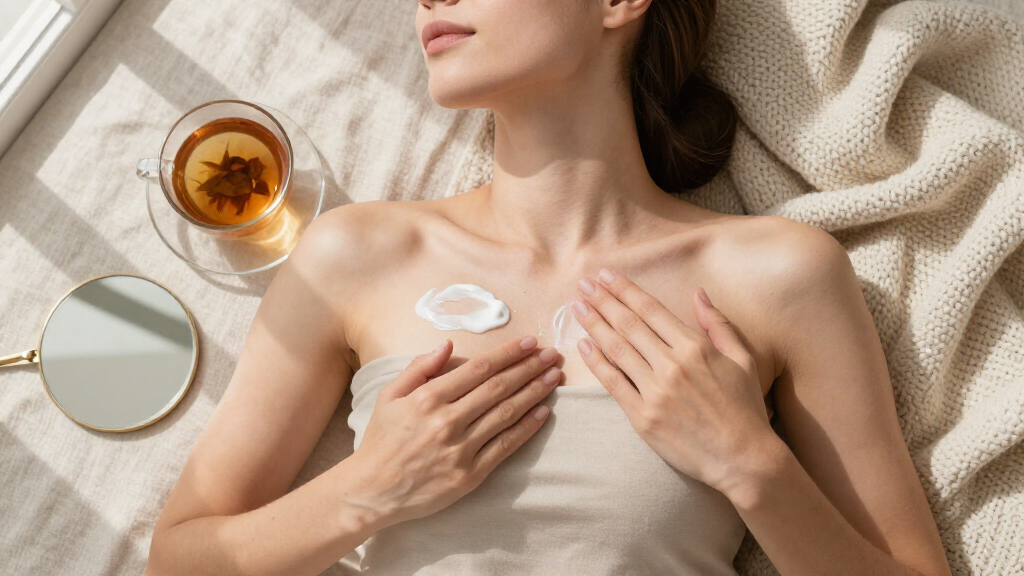
Gentle breast massage
With clean hands and light pressure, notice temperature, texture, comfort, and sensation without judging appearance. Stop if touch is painful. Massage is a self-awareness practice, not a treatment for unexplained symptoms.
Update your bra fit
Re-measure both band and cup size after breastfeeding. Look for a level band, contained breast tissue, straps that do not dig, and cups without gaps or overflow. Comfort is more useful than the number on the label.
Dress your current shape
Retire the expectation that old clothes must still work. Explore necklines, fabrics, structure, and layering that feel good now. A garment should adapt to your body; your body does not need to earn the garment.
From unfamiliar to understood
Body acceptance often develops through repeated, low-pressure experiences. Neutrality is a meaningful destination when immediate body love feels unrealistic.
Name what is different without labeling it good or bad.
Choose soft touch, a better fit, and clothes that move easily.
Remember function, history, sensation, and personal identity.
Let confidence grow through consistent, compassionate choices.
What each practice can—and cannot—do
No routine guarantees a particular breast shape or emotional response. Choose practices for comfort and connection, and involve a qualified professional when symptoms or distress persist.
| Practice | May improve comfort | May support body awareness | Changes breast shape | Best next move |
|---|---|---|---|---|
| Gentle massage | ✓ Often | ✓ Potentially | ✗ Not reliably | Use light pressure and stop with pain. |
| Professional bra fitting | ✓ Often | ~ Indirectly | ✗ No | Recheck fit as your body settles. |
| Body-friendly styling | ✓ Often | ✓ Potentially | ✗ No | Prioritize ease, expression, and fit. |
| Counseling or peer support | ~ Emotional | ✓ Strong focus | ✗ No | Seek body-image-informed support. |
Evidence is still developing on long-term outcomes; emotional responses and physical changes vary widely.
Aim for choices you can control
The strongest everyday levers are not promises to reverse change. They are practical ways to improve comfort, reduce comparison, and create a kinder relationship with your body.
Everyday usefulness
A qualitative guide to where each strategy tends to offer the most direct benefit—not a clinical effectiveness score.
Quick answers
Yes. Loss, pride, relief, frustration, and gratitude can coexist.
No. Support comes from fit and construction, not one required style.
Try body neutrality: “This is my body today, and it deserves care.”
Reach out when distress is persistent, intrusive, or changing how you eat, dress, socialize, or relate to yourself.
Small actions can rebuild trust
The goal is a reinforcing cycle: notice what you need, respond with care, experience more comfort, and build a more accepting internal narrative.
A primary-care clinician, gynecologist, breast specialist, lactation professional, therapist, or qualified bra fitter can help with concerns that self-care alone cannot resolve.
Body-positive groups and post-breastfeeding communities can reduce isolation, normalize mixed emotions, and offer practical strategies without demanding instant acceptance.
Seek medical assessment for a new or persistent lump, skin dimpling, unexplained nipple discharge, redness, warmth, fever, significant swelling, or pain that does not resolve. Avoid massage over an acutely painful or inflamed area until you receive clinical advice.
Impact of Self-Care on Post-Breastfeeding Body Image
This matters because many women struggle with body image after breastfeeding, which can affect self-esteem and mental health. Engaging in supportive practices like massage, proper fitting, and dressing to honor current body shapes can foster acceptance, improve well-being, and promote a positive relationship with one’s body during a pivotal life stage.breast massage tools for post-breastfeeding recovery
As an affiliate, we earn on qualifying purchases.
As an affiliate, we earn on qualifying purchases.
Breast Changes and Emotional Well-Being Post-Breastfeeding
Breasts undergo significant physical changes during pregnancy and lactation, often resulting in sagging, size variations, and altered sensation. Many women report feelings of grief or dissatisfaction with these changes, which can impact their self-esteem. Experts note that societal pressures often emphasize a certain ideal body image, making acceptance more challenging. However, health professionals increasingly advocate for body positivity and self-care routines to help women embrace their post-breastfeeding bodies.
Previous studies have shown that physical practices like massage can improve breast health and body awareness. The cultural shift towards body acceptance supports women in redefining their relationship with their bodies beyond appearance, focusing instead on functionality and personal meaning.
“Breast massage can be a powerful tool for women to reconnect physically and emotionally with their bodies after breastfeeding. It promotes self-awareness and body positivity.”
— Dr. Emily Carter, Breast Health Specialist
Long-Term Effects of Post-Breastfeeding Body Changes
While current evidence supports the benefits of self-care practices like massage and proper fitting, long-term studies on their impact on body image and physical health are limited. It remains unclear how these routines influence emotional well-being over extended periods, and individual experiences vary widely.
Future Research and Support Resources for Post-Breastfeeding Women
Researchers are exploring the long-term psychological and physical effects of body changes after breastfeeding. Healthcare providers are developing more comprehensive support programs, including counseling and body-positive education. Women are encouraged to seek personalized advice from health professionals and participate in community support groups to share experiences and strategies.
Key Questions
Can breast massage really help me love my post-breastfeeding breasts?
Yes, many women find that massage helps them physically reconnect with their breasts and promotes positive feelings. It can also improve breast health and body awareness.
What type of bra should I wear after breastfeeding?
It’s best to measure your current size and choose a well-fitting, supportive bra that feels comfortable. A proper fit can boost confidence and physical comfort.
How can I dress to feel better about my changing body?
Explore styles and cuts that suit your current shape. Avoid forcing old clothing styles that no longer fit well; instead, focus on clothing that makes you feel comfortable and confident.
Is it normal to feel grief or dissatisfaction with my breasts after breastfeeding?
Yes, many women experience a range of emotions. Seeking support from health professionals or body positivity groups can help in processing these feelings.
Are there any risks associated with breast massage or other self-care routines?
When done gently and correctly, breast massage is generally safe. It’s advisable to consult with a healthcare provider if you have concerns or underlying health conditions.
Source: rss
Fall Picks
fall essentials
As an affiliate, we earn on qualifying purchases.